
Kazakhstan threatens to close private schools that allow hijab headscarf
The Minister of Education toughens the message against the school hijab and recalls that the rule also obliges private centers.
Woman with a niqab
Artificial intelligence
Kazakhstan has warned private schools that they could lose their licence if they allow female students to attend class with headscarf or other religious items. The Minister of Education, Zhuldyz Suleimenova, said on 8 September that all schools must adhere to the same uniform rules and that the government is already working on these cases with the National Security Committee and the local authorities.«We have a unique uniform and all schools must comply with these rules.», he stated at a press conference reported by Total Kazakhstan. Suleimenova explained that last year there were centres that allowed the headscarf, «including private schools», but that by this September there were none left, and warned that «One of the measures is to withdraw the licences.».
Scarf banned since 2016
Kazakhstan has regulated the compulsory school uniform since 2016 and It stipulates that no pieces or elements indicating religious affiliation may be incorporated.. The regulation applies to public and private schools and, although it does not explicitly mention Islam, it has mainly affected female students who wish to attend classes wearing headscarf. The government argues that this restriction It is part of the secular character of the education system. and that no school can make exceptions on its own.
The application of the rule, however, has generated recurring conflicts with Muslim families. In several cases, Schools have barred pupils who refused to remove their headscarves., while some courts have reminded us that the constitutional right to education cannot be nullified by this dispute. This has created a legally delicate situation: the headscarf It remains prohibited as part of the school uniform, but expelling a pupil or preventing her from attending class may also violate her rights..

Muslim leaders call for the headscarf to be allowed
The response from the Muslim religious authorities came after the minister's warning. The Spiritual Administration of the Muslims of Kazakhstan She argued that pupils who have reached puberty should be allowed to wear a headscarf that matches the colour and design of the school uniform.. The organisation reminded that, according to its religious interpretation, covering the head is an obligation for these girls and asked the Ministry of Education for a legal formula that would allow the two to be compatible. headscarf with the school rules.
The statement also rejected the idea that private schools could have their licence revoked for allowing the headscarf and warned that a policy based solely on prohibitions could increase social tension. The statement, however, was withdrawn shortly afterwards from the official channels of the Islamic organisation., without a clear explanation of the reason having been made public. Some Kazakhstani media outlets reported speculation about possible political pressure. What is clear, however, is that this September the dispute is no longer just between families and schools, but also between the government and the country's main Muslim religious authority.
The State defends secular education.
The Kazakh government justifies the ban on headscarf at school as part of a broader policy to defend the secular character of education. Kazakhstan is a Muslim-majority country, but it is constitutionally a secular state., and the authorities maintain that both state and private schools must remain free of visible religious expression. The uniform regulations do not mention Islam alone but exclude any elements that indicate membership of any faith.
This position has also been defended by President Kassym-Jomart Tokayev, who has recalled that «Kazakhstan is constitutionally a secular state, and this principle must also be respected in educational institutions.. Politics goes beyond schools. Since 2025, the country has also banned in public spaces items that prevent the face from being identified, such as the niqab or the camel, And in 2026, the police have already fined more than 1,600 people for breaching this rule.. In this case, The country's official Islamic body has endorsed the ban on niqab arguing that it is not a religious obligation. The Kazakh government thus distinguishes between private religious practice and expressions it considers incompatible with the secular school, public security or the national model of Islam.
Kazakhstan is not alone: Uzbekistan and Tajikistan also border it. headscarf
Kazakhstan is no exception in Central Asia. The question of the headscarf At school, it has returned to the front line this September with the start of the school and university academic year. For example, in Tajikistan, the headscarf It is prohibited in public schools and there have been tensions at the start of each school year. Explain. Radio Free Europe/Radio Liberty The case of a student at Khujand State University who was warned on the first day of class that she could not wear the headscarf. According to the young woman, the teacher told her: «Personally, I have nothing against your hijab, but the law is the law.».
The Tajik government has maintained a strict policy on religious dress for years and promotes traditional national clothing as an alternative to items it considers foreign to the country's culture. The debate is repeated with similar nuances across much of Central Asia. In Uzbekistan there are also restrictions on certain forms of religious dress in schools and public institutions, while Kyrgyzstan is the only country in the region that has not officially banned the headscarf, although it has limited the niqab. In all these cases, the governments insist on the same idea: Religion may be part of private life, but the State wants to keep its expression under control within public institutions and, especially, in schools.
More Perceptions of
More about Central Asia

Azerbaijan expels students who wear Islamic headscarves from school
Kazakhstan has already fined more than 1,600 women for wearing a burqa or niqab.
Kazakhstan wants to get rid of TikTok imams
Muslim leaders in Russia and Central Asia call for ban on niqab and urge against praying in the street
Kazakhstan begins fining women who wear burqa or niqab
The EU pressures Kyrgyzstan to lift the ban on the niqab
Shopping centres in Kazakhstan ban the niqab and the burqa

ERC, PSC and Comuns oppose combating political Islam in the European Parliament.
Azerbaijan expels students who wear Islamic headscarves from school
Sharia law in the US is supported by 75% of Muslims, 41% of atheists and up to 20% of Christians.

France now has a halal meat supply without the need to sacrifice animals facing Mecca.
The United Kingdom gives away a thousand hijabs in six months to immigrants arriving via the Channel
US Muslim politicians train Canadian Muslims under the slogan "From the mosque to the city hall"«
Teacher fired in Austria for denying a Muslim woman a prayer room
Canadian government normalizes Islamic prayer during workday
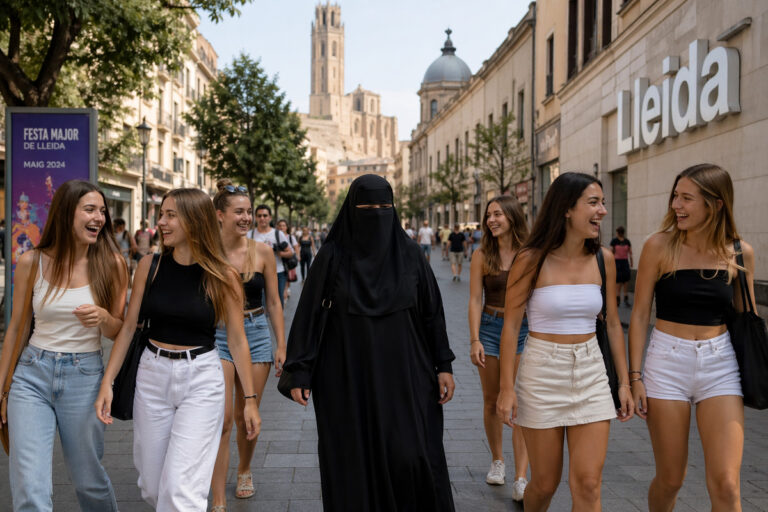
Lleida bans the burqa except if worn for religious reasons
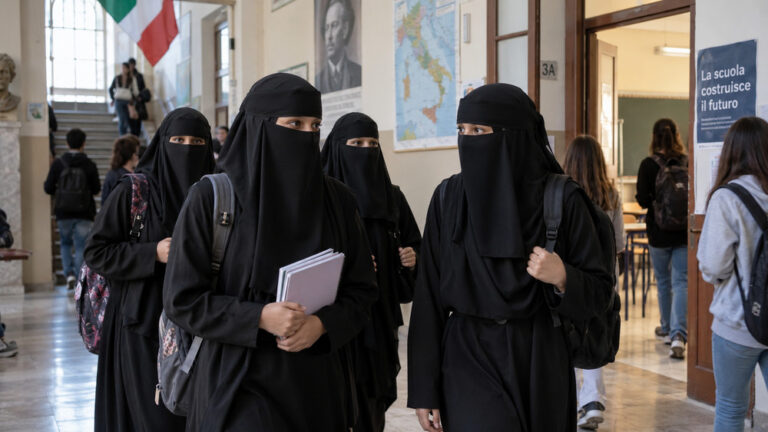
Italy bans burqa and niqab but only in schools
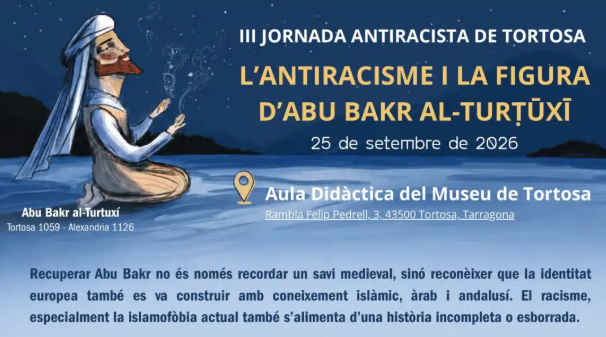
The Generalitat pays tribute to the racist Abu Bakr al-Turtuxí as an anti-racist icon
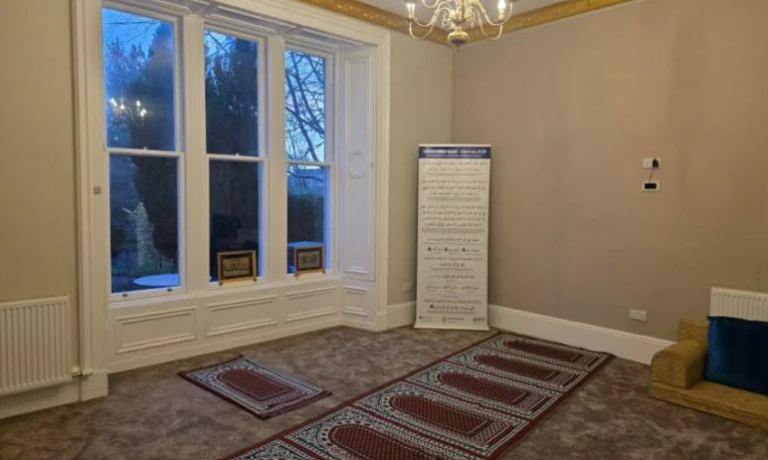
A student residence in Scotland imposes Islamic law in common areas
A Catholic university in Belgium incorporates Islamic chants into the opening mass of the course

A Muslim family in Granada chooses a Catholic school and demands that the courts teach Islam there
Convicted in Mallorca for gender violence for imposing the hijab, controlling and assaulting
Phrase of the Week

Image of the Week
-Don't you have cousins?