
Shopping centres in Kazakhstan ban the niqab and the burqa
Shopping centres have put up signs at the entrances to warn of the ban «because it's the law». 70.1 per cent of Kazakhstan's population is Muslim.
Khan Shatyr shopping centre, Astana, Kazakhstan
Google Maps
[social-share align=»right» style=»button» mobile_app=»desktop»]
[social-share align=»center» style=»icon» mobile_app=»mobile»]
The large shopping centres of Kazakhstan (Central Asia) they have begun putting up signs at the entrances warning that you cannot enter with your face covered by a niqab or a burqa. The measure is part of a law passed this summer that prohibits the use of any item that obstructs facial recognition in public spaces.
The President Kassym-Jomart Tokayev signed the 30 June 2025 a rule that prohibits covering one's face in public spaces, on public transport and in buildings open to the public. The stated objective It is to improve security and facilitate the widespread use of cameras with facial recognition..
Shopping centres have been among the first to visibly implement the regulations, with stickers and signs informing customers at the entrances. A senator, Marat Khojaev, has defended that It is not a matter of discrimination, but of warning in advance before any conflict arises.s”.
The niqab and the burqa They are not traditional. to Kazakhstan
Although more than 70.1% of the Kazakh population declare themselves to be Muslim, the niqab and the burqa They are not traditional in the country. It is, however, more common to have a starter.’headscarf (which leaves the face uncovered), but even this was banned in schools in 2023, prompting protests and students dropping out..
Kazakhstan is following in the footsteps of neighbouring Central Asian countries: Uzbekistan, Tajikistan i Kyrgyzstan They had already introduced similar prohibitions in recent years.
Kazakh religious authorities support the veto
As is customary in Central Asia, Muslim religious leaders support the prohibitions or even propose them. The Spiritual Council of Muslims of Kazakhstan, The major religious body has endorsed the rule, recalling that the measure is a matter of Public safety, not of religion.“It is not about restricting religious beliefs, but about ensuring public safety.”, they stated. They have also insisted that, according to Islamic tradition, There is no obligation to cover your face..
The chief imam of the Almaty mosque has stated that the niqab is not a religious requirement, but rather a cultural tradition. He recalled that «nThere is no religious commandment that requires one to hide one's face., and Islam promotes the Modesty, not extremism in clothing.
The ban is a trend in the region.
The ban on the niqab and burqa in Kazakhstan is not an isolated case but part of a trend spreading across Central Asia. In 2023, Uzbekistan approved a regulation banning the burqa in public spaces. and imposed substantial fines for offences. The following year, the Parliament of Tajikistan went a step further and outlawed both the niqab and the hijab., on the grounds that these pieces were not part of national culture.
By the end of 2024, Kyrgyzstan also passed a law against the niqab. From February 2025, The Kyrgyz police have stopped and fined women for wearing them in markets and on the streets.. Kazakhstan has joined the list with a general law banning face coverings in public spaces, which shopping centres have begun to enforce visibly.
In all these countries, the official justification has been similar: security, the fight against religious extremism and the will to reinforce secular and national identity. All of this shows a concerted move by the Central Asian republics to distance themselves from practices considered foreign and to project a “moderate” model of Islam under state control.
More about the veil

Azerbaijan expels students who wear Islamic headscarves from school
The United Kingdom gives away a thousand hijabs in six months to immigrants arriving via the Channel
Lleida bans the burqa except if worn for religious reasons
Italy bans burqa and niqab but only in schools
Kazakhstan threatens to close private schools that allow hijab
Convicted in Mallorca for gender violence for imposing the hijab, controlling and assaulting
Muslim teacher in Flanders prefers unemployment to taking off her hijab
Even Kadyrov's Islamized Chechnya doesn't want women with their faces covered with the niqab
Feminist strike in Austria to defend the Islamic veil for children under 14

More Perceptions of

ERC, PSC and Comuns oppose combating political Islam in the European Parliament.
Azerbaijan expels students who wear Islamic headscarves from school
Sharia law in the US is supported by 75% of Muslims, 41% of atheists and up to 20% of Christians.

France now has a halal meat supply without the need to sacrifice animals facing Mecca.
The United Kingdom gives away a thousand hijabs in six months to immigrants arriving via the Channel
US Muslim politicians train Canadian Muslims under the slogan "From the mosque to the city hall"«
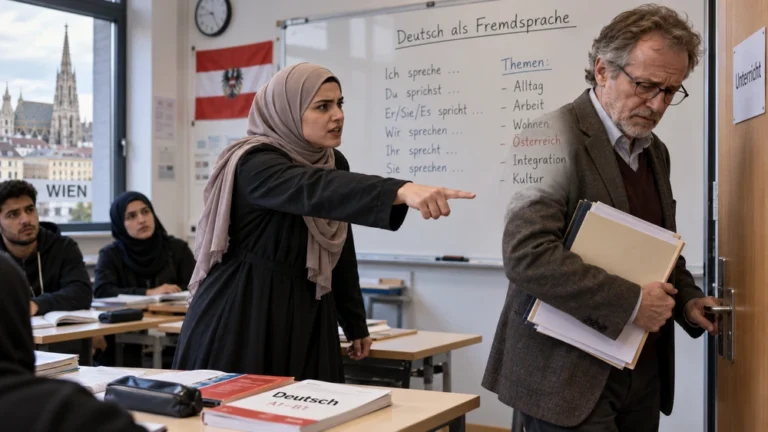
Teacher fired in Austria for denying a Muslim woman a prayer room
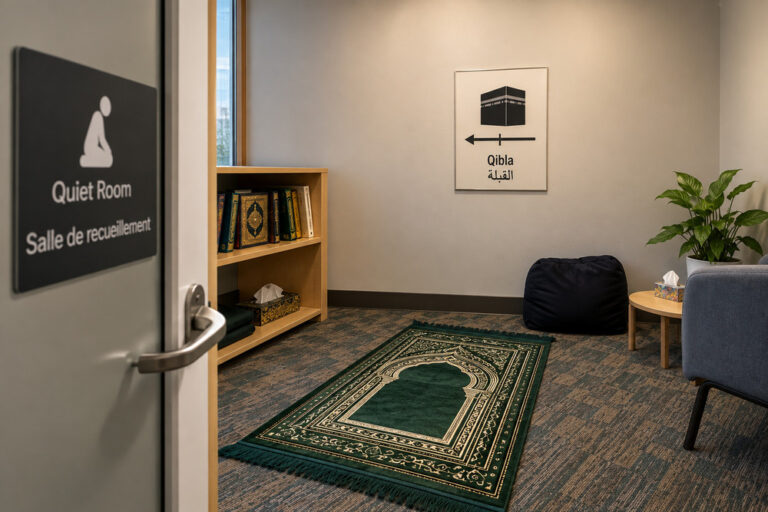
Canadian government normalizes Islamic prayer during workday
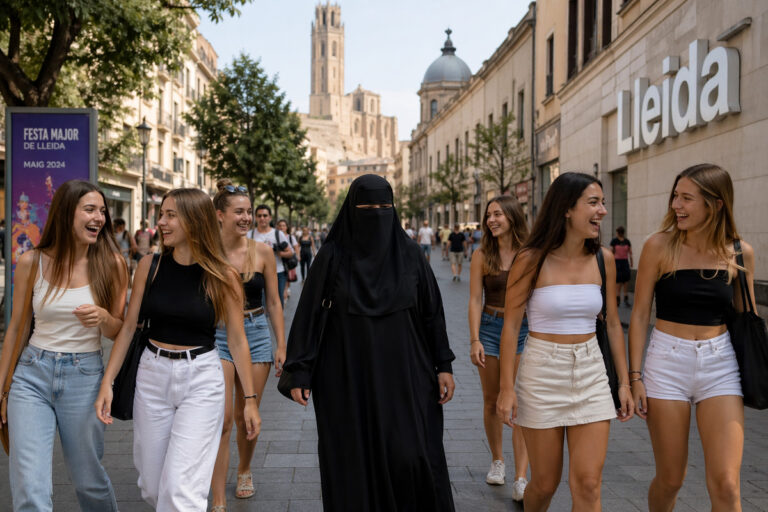
Lleida bans the burqa except if worn for religious reasons
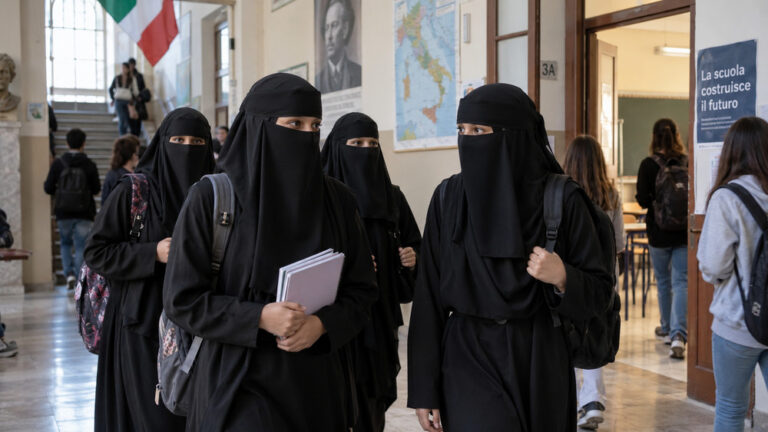
Italy bans burqa and niqab but only in schools
The Generalitat pays tribute to the racist Abu Bakr al-Turtuxí as an anti-racist icon
A student residence in Scotland imposes Islamic law in common areas
Kazakhstan threatens to close private schools that allow hijab
A Catholic university in Belgium incorporates Islamic chants into the opening mass of the course

A Muslim family in Granada chooses a Catholic school and demands that the courts teach Islam there
Phrase of the Week

Image of the Week
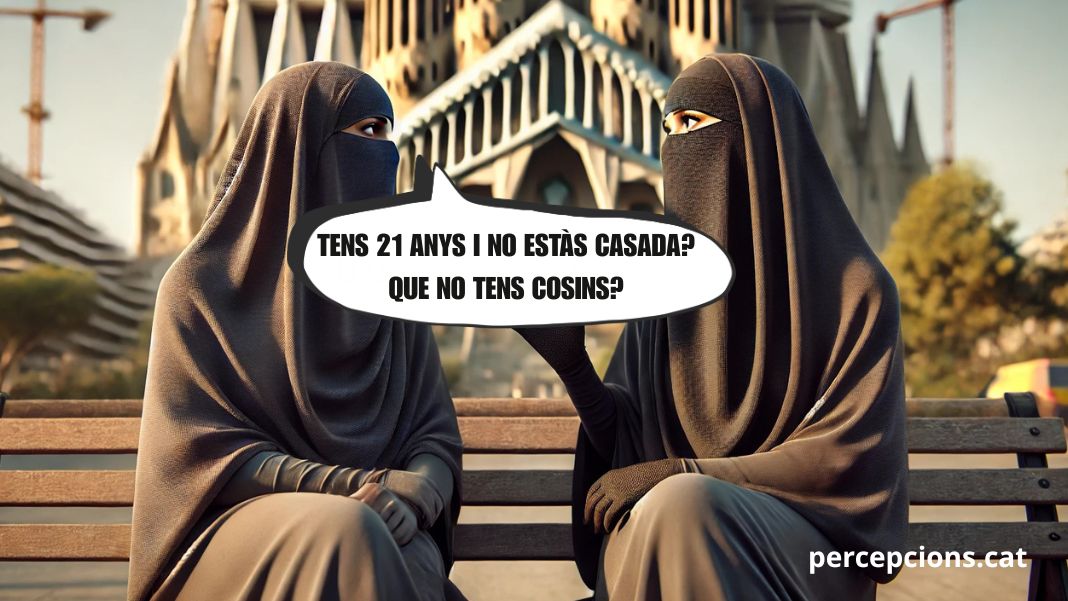
-Don't you have cousins?