Canadian government normalizes Islamic prayer during workday
A parliamentary investigation reveals that the Canadian government has 934 Muslim prayer rooms where civil servants can pray.
Illustrative image
Artificial intelligence
[social-share align=»right» style=»button» mobile_app=»desktop»]
[social-share align=»center» style=»icon» mobile_app=»mobile»]
The figure of 934 Muslim prayer rooms in Canada for officials has come to light following a parliamentary question from the Bloc Québécois. According to what has been published Blacklock's Reporter, The responses from the different government departments allow for a tally to be made. 934 prayer rooms in federal buildings. The research explains that the process of creating spaces where one can pray inside public buildings during working hours has been carried out under the euphemism of’«Quiet spaces», presented as rooms for resting, making private calls, reflecting or, also, praying.
Room for praying or expressing breast milk
A good example of how these spaces have been presented is the one of Canadian Security Intelligence Service (CSIS). In 2023, the organisation explained that it had created small «quiet rooms» so that employees could be alone, switch off from work stress and, in the process, use them too. to pray, express breast milk or make personal calls. Those rooms thus appeared as multipurpose spaces within its accessibility plan. A year later it separated the uses and enabled Separate spaces for prayer and for breastfeeding. What had begun as a generic rest room was also ending up as a room specifically for prayer.
And the process did not stop here. In its 2024 public report, CSIS explains that it also went to expand the prayer rooms to accommodate more people during religious festivities.
Some departments openly acknowledge the religious use of the rooms. Transport Canada, for example, Declares that it has 63 spaces. that can be used to hold private conversations, rest, reflect, collaborate informally or to pray. The Public Prosecution Service declares 31 and the Privy Council Office, 21. Health Canada adds 101 rooms, although it avoids specifically classifying them as prayer rooms and refers to them as «wellness rooms» or «quiet rooms».
And the figure of 934 also does not include all the available spaces. Other 306 rooms open to the public, located mainly in passport and Employment Insurance offices, were excluded from the final count. If they are included, the documentation allows identification. 1,240 government bodies where this type of use is possible.
The scale this policy has reached is particularly evident when compared with data from just a few years ago. In 2023, The Press explained that the federal government had enabled, since 2015, Some 52 multi-faith rooms spread across 46 buildings. Three years later, the parliamentary inquiry allows them to locate 934 prayer rooms or «quiet spaces» in federal facilities. The two figures do not correspond exactly to the same administrative category, but they show how widespread the availability of spaces where one can pray inside government buildings has become.

Muslim pressure to pray at work
The proliferation of these spaces cannot be understood without the pressure exerted in recent years by representatives and networks of Muslim officials. One of the key figures has been Amira Elghawaby, appointed in 2023 as Canada's first Special Representative for Combating Islamophobia. During her tenure she argued that The lack of accommodations for Muslim religious practices could constitute a form of Islamophobia., and demanded facilities so that workers could pray during working hours.
To this pressure was added the Muslim Federal Employees Network (MFEN), an internal network of Muslim civil servants established in 2021. The group drew up a guide for managers reminding them that Muslims have five compulsory prayers a day and that, depending on the time of year, up to three of these may coincide with a conventional nine-to-five working day. The same guide stated that each prayer break can usually last between 10 and 15 minutes. The Canadian government itself eventually incorporated this guide among its official personnel management resources.
In 2025, Elghawaby prepared letters addressed to the directors of public offices in response to the concerns raised by this network. The demands were not limited to being able to pray: They were also demanding flexible working hours and other adjustments so that Muslim religious practices could be accommodated. within the ordinary functioning of public bodies.
Now, in the wake of the controversy over the 934 rooms, Elghawaby has responded on X, defending that these adaptations form part of the federal government's human rights obligations. In a message on X he wrote: “Breaking news! The federal government is fulfilling its human rights obligations towards public officials! And apparently I am one. ”the culprit!" The response is revealing because it positions prayer rooms and religious accommodations not as a debatable administrative option, but as a requirement deriving from human rights.
It wasn't a Canadian tradition: it was introduced as an «accommodation.»
The presence of prayer rooms in public buildings is not part of any historical tradition of the Canadian administration. The origin is much more recent and is linked to workplace religious accommodation policies. A Public Service Commission guide already included, about a decade ago, the case of a Muslim female employee who asked whether the organisation had a prayer room. The organisation had none, but the officials created one. «silent room» so that the workers could use it to pray and to attend to other personal needs such as making a phone call or thinking.
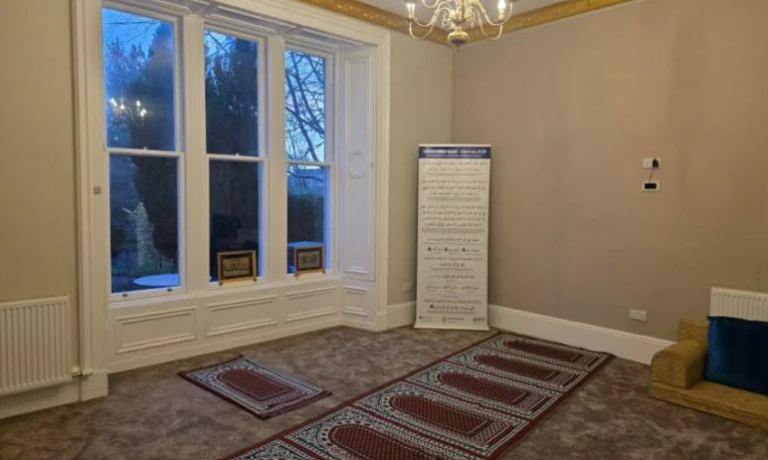
Over the years, however, this ad hoc solution has been normalised and refined. First, public bodies create «quiet rooms» that are expressly suitable for prayer: Muslim workers leave copies of the Qur'an, prayer mats and point towards Mecca.. The result is that a room presented as a neutral space ends up, in practice, acquiring all the elements of a small Islamic prayer space.

More Perceptions of
More about Canada

US Muslim politicians train Canadian Muslims under the slogan "From the mosque to the city hall"«
Quebec fires group of Moroccan teachers for introducing Islamic rules in public schools
Quebec also bans the Islamic veil in nurseries and bans face masks in public services.
Quebec bans Muslim mothers from volunteering in schools while wearing the hijab.
Moroccans and other Muslims are considering leaving Quebec because of laws that limit Islam.


ERC, PSC and Comuns oppose combating political Islam in the European Parliament.
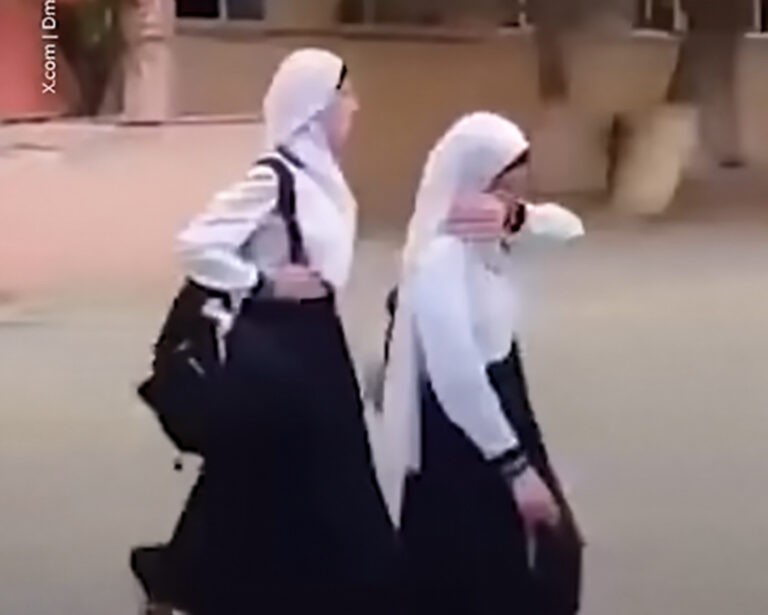
Azerbaijan expels students who wear Islamic headscarves from school

Sharia law in the US is supported by 75% of Muslims, 41% of atheists and up to 20% of Christians.

France now has a halal meat supply without the need to sacrifice animals facing Mecca.
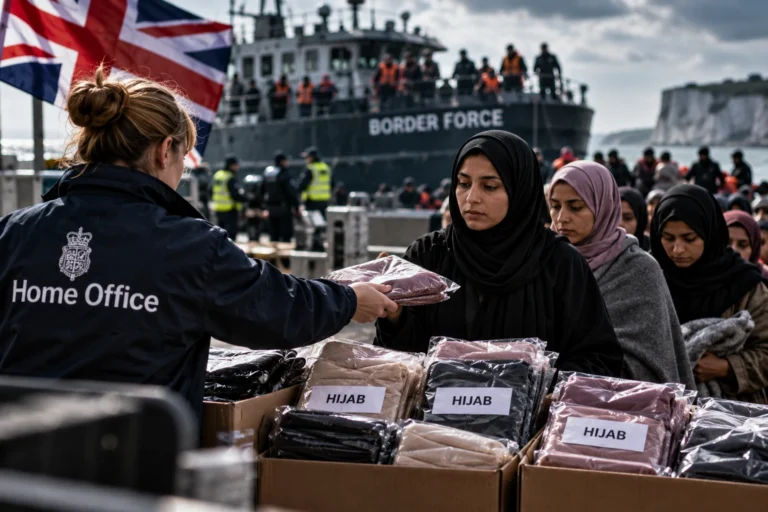
The United Kingdom gives away a thousand hijabs in six months to immigrants arriving via the Channel
US Muslim politicians train Canadian Muslims under the slogan "From the mosque to the city hall"«

Teacher fired in Austria for denying a Muslim woman a prayer room
Lleida bans the burqa except if worn for religious reasons
Italy bans burqa and niqab but only in schools

The Generalitat pays tribute to the racist Abu Bakr al-Turtuxí as an anti-racist icon
A student residence in Scotland imposes Islamic law in common areas
Kazakhstan threatens to close private schools that allow hijab
A Catholic university in Belgium incorporates Islamic chants into the opening mass of the course

A Muslim family in Granada chooses a Catholic school and demands that the courts teach Islam there
Convicted in Mallorca for gender violence for imposing the hijab, controlling and assaulting
Phrase of the Week

Image of the Week
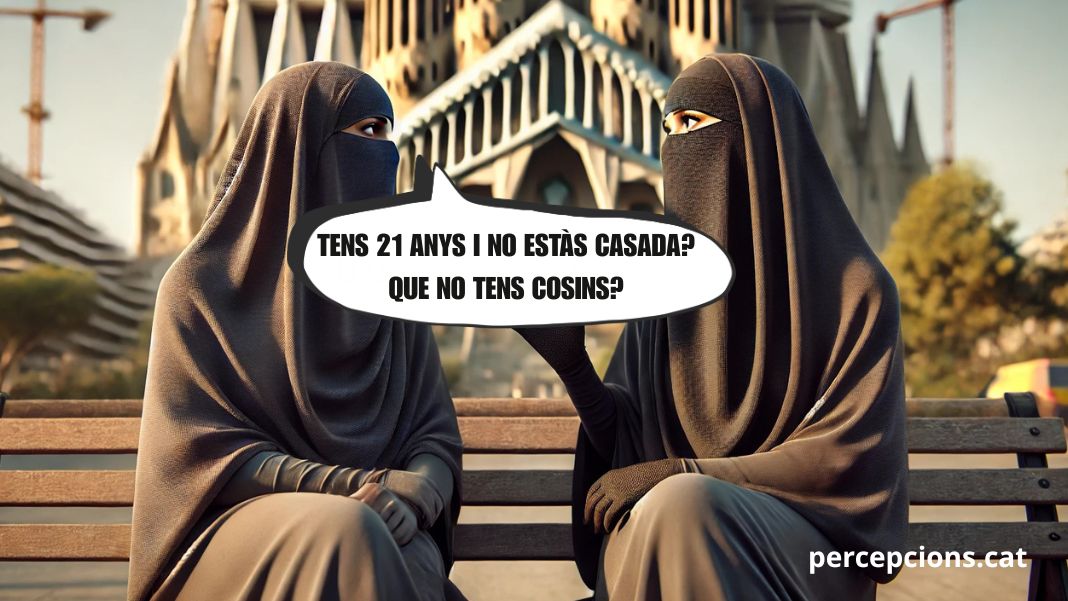
-Don't you have cousins?