
Moroccans and other Muslims are considering leaving Quebec because of laws that limit Islam.
Quebec's new secularism laws particularly restrict the use of the headscarf in key sectors. Some Muslims denounce that this legal tightening is creating a growing climate of hostility.
Illustrative image
[social-share align=»right» style=»button» mobile_app=»desktop»]
[social-share align=»center» style=»icon» mobile_app=»mobile»]
Several witnesses – including some Moroccans who have lived in Montreal for years – say that the tightening of the legal framework in Quebec is making them consider returning to their country of origin or to other provinces of the country. According to a recent report by Bladi.net, Some people of Moroccan origin claim that the new secularism policies have created a sense of exclusion. of the Muslims.
Although there are no official data on a massive migratory flow in this direction, these cases observe what they perceive an increasingly unwelcoming climate for the visibility of the Muslim faith. Quebec has made explicit prohibitions of headscarf in public buildings, to institutional advertising and has closed the prayer rooms in official buildings i the will to ban street prayers.
This hardening contrasts with the discourse of Canada's federal bodies, where government officials responsible for combating Islamophobia make demands such as prayer rooms at work. i where internal guidelines have gone so far as to recommend avoiding coffee, lunches or informal gatherings during Ramadan so as not to inconvenience Muslim employees. The Quebec government rejects and openly opposes these demands from Ottawa, advocating a model of strict secularism and the absolute neutrality of public and workplace spaces.

The prohibition of headscarf Generates an exodus
Among a section of Quebec's Muslim population, The hardening of the secular framework has translated into an everyday experience marked by renunciation and self-limitation.. The most explicit case is the one reported by Bladi.net in the article «The broken Canadian dream»The outlet explains the story of Samira Laouni, a woman of Moroccan origin who has been based in Montreal since 1998, who She openly states that she and her family are considering leaving Quebec.. Although he does not work in the public sector, Laouni says that the laws against headscarf have generated a climate that he describes as “unbearable” for visible Muslims. The conflict is not a direct sanction, but rather the perception that the State and public discourse no longer want any Islamic religious expression in the public sphere.
According to the article, Laouni's daughter has already gone to Ottawa and her son plans to do so when he finishes his studies. The family is considering selling the house and returning to Morocco for good., despite having been in Canada for decades. The narrative is clear: Quebec has changed the rules of the game, and some Muslims feel that the migration project is no longer worth it if they have to hide or downplay their religious identity.
A similar discomfort is documented in The Walrus, that analyses how Bill 21 has particularly impacted Muslim women who wear headscarf. The media reports cases of qualified young women who have given up careers in the public sector because the law forces them to choose between work and faith. Some explain that They have ruled out staying in Quebec and have sought opportunities in other provinces or countries. where religious visibility is not a legal obstacle.
The Walrus also describes the case of Trainee teachers who have abandoned competitive examinations or changed their career path upon discovering that they would not be able to practise with headscarf, as well as families who are reconsidering their children's education in an environment they perceive as increasingly hostile to visible Islam. The text emphasises that this is not a one-off conflict, but an accumulation of renunciations that, for some Muslims, ultimately makes it impossible to remain in Quebec.
The unrest is also documented in Canadian media, albeit with a different focus. CityNews Montreal reported that a significant proportion of Muslim women said they had considered leaving Quebec for work-related reasons., especially in light of the impossibility of accessing public jobs if they wear headscarf. This information confirms that The law is not symbolic.It has real effects on career paths and residency decisions, even when it does not translate into massive migration data.

Quebec no longer negotiates on secularism
The case of Quebec clearly shows what happens when a government decides to set explicit limits on religious visibility and face the consequences. Far from backtracking or making permanent exceptions, the Quebec government has chosen to reinforce secularism. even if this involves inconveniencing a part of the Muslim population or causing individuals to leave.
But This decision also has the support of Muslims. that celebrate a secular public space free from community pressures. Some explain that strict secularism frees them from the obligation to “be the representatives of Islam», protects them from internal impositions—especially on women—and allows faith to be lived as a personal choice and not as a visible political identity. For these sectors, the new framework is not an exclusion but a guarantee of equality before the State and a clear boundary between private beliefs and civic life.
More Perceptions of
More about Canada

US Muslim politicians train Canadian Muslims under the slogan "From the mosque to the city hall"«
Canadian government normalizes Islamic prayer during workday
Quebec fires group of Moroccan teachers for introducing Islamic rules in public schools
Quebec also bans the Islamic veil in nurseries and bans face masks in public services.
Quebec bans Muslim mothers from volunteering in schools while wearing the hijab.

ERC, PSC and Comuns oppose combating political Islam in the European Parliament.
Azerbaijan expels students who wear Islamic headscarves from school
Sharia law in the US is supported by 75% of Muslims, 41% of atheists and up to 20% of Christians.

France now has a halal meat supply without the need to sacrifice animals facing Mecca.
The United Kingdom gives away a thousand hijabs in six months to immigrants arriving via the Channel
US Muslim politicians train Canadian Muslims under the slogan "From the mosque to the city hall"«

Teacher fired in Austria for denying a Muslim woman a prayer room
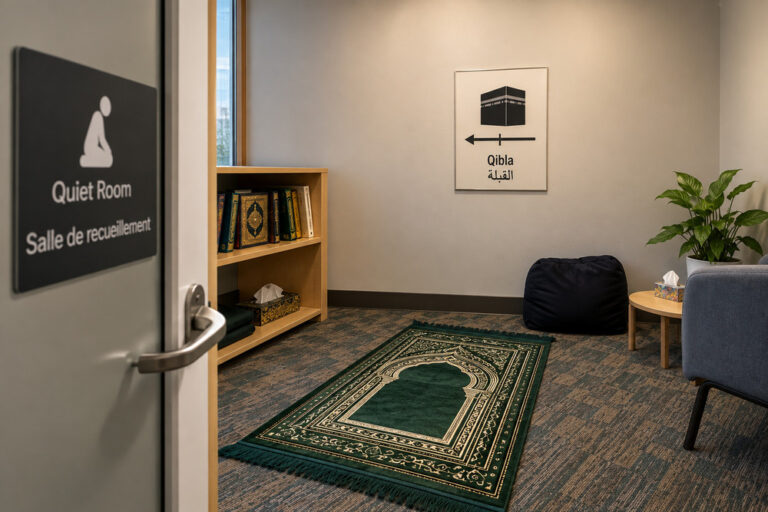
Canadian government normalizes Islamic prayer during workday
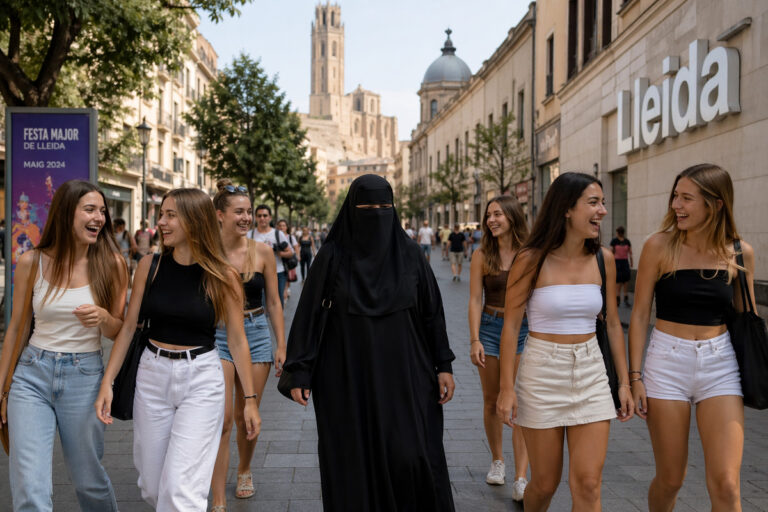
Lleida bans the burqa except if worn for religious reasons
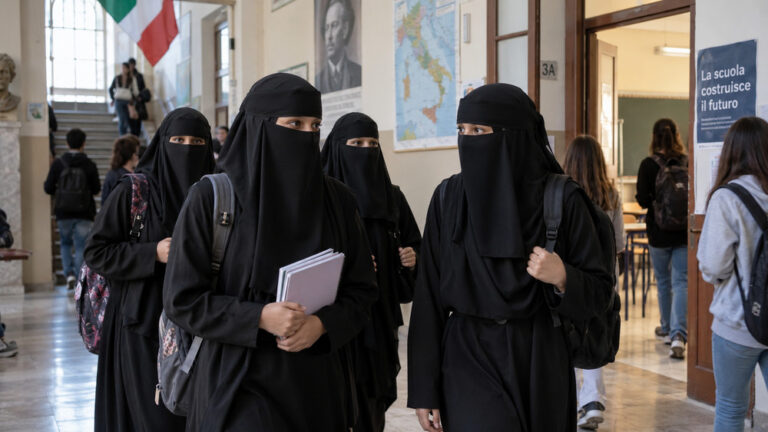
Italy bans burqa and niqab but only in schools

The Generalitat pays tribute to the racist Abu Bakr al-Turtuxí as an anti-racist icon
A student residence in Scotland imposes Islamic law in common areas
Kazakhstan threatens to close private schools that allow hijab
A Catholic university in Belgium incorporates Islamic chants into the opening mass of the course

A Muslim family in Granada chooses a Catholic school and demands that the courts teach Islam there
Phrase of the Week

Image of the Week
-Don't you have cousins?