
The menu halal The cost of school meals in Catalan schools is rising.
The adaptation of schools to the would be It generates an extra cost that is paid by families without a school meal grant and by citizens through their taxes.
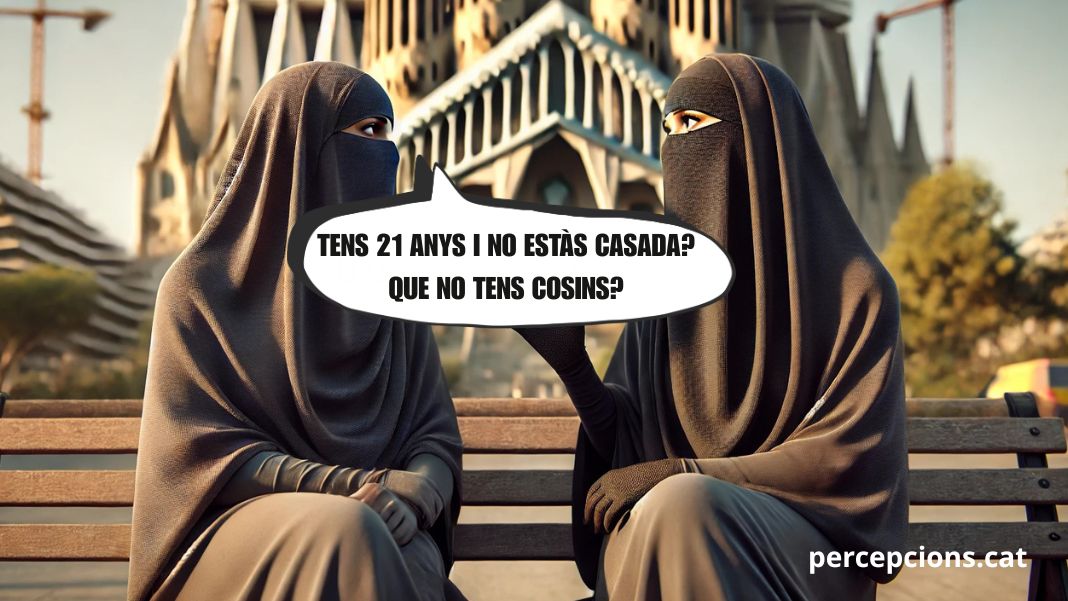
Illustrative image
Generated by AI
[social-share align=»right» style=»button» mobile_app=»desktop»]
[social-share align=»center» style=»icon» mobile_app=»mobile»]
The concept halal It comes from Arabic and literally means “permitted” or “lawful”. It is… of a term that arises from the Sharia, Islamic law, which regulates not only diet, but all aspects of a believer's life. Thus, that which is halal It is not limited to what can be eaten, but extends to areas such as cosmetics, medicine, finance, clothing, tourism or even entertainment.
Moreover, this concept has generated a multi-million-pound industry surrounding certifications halal. Each stamp, inspection or procedure represents a burgeoning enterprise that combines religion, the market and globalisation. In Spain, various bodies offer religious inspections to certify that companies comply with the requirements of the Sharia. The cost can reach €3,000 per year depending on the sector and the size of the company and, like any cost, it is passed on to the final price. It is therefore, A lucrative, secure, and rapidly expanding religious business. and which has been linked to the financing of Islamic terrorism in France, Australia, the United States or the United Kingdom.
The religious requirements that a school canteen must meetTo play the organ
For a school canteen to be able to offer menus halal, must fulfil a series of strict religious conditions established by Islamic law (Sharia). These conditions involve a cost that is added to the surcharge for ingredients certified by the religious organisation. To comply with the Sharia in Catalan schools implies:
- Certified meat as halalIt must come from animals slaughtered according to Islamic ritual, with a specific prayer recited by a religious official and without prior stunning.
- All the ingredients must be halal: Not only meat, but also oils, spices, preservatives, gelatins, additives or flavourings must have religious certification. This requires the canteen's suppliers to work exclusively with accredited companies.
- Avoid cross-contamination: the food halal They must be stored in separate refrigerators and handled with exclusive utensils, tools and kitchen areas, isolated from products considered impure (haram), such as pork or alcohol.
- Training for kitchen and service staffCooks, assistants and supervisors must receive specific training in food handling. halal, ritual hygiene and protocols established by the certifying bodies.
- Religious supervisionThe canteen and all its processes must be audited and certified by a recognised religious authority, which carries out periodic checks and may revoke the certification if any non-compliance is detected.
- Complete documentation and traceabilityWritten records must be kept of all products, suppliers and processes to demonstrate at any time that the entire system complies with the regulations. halal.
- Absence of certain prohibited ingredientsThe use of alcohol-contaminated ingredients is prohibited, even in small quantities (such as culinary extracts or alcohol-based cleaning products).
These requirements make adapting a school canteen to halal criteria a challenge. Technical, logistical and economic challenge which affects the day-to-day management of the service.
A 20% surcharge borne by all families.
Several school catering companies we have spoken to—and which have preferred not to make public statements—assure us that adapting to the requirements of halal menus involves an increase in costs of approximately 20%. This increase is due to the purchase of certified products, the use of separate equipment and the additional logistical requirements involved in preventing cross-contamination.
Even so, In Catalonia, the cost is not only passed on to the families who request it., but, due to a management issue, it ends up affecting the overall price paid by all the families who use the school canteen. Furthermore, Part of this extra cost is borne by the public administration. through the school meal grants, funded with public money.
Catalonia finances the Sharia via school meals grants
In practice, this means that Catalonia finances with public money the application of precepts of the Sharia in public schools. This is because a significant proportion of school menus are covered. through meal vouchers, funded by the Generalitat and the town councils.
According to Data from the Barcelona Education Consortium, the students' 86% of the city receive some form of help with the canteen. This means that the Overheads arising from adapting to the criteria halal They are paid for with public money.. The result is that The Catalan model of managing religious diversity in schools is based on allocating public resources. to adapt common services to specific religious requirements.
The price of school lunch in Catalonia
In Catalonia, The price of the school menu is 7.54 euros. per pupil and day at most, according to what The Generalitat has established it for the 2025 academic year.. Thus, if a pupil uses the canteen service every school day, the approximate monthly cost for families or the administration is €151.
However, Various schools in Barcelona consulted we are told that, in practice, Most families end up paying between 120 and 130 euros a month. for the canteen service. Without the 20% cost overrun resulting from adapting to the criteria. halal Under Islamic law, this price would be closer to €100 or €105 per month.
A split day means you have to use the school canteen.
The amount that families and the administration pay for the school meals covers both the full meal (first course, second course, dessert and bread) and the supervision and care of pupils during the two and a half hours of the lunch period (the 40% of the school day).
Most public schools in Catalonia operate on a split-day timetable, with a midday break between 12:30 pm and 3:00 pm. This schedule makes it virtually impossible for families to take their children home for lunch and bring them back to school on time, especially if they are working. As a result, The canteen service becomes a necessity rather than an option for the vast majority of pupils..
This situation multiplies the number of children who use the canteen daily, and therefore amplifies both the cost to families and the associated public expenditure. Any increase in the price of the menu—com what is involved in adapting it to criteria halal that imposes ShariaIt has a direct impact not only on parents' monthly pay packets but also on public coffers, through the scholarships and grants provided by the government.
The split shift not only does it encourage the widespread use of the school canteen, but it also It has indirectly become a source of funding for the certification system. halal that are issued by religious institutions. It is also the case for catering companies operating within this model. The more pupils have lunch at school, the more meals are served, and More money is moving around a circuit that mixes public services, religious demands and economic interests..
Outside Catalonia: continuous day and more affordable canteens
The split day is the most common timetable model in Catalan public schools. In contrast, most autonomous communities in the Spanish State have opted for the continuous day in early childhood and primary education. In territories such as Murcia, Extremadura and the Canary Islands, Almost all schools concentrate lessons in the morning and finish before lunch, which drastically reduces the need for a canteen service, as many pupils can go home..
As for the prices, Catalonia has the most expensive school canteens in the state.t. In other communities the prices are much lower: In Madrid they remain at €4.88 per day, in Galicia at €4.50, and in Asturias at €4.. The combination of the continuous school day and lower prices means that, outside Catalonia, the school canteen has reduced use and a much lower cost, for both families and administrations.
If we look at Asturias, the monthly cost of the school canteen is around €80 per pupil, a figure that does not include any extra cost to adapt menus to halal standards, since this type of provision is virtually non-existent in public schools in Asturias.
The school canteen in Catalonia is the anomaly in Spain and Europe.
While in most of the Spanish State school canteens operate at lower prices and in Europe a secular and uniform educational model predominates, Catalonia stands out as a unique case. In fact, in many European countries it is not even possible to offer meat. halal in public schools, since religious sacrifice is prohibited by law on animal welfare grounds. In these countries, the debate over school menus adapted to Islam does not exist, because the legal framework already prevents it.
One of the few exceptions in Europe is the city of Strasbourg, in France., where the standard school menu costs €3.28 and the menu halal 3.97 euros, a more expensive 21%. Unlike in Catalonia, the family, not the government, pays this difference.
This contrast highlights that The Catalan model of school canteen is an exception., both in Spain and the rest of Europe. In Catalonia we have religious surcharges borne by families or funded by public money and a school timetable that practically forces pupils to stay for lunch. The result is that Catalonia has developed a unique school canteen model in Europe, where Economic interests and religious demands are mixed in a way that is difficult to compare with other territories..

France now has a halal meat supply without the need to sacrifice animals facing Mecca.
A student residence in Scotland imposes Islamic law in common areas
Halal logistics arrives: separate lorries and warehouses for Muslim food
The Barxiluna project turned 80 years of al-Andalus into Barcelona's eternal debt to Islam
A Muslim father denounces a Swedish judo club for not adapting the greeting to Islam
Muslims ban pork cooking at public barbecues in Austria
Human rights report claims Ireland served pork sausages to deportees to Pakistan
German police investigate kindergarten cook for serving pork to Muslims
A public water park in Texas advertises itself as a “Muslim-only” space”

ERC, PSC and Comuns oppose combating political Islam in the European Parliament.
Azerbaijan expels students who wear Islamic headscarves from school

Sharia law in the US is supported by 75% of Muslims, 41% of atheists and up to 20% of Christians.
France now has a halal meat supply without the need to sacrifice animals facing Mecca.
The United Kingdom gives away a thousand hijabs in six months to immigrants arriving via the Channel
US Muslim politicians train Canadian Muslims under the slogan "From the mosque to the city hall"«
Teacher fired in Austria for denying a Muslim woman a prayer room
Canadian government normalizes Islamic prayer during workday
Lleida bans the burqa except if worn for religious reasons
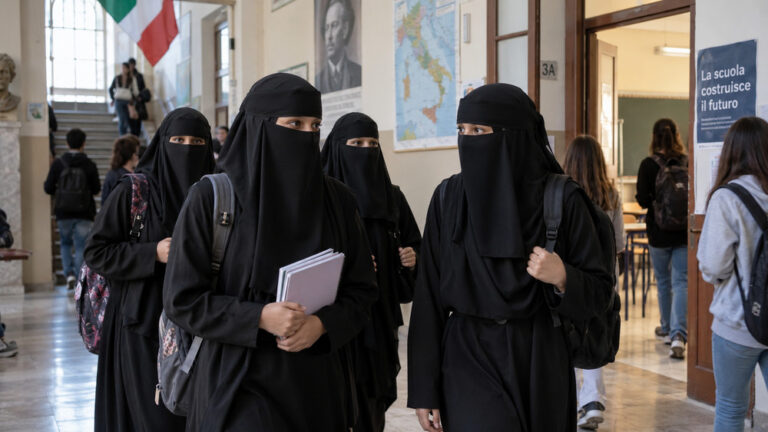
Italy bans burqa and niqab but only in schools
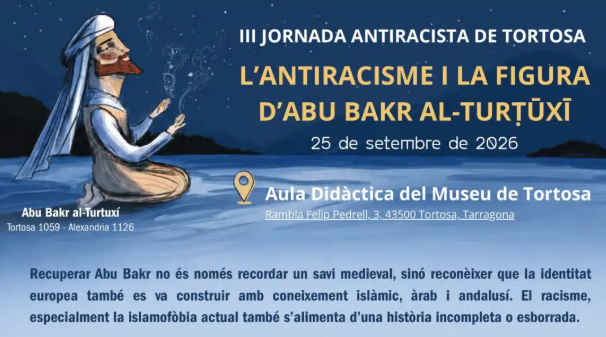
The Generalitat pays tribute to the racist Abu Bakr al-Turtuxí as an anti-racist icon
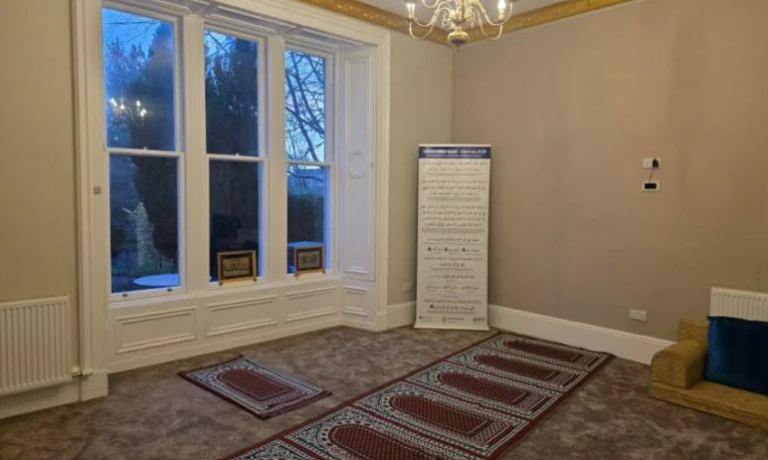
A student residence in Scotland imposes Islamic law in common areas
Kazakhstan threatens to close private schools that allow hijab
A Catholic university in Belgium incorporates Islamic chants into the opening mass of the course
A Muslim family in Granada chooses a Catholic school and demands that the courts teach Islam there
Phrase of the Week

Image of the Week
-Don't you have cousins?