
Canadian schools receive official guidance on adapting to Islam with prayer rooms, accommodations and preventive censorship
The guide was drafted with the participation of Muslim activists identified for ideological ties to the Muslim Brotherhood. The orders have reached schools without debate or prior presentation.
Cover of the guide to supporting Muslims
[social-share align=»right» style=»button» mobile_app=»desktop»]
[social-share align=»center» style=»icon» mobile_app=»mobile»]
The Ontario public education system has distributed to its staff a 39-page internal guide that Redefines the ordinary functioning of schools in relation to Islam and Muslim pupils.. The document, entitled Guide to Supporting Muslim Students, Staff, and Families It is presented as a general framework that should guide teaching practice, school management and the treatment of educational content to meet the needs of Muslims.
The guide makes no secret that one of its objectives is to strengthen Muslim visibility. It talks about ’expanding mentorship opportunities“, supporting Muslim Student Associations, and increasing Muslim representation among teaching staff.
The document proposes a structural change: Redefines spaces, timetables, curricula and criteria for teacher intervention with the aim of adapting the state school to a specific religious identity. before any conflict arises. The text was not presented in a prior public debate nor does it appear in the minutes of any open school board meeting. It was provided to the teaching staff and educational personnel as a reference document., with the explicit aim of unifying criteria and practices across the entire system.
It is assumed that the school must adapt to Islam.
The guide starts from a prior diagnosis that is neither discussed nor challenged: The state school is part of an institutional environment hostile to Muslims.. The document assumes that the education system reproduces structural inequalities and that, therefore, it is not neutral. nor sufficiently safe for Muslim pupils and staff. This premise serves as a starting point.
This initial approach is key because Justify the rest of the document. If the school is, by definition, a problematic space, changes must be made. The guide does not envisage the option of correcting specific dysfunctions within a shared general framework, but instead assumes that the framework itself is inadequate and must be reconfigured.
In this context, the guide frames The adaptation to Islam as a matter of human rights. The text presents the proposed measures not as educational options, but as obligations arising from the defence of rights, which pushes any pedagogical or institutional debate out of the legitimate sphere of discussion.
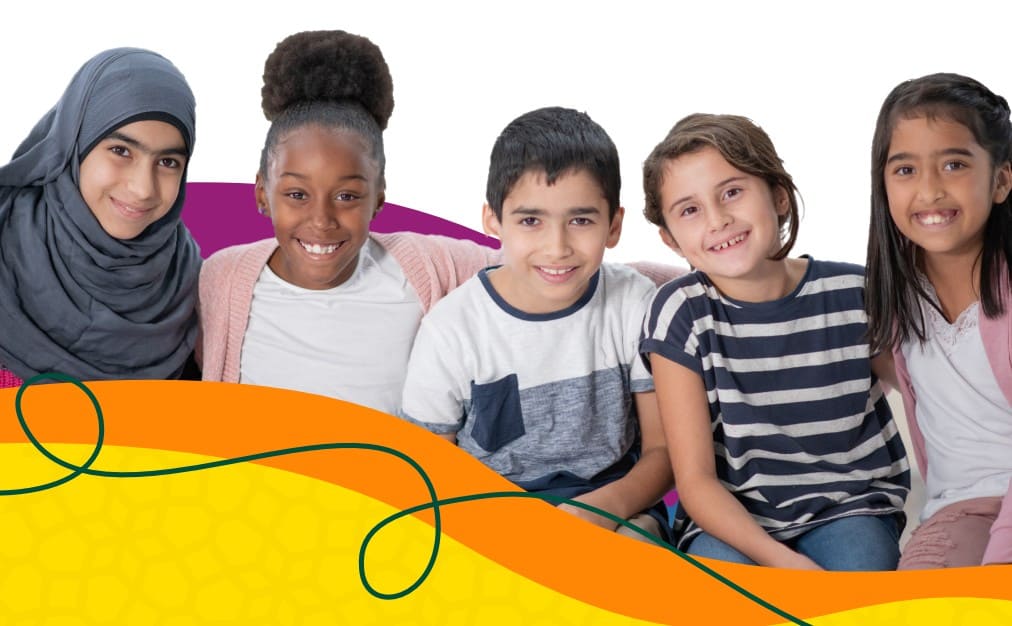
One of the images illustrating the guide.
The changes necessary to satisfy the Muslims
Once it has been established that the state school is not a sufficiently safe environment for Muslims and that their human rights are being violated, it is necessary to determine which changes are considered necessary. The document translates this approach into a set of concrete requirements for Muslims. they can live and express their religious identity normally within the state school. These are measures such as:
- Providing spaces for prayer to all educational centres and ensure that they are accessible during school hours.
- Adapt school timetables and routines during Ramadan, including flexibility in physical activities, assessments and daily routines.
- Strengthen and fund Muslim student associations. (MSA) as stable structures within the centres.
- Expand specific mentoring programmess for Muslim pupils and to connect them with adult role models within the education system.
- Increase the presence of content about Islam. and Muslim identities at all stages and subjects of the curriculum.
- Mandatory training for teaching staff and educational staff on Islam, Islamophobia and anti-oppressive practices.
- Increase Muslim representation among teaching and leadership staff, and to support internal networks of Muslim professionals.
- Create specific spaces for emotional support and mental health support aimed at Muslim students and staff, especially on significant dates or after incidents considered Islamophobic.
The explicit objective is that Muslim pupils and staff “are reflected in the school's policies, programmes and initiatives”, which makes identity recognition a central criterion of educational action, above other pedagogical or institutional considerations. The guide closes off any room for disagreement: Any questioning of the proposed measures is implicitly associated with a violation of rights..
And the common thread running through all these measures is the notion of Islamophobia, which the guide identifies as a structural problem inherent within the education system itself. From this premise, The recognition of Muslim identity ceases to be a pedagogical option and becomes a preventative tool.Making Muslims visible, strengthening their structures and adapting school operations is presented as the way to avoid harm, marginalisation and discrimination.
The normalisation of religious activism in the classroom: the case of jihad
The set of measures presented It is not limited to protection against IslamophobiaIt even extends to the way sensitive religious and political concepts are presented within the school curriculum. This is particularly evident in the treatment of jihad, which Ontario's educational guidelines call for addressing it almost exclusively as an internal spiritual struggle.. The curricular documents insist on correcting what they define as “misunderstandings” or “media representations” of the concept, but They systematically omit its historical and contemporary dimension linked to violent movements and armed jihadist groups..
This way of proceeding transforms the classroom into a space of ideological validation. What should be a contextualised and plural explanation becomes an exercise in moral correction. With these rules, The teacher is obliged to reinforce a specific interpretation of Islam to avoid offending or “harming” Muslim pupils.. The result is an inversion of the principle of neutrality: instead of guaranteeing critical distance from all beliefs, The school assumes the function of protecting and normalising a specific religious narrative., even when it comes into tension with legitimate debates about political violence, security and democratic values.
The Muslim Brotherhood's orbit in Canadian education
What is happening at the Durham School Board is not an isolated case. In recent years, the National Council of Canadian Muslims (NCCM) has consolidated a stable presence within several school boards in Ontario and the rest of the country, where it has helped to design “anti-Islamophobia” frameworks, teacher training programmes and initiatives aimed directly at students. Materials similar to those used in Durham have been introduced in the school boards of Peel Region and Thames Valley, as well as in the Toronto District School Board. In the Toronto District, NCCM staff have participated in conferences with hundreds of Muslim students from dozens of schools.
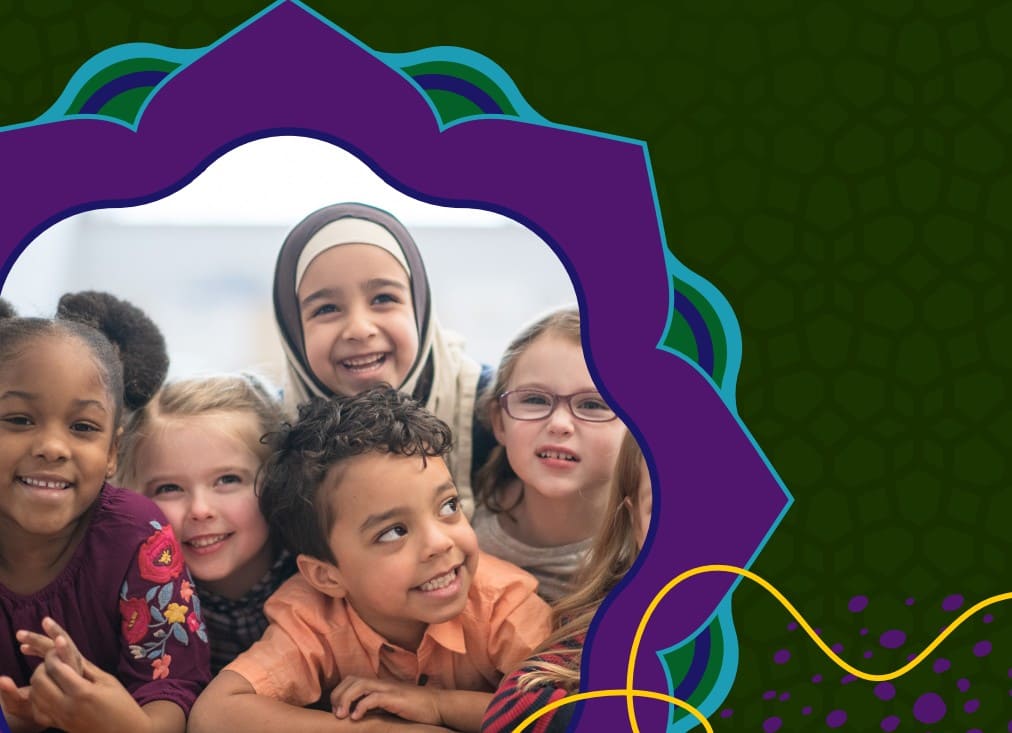
Happy girl with a hijab.
This presence is not only ideological but also economic. The NCCM receives relevant public funding to carry out these programmes.. This financing allows an entity with a political and religious agenda to intervene directly in teacher training and in the construction of the educational narrative under the label of the fight against discrimination.
This growing role of the NCCM in the educational sphere has generated controversy beyond the pedagogical debate. A report published in June 2025 by the Institute for the Study of Global Antisemitism and Policy (ISGAP) It points out that the NCCM maintains ideological and historical ties with North American Islamist networks connected to the Muslim Brotherhood ecosystem., including organisations associated with Hamas.
Between Easter eggs and being a good Muslim
The publication of the guide has caused unease among some families who have long watched Islam enter a space where Christianity has never held any privilege. At several schools in the Durham District School Board, parents have expressed discomfort at practices they perceive as unequal in the treatment of religions within the classroom.
In one specific case, a mother withdrew her son from a Year 4 class after an activity about Islam. The exercise consisted of identifying the five pillars of Islam. Moreover, dHe was keen for the pupils to explain how one can be a “better Muslim”.”, associating it with prayer and the reading of the Qur'an. The mother compared this task to a previous activity on Christianity, limited to painting Easter eggs as a cultural and non-confessional exercise, and considered that the treatment of the two religions was not equivalent.
The guide thus constitutes another step within of a gradual process of Islamisation of the Canadian education system, which does not depend on a single document or a single decision. This process It includes the generalisation of halal menus, the acceptance of the hijab, the permanent religious adaptation of the centres' operations, the introduction of preventive censorship of content and teaching language that avoids any accusation of Islamophobia.. The institutional framework has succeeded in invalidating families' criticism by using the trump card of Islamophobia and human rights. The guide does not create this dynamic, but consolidates it: it sets criteria, provides administrative cover for decisions already in place, and reduces the space in which parents and teachers can express disagreement without being placed outside the legitimate framework of the education system.
More Perceptions of
More Halal

France now has a halal meat supply without the need to sacrifice animals facing Mecca.
A student residence in Scotland imposes Islamic law in common areas
Halal logistics arrives: separate lorries and warehouses for Muslim food
The Barxiluna project turned 80 years of al-Andalus into Barcelona's eternal debt to Islam
A Muslim father denounces a Swedish judo club for not adapting the greeting to Islam
Muslims ban pork cooking at public barbecues in Austria
Human rights report claims Ireland served pork sausages to deportees to Pakistan
German police investigate kindergarten cook for serving pork to Muslims
A public water park in Texas advertises itself as a “Muslim-only” space”

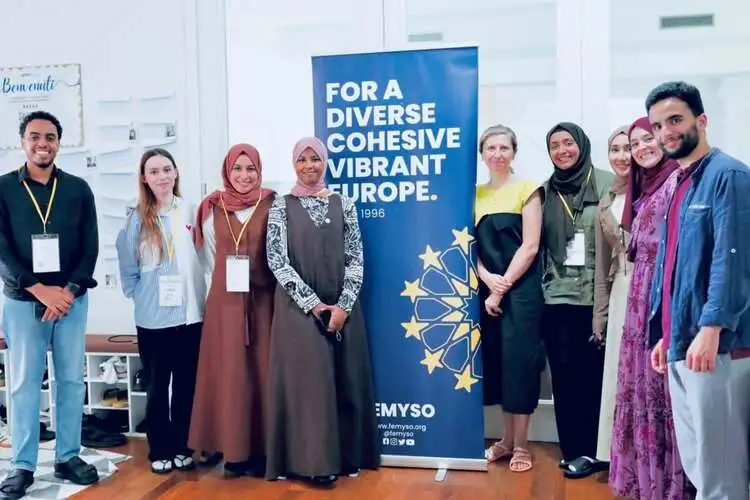
ERC, PSC and Comuns oppose combating political Islam in the European Parliament.
Azerbaijan expels students who wear Islamic headscarves from school
Sharia law in the US is supported by 75% of Muslims, 41% of atheists and up to 20% of Christians.
France now has a halal meat supply without the need to sacrifice animals facing Mecca.
The United Kingdom gives away a thousand hijabs in six months to immigrants arriving via the Channel
US Muslim politicians train Canadian Muslims under the slogan "From the mosque to the city hall"«
Teacher fired in Austria for denying a Muslim woman a prayer room
Canadian government normalizes Islamic prayer during workday
Lleida bans the burqa except if worn for religious reasons
Italy bans burqa and niqab but only in schools
The Generalitat pays tribute to the racist Abu Bakr al-Turtuxí as an anti-racist icon
A student residence in Scotland imposes Islamic law in common areas
Kazakhstan threatens to close private schools that allow hijab
A Catholic university in Belgium incorporates Islamic chants into the opening mass of the course
A Muslim family in Granada chooses a Catholic school and demands that the courts teach Islam there
Phrase of the Week

Image of the Week
-Don't you have cousins?