
Alimentària 2026 integrates an Islamic religious congress that promotes the halal as a morally correct and sustainable model
Alimentària 2026 once again breaks down the boundaries between religion and the market with the 4th International Halal Congress. Religious law is presented as an inclusive, ethical and sustainable criterion, but it overlooks animal suffering and the financing of a religion.
Illustrative image
[social-share align=»right» style=»button» mobile_app=»desktop»]
[social-share align=»center» style=»icon» mobile_app=»mobile»]
Alimentaria Barcelona 2026 is celebrated on the 23 to 26 March 2026 on the premises of Fira de Barcelona – Gran Via, and it is one of the main international food fairs in southern Europe. The event is presented as a large showcase of, business and trends in the agri-food sector, with a clear international vocation and a strong institutional profile under the Barcelona brand.
Within this framework, the fair brings together multiple spaces and activities aimed at specific sectors such as coffee, patisserie and olive oil. One of the parallel sectoral activities at Alimentària 2026 is a religious event. called the 4th International Halal Congress. Unlike the other areas, however, the Halal Congress does not promote a technology, a production process or a scientific advance, other than a confessional religious norm presented as an inclusive, ethical and sustainable criterion.
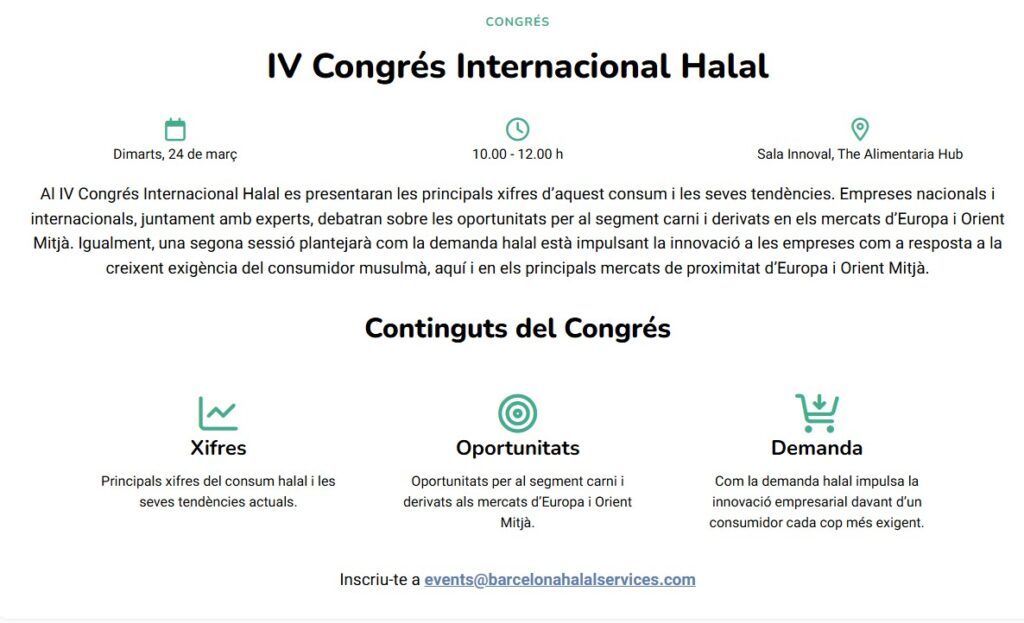
Religious law within the food chain
The introduction of halal Within a fair like Alimentària, it is not limited to expanding the range for a segment of consumers, but rather… It incorporates a confessional religious norm into the heart of production, logistics and commercial processes. of the food industry. The halal establishes doctrinal criteria that condition how a food is produced, slaughtered, handled and certified, subordinating technical, health or scientific decisions to a religious authority. This logic involves clerical oversight, confessional certification and associated economic flows, and turns a practice of faith into operational criterion within the market.
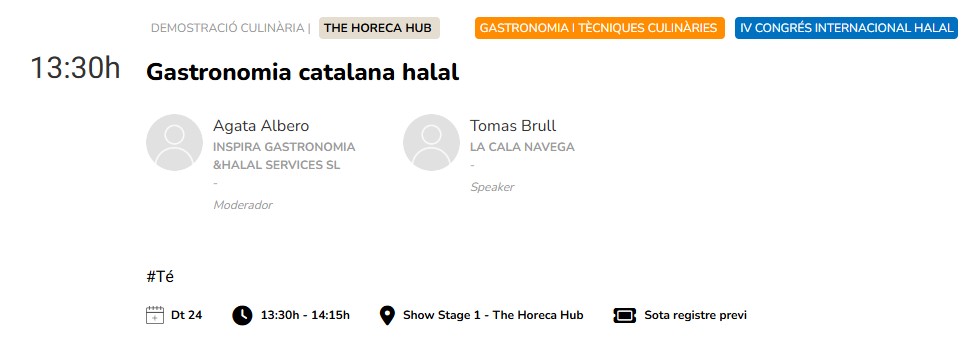
This model also entails the exclusion of a central element of Catalan and Mediterranean gastronomic culture: pork. It is not a marginal ingredient but a historic pillar of the country's cuisine, farming, meat industry and food identity. Nevertheless, the halal programme at Alimentària 2026 includes halal cookery demonstrations, among which Catalan cuisine adapted for the Muslim consumer, organised by the Department of Agriculture, Livestock, Fisheries and Food of the Generalitat of Catalonia. In this new proposal for Catalan cuisine without pork, All the ingredients have paid the religious tax in the form of a certificate. as a quality criterion.
Inclusive language to avoid talking about religion
The discourse with which Alimentària presents halal deliberately avoids referring to religion as a normative system and reframes it as a Transversal gastronomic philosophy, associated with widely accepted values such as respect, hospitality, traceability, health or sustainability. Halal ceases to be defined as that which is “permitted” according to a specific religious doctrine to become a Inclusive and modern model, capable of “connecting cultures”, generating business opportunities and positively transforming the food industry. In this narrative, the confessional dimension is diluted beneath a veneer of friendly, emotional and aspirational language.
This discursive operation is reinforced by testimonials from entrepreneurs, chefs and consultants who present halal as a Standard of quality and trust, comparable—or even superior—to sanitary or scientific criteria. With the operation, halal is defended as a moral common sense, which makes any criticism difficult, since questioning it comes to seem like opposition to diversity, to coexistence or even to progress. The language of diversity and hospitality conceals that it is about Rearrange habits, processes and values according to a specific doctrine. Halal is not sold as something that some people need, but as something that everyone should accept as good, healthy and desirable.
In this narrative, the market plays a central role. The halal It presents itself as a Inevitable opportunity in the face of Muslim demographic growth and as a pragmatic adaptation to the “globality to come”. Population figures, Muslim tourism and the expansion of halal consumption are used not only as economic data, but as Normative argument: if the market grows, the model must be adopted..
Animal welfare subordinated to religion and business
One of the most problematic aspects of the halal system is the direct conflict with animal welfare standards consolidated in Europe. Traditional halal sacrifice requires the Slaughter without prior stunning, a practice that the veterinary and scientific community considers more painful and stressful for the animal. Although partial adaptations exist, the underlying principle remains: When scientific criteria conflict with religious precepts, the confessional norm prevails.. This hierarchy is incompatible with a discourse that presents halal as an “ethical model” or “sustainable”. The religious exception that the law now tolerates is being promoted institutionally as an economic opportunity, turning a religious exception into competitive advantage within the meat industry.
This logic extends beyond the moment of sacrifice and permeates the entire food chain through the concept of “no pollution”. The certification halal guarantees that a product has not been “contaminated” by ingredients, processes or contacts with foods considered non-halal, introducing religious language of purity and impurity into industrial production. The Generalitat of Catalonia, through PRODECA, not only endorses this framework, but also… actively promotes with the creation of the Halal Catalunya brand, participation in fairs and festivals in Saudi Arabia and supporting companies to adapt their processes, slaughtering and logistics to this requirement.
The certification halal as a religious financing system
Halal certification is not a simple informational label for the consumer, but a Structured economic mechanism that generates recurring revenue through audits, licences, annual fees and periodic inspections. To be able to operate in markets halal, Companies must submit themselves to accredited certification bodies that verify compliance with the religious standard throughout the entire production chain. This process is neither free nor one-off: it involves Continuous payments and dependence on an authority that is neither health nor public, but rather confessional.
The result is a system of indirect religious financing, integrated into the agri-food internationalisation policy and presented as a strategy for quality and competitiveness.
The normalisation of religious food in Catalonia
The normalisation of halal at Alimentària is no coincidence, given that The Generalitat and the Barcelona City Council have adopted, promoted and incorporated the religious dietary model into multiple spheres of public and economic life.. The penetration of religious control that implies the halal It extends to public canteens and the tourist offering., with the active complicity of the Generalitat and its bodies.
This logic is already visible in the educational sphere, where Halal meat is for everyone, whether they are Muslim or not. and links to The disappearance of pork from school canteens in the name of the inclusion of Muslims. The same pattern extends to the tourism sector, with more than 1,500 hotels in Catalonia offering halal services, in many cases without alcohol, reconfiguring the offering in accordance with confessional criteria.
These are not isolated actions, but an Islamising trend in the lives of Catalansfrom school meals to international cuisine, via tourism policy, cosmetics, and prison, hospital or university canteens. The trend is to present the halal as a Desirable, inclusive and economically inevitable model, with explicit support from public institutions. In this triumphalist narrative, the suffering of animals from ritual slaughter, the contempt for Catalan gastronomic culture, the diversion of resources to religious structures and the segmentation of consumption along confessional lines are systematically omitted.
More about Halal

France now has a halal meat supply without the need to sacrifice animals facing Mecca.
A student residence in Scotland imposes Islamic law in common areas
Halal logistics arrives: separate lorries and warehouses for Muslim food
The Barxiluna project turned 80 years of al-Andalus into Barcelona's eternal debt to Islam
A Muslim father denounces a Swedish judo club for not adapting the greeting to Islam
Muslims ban pork cooking at public barbecues in Austria
Human rights report claims Ireland served pork sausages to deportees to Pakistan
German police investigate kindergarten cook for serving pork to Muslims
A public water park in Texas advertises itself as a “Muslim-only” space”

ERC, PSC and Comuns oppose combating political Islam in the European Parliament.
Azerbaijan expels students who wear Islamic headscarves from school
Sharia law in the US is supported by 75% of Muslims, 41% of atheists and up to 20% of Christians.
France now has a halal meat supply without the need to sacrifice animals facing Mecca.
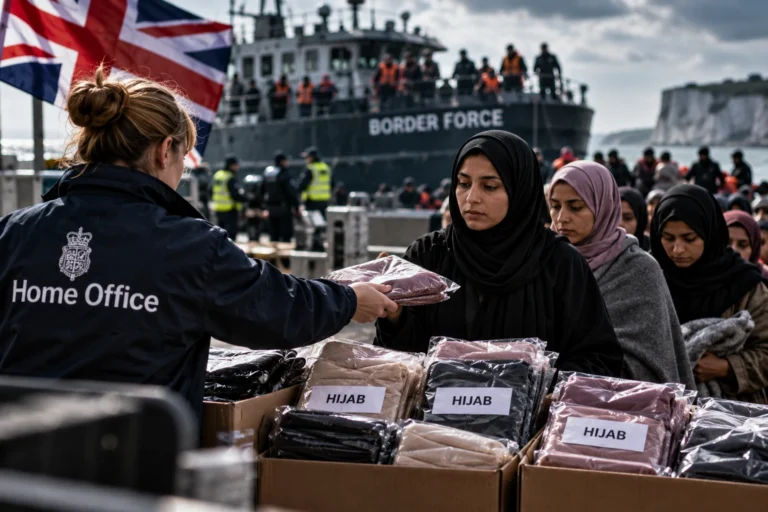
The United Kingdom gives away a thousand hijabs in six months to immigrants arriving via the Channel
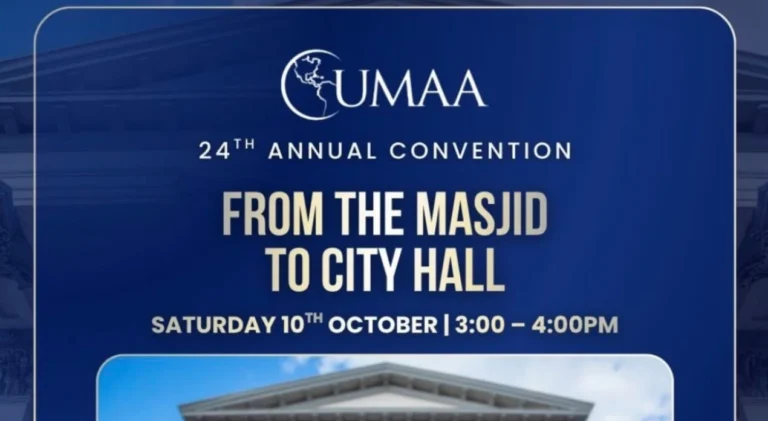
US Muslim politicians train Canadian Muslims under the slogan "From the mosque to the city hall"«
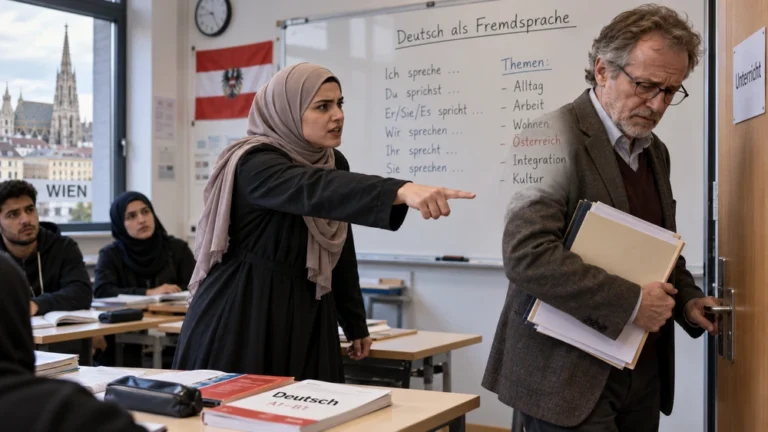
Teacher fired in Austria for denying a Muslim woman a prayer room
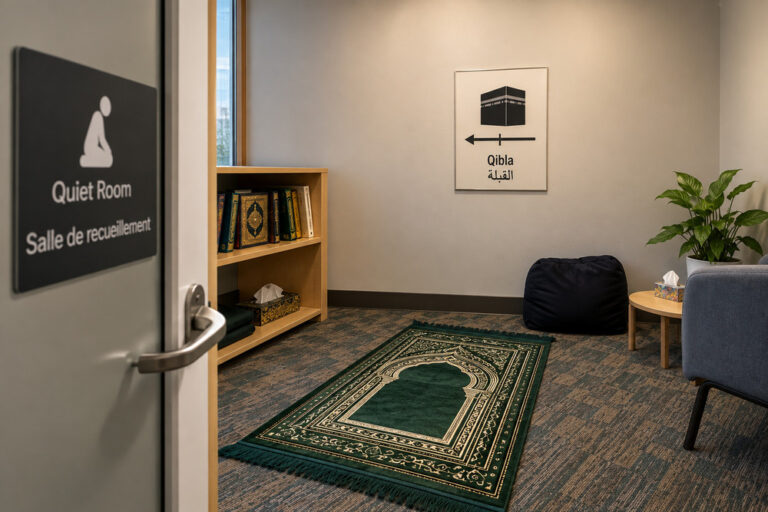
Canadian government normalizes Islamic prayer during workday
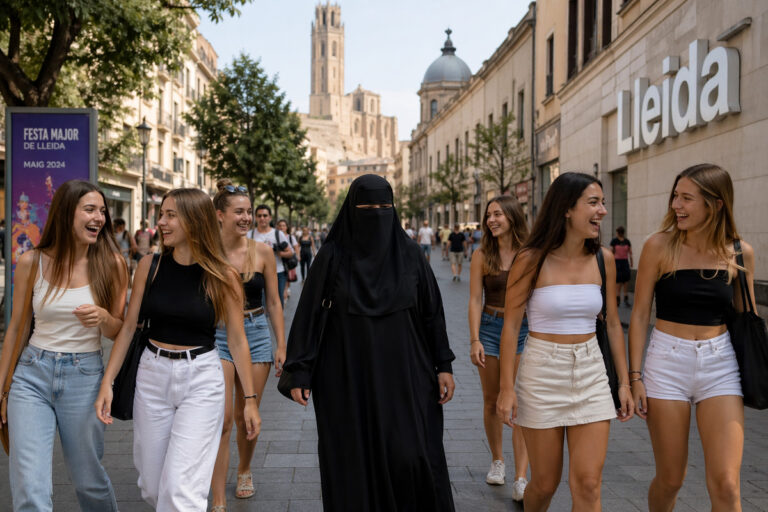
Lleida bans the burqa except if worn for religious reasons
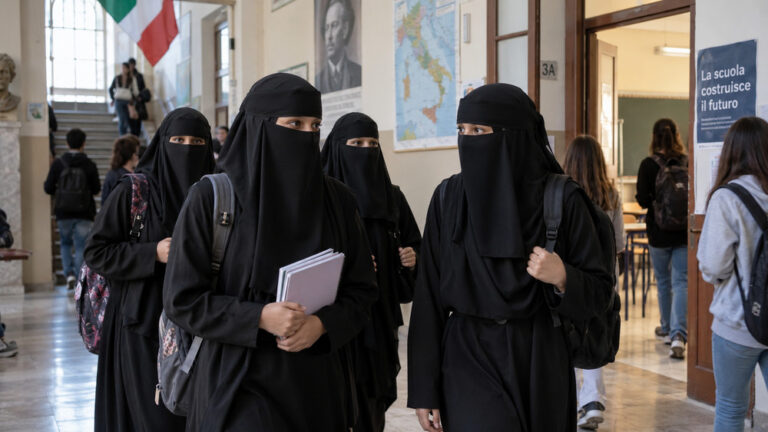
Italy bans burqa and niqab but only in schools
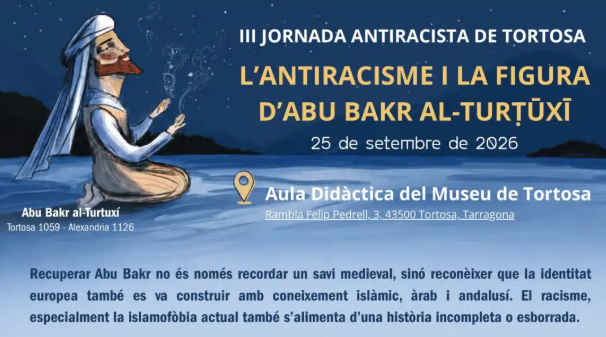
The Generalitat pays tribute to the racist Abu Bakr al-Turtuxí as an anti-racist icon
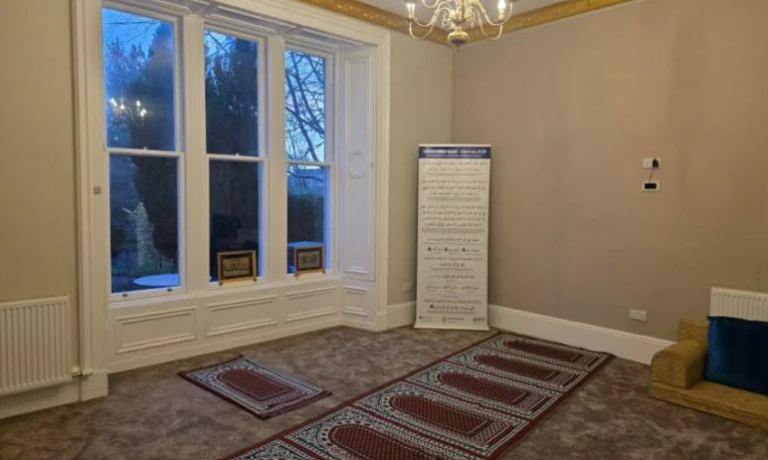
A student residence in Scotland imposes Islamic law in common areas
Kazakhstan threatens to close private schools that allow hijab
A Catholic university in Belgium incorporates Islamic chants into the opening mass of the course
A Muslim family in Granada chooses a Catholic school and demands that the courts teach Islam there
Phrase of the Week

Image of the Week
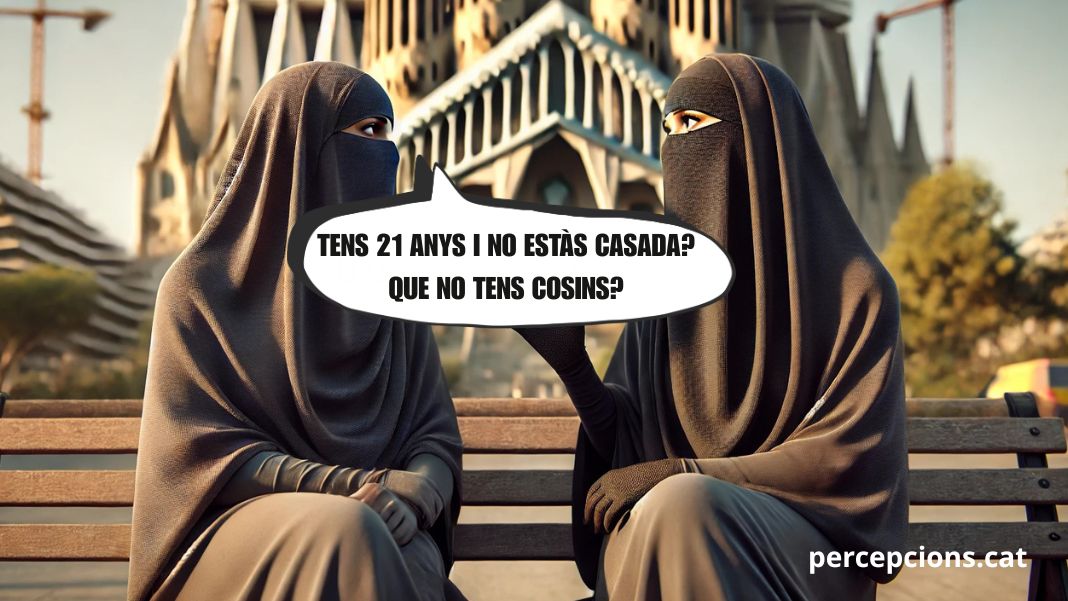
-Don't you have cousins?