
Not even Kadyrov's Islamised Chechnya wants women with their faces covered with the niqab
The Chechen leader has imposed a strong Islamization of public life, but rejects the niqab because he considers it an imported fashion alien to local tradition.
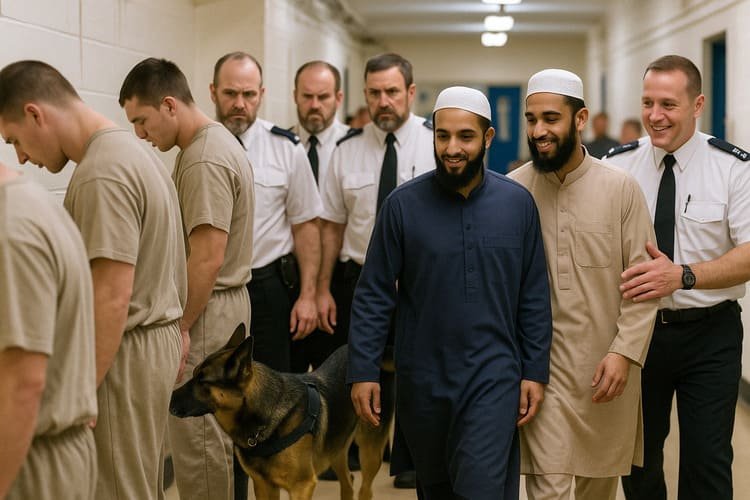
Illustrative image
Generated by AI
[social-share align=»right» style=»button» mobile_app=»desktop»]
[social-share align=»center» style=»icon» mobile_app=»mobile»]
Ramzan Kadyrov has once again set the limits of the Islamisation that he himself has promoted in Chechnya. According to the Russian media outlet Islam News, The leader of the republic criticised women who cover their faces completely.. He also advocated that young people observe religious precepts. without adopting “external elements of Arab culture”. According to Kadyrov, this type of clothing is not part of Chechen tradition and women can dress in accordance with Islam without covering their faces.
The position is particularly surprising because Kadyrov is no defender of secularisation. On the contrary, Under its government, Chechnya has experienced a strong Islamisation of public life.. Human Rights Watch documented the existence of a de facto Islamic dress code for women years ago., with the obligation to cover their hair in public institutions, schools and other spaces. Kadyrov himself has repeatedly argued that Chechen women should dress modestly and follow Islamic precepts.
Islam yes, face covered no
The distinction that Kadyrov establishes is, therefore, very concrete. It does not question the headscarf nor the requirement for women to dress according to Islamic standards, other than the wearing of items that completely conceal the face. For the Chechen leader, these forms of dress would not be native to the local culture, but rather an import associated with other Muslim societies.
This defence of local tradition also affects men. During the same meeting, Kadriov criticised young men who grow their beards excessively. or they wear shorts imitating certain religious models. According to him, Many adopt an outwardly Islamic appearance without this translating into genuine religious practice.. His message is that Chechens should follow the religion, but without copying an aesthetic imported from the Arab world.
A regime that imposes Islamic morality
Kadyrov's rejection of the niqab is particularly significant because his government has for years imposed strict religious criteria on dress and public morality. In July 2025, Chechen authorities even went so far as to shut down women's clothing shops for publishing promotional videos considered “indecent”.” and contrary to the values of Islam. The Chechen Muftiate denounced that those adverts “showed bodies, not clothes” and demanded they be withdrawn before allowing the establishments to reopen.
Control went so far as to create a WhatsApp group with representatives of the administration and the muftiate so that traders could send promotional content to it in advance. Showing women without a headscarf or in a way considered too body-focused could result in sanctions or the closure of the business. It is in this context that Kadyrov's new stance gains momentum: It does not call for less Islamic dress, but rather rejects the adoption of forms of Islamisation that it considers to be imported. and alien to Chechen tradition.

More Perceptions of
More about Russia

Muslim leaders in Russia and Central Asia call for ban on niqab and urge against praying in the street
Growing unease in Russia over Muslims praying in the streets
The Republic of Tatarstan (Russia) has drawn up an anti-radicalism plan in response to the rise in hijabs and beards.
The Russian government accuses Muslim leaders of flouting five articles of the Constitution.
A Russian city will punish headteachers if pupils wear the hijab.
Russia announces family-free immigration

ERC, PSC and Comuns oppose combating political Islam in the European Parliament.
Azerbaijan expels students who wear Islamic headscarves from school
Sharia law in the US is supported by 75% of Muslims, 41% of atheists and up to 20% of Christians.
France now has a halal meat supply without the need to sacrifice animals facing Mecca.
The United Kingdom gives away a thousand hijabs in six months to immigrants arriving via the Channel
US Muslim politicians train Canadian Muslims under the slogan "From the mosque to the city hall"«
Teacher fired in Austria for denying a Muslim woman a prayer room
Canadian government normalizes Islamic prayer during workday
Lleida bans the burqa except if worn for religious reasons
Italy bans burqa and niqab but only in schools
The Generalitat pays tribute to the racist Abu Bakr al-Turtuxí as an anti-racist icon
A student residence in Scotland imposes Islamic law in common areas
Kazakhstan threatens to close private schools that allow hijab
A Catholic university in Belgium incorporates Islamic chants into the opening mass of the course

A Muslim family in Granada chooses a Catholic school and demands that the courts teach Islam there
Phrase of the Week

Image of the Week
-Don't you have cousins?