
Russia announces family-free immigration
The Russian government has adopted the slogan «come, work, earn and dress up». The new system is based on temporality and control to end the degradation of public services and the entrenchment of entrenched interests.
Illustrative image
Generated by AI
[social-share align=»right» style=»button» mobile_app=»desktop»]
[social-share align=»center» style=»icon» mobile_app=»mobile»]
Russia's Ministry of Economic Development has launched a proposal that redefines foreign labour migration as a temporary relationship: The workers will come to fill labour shortages, work, and then leave the country.. This policy provides that the families of migrants are not permitted to be present during this temporary work stay.
The principle summarised by the Minister of Economic Development is “Come — work — earn — get dressed”, according to the newspaper Izvestia. This initiative seeks to address the labour shortage affecting various sectors of the Russian economy.
Social control and limits on public services
Parallel to the minister's statements, the parliamentary faction Just Russia – For the Truth has promoted a legislative initiative to to prevent the family members of immigrant workers from settling in the country. The MPs who support the proposal They argue that the presence of families increases pressure on public health, education and social welfare services.. The new policy therefore aims to reduce social costs and simplify immigration management.
The authorities consider that this model of temporary migration will facilitate the rotation of workers and will prevent long-term root growth. The new policy arrives in parallel with a key date: The deadline to legalise undocumented migrants in Russia expired this month.. Those who are in the country without papers will be enrolled in a Special register of monitored persons. Inclusion in this register entails significant restrictions, such as being prohibited from marrying, obtaining a driving licence or enrolling children in nurseries and schools.
End of the legalisation of immigrants in Russia
The new policy arrives in parallel with a key date: The deadline to legalise undocumented migrants in Russia expired this month.. Those who are in the country without papers will be enrolled in a Special register of monitored persons. Inclusion in this register entails significant restrictions., such as being prohibited from getting married, obtaining a driving licence or enrolling their children in schools.
The most recent statistics show the magnitude of the educational problem. According to official sources, 871,000 foreign children have been excluded from the Russian education system., whether due to failing exams or difficulties with documentation. This percentage highlights the government's orientation towards limiting migrants' family integration and to to focus only on their contribution as a workforce.
Russia bets on temporality and control
With this measure, Russia reinforces a model of labour migration based on temporality and strict control. The country seeks cto open up the labour shortage resulting from its demographic situation and of the needs of certain economic sectors, but at the same time It wants to reduce the pressure on social services, schools and healthcare..
Human rights organisations warn that the lack of family and educational prospects can exacerbate labour exploitation, marginalisation and to make Russia a less attractive country to emigrate to.
More about Russia

Even Kadyrov's Islamized Chechnya doesn't want women with their faces covered with the niqab
Muslim leaders in Russia and Central Asia call for ban on niqab and urge against praying in the street
Growing unease in Russia over Muslims praying in the streets
The Republic of Tatarstan (Russia) has drawn up an anti-radicalism plan in response to the rise in hijabs and beards.
The Russian government accuses Muslim leaders of flouting five articles of the Constitution.
A Russian city will punish headteachers if pupils wear the hijab.

More Perceptions of
ERC, PSC and Comuns oppose combating political Islam in the European Parliament.
Azerbaijan expels students who wear Islamic headscarves from school
Sharia law in the US is supported by 75% of Muslims, 41% of atheists and up to 20% of Christians.

France now has a halal meat supply without the need to sacrifice animals facing Mecca.
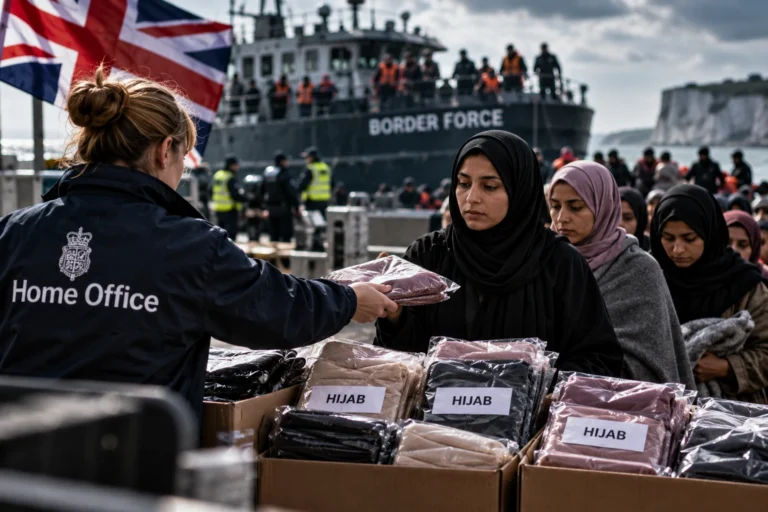
The United Kingdom gives away a thousand hijabs in six months to immigrants arriving via the Channel
US Muslim politicians train Canadian Muslims under the slogan "From the mosque to the city hall"«
Teacher fired in Austria for denying a Muslim woman a prayer room
Canadian government normalizes Islamic prayer during workday
Lleida bans the burqa except if worn for religious reasons
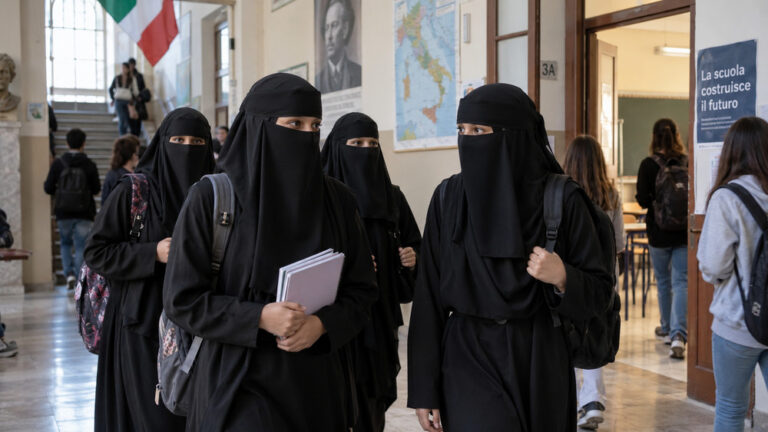
Italy bans burqa and niqab but only in schools
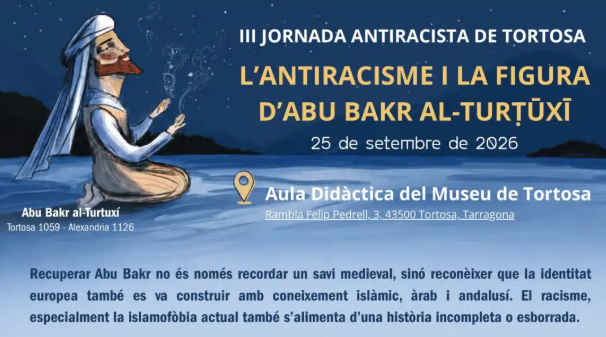
The Generalitat pays tribute to the racist Abu Bakr al-Turtuxí as an anti-racist icon
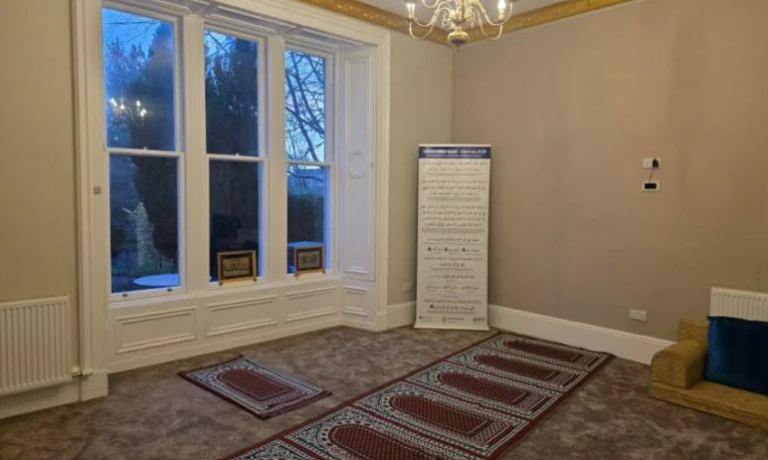
A student residence in Scotland imposes Islamic law in common areas
Kazakhstan threatens to close private schools that allow hijab
A Catholic university in Belgium incorporates Islamic chants into the opening mass of the course

A Muslim family in Granada chooses a Catholic school and demands that the courts teach Islam there
Phrase of the Week

Image of the Week
-Don't you have cousins?