
The Russian government accuses Muslim leaders of flouting five articles of the Constitution.
The Russian Human Rights Council denounces that a ruling on the distribution of “non-halal” goods contradicts five articles of the Constitution.
Illustrative image
Generated by AI
[social-share align=»right» style=»button» mobile_app=»desktop»]
[social-share align=»center» style=»icon» mobile_app=»mobile»]
The President of the Council for Human Rights of Russia, Valery Fadeev, He has strongly criticised a fatwa approved by the Spiritual Administration of Muslims of Russia (DUM RF). According to him, the religious decision contradicts up to five articles of the Constitution and constitutes an interference by religious authorities in areas that are the exclusive preserve of the state.
The controversy has arisen from a fatwa —an Islamic religious legal opinion— that establishes limitations for Muslim delivery drivers. The text of the DUM Prohibits transporting products considered forbidden by Islam., such as alcoholic beverages, pork, products linked to gambling or objects of worship from other religions. The reason for issuing the verdict It is to clarify what the Muslims who deliver by bicycle can carry. but it is extensible to any transport.
The content of the opinion
However, the document also introduces exceptions. If the delivery person does not know the contents of the package, there is no sin. Transport is also permitted if the goods are intended for disposal rather than consumption. In the case of mixed orders—with both halal and non-halal products—it is advisable to deliver them nonetheless but to donate to charity the share of the profit associated with the prohibited items.
From the Spiritual Directorate of the Muslims it has been argued that the fatwa It is not a legal norm, but a religious guide for believers, and has no legal effect on society as a whole.. Despite this, there has long been controversy in Russia. by bicycle delivery riders who refuse to deliver orders out of fear. The opinions of the Islamic scholars in Russia are divided, but the view of the most important and influential organisation is clear: A Muslim cannot transport products forbidden by Islam..
The five articles of the Constitution that are ignored
According to Valeri Fadeev, president of the Human Rights Council that advises the Russian government, The DUM's ruling is not just a spiritual recommendation.. It considers that de facto It introduces labour and trade restrictions that only the state can regulate. In this sense, He asserted that the decision “collides head-on with the Constitution."”, since it violates the principle of a secular state (Article 14) and breaks the unity of the economic space and the free movement of goods and services (Article 8).
Furthermore, Fadeev remarked that the fatwa limits the right to freely choose a job (Article 37) and may lead to religious discrimination (Article 19), since it conditions the working activities of Muslims in relation to other workers. It could also contravene Article 29, which Prohibits incitement to hatred or division on religious grounds.. All in all, Fadeev considers that this interference by the religious authorities exceeds its remit and constitutes a threat to the state's neutrality.
More about Russia

Even Kadyrov's Islamized Chechnya doesn't want women with their faces covered with the niqab
Muslim leaders in Russia and Central Asia call for ban on niqab and urge against praying in the street
Growing unease in Russia over Muslims praying in the streets
The Republic of Tatarstan (Russia) has drawn up an anti-radicalism plan in response to the rise in hijabs and beards.
A Russian city will punish headteachers if pupils wear the hijab.
Russia announces family-free immigration

ERC, PSC and Comuns oppose combating political Islam in the European Parliament.
Azerbaijan expels students who wear Islamic headscarves from school
Sharia law in the US is supported by 75% of Muslims, 41% of atheists and up to 20% of Christians.
France now has a halal meat supply without the need to sacrifice animals facing Mecca.
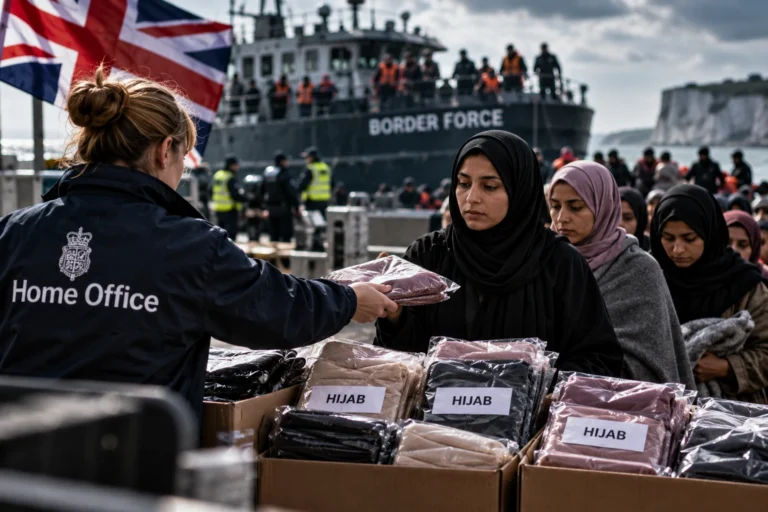
The United Kingdom gives away a thousand hijabs in six months to immigrants arriving via the Channel
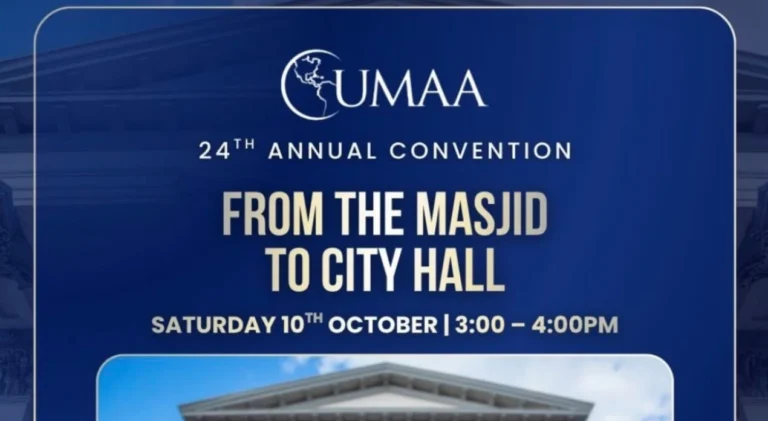
US Muslim politicians train Canadian Muslims under the slogan "From the mosque to the city hall"«

Teacher fired in Austria for denying a Muslim woman a prayer room
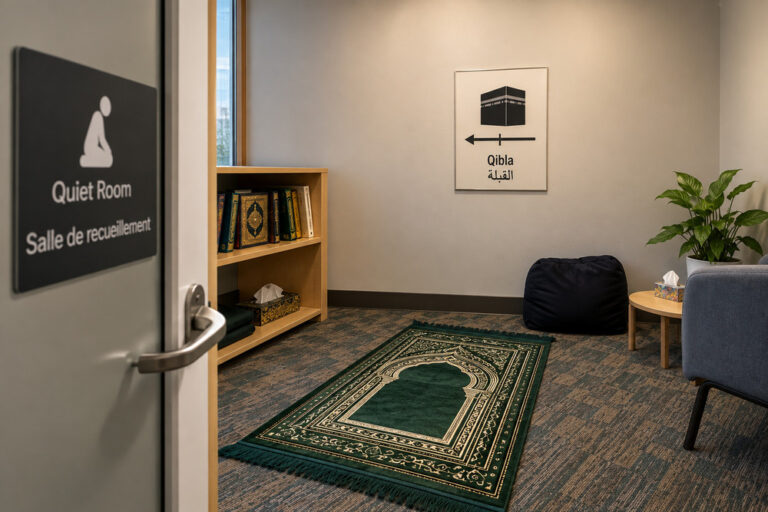
Canadian government normalizes Islamic prayer during workday
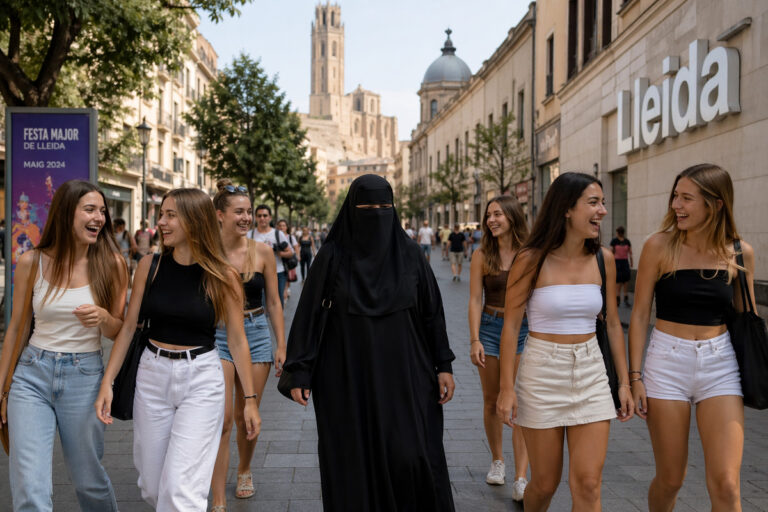
Lleida bans the burqa except if worn for religious reasons
Italy bans burqa and niqab but only in schools
The Generalitat pays tribute to the racist Abu Bakr al-Turtuxí as an anti-racist icon
A student residence in Scotland imposes Islamic law in common areas
Kazakhstan threatens to close private schools that allow hijab
A Catholic university in Belgium incorporates Islamic chants into the opening mass of the course

A Muslim family in Granada chooses a Catholic school and demands that the courts teach Islam there
Phrase of the Week

Image of the Week
-Don't you have cousins?