
In Russia, an increasing number of Muslim food delivery drivers are refusing to deliver orders containing pork.
Disconcert in Russia over Muslim delivery drivers who refuse to deliver orders containing pork. The Islamic scholars hold differing opinions.
Illustrative image
Generated by AI
[social-share align=»right» style=»button» mobile_app=»desktop»]
[social-share align=»center» style=»icon» mobile_app=»mobile»]
In Moscow, a growing number of delivery riders for food delivery platforms are refusing to deliver orders containing pork, citing religious reasons. According to reports Caliber.Az, Some customers have received notifications indicating that the assigned delivery driver has declined the order for containing «forbidden dishes».», in reference to foods that contravene Islamic law.
Division among the scholars of Islam in Russia
The debate surrounding Muslim delivery drivers who refuse to deliver Pork has divided the Russian ulema. According to the report Islam News, the Supreme Council of Muftis of Russia (SCMR) He considers that the refusal to transport pork is legitimate from a religious point of view.. They argue that Islam prohibits contact with this food and, therefore, it is consistent for a believer to refuse to handle it, even as part of their job. This stance has been supported by various religious leaders and Muslim communities in the country. The leader of this organisation,
Also, the mufti of the Spiritual Administration of Muslims of the Moscow Region explained that the food deliveries forbidden It is forbidden for Muslims. They are clear that a Muslim messenger who delivers forbidden food is committing a sin and, therefore, should not do so.
By contrast, the Council of Ulema of the Spiritual Assembly of Muslims of Russia (SAMR), headed by Mufti Albir Krganov, say the opposite: they point out that eMuslims who work in services open to the public cannot impose their rules on the rest of society.. They warn that Muslims are obliged to respect their fellow citizens, their traditions and to comply with the laws of the State., because this is the true way to live in accordance with Islam
Position of the platforms
The affected delivery platforms have indicated that respect the religious beliefs of their delivery drivers and are working to find solutions that allow the needs of clients to be reconciled with the convictions of workers. However, they have not detailed which specific measures they are implementing to address this issue that may affect 75-80% of the template.
Representatives of delivery services confirm that these situations occur and that orders containing prohibited items are passed on to other couriers.
Reactions of society and politics
The case has sparked extensive debate on social media and in the Russian media. Opinions are divided between those who defend workers' right to act according to their beliefs and those who believe this could affect the quality of service.
Blogger and analyst Ilya Valiev adds in his LiveJournal that this kind of attitude can fuel tensions and harm the image of Muslims in Russia. According to him, “If someone works in a public service, they must carry out their duties or find a job that does not conflict with their personal beliefs.”.
Journalist and human rights defender Marina Akhmedova, a member of the Russian Human Rights Council (SPCh), has proposed severely sanctioning delivery drivers who refuse to deliver orders containing pork on religious grounds. Akhmedova argues that, although religious freedom is a fundamental right, workers in public services such as delivery drivers have an obligation to fulfil their work responsibilities without discrimination on religious grounds.
This stance has sparked debate in Russian society, with opinions divided between those who defend workers' right to act according to their beliefs and those who believe it could affect service quality and social cohesion. The case highlights the complexity of reconciling religious practices with secular norms in a diverse society such as Russia's.
Similar

Even Kadyrov's Islamized Chechnya doesn't want women with their faces covered with the niqab
Muslim leaders in Russia and Central Asia call for ban on niqab and urge against praying in the street
Growing unease in Russia over Muslims praying in the streets
The Republic of Tatarstan (Russia) has drawn up an anti-radicalism plan in response to the rise in hijabs and beards.
The Russian government accuses Muslim leaders of flouting five articles of the Constitution.
A Russian city will punish headteachers if pupils wear the hijab.

More Perceptions of
ERC, PSC and Comuns oppose combating political Islam in the European Parliament.
Azerbaijan expels students who wear Islamic headscarves from school
Sharia law in the US is supported by 75% of Muslims, 41% of atheists and up to 20% of Christians.

France now has a halal meat supply without the need to sacrifice animals facing Mecca.
The United Kingdom gives away a thousand hijabs in six months to immigrants arriving via the Channel
US Muslim politicians train Canadian Muslims under the slogan "From the mosque to the city hall"«

Teacher fired in Austria for denying a Muslim woman a prayer room
Canadian government normalizes Islamic prayer during workday
Lleida bans the burqa except if worn for religious reasons
Italy bans burqa and niqab but only in schools
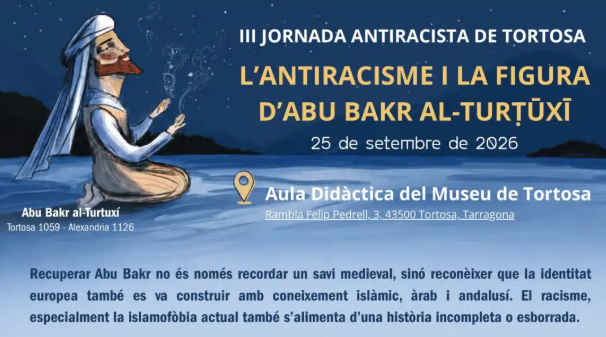
The Generalitat pays tribute to the racist Abu Bakr al-Turtuxí as an anti-racist icon
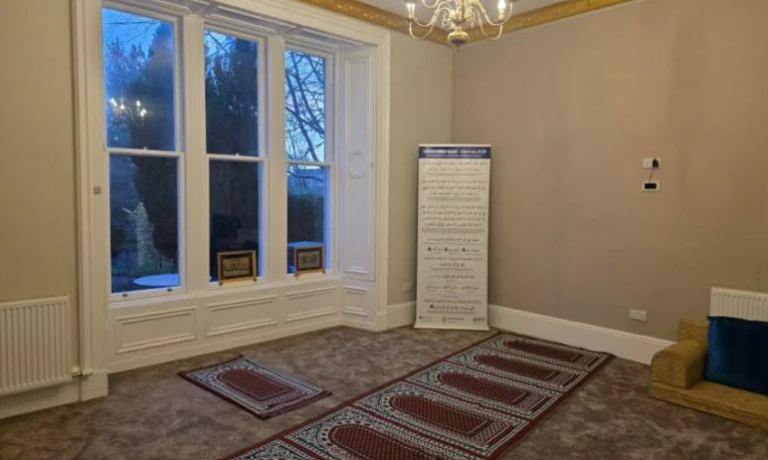
A student residence in Scotland imposes Islamic law in common areas
Kazakhstan threatens to close private schools that allow hijab

A Catholic university in Belgium incorporates Islamic chants into the opening mass of the course

A Muslim family in Granada chooses a Catholic school and demands that the courts teach Islam there
Phrase of the Week

Image of the Week

-Don't you have cousins?