
The Republic of Tatarstan (Russia) has drawn up an anti-radicalism plan in response to the rise in hijabs and beards.
The political and religious authorities in the region are concerned about the presence of visible elements alien to their culture. The plan seeks to equip young people with a «spiritual armour.».
Kul Sharif Mosque of Kazan with the Orthodox cathedral in the background.
Google Maps
[social-share align=»right» style=»button» mobile_app=»desktop»]
[social-share align=»center» style=»icon» mobile_app=»mobile»]
Tatarstan is a republic located in the centre of Russia with nearly four million inhabitants. Approximately half of the population is Muslim, making it one of the most important Islamic regions in the country. Tatarstan combines a strong Muslim identity with a political framework integrated within the Russian Federation. It is a region regarded as one of the main centres of traditional and moderate Islam in Russia.
Local authorities warn of growing risk of radicalisation among young Muslims, especially via the internet and unofficial religious channels. According to security officials and religious leaders, Some foreign currents are attempting to influence young people by spreading a foreign view of Islam. to the local tradition.
Although the plan avoids explicitly naming Salafism or other radical currents, local sources and experts point to this as the main cause for alarm. In the past, Jihadist groups have attempted to gain influence in various regions of Russia., including Tatarstan, taking advantage of social vacuums, identity crises and the lack of ties between young people and their community.
Hijabs, niqabs and beards are suspicious.
In the words of an expert quoted by the Forum18.org portal, “lTatar women who wear a hijab or banyan (a long covering) and men with long beards arouse the suspicion of the authorities.”This sentence aptly summarises a constant tension in Tatarstan: that between religious freedom, local identity and the control of radicalism.
Wearing a hijab or growing a beard is not a problem in itself, but when these practices are linked to separatist discourse or to a rejection of communal living, they cause alarm. The authorities, the imams and even many local families advocate a discreet and balanced faith., faithful to the Tatar tradition, where religion is lived as part of the culture and not as an element of confrontation.
Although there is no formal prohibition on the way of dressing or on religious signs,The authorities view with concern those styles or customs they consider to have been imported from other Islamic contexts, such as Saudi Arabia or the Caucasus.. Traditional Tatarstan Islam, linked to the Hanafi school and characterised by its moderation, does not include the niqab nor promote a pronounced religious aesthetic. Therefore, when these symbols become more visible, it is often interpreted as a sign of Salafist or Wahhabi influence, currents that the Russian government considers potentially destabilising.
The plan to build a “spiritual immunity”
In this context, The government of Tatarstan has launched a comprehensive “spiritual security” plan.” with the aim of reinforcing traditional religious identity and preventing the infiltration of radical currents among young people. The project, developed in collaboration with the Spiritual Council of Muslims of Tatarstan and supported by the regional Anti-Terrorism Commission, advocates a strategy that combines Education, religion and social cohesion.
The central idea is to create what the authorities call a “spiritual immunity”, that is to say, an inner fortitude that would enable young people to resist the influence of extremist ideologies. To achieve this, educational programmes will be promoted to disseminate the values of traditional Hanafi Islam and the history of Islam in Tatarstan, leisure and volunteering activities aimed at fostering coexistence, and active work on social media to counter jihadist propaganda. The plan's proponents insist that it is not about controlling religion, but about returning it to its social and cultural role. as a source of positive values and integration.
Local imams and security experts agree that the best way to prevent radicalisation is not repression, but To offer young people alternatives for belonging and purpose.. Rather than punishing or stigmatising, the plan aims to educate and support, connecting faith with everyday life and with a civic patriotism compatible with Muslim identity. This model, according to its promoters, could become a reference for other Russian regions with a Muslim population, as it seeks to curb extremism without severing the link between religion and society.
Tatarstan wants to be a benchmark in the fight against Islamic radicalisation.
With this new approach, Tatarstan aspires to become a benchmark for preventing radicalisation. religious within the Russian Federation and beyond. The regional government wants to demonstrate that it is possible to protect young people without resorting to repressive measures, but rather through education, identity and community participation. The project is part of a regional strategy in force until 2030, which seeks to consolidate a cohesive society, faithful to its moderate Islamic tradition and at the same time fully integrated into the Russian state.
The initiative comes at a time when concerns are growing worldwide about the influence of religious extremism on the youngest and most vulnerable sectors. In this context, Tatarstan asserts its own model of an open and dialoguing Islam, heir to a long history of coexistence between cultures and faiths. Rather than imposing, The plan aims to convince and educate, reinforcing faith as a space for values and not as an instrument of confrontation.. The republic trusts that this “spiritual immunity” will become its best shield against the threat of jihadism and an example for other regions of the Muslim world.
More about Russia

Even Kadyrov's Islamized Chechnya doesn't want women with their faces covered with the niqab
Muslim leaders in Russia and Central Asia call for ban on niqab and urge against praying in the street
Growing unease in Russia over Muslims praying in the streets
The Russian government accuses Muslim leaders of flouting five articles of the Constitution.
A Russian city will punish headteachers if pupils wear the hijab.
Russia announces family-free immigration

More Perceptions of
ERC, PSC and Comuns oppose combating political Islam in the European Parliament.
Azerbaijan expels students who wear Islamic headscarves from school
Sharia law in the US is supported by 75% of Muslims, 41% of atheists and up to 20% of Christians.

France now has a halal meat supply without the need to sacrifice animals facing Mecca.
The United Kingdom gives away a thousand hijabs in six months to immigrants arriving via the Channel
US Muslim politicians train Canadian Muslims under the slogan "From the mosque to the city hall"«
Teacher fired in Austria for denying a Muslim woman a prayer room
Canadian government normalizes Islamic prayer during workday
Lleida bans the burqa except if worn for religious reasons
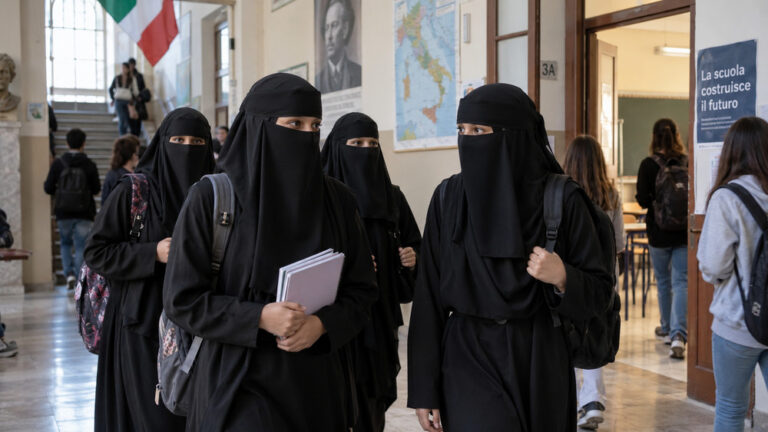
Italy bans burqa and niqab but only in schools
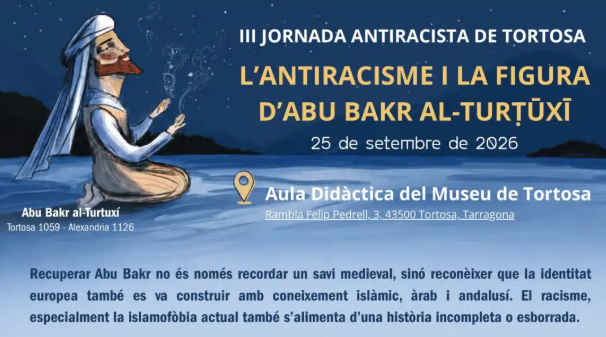
The Generalitat pays tribute to the racist Abu Bakr al-Turtuxí as an anti-racist icon
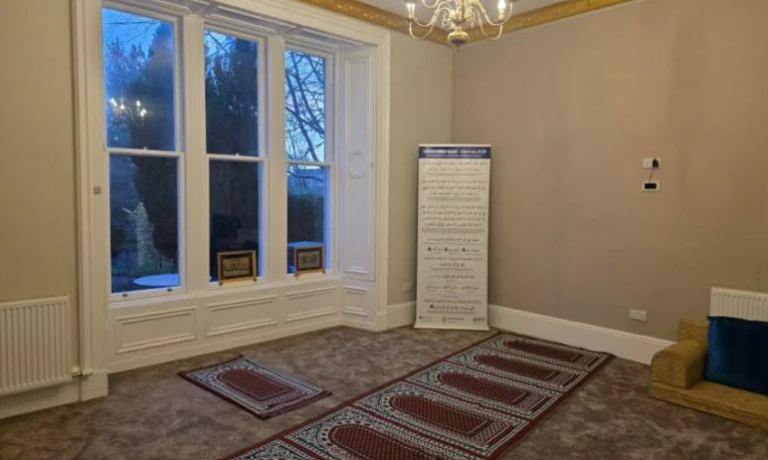
A student residence in Scotland imposes Islamic law in common areas
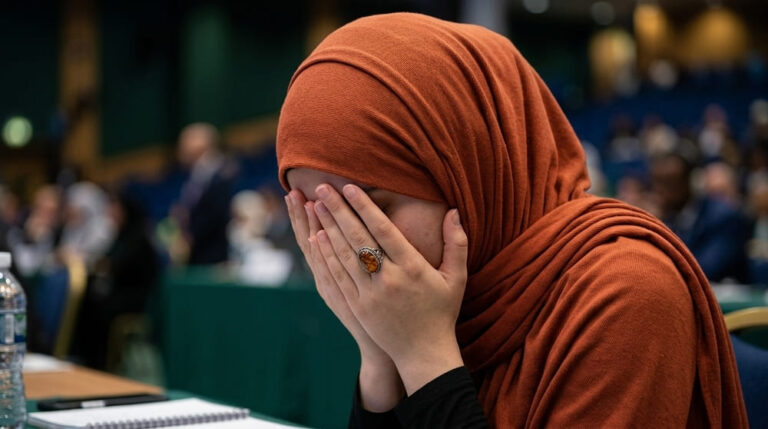
Kazakhstan threatens to close private schools that allow hijab
A Catholic university in Belgium incorporates Islamic chants into the opening mass of the course
A Muslim family in Granada chooses a Catholic school and demands that the courts teach Islam there
Phrase of the Week

Image of the Week
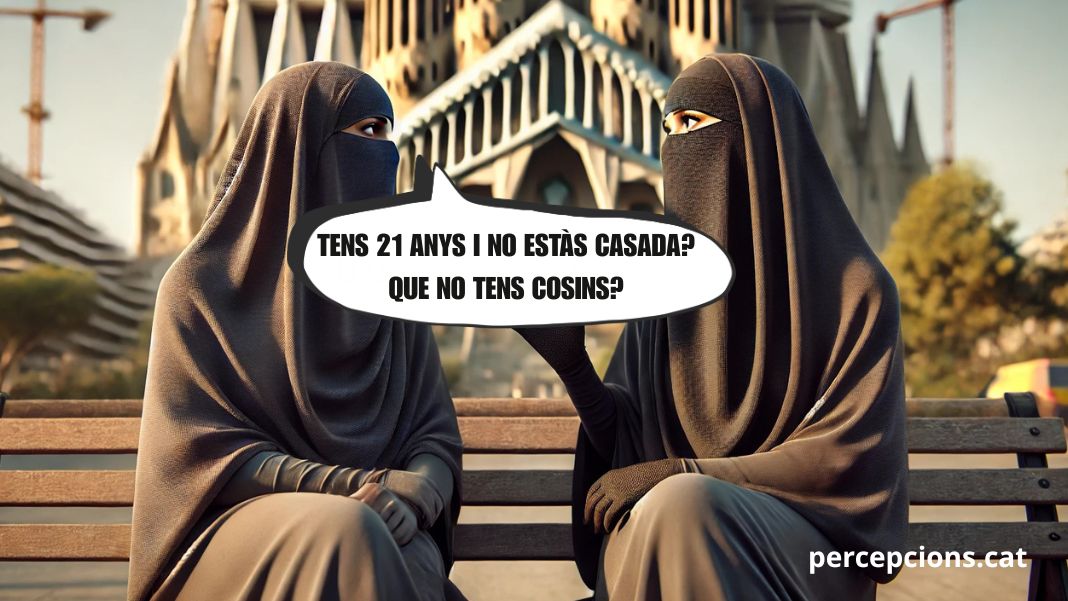
-Don't you have cousins?