
151 per cent of young Catalans are Muslim and 751 per cent were born abroad.
29 per cent of young Muslims in Catalonia aged 16 to 24 believe that religion should influence politics; more than 50 per cent say it guides their daily decisions, and nearly 90 per cent say that starting a family is a life goal.
Graph from the study «The Religiosity of Catalan Youth»
Generalitat de Catalunya, 2021. Licence: CC BY-NC-ND 3.0.
[social-share align=»right» style=»button» mobile_app=»desktop»]
[social-share align=»center» style=»icon» mobile_app=»mobile»]
The latest studies on religiosity and youth in Catalonia offer a very precise portrait of the Muslim community. The most relevant document is The religiosity of Catalan youth , published by the Department of Social Rights and Inclusion in September 2025. This research analyses in detail the beliefs, practices and attitudes of young people aged 16 to 24. In addition, the data are complemented by the Barometer on religiosity and the management of diversity promoted by the Directorate-General for Religious Affairs.
The data reveal that, despite general secularisation, Islam is the religion with the greatest influence among young people of migrant origin. and it has a notable impact on values, political opinions and everyday ways of life. Islam is the second most prevalent faith among Catalan youth., with 14.51% of the faithful. Catholicism leads with 281%, but most notably 551% of young people declare themselves as having no religion. The remainder is split among minority faiths, such as Protestantism, Buddhism or Judaism, which together do not exceed 31% of the youth population.
Only 1.11 per cent of Catalan young Muslims have Western parents.
The 75.91% of young Muslims aged 16 to 24 Born abroad, another 21.21 per cent are children of both immigrant parents. and less than 3% have an indigenous parent. However, Only 1.11 per cent of young Catalan Muslims have both parents born in the West..
It is also a very linguistically diverse group: The 90%'s native language is one other than Catalan or Spanish.. This origin, marked by immigration and multilingualism, makes them a peculiar profile within the broader body of Catalan youth. Thus, while the majority of native-born young people tend towards secularisation and experience Catholicism primarily as a cultural element, Among young Muslims, religion remains a central and determining reference point., rooted in its tradition and in the cultural context of its origin.
Studies by the Centre for Opinion Studies and the Catalan Youth Observatory show that Young Muslims not only maintain their faith, but also give it a central value.l. Religion guides their daily life, influences their political opinions and defines a more communitarian and conservative stance on family and social roles.
Key data on Catalan young Muslims
The presence of young Muslims is transforming the religious map of Catalonia. Islam is a faith with growing influence among young people and a very high level of practice and commitment. This reality paints a more religiously Islamic Catalonia in terms of the number of adherents and the intensity of their faith. Some important data are:
- Origin and parentsOnly 1.11 per cent of young Muslims have parents born in Europe. Among young Catholics, by contrast, 62.31 per cent were born in Spain to parents also born in the country.
- Familiar languageThe 90% of young Muslims have a mother tongue other than Catalan or Spanish. Among Catholics, almost 90% have Catalan (29%) or Spanish (58%) as their initial language.
- Attendance at temples38 per cent of young Muslims attend worship weekly or more often, compared with just 71 per cent of Catholics.
- Lack of practice. Only 13% of Muslims say they never attend places of worship, a figure that rises to 57% for Catholics.
- Daily practice: 61.71% of young Muslims pray every day and 85.1% observe the Ramadan fast. Only 6.41% of Catholics pray daily and 10.81% observe Lent.
- Religious intensity55.1% of young Muslims consider themselves very religious, compared with 13.71% of Catholics.
- Sacred texts74 per cent of young Muslims have read the Qur'an over the past year, whereas only 20 per cent of Catholics have read the Bible.
- PrayerThe 87% of Muslims have prayed over the past year, compared with the 54% of Catholics.
- Everyday influence: 57 per cent of Muslims say that religion influences their everyday decisions a great deal or quite a lot; among Catholics the percentage falls to 25 per cent.
- Religion and politics: 291 per cent of Muslims believe that religion should influence politics, whereas only 81 per cent of Catholics and less than 31 per cent of the non-religious agree.
- Homosexuality: 73.41 per cent of young Muslims believe that homosexuality is not morally acceptable, compared with 25.61 per cent of Catholics and only 3.41 per cent of non-believers who hold the same view.
- Marriage: 99% of young Muslims want to marry by religious means. 83% would not marry someone of another religion. Among practising Catholics, religious endogamy is the preferred option for 31%, falling to 12% among non-practising Catholics.
- Family life90% consider that forming a stable family and getting married is an important life goal. It is estimated that 75% or more have a clear expectation of having a large family (two or more children). Among Catholics, only 42% believe that starting a family is a priority, and 60% value having children.
- Transmission of religion96.11 per cent of the children of Muslim parents also identify as Muslim. Among Catholics the percentage falls to 74.11 per cent.
- Reproduction of religious practice83.1% of the children of practising Muslims maintain the same level of religiosity and practice as their parents. In the Catholic case, more than 60.1% of the children of practising Catholics stop practising, and 16.1% even go on to identify as non-religious.
- Identity: 84.91 per cent of young Muslims say they ‘feel Muslim’, and for many this is the most significant identity. In contrast, among the other young people, religion carries much less weight and national identity (Catalan or Spanish) tends to be central.
- Leisure and participationYoung Muslims show lower participation in conventional organised leisure activities, such as youth groups or camps, often for reasons of religious or cultural values or because they feel under-represented. In contrast, they have a more prominent presence in their own community spaces, such as Islamic organisations, cultural centres or activities linked to the mosque.
- Election turnout90.61% of Muslims state they did not vote in the last election, compared to 57.61% of the youth as a whole.
- Ideological self-placementThe Muslims' 45% doesn't know where to place itself on the left–right axis (the average for young people is 23%).
The figures leave no room for doubt: secularisation is advancing among young Catalans, but not in a homogeneous way. While Catholicism is weakening among young people, Islam is growing strongly and doing so with unprecedented intensity..
The transmission of faith within Muslim families is almost total, religious commitment is massive and rejection of traditional political participation is extremely high. The map is clear: Religion is fading in Catalan homes, but it is taking root with renewed strength among young Muslims, who are young, growing in number and determined to uphold their values. This mismatch between secularisation and religious fervour threatens to open a generational and community divide that will shape the country's future.
Younger Muslims more devout than adults
Islam in Catalonia is above all a youth phenomenon. In Catalonia, approximately 71 per cent of the population identify as Muslim, but this distribution is not homogeneous across age groups. While 14.5% of young people aged 16 to 24 identify as Muslim, among those over 65 it is only 0.9%. In the 25 to 34 age bracket, the percentage remains at 8.71% of Muslims, rises to 10.21% among those aged 35 to 49 and falls to 4.81% for those aged 50 and over.
The intensity with which young Muslims live their religion is greater than among adults. Nearly 79 per cent of 16 to 24-year-olds consider religion “very important” in their lives, whereas among those over 45 this proportion falls to 48 per cent.. Daily prayer also makes a clear difference: almost two-thirds of young people (64 per cent) say they pray five times a day, compared with 38 per cent of adults.
The same pattern is seen in the observance of practices such as Ramadan. An 86% of young Muslims say they observe the fast strictly, whereas only 61% of adults do so with the same regularity. Attendance at the mosque also stands out: 55% of young people attend weekly, compared with 30% of older people. This shows that Religion occupies a central place in the daily lives of young people., not only as an identity, but also as a sustained practice. It is no coincidence that 7 out of 10 young Muslims say that “being Muslim” is an essential part of their identity., a much higher percentage than that of adults, which stands at 4 out of 10.
From adult discretion to youthful visibility
The demographic weight of young Muslims and their greater religious commitment is changing the religious landscape of Catalonia. Young Muslims differ from adults not only in being more numerous, but also in the way they live and express their faith. While older generations tend towards a more discreet and private religiosity, young people make it visible and turn it into an element of community cohesion.
This expressiveness is reflected in practices such as prayer, fasting or attending the mosque, but also in identity symbols such as religious clothing, which takes on special significance among the new generations. At the same time, They are the ones who make the most public demands., From spaces for worship to adherence to dietary rules. They are also young. Altogether, this shapes a young community with intense and visible religiosity, raising questions about the role of Islam in the Catalonia of the future.

However, this very centrality of young Muslims in the public sphere is also visible in a more problematic domain: Jihadist radicalisation. A report from the Ministry of the Interior explains that 40.1% of those arrested for jihadism in Spain in 2024 were under 25 years of age., and among them 18% were minors. The trend, both in Spain and across Europe, is that Islamic radicals are becoming younger, more radical and more ignorant of Islam. Thus, according to the Real Instituto Elcano The profile of the Catalan jihadist is that of a man aged between 18 and 25, with Moroccan parents and who speaks Catalan and/or Spanish. because they have been living among us for years. It is a profile that dispels the notion that they are people who have just arrived or are uprooted.
The data from the latest surveys allow us to paint a picture of profound change in Catalan society, where Islam is above all a youth phenomenon. We do not have data as accurate as those from France, where we know that Young Muslims are more radical and conservative. For more specific questions, however, the situation appears to be very similar. This transformation not only has effects in the private religious sphere but also translates into greater visibility, public demands and the formation of new collective identities. At the same time, it also has a more problematic side, with a minority of young Muslims undergoing jihadist radicalisation processes that place Catalonia at the centre of the debate on coexistence and security.
More Surveys

Sharia law in the US is supported by 75% of Muslims, 41% of atheists and up to 20% of Christians.
Imam in Germany: "Every Muslim knows another who votes for the AfD"«
Forty-one per cent of Muslim students in Berlin want the precepts of the Qur'an taught in class.
Islam accounts for 85 per cent of religious conflicts in French companies.
More than 40% of young Muslims in Vienna prefer Islamic law to Austrian law
A survey in Germany reveals that almost half of young Muslims hold Islamist views.
Almost half of Muslim women in France wear veils to protect themselves from men
59.1% of young French Muslims want Sharia law and 24.1% sympathise with the Muslim Brotherhood.
The 45% of young Muslims supports an Islamic state in Germany.

ERC, PSC and Comuns oppose combating political Islam in the European Parliament.
Azerbaijan expels students who wear Islamic headscarves from school
Sharia law in the US is supported by 75% of Muslims, 41% of atheists and up to 20% of Christians.
France now has a halal meat supply without the need to sacrifice animals facing Mecca.
The United Kingdom gives away a thousand hijabs in six months to immigrants arriving via the Channel
US Muslim politicians train Canadian Muslims under the slogan "From the mosque to the city hall"«
Teacher fired in Austria for denying a Muslim woman a prayer room
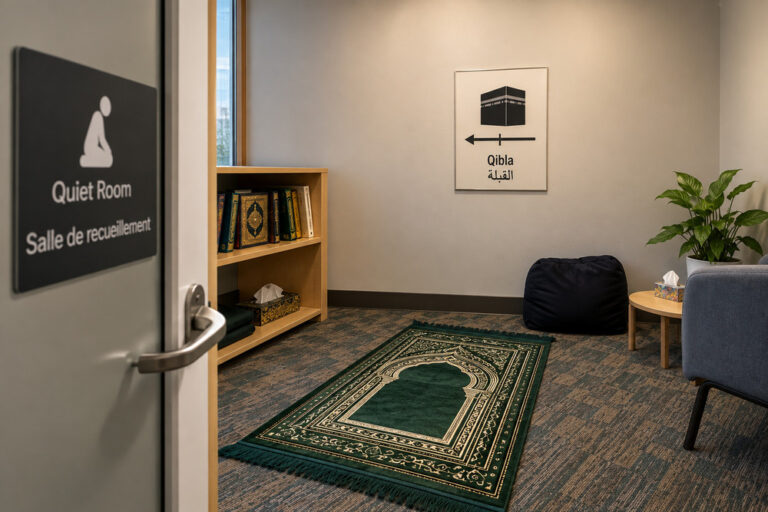
Canadian government normalizes Islamic prayer during workday
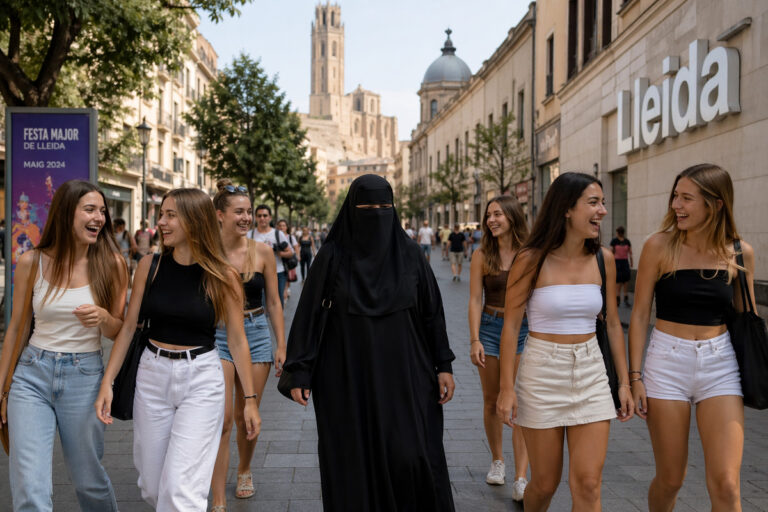
Lleida bans the burqa except if worn for religious reasons
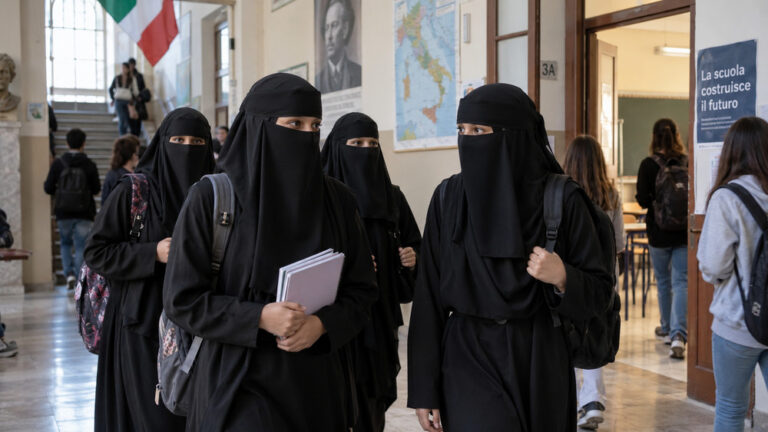
Italy bans burqa and niqab but only in schools
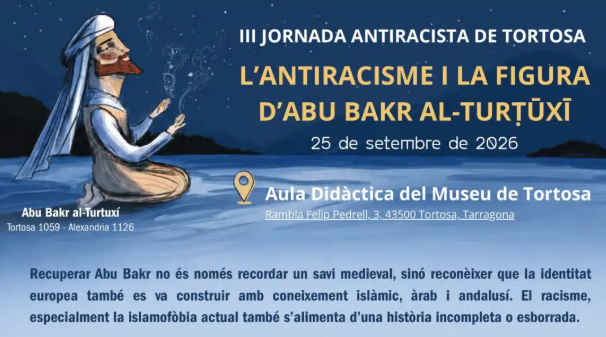
The Generalitat pays tribute to the racist Abu Bakr al-Turtuxí as an anti-racist icon
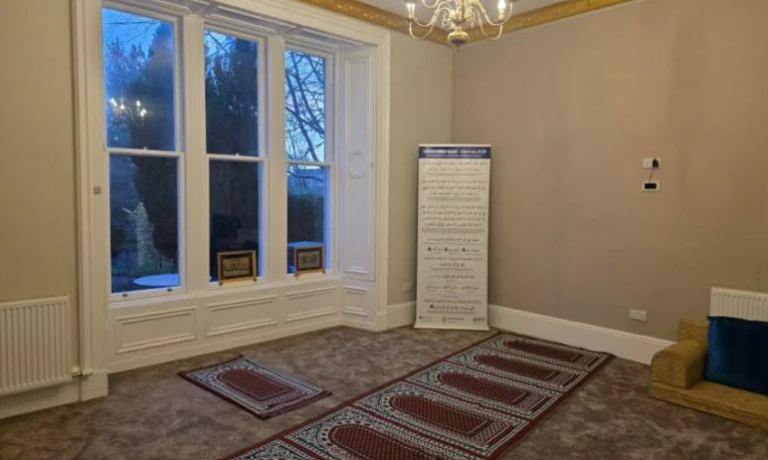
A student residence in Scotland imposes Islamic law in common areas
Kazakhstan threatens to close private schools that allow hijab
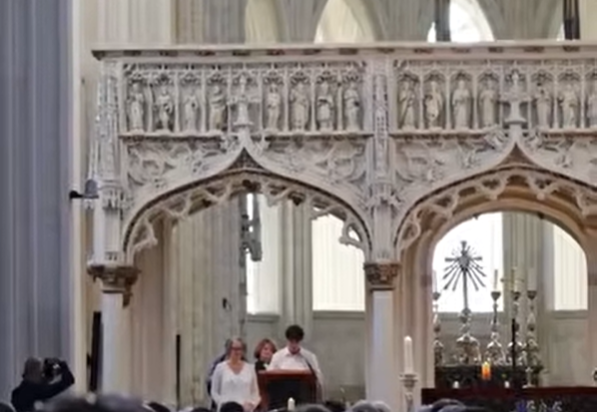
A Catholic university in Belgium incorporates Islamic chants into the opening mass of the course
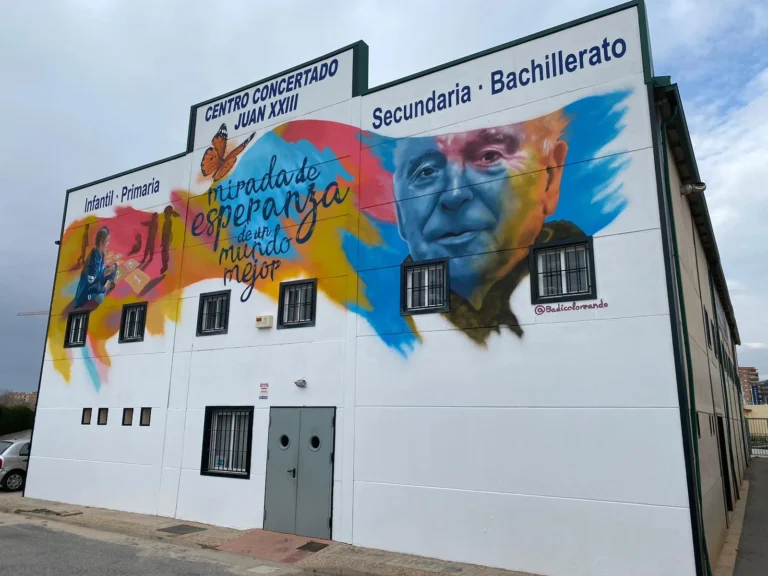
A Muslim family in Granada chooses a Catholic school and demands that the courts teach Islam there
Phrase of the Week

Image of the Week
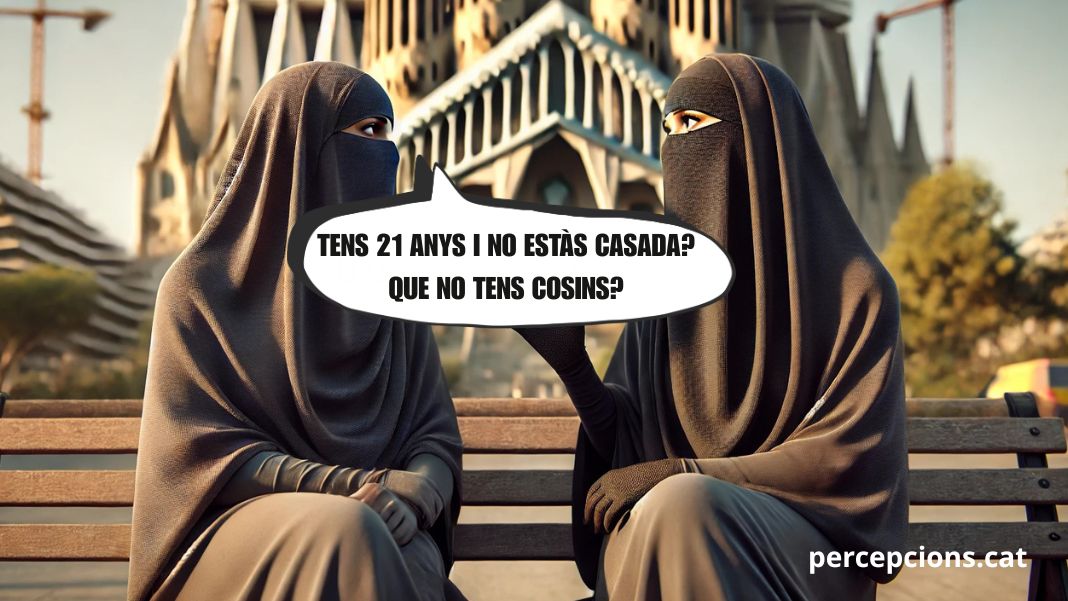
-Don't you have cousins?