
A survey in Germany reveals that almost half of young Muslims hold Islamist views.
The 45% of young Muslims places Islam above the law. The survey reveals a social time bomb due to the direct clash between religion and Western values.
Illustrative image
[social-share align=»right» style=»button» mobile_app=»desktop»]
[social-share align=»center» style=»icon» mobile_app=»mobile»]
The radicalisation survey MOTRA 2025 The German police puts figures to a debate that is becoming increasingly prevalent in Europe. According to this report, Almost half of Muslims under 40 in Germany show an affinity for Islamist ideas.. Specifically, the study indicates that 45.11 per cent of Muslims under the age of 40 hold Islamist positions, either latently (33.61 per cent) or manifestly (11.51 per cent), a particularly high proportion within this age group.
The majority weight of the latent attitudes indicates that radicalisation is not just a present reality, but also a future possibility. The bulk of the phenomenon is concentrated in an intermediate zone that can evolve into harsher forms. It is at this point that the report's authors point to a future structural risk.
What exactly does the MOTRA 2025 survey reveal?
The MOTRA 2024/25 radicalisation report does not limit itself to measuring general perceptions, but specifically analyses ideological attitudes within Germany's young Muslim population. Through specific indicators, The study identifies the extent to which these people share Islamist ideologies., such as the primacy of religion over civil law or support for certain political views linked to this ideology. The main results are:
- The 23,8% believes that “An Islamic state is the best form of government.”.
- The 25,1% considers that “The rules of the Qur'an are more important than German laws.”.
- The 9,8% opines that “German society should be organised more according to Islamic norms.”.
- The 8,5% prefers “A religious leader above the democratic system”.
- The 44,3% believes that “Only Islam can solve the problems of our time.”.
- The 28,6% states that “You can't trust the Jews.”.
- The 44.8% considers that “The morality of Western societies is completely corrupt.”.
These responses point to a deep-seated ideological element that goes beyond politics or law: the perception of moral superiority of Islam. The report shows that 44.81 per cent of respondents consider the morals of Western societies to be “completely corrupt”. This view —very much present in the orbit of the Muslim BrotherhoodIt is based on the idea that the West is in moral decline and that Islam is not only a religion but a global alternative capable of offering political, social and cultural solutions.
Religion does not just appear as a personal identity, rather as a normative framework with public aspirations, especially among young people. Moreover, the document emphasises the role of the social and ideological environment, where certain narratives—often disseminated through social media or community spaces—reinforce these perceptions. Although the study does not go into detail about the specific role of each religious association, it does make clear that These attitudes do not emerge spontaneously., but rather they are part of broader ideological ecosystems that facilitate their dissemination and consolidation.

Islamism is not retreating and is already a social ticking time bomb.
Far from decreasing, radicalisation remains at high and stable levels.’The report does not detect any clear trend of improvement., a fact that reinforces the idea that this is not a one-off incident, but rather a dynamic that has been established over time.
Several German political leaders have already reacted to the publication of the report. Among them, Wolfgang Kubicki, a prominent member of the Free Democrats (FDP) and former vice-president of the Bundestag, has warned that the conclusions “should set off all the alarm bells”. In a post on X, Kubicki He described the situation as a “social time bomb”.” and called for a change of political course: “We must not only talk about migration, but also about integration and religion. The policy of naively looking the other way has fostered this development. Naivety must stop.”.
Religion at the centre of the debate
The data, due to its scale and concentration among young people, have reopened the debate about the limits of the current model and They have placed issues such as secularism, social cohesion and the role of religious associations at the centre.. Beyond the figures, the report points to an ideological fracture that can no longer be explained solely in socioeconomic terms, but which compels a direct examination of the relationship between religion, integration and democratic values.
In this regard, various voices from the political and academic worlds agree that The phenomenon cannot be divorced from the dissemination of certain Islamist narratives in social and digital spaces, nor from the role of certain associative structures operating in this environment.. The debate, until now often avoided or reduced to migration issues, is gradually shifting to more uncomfortable territory: that of the compatibility between certain religious interpretations and the European democratic framework.
Nevertheless, the MOTRA monitor not only describes a present reality but also points to an ongoing evolution. And it is precisely this projection—a young generation with a significant presence of Islamist attitudes—that explains why, in growing sectors of the German public debate, the situation is no longer perceived as a one-off episode but as a structural problem with long-term implications.
More Perceptions of
More surveys

Sharia law in the US is supported by 75% of Muslims, 41% of atheists and up to 20% of Christians.
Imam in Germany: "Every Muslim knows another who votes for the AfD"«
Forty-one per cent of Muslim students in Berlin want the precepts of the Qur'an taught in class.
Islam accounts for 85 per cent of religious conflicts in French companies.
More than 40% of young Muslims in Vienna prefer Islamic law to Austrian law
Almost half of Muslim women in France wear veils to protect themselves from men
59.1% of young French Muslims want Sharia law and 24.1% sympathise with the Muslim Brotherhood.
The 45% of young Muslims supports an Islamic state in Germany.
151 per cent of young Catalans are Muslim and 751 per cent were born abroad.

ERC, PSC and Comuns oppose combating political Islam in the European Parliament.

Azerbaijan expels students who wear Islamic headscarves from school
Sharia law in the US is supported by 75% of Muslims, 41% of atheists and up to 20% of Christians.

France now has a halal meat supply without the need to sacrifice animals facing Mecca.
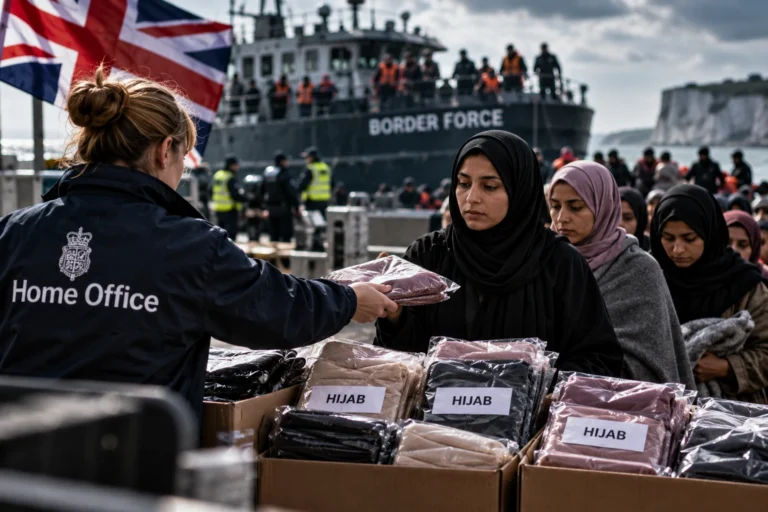
The United Kingdom gives away a thousand hijabs in six months to immigrants arriving via the Channel
US Muslim politicians train Canadian Muslims under the slogan "From the mosque to the city hall"«
Teacher fired in Austria for denying a Muslim woman a prayer room
Canadian government normalizes Islamic prayer during workday
Lleida bans the burqa except if worn for religious reasons
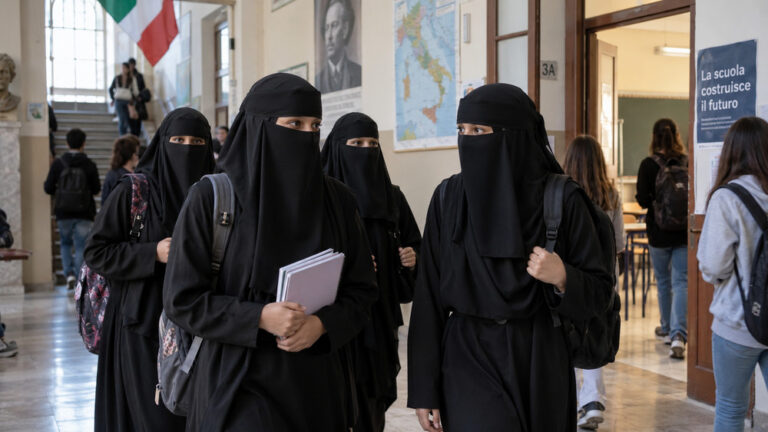
Italy bans burqa and niqab but only in schools
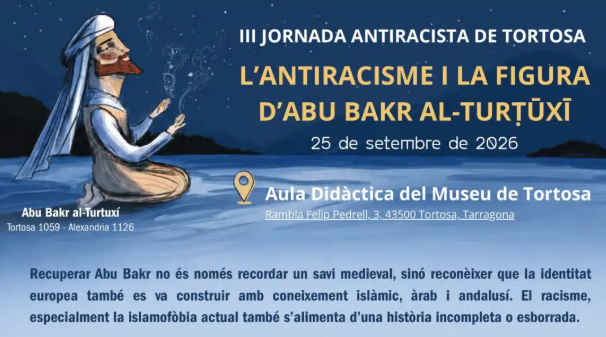
The Generalitat pays tribute to the racist Abu Bakr al-Turtuxí as an anti-racist icon
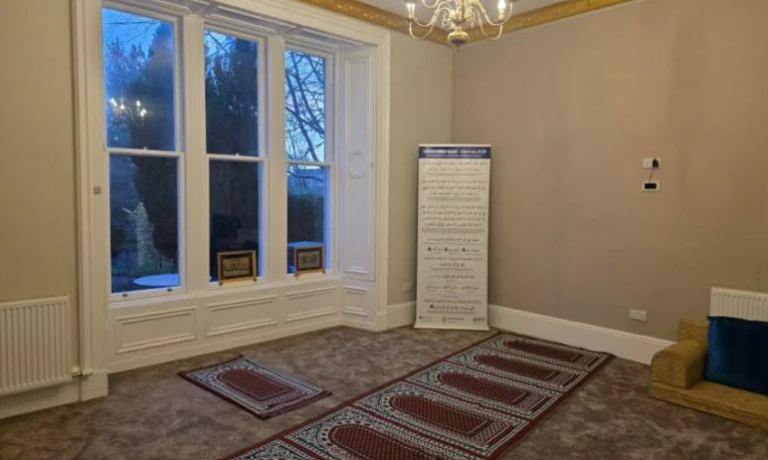
A student residence in Scotland imposes Islamic law in common areas
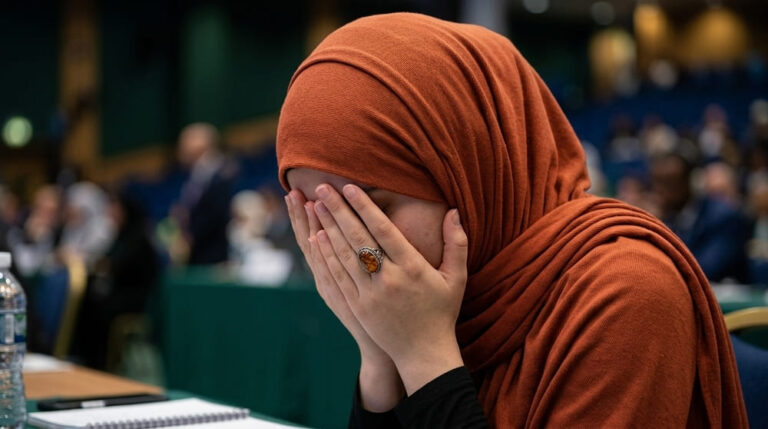
Kazakhstan threatens to close private schools that allow hijab
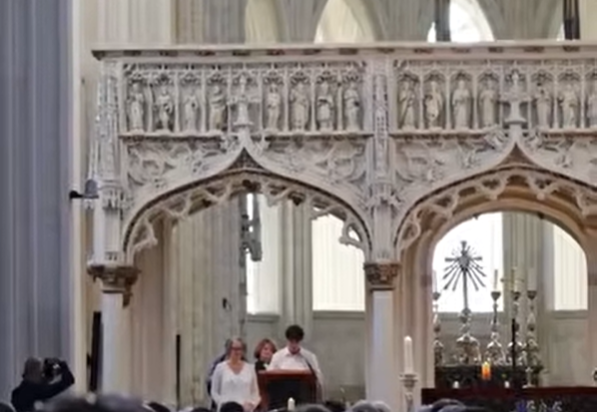
A Catholic university in Belgium incorporates Islamic chants into the opening mass of the course

A Muslim family in Granada chooses a Catholic school and demands that the courts teach Islam there
Phrase of the Week

Image of the Week
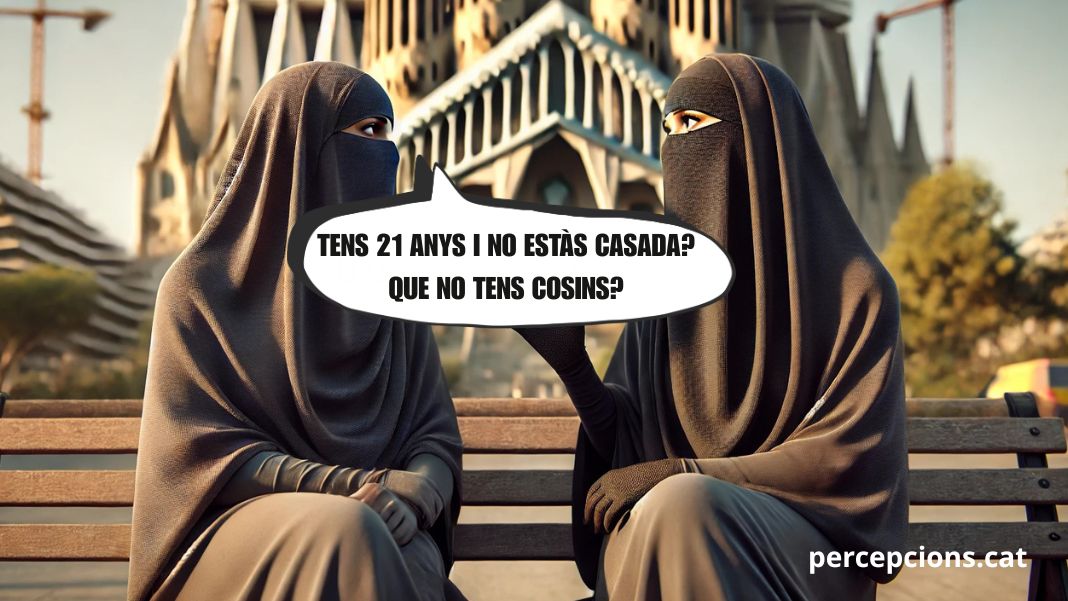
-Don't you have cousins?