
Islam accounts for 85 per cent of religious conflicts in French companies.
Rigidist behaviours are on the rise and in 91 per cent of cases are linked to Islam. Refusals to work with women or to carry out certain tasks on religious grounds are increasing.
Religion is increasingly visible within French companies, and Islam largely accounts for the phenomenon. The new Barometer of Religious Practice in the Workplace 2026 of the Institut Montaigne indicates that The Muslim religion appears in 85 per cent of the religious situations detected in the workplace.. Islam is the most visible religion in the workplace and It also accounts for 91 per cent of the behaviours that the report describes as rigorous. The document warns that these channels are still a minority, but they are increasing steadily and are increasingly forcing those responsible to intervene.
Religious presence is no longer a one-off phenomenon. 79% of the respondents surveyed state that they detect religious phenomena on a regular or occasional basis., the highest level since the barometer began being compiled in 2013. In 2022 it was 66.7 per cent and in 2024, 71.3 per cent. The report nuances that not all of these situations give rise to conflict, but the trend is clear: Religion is taking up more and more space within the company and forcing those in charge to decide how far freedom goes. of belief and where the obligation to comply with the same rules as the rest of the workers begins.
Islam imposes its rules.
The report shows that conflict arises when religion ceases to be confined to the personal sphere and begins to shape the organisation of work and relationships between colleagues. The Montaigne Institute warns that conduct which is not corrected may end up becoming a precedent: First it is tolerated, then it is normalised and finally it is claimed as a right.. These are some of the ducts detected:
- The 50 % of the officials detects Islamic veils. The presence of Muslim signs has increased from 19 per cent of cases in 2022 to 36 per cent in 2024 and to 50 per cent in 2026.
- The 8 % has detected workers who refuse to shake hands with women. The percentage has doubled in just two years, as it was 4.1 per cent in 2024.
- The 7 % has observed religious proselytising within the company. It's not simply about talking about religion, but about trying to persuade other workers or draw them towards a religious practice.
- The 6 % has detected refusals to perform certain tasks on religious grounds. The report covers the case of a Muslim worker in the wholesale distribution sector who refuses to carry out any work involving alcohol and maintains that It is the company that must adapt to its beliefs..
- The 6 % has observed men who refuse to work under a woman's orders. Here, religion no longer concerns an individual preference but directly questions a woman's authority simply because she is a woman.
- On 6 January 2013, workers were found who refuse to work with a woman. The religious requirement thus dictates the composition of teams and forces the company to decide whether to reorganise its workforce or impose the same rules on everyone.
- The 5 % has detected the dissemination of religious content in internal WhatsApp groups or in other company communication channels. Religion also enters digital work spaces, which can end up being used to proselytise or pressure colleagues.
- 3 % has observed workers who interrupt their working day to pray. The report clearly distinguishes between praying during a break and leaving work during working hours to fulfil a religious obligation.
- The 2 % has detected collective prayers within the company. These practices can turn a shared workspace into a place of worship and put pressure on workers who do not participate.
- The 2 % has observed objections to working with certain colleagues on religious grounds. Thus, faith comes to decide with whom you can share a team and with whom you cannot.
The important fact is not just that these ducts exist, but they tend to grow and consolidate. The same report warns that, when a manager does not correct them from the outset, they become a precedent.
Half of Muslims put religion before work
The channels detected by those in charge do not appear out of nowhere. When the Institut Montaigne directly asks practising Muslim workers which demands they consider acceptable, A significant proportion argue that religion can influence professional obligations. They're not just talking about wearing the veil or praying during a break, but about refusing jobs, limiting contact with women and placing religious prescriptions above the company's organisation.
- The 49 % considers it legitimate for a worker to refuse to carry out a task on religious grounds. Among practitioners, this opinion has shifted from 25 % in 2024 to 28 % in 2026.
- The 28 % of Muslims defends that a man may request not to work directly with a woman. Among the group of practitioners, support for this requirement has grown from 12 % to 20 % in just two years.
- 40 per cent of Muslims consider it normal to prioritise religious practice over work. Among practitioners, this position has risen from 16 per cent in 2024 to 19 per cent in 2026.
Some of the Muslims interviewed who find it difficult to reconcile their faith with the workplace are considering to set up your own business, Looking for a job in companies run by Muslims, to enter sectors such as halal trade or Islamic finance, Find companies known for being more accommodating of religious practices, or move to a large city or a Muslim country.
The new puritanical generation
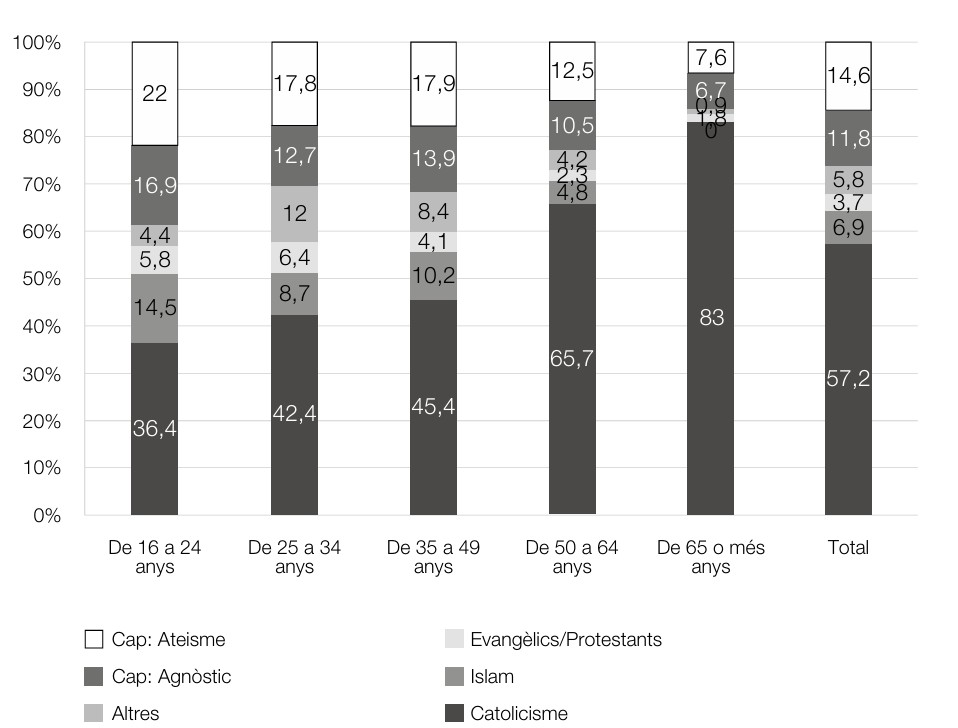
The data from the labour barometer don't appear out of nowhere. They are part of a broader generational shift among French Muslims. Young people are more religious, more observant and more inclined than previous generations to place Islamic norms above common ones. That is why they are also more likely to consider that religion can influence tasks, schedules, relationships with women or the orders of a superior.
This hierarchy of values does not disappear when they start work. If the religious norm is considered superior to French law, it is coherent that it should also be placed above labour obligations and the authority of the company. Refusals to carry out certain tasks, to work with women or to obey a female manager are the everyday manifestation of a rigourism that no longer confines itself to private life but demands transforming shared spaces.

More about Surveys

Sharia law in the US is supported by 75% of Muslims, 41% of atheists and up to 20% of Christians.
Imam in Germany: "Every Muslim knows another who votes for the AfD"«
Forty-one per cent of Muslim students in Berlin want the precepts of the Qur'an taught in class.
More than 40% of young Muslims in Vienna prefer Islamic law to Austrian law
A survey in Germany reveals that almost half of young Muslims hold Islamist views.
Almost half of Muslim women in France wear veils to protect themselves from men
59.1% of young French Muslims want Sharia law and 24.1% sympathise with the Muslim Brotherhood.
The 45% of young Muslims supports an Islamic state in Germany.
151 per cent of young Catalans are Muslim and 751 per cent were born abroad.


ERC, PSC and Comuns oppose combating political Islam in the European Parliament.
Azerbaijan expels students who wear Islamic headscarves from school

Sharia law in the US is supported by 75% of Muslims, 41% of atheists and up to 20% of Christians.

France now has a halal meat supply without the need to sacrifice animals facing Mecca.
The United Kingdom gives away a thousand hijabs in six months to immigrants arriving via the Channel
US Muslim politicians train Canadian Muslims under the slogan "From the mosque to the city hall"«
Teacher fired in Austria for denying a Muslim woman a prayer room
Canadian government normalizes Islamic prayer during workday
Lleida bans the burqa except if worn for religious reasons
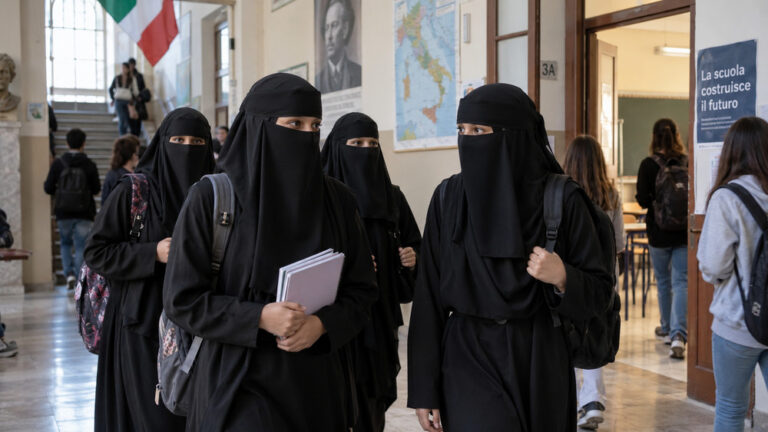
Italy bans burqa and niqab but only in schools

The Generalitat pays tribute to the racist Abu Bakr al-Turtuxí as an anti-racist icon
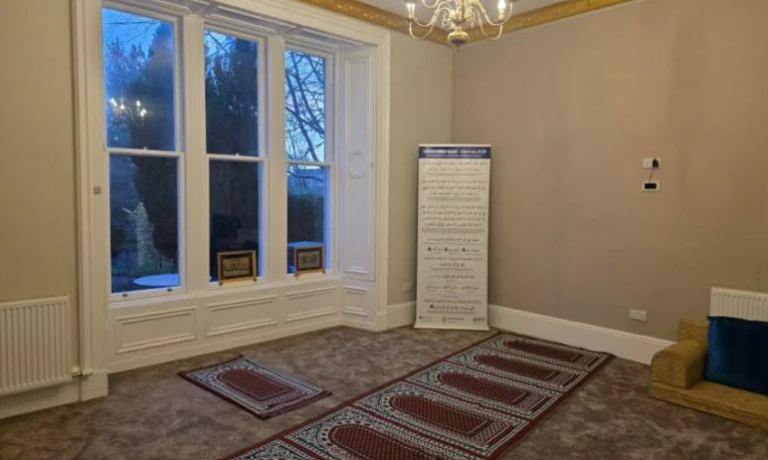
A student residence in Scotland imposes Islamic law in common areas
Kazakhstan threatens to close private schools that allow hijab
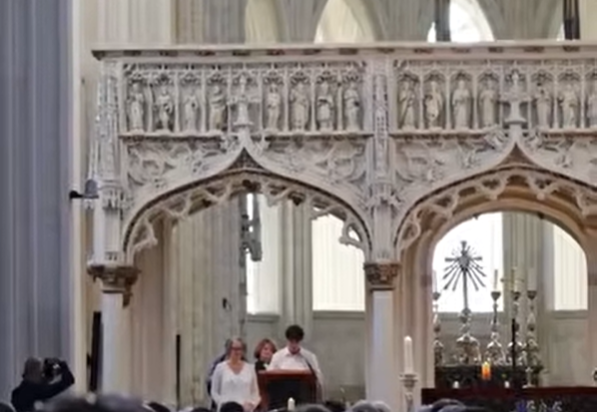
A Catholic university in Belgium incorporates Islamic chants into the opening mass of the course

A Muslim family in Granada chooses a Catholic school and demands that the courts teach Islam there
Phrase of the Week

Image of the Week
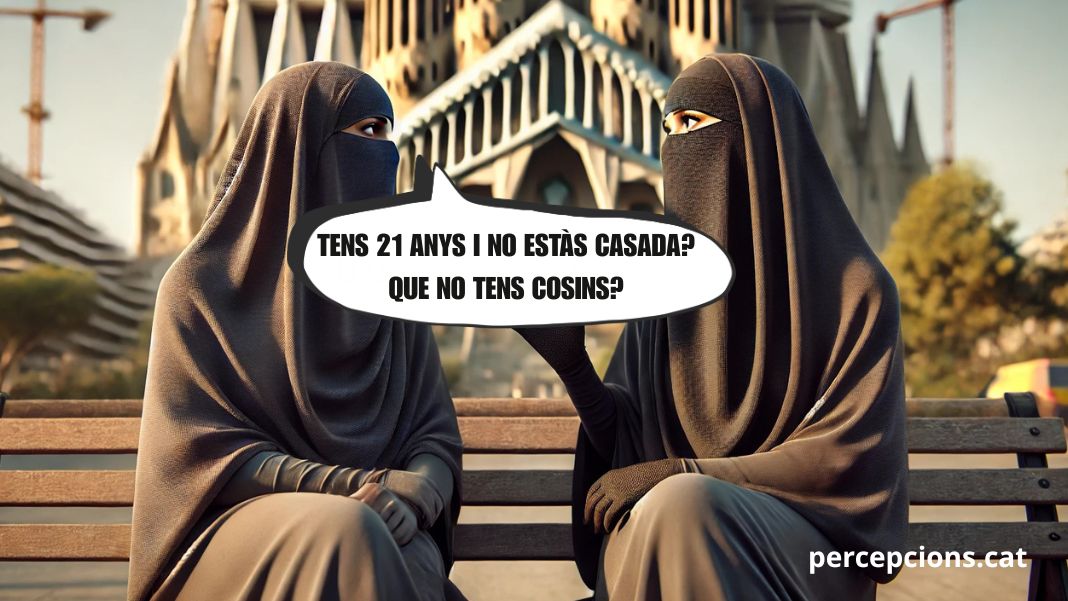
-Don't you have cousins?