
Imam in Germany: "Every Muslim knows another who votes for the AfD"«
Imam Scharjil Khalid admits the party is gaining ground among integrated Muslims. A poll places the AfD in 11% among Muslim voters.
Illustrative image
[social-share align=»right» style=»button» mobile_app=»desktop»]
[social-share align=»center» style=»icon» mobile_app=»mobile»]
The AfD is beginning to gain ground in an area that until recently seemed almost inaccessible: the Muslim vote. A a recent survey by’German Aerospace Center places the party in the’11% among German Muslim voters, behind the SPD (26%), Die Linke (23%) and the CDU/CSU (22%), but ahead of the Greens (8%).
The change is particularly noticeable when compared with the 2025 federal elections. At that time, an exit poll by Research Group Elections placed the AfD in only the 6% of the Muslim vote. AfD remains a minority among Muslims, but the fact that it already polls in double figures and surpasses the Greens is a development that is hard to ignore.
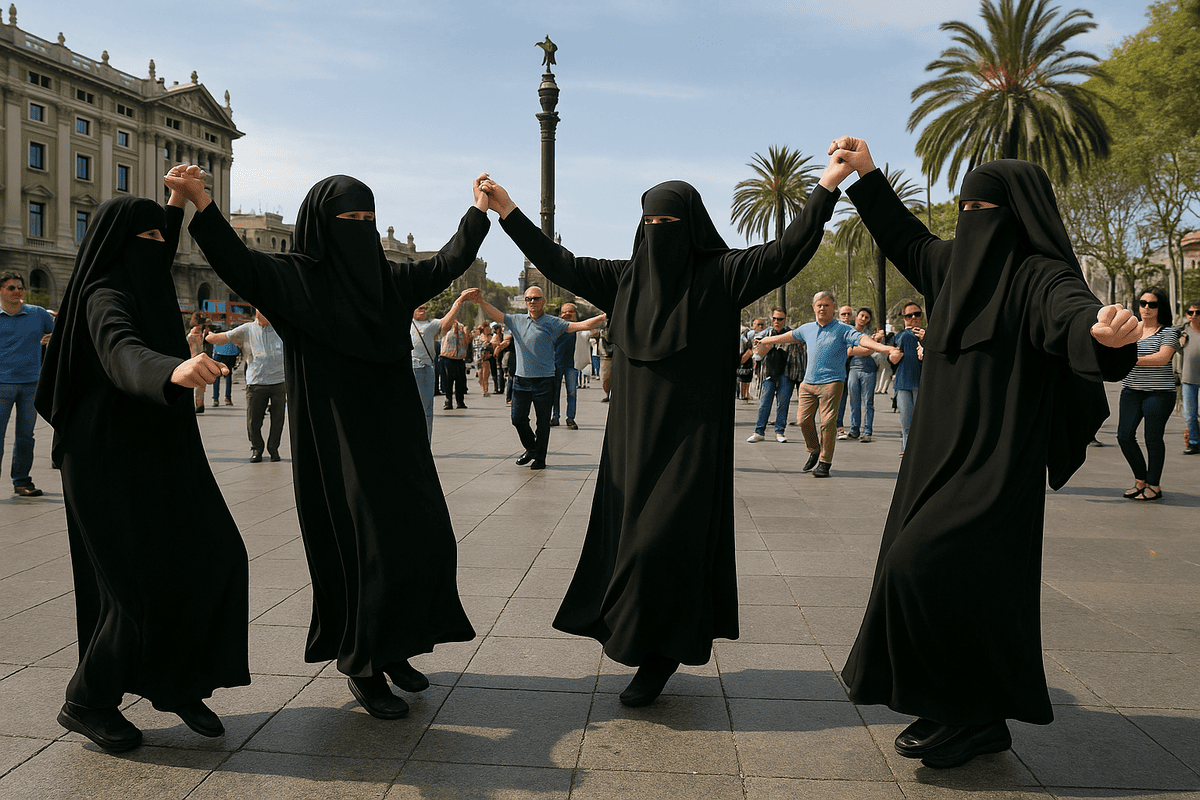
AfD to Muslims: “If you are integrated, we're not talking about you.”
The AfD makes a very clear distinction in its own programme. The party states that “Muslims who integrate and recognise our constitutional order and fundamental rights are valued members of our society.”, and in its early programme it goes even further: “Many moderate Muslims live law-abidingly, are integrated and are accepted and valued members of our society. They belong to Germany. Islam, however, does not belong to Germany.” This separation between the integrated Muslim individual and Islam as a social or political project is one of the keys to the party's discourse.
In the 2025 election programme, this line is further specified. The AfD describes the’political Islam as a threat to “Christian-Western” culture and proposes to punish the public assertion of a caliphate, to prevent foreign funding of mosques linked to problematic structures, to strengthen control over imams and to restrict organisations deemed contrary to the constitutional order. At the same time, insists that its target is not Muslims who comply with the lawsIt is not integration, but the expansion of parallel societies, radicalisation and Islamist structures.

“They don't talk about me”: the key to the Muslim vote for the AfD
The imam Scharjil Khalid explained to Daily Mirror that the key to the Muslim vote for the AfD is that many Muslims interpret it as «they're not talking about me, but about others». The party, according to him, manages to separate in its discourse the immigrants who have been living in Germany for years, working and integrated of the newcomers who refuse to adapt or cause problems. Khalid says that the phenomenon is already It is not marginal. among German Muslims.“Every Muslim knows someone who votes for the AfD or at least considers doing so.”, he states.
Khalid's diagnosis largely coincides with that of Professor Mouhanad Khorchide, director of the Centre for Islamic Theology at the University of Münster. In a column published on 4 September 2026 in the Rheinische Post, Khorchide specifically analyses why some Muslims vote for the AfD and warns that there is no single “Muslim vote”. According to him, Some voters share conservative positions on family and gender, others are concerned about crime, schools or a sense of loss.e control, and others vote for the AfD as a protest against the traditional parties. It also points out a group of Muslims who have fled from Islamism and appreciate the party speaking out strongly about it, as well as immigrants who have been living in Germany for decades and who want to distance themselves from the newcomers.
Khorchide summarises this apparent contradiction by saying that many Muslims who vote for the AfD They assume that the party's rejection “is not against them, but against the Islamists, the non-integrated, the others”.”. But he himself warns them that they may be underestimating the extent to which criticism of Islamism can end up turning into rejection of Muslims in general. His conclusion is that these voters rarely vote for the AfD because of its stance on Islam, but rather in spite of it: they do so on account of other political, social or cultural concerns which, for them, carry more weight when deciding how to vote.
Beyond the AfD's 11.1 per cent, perhaps the most significant figure is another: the German Muslim vote is becoming more volatile and less predictable. The SPD and Die Linke remain strong, the CDU/CSU is competing at almost the same level, and the AfD is no longer a marginal option. This forces us to abandon the idea of a homogeneous ’Muslim electorate“ loyal to the left. If the AfD manages to consolidate a space among Muslims who consider themselves integrated, it could breach one of the electoral boundaries that until now had seemed the most rigid in Germany.
More about Germany

Germany prevents civil servant from being a civil servant due to ties with the Muslim Brotherhood
Forty-one per cent of Muslim students in Berlin want the precepts of the Qur'an taught in class.
German police investigate kindergarten cook for serving pork to Muslims

ERC, PSC and Comuns oppose combating political Islam in the European Parliament.
Azerbaijan expels students who wear Islamic headscarves from school
Sharia law in the US is supported by 75% of Muslims, 41% of atheists and up to 20% of Christians.

France now has a halal meat supply without the need to sacrifice animals facing Mecca.
The United Kingdom gives away a thousand hijabs in six months to immigrants arriving via the Channel
US Muslim politicians train Canadian Muslims under the slogan "From the mosque to the city hall"«
Teacher fired in Austria for denying a Muslim woman a prayer room
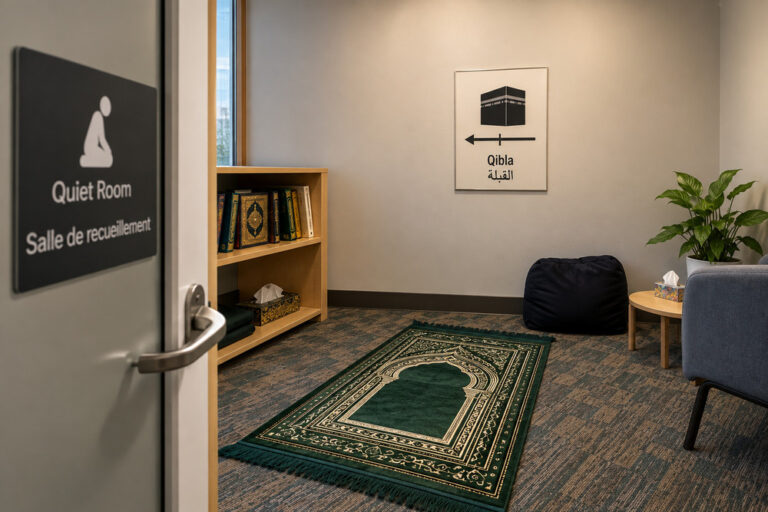
Canadian government normalizes Islamic prayer during workday
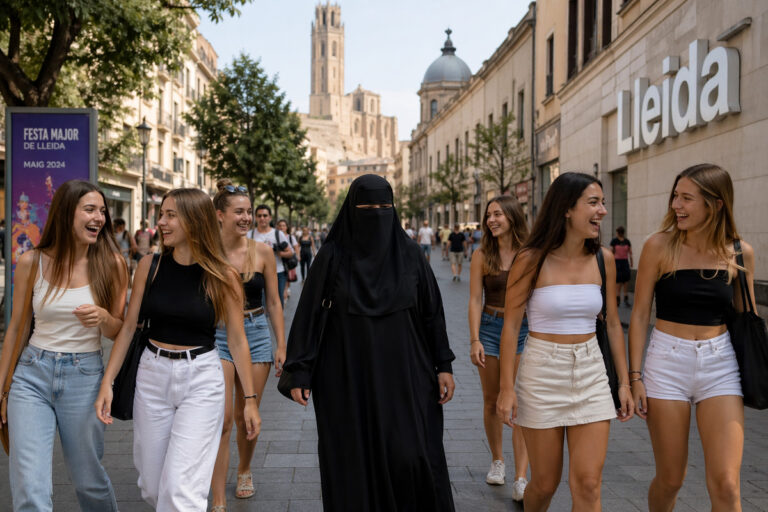
Lleida bans the burqa except if worn for religious reasons
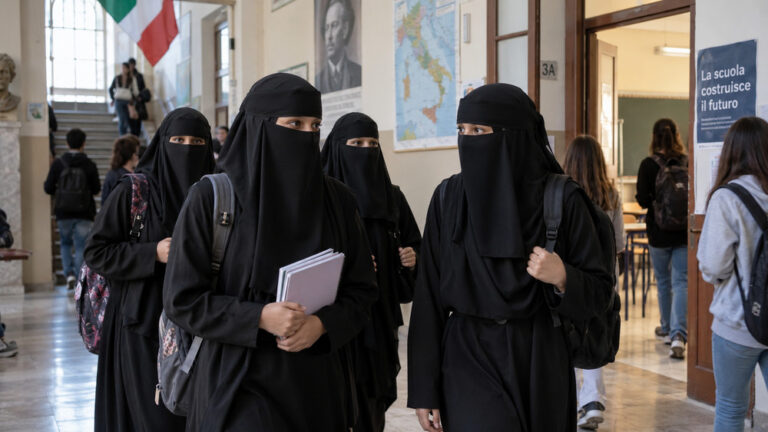
Italy bans burqa and niqab but only in schools
The Generalitat pays tribute to the racist Abu Bakr al-Turtuxí as an anti-racist icon
A student residence in Scotland imposes Islamic law in common areas
Kazakhstan threatens to close private schools that allow hijab
A Catholic university in Belgium incorporates Islamic chants into the opening mass of the course

A Muslim family in Granada chooses a Catholic school and demands that the courts teach Islam there
Phrase of the Week

Image of the Week
-Don't you have cousins?