
70% of jihadists in Catalonia have parents from Morocco. The rest are converts and from other origins
According to the Elcano Royal Institute, 10% of jihadists in Catalonia are converts and 20% of jihadists originate from countries such as Algeria, Pakistan or Syria.
Illustrative image
Generated by AI
[social-share align=»right» style=»button» mobile_app=»desktop»]
[social-share align=»center» style=»icon» mobile_app=»mobile»]
Catalonia accounts for 40.1% of those detained in Spain for jihadist-related activities between 2012 and 2023.. This presence is particularly striking when one considers that Catalonia accounts for approximately 16.1 per cent of the State's total population. Another figure that catches the eye is that 70% of the jihadists arrested in Catalonia have family ties to Morocco., while the remaining 30 % is distributed among converts to Islam and people originally from other countries such as Algeria, Pakistan or Syria. In contrast, at the national level, the proportion of jihadists linked to Morocco is 90.1 per cent.
These and other data are collected. in an extensive study published by the Real Instituto Elcano which analyses the period between 2012 and 2023. The study examines the profiles of 195 convicted jihadists and 10 fatalities. Beyond the statistics, the report reveals a complex and persistent reality that compels a review of current prevention and intervention strategies.
Catalonia is the leader of jihadism in Spain.
The figure of 40 per cent of jihadists, whether Catalan or new Catalans, places Catalonia as the main scene of jihadist radicalisation in the State.. By comparison, Madrid accounts for only 15.7 per cent of the cases, and Ceuta 14.2 per cent, despite its geographical proximity to Morocco and the historical presence of Muslim communities.
In other territories, many cases of jihadism have arisen in neighbourhoods with high levels of social exclusion or through links with foreign groups. In contrast, Radicalisation processes are detected in apparently stable environments in Catalonia.. Municipalities such as Ripoll, Granollers or Sant Boi de Llobregat have experienced cases in which Young people with an education, in employment and with no criminal record have been recruited to the jihadist narrative through friendships or via the internet. This means that Catalonia has its own unique dynamic that produces jihadists in contexts where one would not expect them.
Catalans with parents born in Morocco are the protagonists.
According to the study by the Real Instituto Elcano, The profile of a Catalan jihadist is that of a man between 18 and 35 years old, with Spanish nationality and family ties to Morocco.. He was educated in Catalonia, speaks Catalan and/or Spanish, and usually has no criminal record prior to his radicalisation. This profile dispels the idea that jihadism is only a matter for recent immigrants or marginalised people..
In addition, Radicalisation is not usually an individual process. In 90 per cent of the cases studied, it occurs within a group environment: friends, acquaintances, family members or connections established through social networks.. These networks, especially digital ones, play a key role in the recruitment and dissemination of extremist discourse. The profile of the Catalan jihadist, then, is that of a young man outwardly integrated but with a deep internal identity conflict, who finds in jihadism a radical response to a feeling of disconnection from the society in which he has grown up.
Those involved in jihadism in Catalonia appear, on the face of it, to be young people fully integrated with a normal life that arouses no suspicion. The internet and digital platforms play a key role as amplifiers of extremist discourse, but It is human bonds—of trust and everydayness—that consolidate the process of radicalisation..
The roots of grassroots jihadism in Catalonia
Catalonia has unique conditions that explain why home-grown jihadism has found particularly fertile ground there. On the one hand, It has one of the country's largest and most established Muslim communities., with a prominent presence of Moroccan families who arrived decades ago. This has led to a generation of young people born or brought up here who They live between two identities. They often do not feel fully accepted as Catalans, but nor do they recognise themselves in their parents' culture of origin., which can generate a feeling of emptiness or dislocation. This unease can become a risk factor for radicalisation.
The other factor that facilitates the spread of the jihadist message is political and social tolerance towards any display of extreme religiosity.
Ripoll confirms the local jihadist pattern identified by the Elcano Institute.
The Ripoll case exemplifies, in every detail, the model of local jihadism described in the Elcano Institute report. The process was neither external nor sudden, but was cooked up within the community, discreetly and progressively.
After the attacks it was discovered that, beyond Es Satty, The cell had also been influenced by the Salafist preacher Tarik Chadlioui, active online and based in Belgium. His discourse, rigorist and laden with ultra-conservative references, circulated easily among young people in the community. According to Fernando Reinares during his appearance before Congress, Some members of the cell had travelled to Belgium, knew its history first-hand and regularly shared its videos.
Chadlioui never went to Ripoll, but he preached throughout Central Catalonia and was known in certain Islamic circles in the area. He settled in Central Catalonia after Belgium banned the use of the niqab, a measure that deeply unsettled him. In Catalonia, by contrast, he felt at ease: his wife could wear a niqab without any problems and he moved freely within Islamic circles where his ideas were welcomed.. His discourse easily took root in places where practices such as gender segregation or the full-face veil were tolerated without public question.
The lack of response to radical Islam favours jihadism.
In Catalonia, the debate on radical Islamism has often been avoided for fear of stigmatisation. This attitude has led to an uncritical political tolerance of practices that have nothing to do with integration or fundamental rights. The niqab, the burkini, or gender segregation in religious spaces have been defended in the name of diversity, without analysing their real social and cohesion consequences.
The young children of Moroccans grow up in an environment where they find no clear role models or real integration. Instead of strengthening their bond with the society in which they were born or have grown up, They have been left in the hands of parallel discourses, where identity is constructed through the rejection of everything that surrounds them.. When institutions tolerate and even whitewash exclusionary religious practices, the message they send is clear: There is room to build a separate and closed community within Catalan society..
Proximity jihadism does not take root where there is institutional vigilance and clarity., but where silence and the fear of conflict allow it to advance. What is happening in Catalonia may be merely a foretaste of what is to come in the rest of the State. We are already seeing that Where Moroccan communities grow without a clear model of integration or a firm institutional response to radical Islam, proximity jihadism reproduces itself with little difficulty..
Similar

The United Kingdom has foiled 19 imminent Islamist attacks in five years and is monitoring 600 Muslims.
From terrorist in Yemen to municipal candidate in the multicultural United Kingdom
A report from the French secret services warns that Islamists are ordering attacks on Christians in Europe.
59.1% of young French Muslims want Sharia law and 24.1% sympathise with the Muslim Brotherhood.
Niqab, Bin Laden and wheelchair: three very young girls wanted to carry out a suicide bombing in Paris
Mohmed and Majed arrested on charges of trying to kill LGBTI locals in Detroit

ERC, PSC and Comuns oppose combating political Islam in the European Parliament.
Azerbaijan expels students who wear Islamic headscarves from school

Sharia law in the US is supported by 75% of Muslims, 41% of atheists and up to 20% of Christians.
France now has a halal meat supply without the need to sacrifice animals facing Mecca.
The United Kingdom gives away a thousand hijabs in six months to immigrants arriving via the Channel
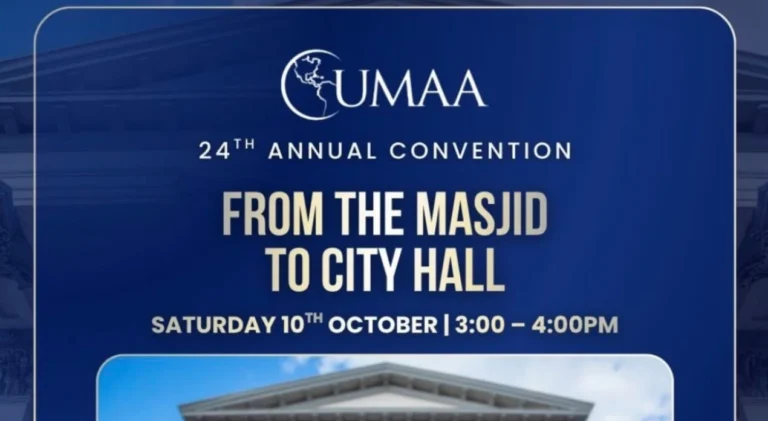
US Muslim politicians train Canadian Muslims under the slogan "From the mosque to the city hall"«
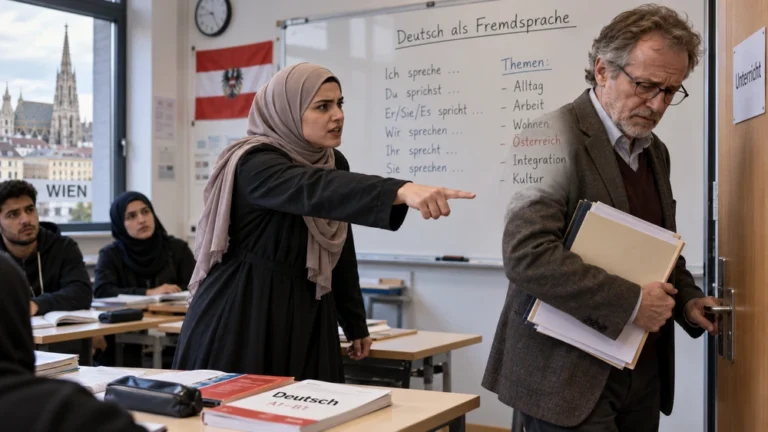
Teacher fired in Austria for denying a Muslim woman a prayer room
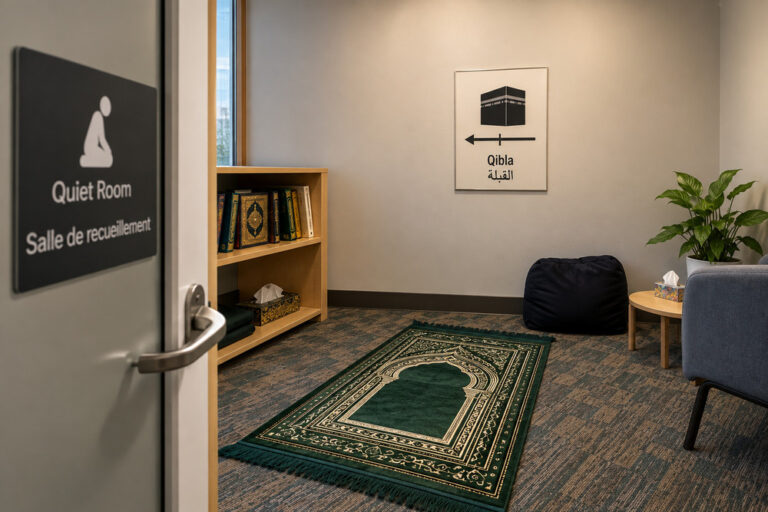
Canadian government normalizes Islamic prayer during workday
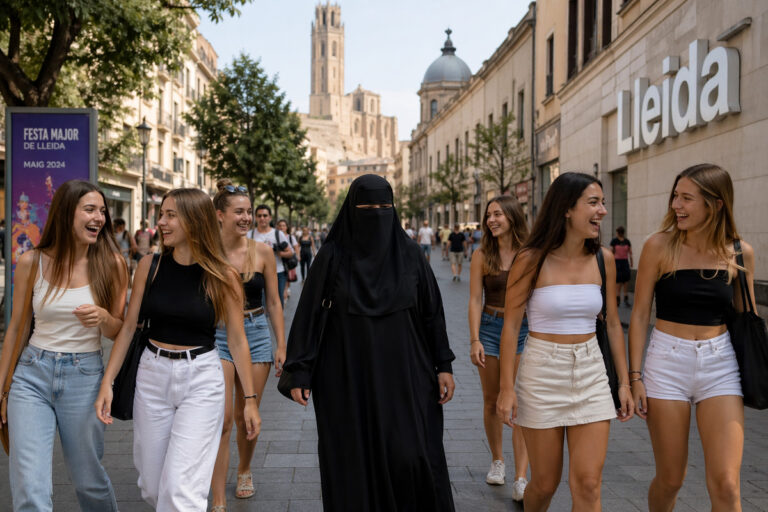
Lleida bans the burqa except if worn for religious reasons
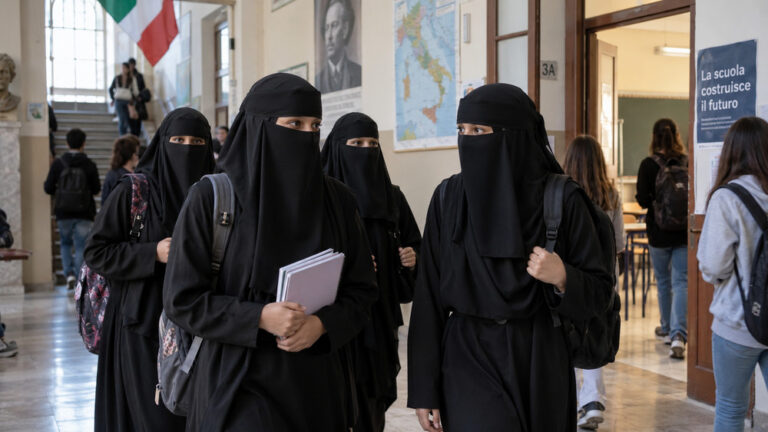
Italy bans burqa and niqab but only in schools
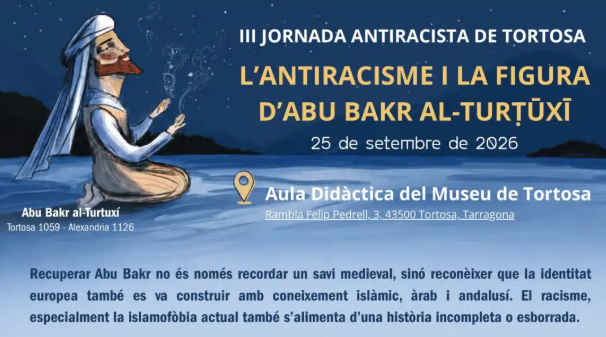
The Generalitat pays tribute to the racist Abu Bakr al-Turtuxí as an anti-racist icon
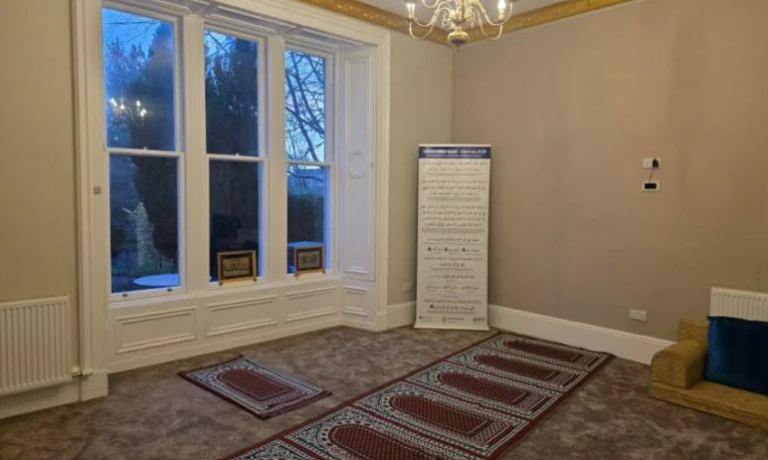
A student residence in Scotland imposes Islamic law in common areas
Kazakhstan threatens to close private schools that allow hijab
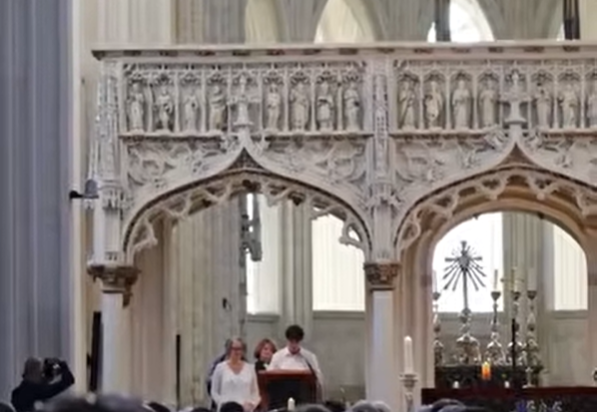
A Catholic university in Belgium incorporates Islamic chants into the opening mass of the course
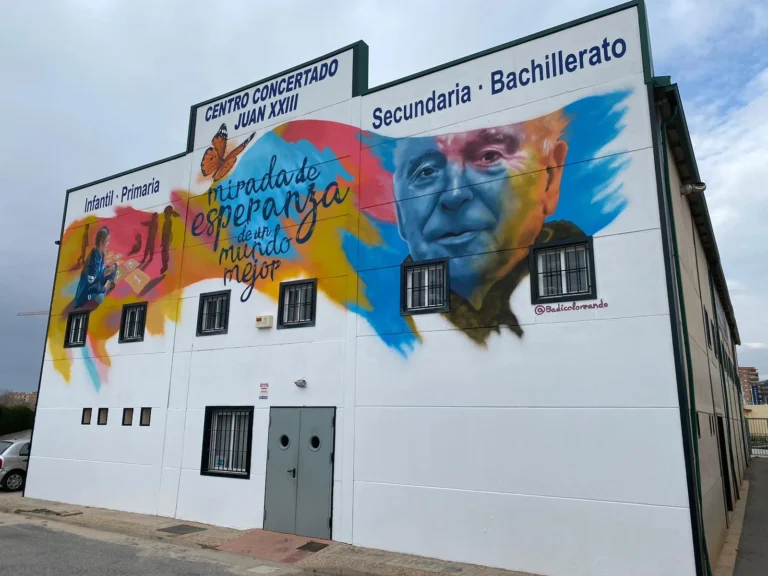
A Muslim family in Granada chooses a Catholic school and demands that the courts teach Islam there
Phrase of the Week

Image of the Week
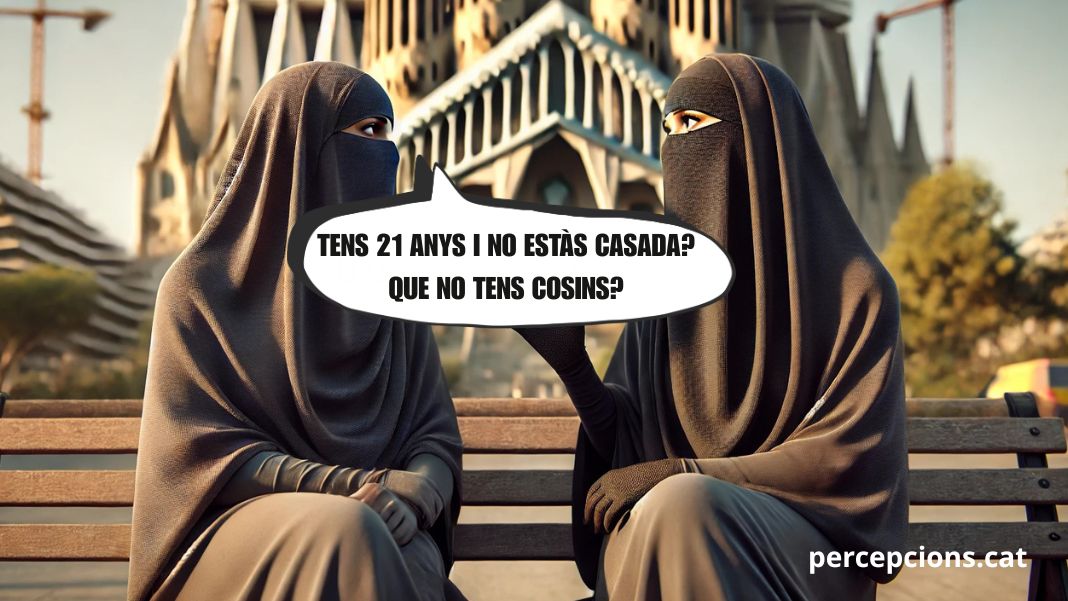
-Don't you have cousins?