
France resorts to curfews to combat its youth on the streets
Cities like Nîmes, Meyzieu, Villecresnes and small towns implement curfews to curb riots by youth migrant gangs.
Illustrative image
Generated by AI
[social-share align=»right» style=»button» mobile_app=»desktop»]
[social-share align=»center» style=»icon» mobile_app=»mobile»]
France is experiencing a wave of emergency measures that directly affect young people: More and more municipalities are imposing nightly curfews on minors in response to the alarming rise in youth violence on the streets. Cities such as Nîmes, Meyzieu, Villecresnes, Dourdan, Triel-sur-Seine, among many others, have introduced restrictions that They forbid minors from walking alone in the street at night.. The phenomenon is spreading rapidly, and the social and political debate is becoming increasingly tense.
The curfew, or couvre-feu, which had traditionally been a tool of control in health or emergency contexts, has now become a common response in various French towns and cities. to curb riots, fights between youth gangs and acts of delinquency committed by minors.
In any case, according to a member of the police union at European Conservative, «Young criminals shoot in broad daylight, the curfew won't stop them.» .
Curfews for teenagers
In Nîmes, for example, It is forbidden for under-16s to be on the street between 11 pm and 6 am. In Meyzieu (near Lyon), the measure applies to under-16s until 9 August. In Villecresnes, near Paris, the curfew affects all under-18s, and in Dourdan the restriction will be in place for almost the entire summer. Triel-sur-Seine, also in the Paris region, has adopted similar measures.
Fights, bladed weapons and young people arrested
The authorities justify these measures as response to serious incidents such as violent assaults, robberies, destruction of public property and confrontations between groups of young people armed with knives or baseball bats. In some cases, fights involving dozens of young people have broken out in the dead of night in urban or suburban areas.
The mayors who have decreed the curfews state that the situation “has escaped the usual control of the local police” and that it is necessary “to protect the population and force parents to take responsibility for their children"”.
Migration and crime: a latent debate
Although the curfews do not distinguish by origin, Some political and media sectors link these episodes of violence to young people of immigrant origin or unaccompanied minors.. In cities such as Calais and Marseille, the presence of youth groups linked to illegal networks has generated tensions with the police, including direct confrontations, stone-throwing and nighttime pursuits.
Measures such as curfews generate strong division within French society. For some, they are necessary to restore authority, curb nighttime lawlessness and prevent further violent incidents. For others, They represent a massive criminalisation of youth and a failure of integration and education policies..
Similar

France now has a halal meat supply without the need to sacrifice animals facing Mecca.
Feminists in France wear the Muslim headscarf against the possible ban
Human rights defenders in France want to ban debate on the Islamic veil
Islam accounts for 85 per cent of religious conflicts in French companies.
France permanently bans the burkini in municipal swimming pools
The University of Strasbourg paid the lawyers of a student who had denounced a researcher critical of the Muslim Brotherhood.

More Perceptions of

ERC, PSC and Comuns oppose combating political Islam in the European Parliament.
Azerbaijan expels students who wear Islamic headscarves from school
Sharia law in the US is supported by 75% of Muslims, 41% of atheists and up to 20% of Christians.

France now has a halal meat supply without the need to sacrifice animals facing Mecca.
The United Kingdom gives away a thousand hijabs in six months to immigrants arriving via the Channel
US Muslim politicians train Canadian Muslims under the slogan "From the mosque to the city hall"«
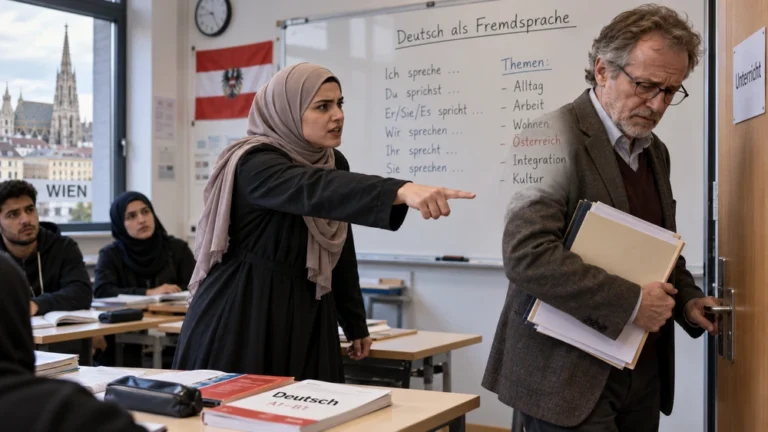
Teacher fired in Austria for denying a Muslim woman a prayer room
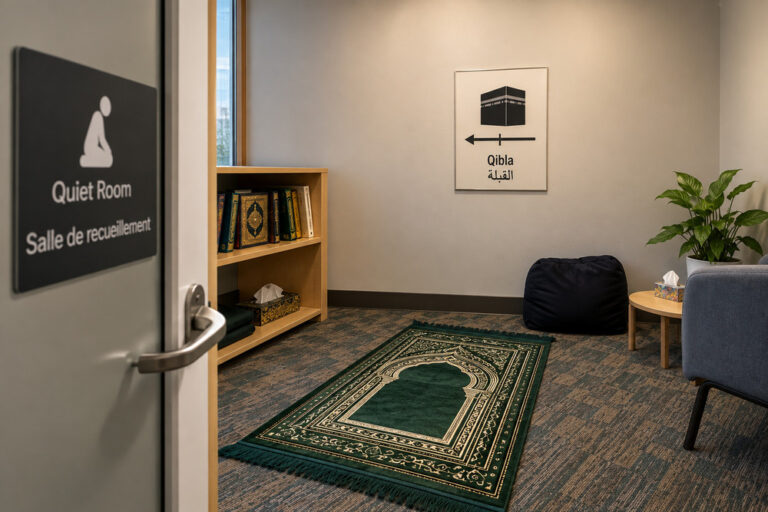
Canadian government normalizes Islamic prayer during workday
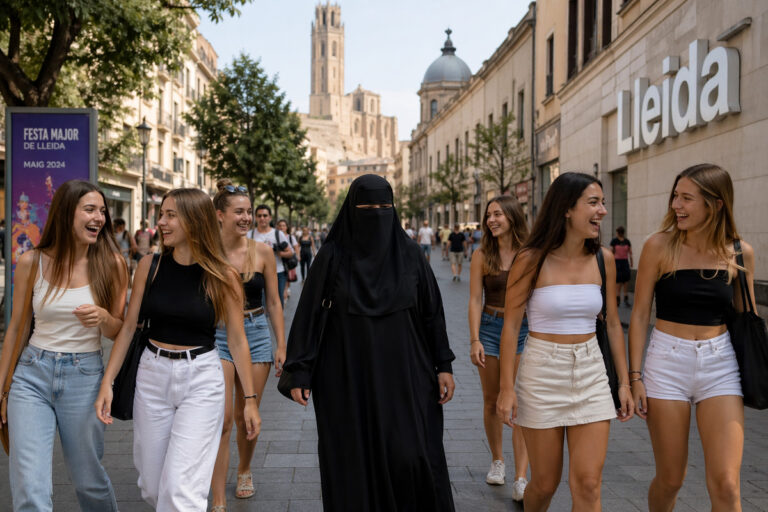
Lleida bans the burqa except if worn for religious reasons
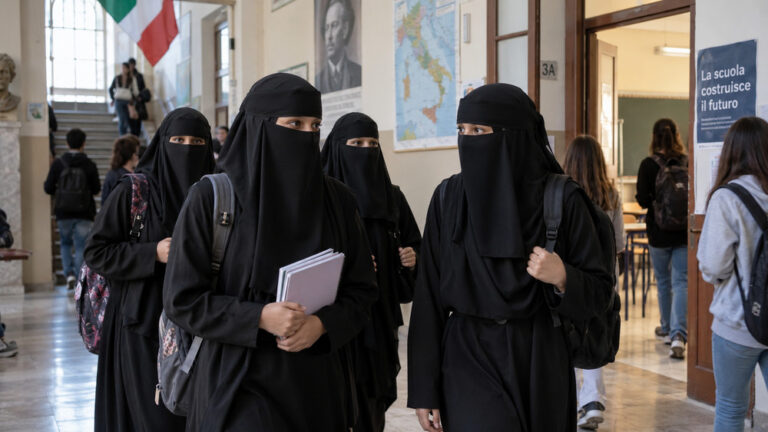
Italy bans burqa and niqab but only in schools
The Generalitat pays tribute to the racist Abu Bakr al-Turtuxí as an anti-racist icon
A student residence in Scotland imposes Islamic law in common areas
Kazakhstan threatens to close private schools that allow hijab
A Catholic university in Belgium incorporates Islamic chants into the opening mass of the course
A Muslim family in Granada chooses a Catholic school and demands that the courts teach Islam there
Phrase of the Week

Image of the Week
-Don't you have cousins?