
France bans the book «I, the Young Muslim Woman» for promoting the subjugation of women and hatred of the West.
The book is a religious guide for adolescents, featuring drawings of girls without faces or expressions to reinforce the erasure of individual identity.
Book cover I, the young Muslim woman with expressionless faces.
Social Networks
[social-share align=»right» style=»button» mobile_app=»desktop»]
[social-share align=»center» style=»icon» mobile_app=»mobile»]
The French Ministry of the Interior has issued a notice to make public that it has ordered a ban on the sale to minors of the book I, the young Muslim woman Written by Ahmad Ibn Moubarak ibn Qadhlan Al Mazru'i. It is a work aimed at adolescent girls which, according to the administration, contains passages that may ’to harm the physical, mental or moral development of children and young people”and inciting discrimination. The resolution is not limited to commercialisation: it also explicitly states that It is prohibited to offer or give it to minors, as well as to display it publicly or promote it through advertising..
The decision is based on the French law of 16 July 1949 on publications intended for young people., which allows the vetoing of works likely to negatively affect minors or to foster hatred. The official oversight commission concluded that the book contains instructions that promote female submission and hostility towards other groups.
Phrases from the book that have prompted the ban
The ministerial decree quotes various passages from the work verbatim as justification for the measure. Among them:
- “I do not imitate Westerners in their beliefs, their worship, their dress, their customs, their festivals and their behaviour.”
- “The Prophet cursed women who act like men.”
- “I do not travel without a mahram (close relative) and I do not mix with men I am permitted to marry.”
- “My home is my paradise; I only go out when it's necessary and with my parents” permission.”
- “I don't soften my voice in front of them and I only speak to them when it's necessary.”
- “I do not listen to Western slogans aimed at tarnishing the image of the Muslim woman.”
Before the ban was imposed, the French authorities had already formally warned the publisher to make changes that he did not make. Despite promises to amend the edition with warnings, contextualising prologues and distribution restrictions, the authorities considered these commitments did not offer sufficient guarantees and decided to ban its distribution.
Drawings of girls without a face or expression
The visual elements of the book follow the same doctrinal line as the text. The cover features a female figure with a wide veil covering her hair, neck and part of her face., drawn with minimal features and without a defined facial expression. The illustration does not seek realism or individuality, but rather conveys a generic and symbolic image: The young woman appears as an idealised, discreet and depersonalised figure, without visible gestures or emotions.. This minimalist aesthetic visually reinforces the manual's central message, which emphasises modesty, restraint and the absence of personal display.
This graphic style is not accidental. In normative religious materials aimed at a young audience, the depiction of faces without features or with blurred features… It is often used to avoid the individualisation of the character and to turn them into a role model.. Thus, the image does not aim to depict a specific person, but rather an archetype of behaviour: a girl defined by her obedient attitude, her discretion and her strict adherence to the religious rules set out in the text.
The book continues to circulate despite the ban.
Despite the ban on selling, offering or giving it to minors and the restrictions on display and advertising, the book I, the young Muslim woman continues to circulate. According to the information published on the same day as the ministerial order, The work can still be found on various channels: on internet platforms where it is distributed in digital format — even free of charge in some cases —, in specialist bookshops and on major e-commerce websites.. This means that the administrative measure restricts minors' access in the legal and physical commercial sphere, but does not completely eliminate their actual availability.
More about France

France now has a halal meat supply without the need to sacrifice animals facing Mecca.
Feminists in France wear the Muslim headscarf against the possible ban
Human rights defenders in France want to ban debate on the Islamic veil
Islam accounts for 85 per cent of religious conflicts in French companies.
France permanently bans the burkini in municipal swimming pools
The University of Strasbourg paid the lawyers of a student who had denounced a researcher critical of the Muslim Brotherhood.

ERC, PSC and Comuns oppose combating political Islam in the European Parliament.
Azerbaijan expels students who wear Islamic headscarves from school
Sharia law in the US is supported by 75% of Muslims, 41% of atheists and up to 20% of Christians.
France now has a halal meat supply without the need to sacrifice animals facing Mecca.
The United Kingdom gives away a thousand hijabs in six months to immigrants arriving via the Channel
US Muslim politicians train Canadian Muslims under the slogan "From the mosque to the city hall"«
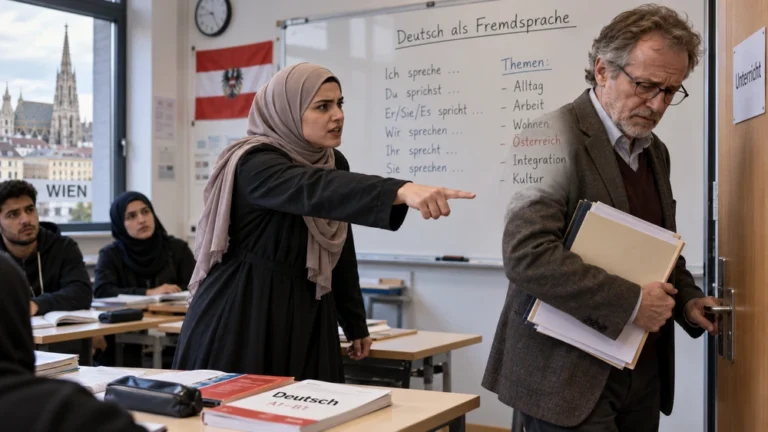
Teacher fired in Austria for denying a Muslim woman a prayer room
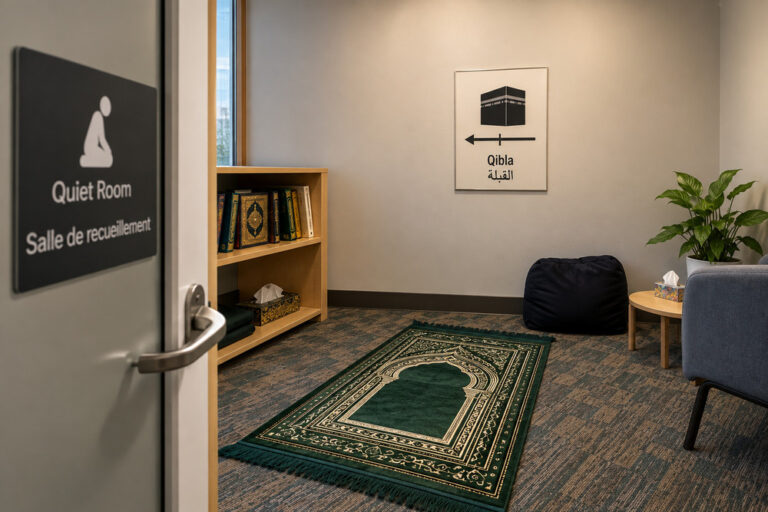
Canadian government normalizes Islamic prayer during workday
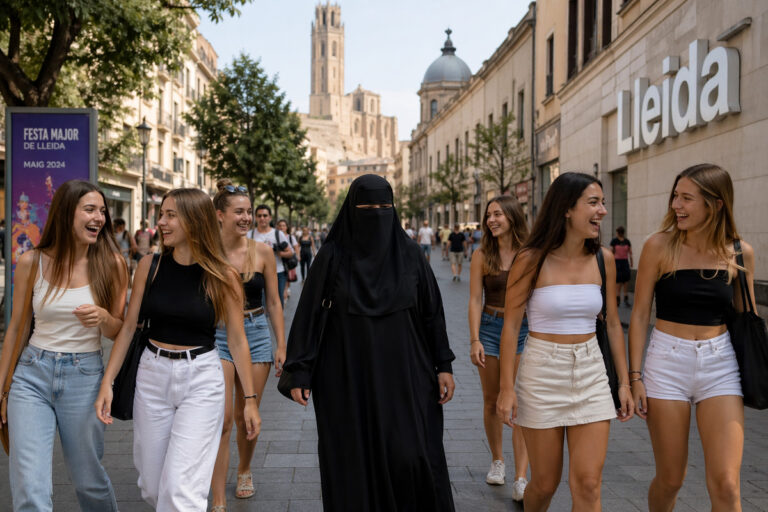
Lleida bans the burqa except if worn for religious reasons
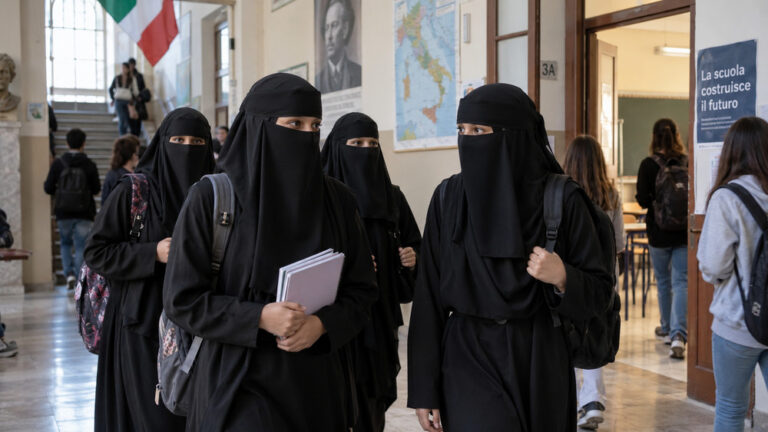
Italy bans burqa and niqab but only in schools
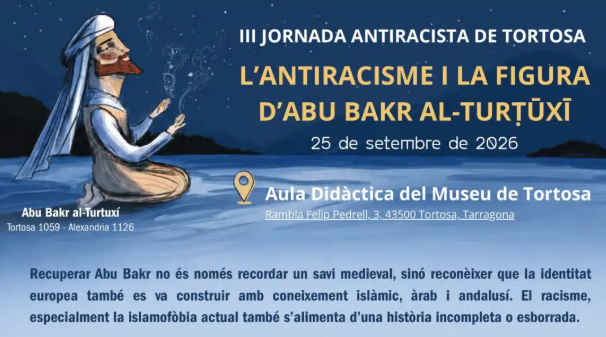
The Generalitat pays tribute to the racist Abu Bakr al-Turtuxí as an anti-racist icon
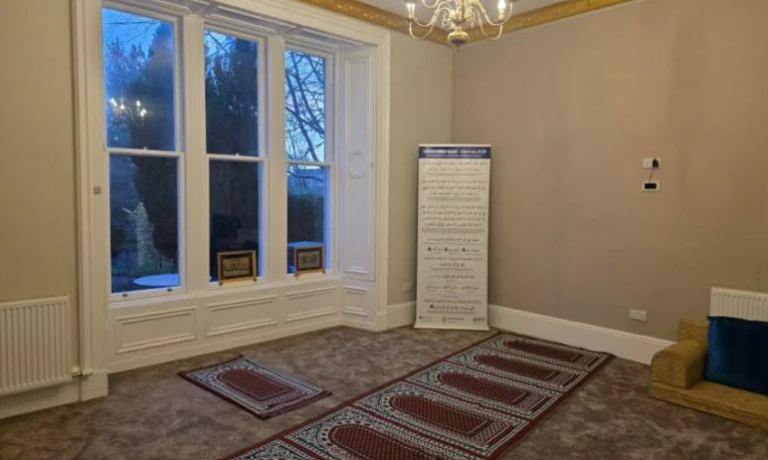
A student residence in Scotland imposes Islamic law in common areas
Kazakhstan threatens to close private schools that allow hijab
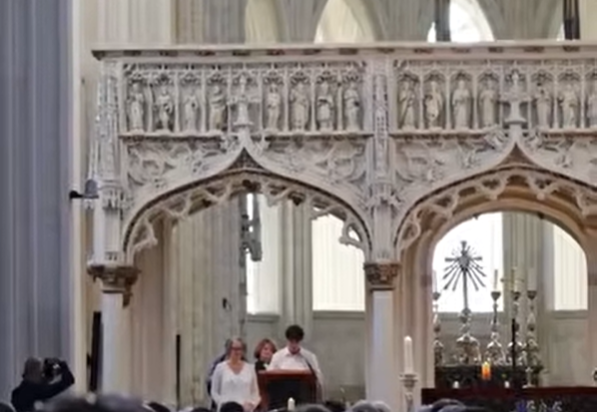
A Catholic university in Belgium incorporates Islamic chants into the opening mass of the course

A Muslim family in Granada chooses a Catholic school and demands that the courts teach Islam there
Phrase of the Week

Image of the Week
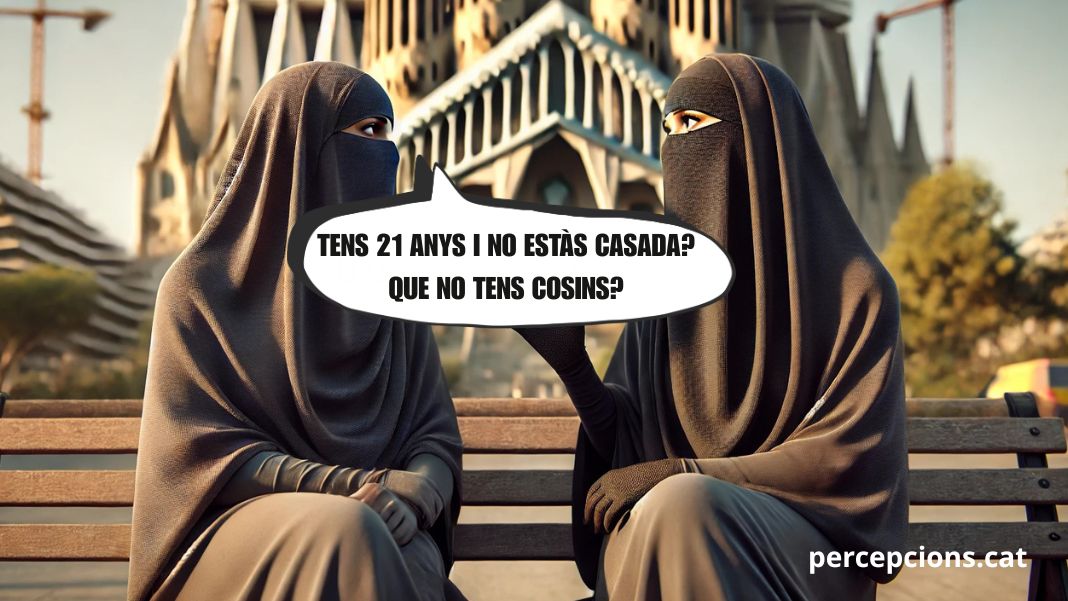
-Don't you have cousins?