
Barcelona City Council provides training for healthcare professionals to adapt medical care for Ramadan.
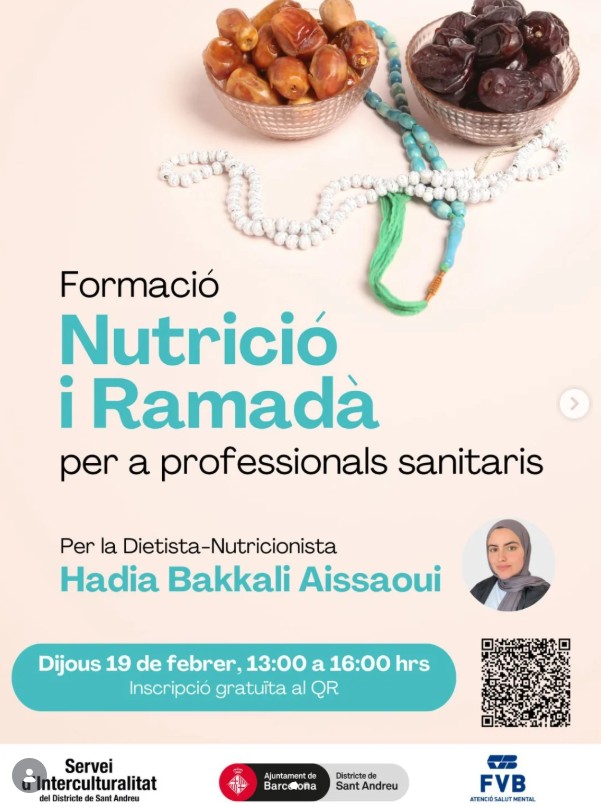
The training of Islamic nutritionist Hadia Bakkali at the CUAP in Sant Andreu includes guidelines for observing the fast in people with medical conditions and pregnant women, even though it can involve up to 14 hours without hydration.
Presentation of the religious session for healthcare staff
YouTube
[social-share align=»right» style=»button» mobile_app=»desktop»]
[social-share align=»center» style=»icon» mobile_app=»mobile»]
The Interculturality Service of Barcelona City Council organised a training session at the Casernes de Sant Andreu CUAP on Thursday 19 February on Healthcare for patients observing Ramadan. The activity was held at this health centre with the aim of To provide healthcare professionals with tools to ensure their patients' religious commitment.. The talk was given by the Islamic nutritionist Hadia Bakkali, who works to reconcile science and religion. During the session, she addressed How to adapt the fast of up to 14 hours without drinking water for people with medical conditions, children and pregnant women..
The religious framework and doctrinal exemptions
The reference to fasting in people with pathologies becomes relevant if one takes into account that The Qur'an itself establishes exceptions for health reasons.. Verse 2:184 indicates that “Anyone who is ill or away on a journey must fast for the same number of other days.”. And adds that «For those who can only fast with great difficulty, there is a compensation: feeding a person in need.«Traditional Islamic jurisprudence has introduced dispensations for pregnant women, those menstruating, breastfeeding or in any situation where fasting might cause physical harm. This framework is based on a classical principle of Islamic law according to which lReligion must not cause harm to the body or impose a burden that puts the believer's health at risk..
Hadia Bakkali, trained in nutritional science at the University of Barcelona, He mentioned in passing that religious exemptions exist. on fasting for health reasons without any reference to the clarity of the Qur'an on this matter. However, in his presentation he placed more emphasis on how to adapt one's diet and timetables than on the clarity of the Qur'an. not in establishing clear criteria to preventively advise against it. On the other hand, Yes He emphasised that the breaking of the fast should be done with water and dates «because that is how he did it» (the Prophet Muhammad).).
The integration of Ramadan into the health system
The session focused on how to adapt fasting to different medical situations, including cases of diabetes, insulin resistance or menopause. The focus was not on whether the patient should cancel the fast, but rather on how to adapt it. How to adjust diet, hydration and schedules so that you can last through the month of Ramadan..
Among the aspects addressed, it was also highlighted that dehydration is one of the main difficulties of fasting. Since during the day one cannot consume either water or food, The session included recommendations to concentrate patients' hydration during the night hours.. The approach did not contemplate breaking the fast in case of risk, but rather the organisation of the intake so that the person could sustain it without falling into sin.
This type of approach involves practical adjustments to the care task. Now, Healthcare professionals must take fasting times into account when planning dietary regimens, pharmaceutical prescriptions or hydration recommendations.. This may involve altering medication dosing windows, reorganising intake times or adapting usual clinical indications to the nocturnal eating schedule characteristic of Ramadan. These elements introduce Additional variables in routine clinical management and in the organisation of work which are sidelined in favour of the intercultural management of public services.
Pregnancy and Ramadan: a sensitive medical area
The session discussed pregnancy in terms of adaptation. without recalling the doctrinal principle of exemption or the metabolic risk in depth. However, prolonged fasting can lead to ketosis, glycaemic fluctuations and changes in hydration, factors that are routinely part of medical monitoring in pregnant women. Adjusting the dietary schedule in this context introduces an element of clinical complexity that requires individualised assessment and specific monitoring.
It so happens that even the Moroccan Penal Code, which punishes the public breaking of the fast without a justifiable cause, It explicitly refers to the exceptions permitted by religion, among them illness or pregnancy.. Despite this, in Bakkali's formation The possibility of recommending breaking the fast was not considered as a first option. Neither for pregnancy nor for any other health reason.
Religious pressure outweighing clinical judgement
At the session, he acknowledges that There can be “social, religious and family pressure” for certain people to fast “even if they are unable to do so."”Rather than framing this pressure as a risk factor that needs to be counteracted from within healthcare practice, the discourse focuses primarily on dietary and organisational adjustment strategies. The question is no longer whether the patient should fast on health grounds, nor how the healthcare system should address it to protect them.
In this way, The clinical focus is shifting from risk prevention to managing the consequences., implicitly assuming the social framework that drives the practice rather than questioning it from a strictly health-based standpoint.
Ramadan sold as an intermittent fasting diet
The speaker presents Ramadan as if it were equivalent to an intermittent fasting diet. The underlying idea is to link the intermittent fasting studied by modern biomedical science to validate a religious practice. To reinforce this, the session uses vocabulary typical of nutritional protocols — energy control, protein, meal composition — to explain religious fasting. In the same material He acknowledges that during Ramadan not only is food restricted but water as well. during daylight hours, and that this involves a physical and mental effort to which the body is not accustomed.
This difference is fundamental: in the scientific literature, Intermittent fasting does not allow dehydration. and is often timed to coincide with sleeping hours. This has nothing to do with the daytime fasting of Ramadan, which combines caloric restriction with water restriction, altering metabolism and physiological regulation in different ways.
More religion than science
The session devotes a significant part of its presentation to explaining the spiritual meaning of Ramadan, its religious rules and the traditional way of breaking the fast according to the Prophet's practice. At the same time, when it addresses the physiological or clinical effects, The same material notes that the available scientific evidence is limited., often observational and still under development.
Thus, while the doctrinal elements are presented as a stable and definitive framework, The medical foundations are described as provisional or inconclusive. The result is a presentation in which the religious normative aspect is presented as the starting point, and the scientific aspect as a field that the presentation itself acknowledges does not yet have solid conclusions.
More Ramadan

Muslims in Italy are taking advantage of May Day to demand public holidays in the work calendar.
A study by Can Ruti and Sant Pau proposes not testing pregnant women for glucose during Ramadan.
Sant Andreu observes Ramadan with a prayer room at the district headquarters.
Bonpreu is sponsoring an iftar in Lleida featuring a conservative Islamic preacher.
New York police explain they put up Ramadan lights to «educate» non-Muslims
Pep Guardiola rebukes fans who boo during the Ramadan break

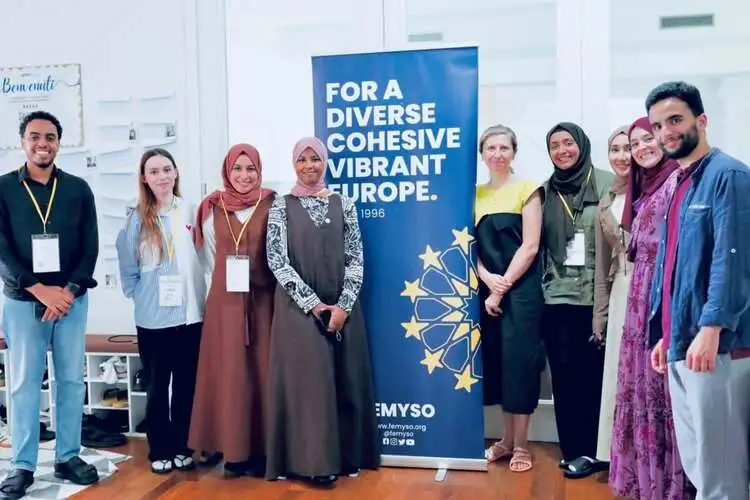
ERC, PSC and Comuns oppose combating political Islam in the European Parliament.

Azerbaijan expels students who wear Islamic headscarves from school
Sharia law in the US is supported by 75% of Muslims, 41% of atheists and up to 20% of Christians.

France now has a halal meat supply without the need to sacrifice animals facing Mecca.
The United Kingdom gives away a thousand hijabs in six months to immigrants arriving via the Channel
US Muslim politicians train Canadian Muslims under the slogan "From the mosque to the city hall"«

Teacher fired in Austria for denying a Muslim woman a prayer room
Canadian government normalizes Islamic prayer during workday

Lleida bans the burqa except if worn for religious reasons
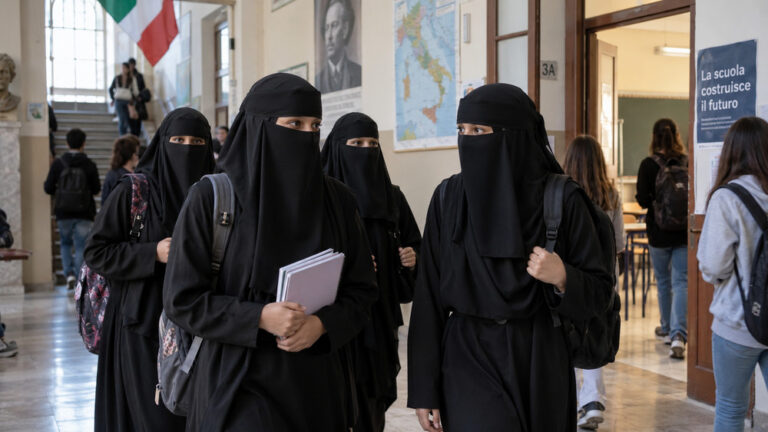
Italy bans burqa and niqab but only in schools
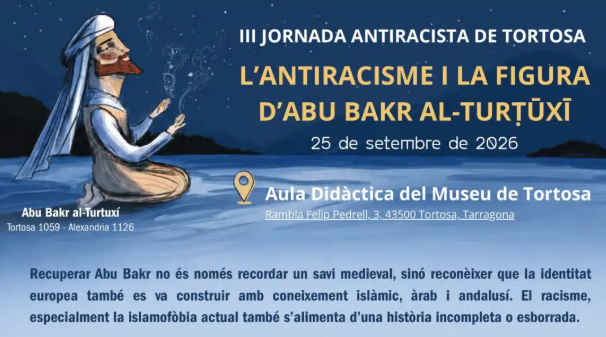
The Generalitat pays tribute to the racist Abu Bakr al-Turtuxí as an anti-racist icon
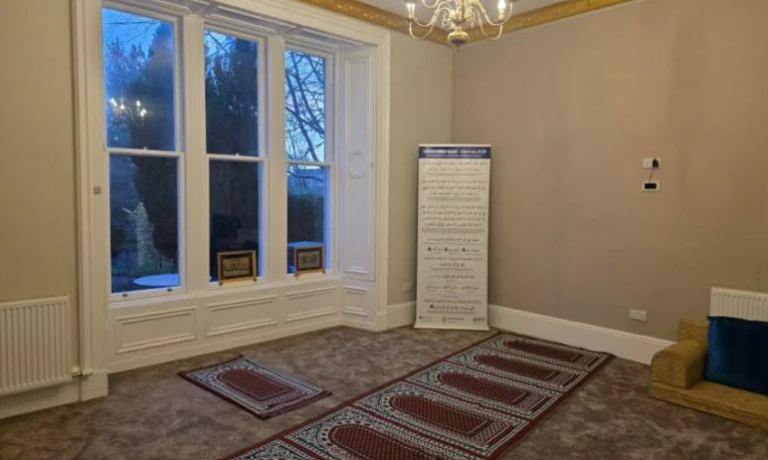
A student residence in Scotland imposes Islamic law in common areas
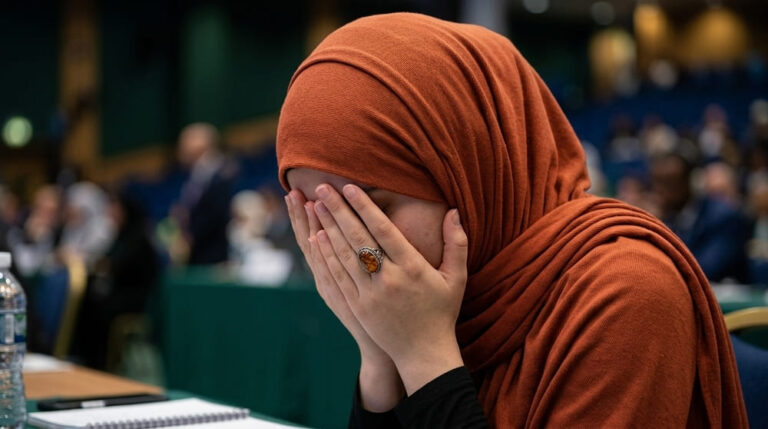
Kazakhstan threatens to close private schools that allow hijab

A Catholic university in Belgium incorporates Islamic chants into the opening mass of the course

A Muslim family in Granada chooses a Catholic school and demands that the courts teach Islam there
Phrase of the Week

Image of the Week

-Don't you have cousins?