
Tariq Ramadan (Muslim Brotherhood) took part in defining Islamophobia by the Barcelona City Council to silence criticism of Islam.
Marxist intellectuals, activists and Moroccan MPs, subsidised organisations and other authors redefined the boundaries of debate to portray criticism of Islam as racism.
Municipal Plan against Islamophobia, 2017
[social-share align=»right» style=»button» mobile_app=»desktop»]
[social-share align=»center» style=»icon» mobile_app=»mobile»]
During Ada Colau's era, Barcelona City Council promoted an institutional definition of Islamophobia that shielded Islam from criticism. In this process, figures and activists linked to political Islam acquired a central role as expert voices and moral authorities. Among them, Tariq Ramadan, a leading intellectual of the Muslim Brotherhood, He took part in the construction of a conceptual framework that ultimately equated religious, doctrinal or cultural criticism of Islam with a form of discrimination. The result was a restriction of public debate and a redefinition of the boundaries of what can be said about Islam within institutional Barcelona.
This ecosystem was not centred on a single name, but on a recurring profile that repeats itself with few variations: Marxist-rooted academics, Moroccan activists with a history of association-building, and indigenous anti-racist feminists.. In this process Muslim women victims of coercion, dissenting voices, apostates, and believers critical of the doctrine were not heard.. At the same time, they legitimised themselves controversial interlocutors such as Najia Lotfi, Taoufik Cheddadi or Wafaa Moussaoui who speak on behalf of “the community”. The result was a closed, homogeneous narrative that the City Council adopted as its own and which deliberately excluded any internal or external questioning of Islam.
Tariq Ramadan, Colau's religious adviser, takes an equidistant stance on stonings.
The City Council presents Tariq Ramadan in the documents as a academic expert on Islam and the situation of Muslims in the West. He is described as a DPhil in Islamic studies and a professor at Oxford. This academic credential allows him to gain entry to institutions, universities and public administrations as an authorised voice, ostensibly technical and neutral. It is precisely this aura of expertise that makes him an especially influential figure. That he is The grandson of the founder of the Muslim Brotherhood is not a minor biographical detail nor a family coincidence., but rather the key to understanding his role and his discourse. This affiliation explains both his view of Islam as a total moral system and its strategy of presenting political Islam in acceptable language for Western institutions.
Behind the soft and accommodating façade, however, multiple governments, researchers and courts have pointed to a Constant pattern of double discourse. In front of a Western audience he presents himself as a moderate and a champion of coexistence; in other contexts It avoids condemning practices such as stoning—limiting itself to calling for a “moratorium”—and promotes an identity-based reading of Islam incompatible with secularism.. Ramadan was banned for years in the United States on suspicion of supporting Islamist terrorist organisations, was rejected as a French citizen by Manuel Valls's government, and finally fell into disrepute from 2017 onwards amid multiple accusations of sexual violence.
All in all, it paints an unequivocal profile: Ramadan is not a neutral bridge between cultures, but an ideologue who used academic prestige and the discourse of rights to advance an identity and political project., and which for years was legitimised by European institutions without its agenda or consequences being sufficiently questioned. One of them was the Barcelona City Council, which did not take into account the accusations of rape. nor the links with an organisation that wants to Islamise the West and which has been banned in several countries for links to terrorism.

Islamophobia tailor-made for the promoters of political Islam
The municipal framework against Islamophobia was not built on criteria of the universal defence of human rights., but through actors with an explicit Islamic ideological agenda. For example, There are figures like Najia Lotfi. who at the time was a member of parliament in Morocco for the Islamist Justice and Development Party, ideologically linked to the Muslim Brotherhood. Among her contributions are reports defining the lack of prayer rooms for municipal officials as Islamophobia.
This approach reveals to what extent the fight against discrimination shifted towards the satisfaction of confessional demands. In this context, also Teachers' unease about the hijab is defined as Islamophobia.. The reports consider any critical gaze at the veil suspicious and reclassify it as an expression of anti-Muslim prejudice. To “correct” this situation, the City Council launched Specific training programmes aimed at education professionals and the public sector, with the aim of detecting and preventing conduct considered Islamophobic.

Islamophobia is that officials cannot pray at work.
A few months after Ada Colau's arrival as mayor, the City Council adopted as its reference framework a first report promoted by SAFI (Stop Islamophobic Phenomena), in which it participated. Najia Lofti. The burka-defending Islamic banker who was then a Moroccan MP for the Justice and Democracy Party, ideologically linked to the Muslim Brotherhood.
The idea of the report was to identify the alleged “problems” affecting the Muslim population in Barcelona. The document redefines Islamophobia in an expansive manner. including the absence of prayer rooms in public workplaces or the failure to accommodate prayer times in schedules., situations that come to be read as institutional grievances
Islamophobia to cover up human rights violations
This narrative was not constructed solely with figures from political Islam, but with the active support of’Western intellectuals willing to legitimise it. Thinkers such as Santiago Alba Rico, of Marxist origin, contributed to portraying any criticism of Islam as an expression of cultural colonialism or structural racism, shifting the debate from the realm of human rights to that of Western historical guilt. In parallel, religious actors such as Taoufik Cheddadi, imam and preacher, openly defended doctrinal tenets —such as the obligation of the veil or the moral superiority of Islam— while they were accepted as legitimate voices in spaces of coexistence and diversity. This The alliance between political Islam and anti-liberal intellectualism allowed a narrative to be entrenched without the need for formal imposition..
The most relevant thing is that this The framework did not end with Ada Colau's term of office.. The expansive definition of Islamophobia, the institutional fear of criticism and the prioritisation of religious accommodation over neutrality continue to permeate municipal political action. The result is a city where many professionals, feminists and citizens practise self-censorship. A clear example of this is the practices of segregation and control over Muslim girls and adolescents denounced by the organisation Per Elles with the opposition of the entire institutional machinery and feminism in general.
The result of all this is that today this framework already operates as a Political common senseNo one questions protocols, reports or training; no one reviews the boundaries between neutrality and accommodation; no one wants to open a debate that the official narrative has made taboo. Silence is no longer imposed from above: It has been internalised..
More about Muslim Brotherhood

ERC, PSC and Comuns oppose combating political Islam in the European Parliament.
Who is Fatiha El Mouali, much more than the helpless immigrant from the newspaper ARA
Austria prepares to ban Muslim Brotherhood political Islam
Germany prevents civil servant from being a civil servant due to ties with the Muslim Brotherhood
An official Austrian report accuses the Muslim Brotherhood of wanting to transform democracy from within.
The foundation that manages the Barcelona Office of Religious Affairs paid €175 to denounce Islamophobia
The Generalitat trains teachers with an Islamic preacher who denies Western equality between men and women
The University of Strasbourg paid the lawyers of a student who had denounced a researcher critical of the Muslim Brotherhood.
Germany's intelligence service warns of the infiltration of the Muslim Brotherhood into institutions and parties.

ERC, PSC and Comuns oppose combating political Islam in the European Parliament.
Azerbaijan expels students who wear Islamic headscarves from school
Sharia law in the US is supported by 75% of Muslims, 41% of atheists and up to 20% of Christians.

France now has a halal meat supply without the need to sacrifice animals facing Mecca.
The United Kingdom gives away a thousand hijabs in six months to immigrants arriving via the Channel
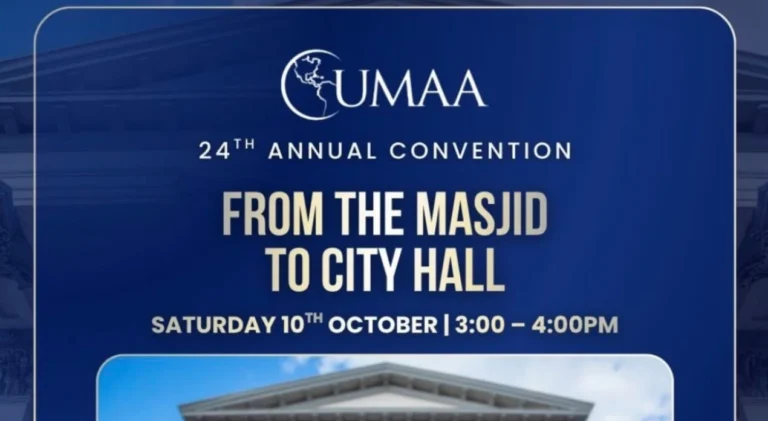
US Muslim politicians train Canadian Muslims under the slogan "From the mosque to the city hall"«
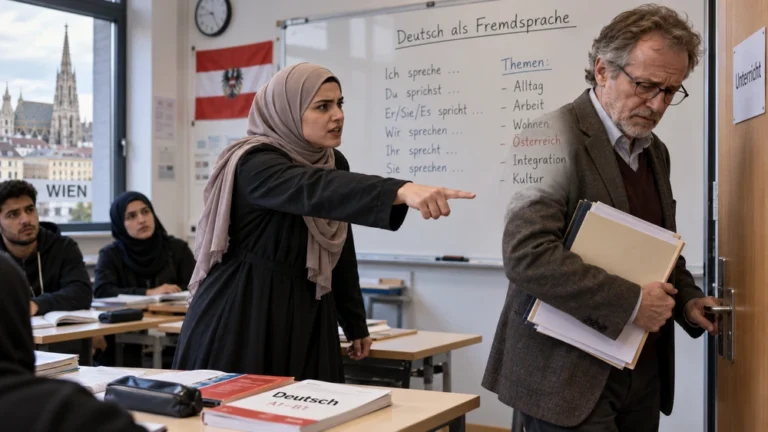
Teacher fired in Austria for denying a Muslim woman a prayer room
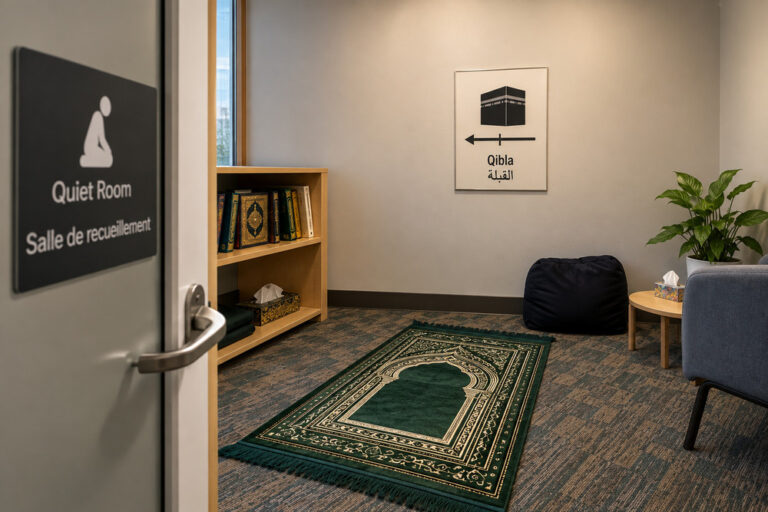
Canadian government normalizes Islamic prayer during workday
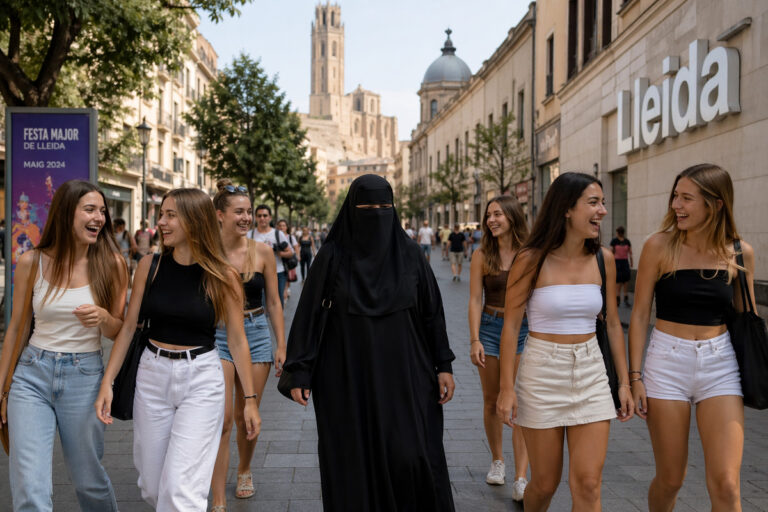
Lleida bans the burqa except if worn for religious reasons
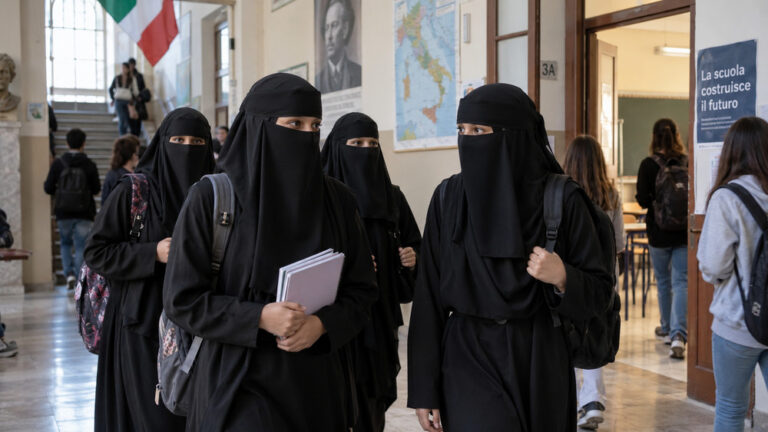
Italy bans burqa and niqab but only in schools
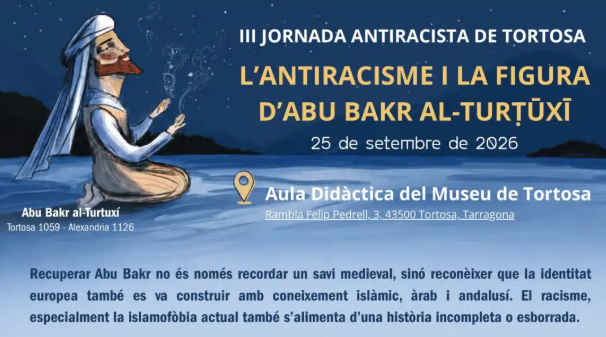
The Generalitat pays tribute to the racist Abu Bakr al-Turtuxí as an anti-racist icon
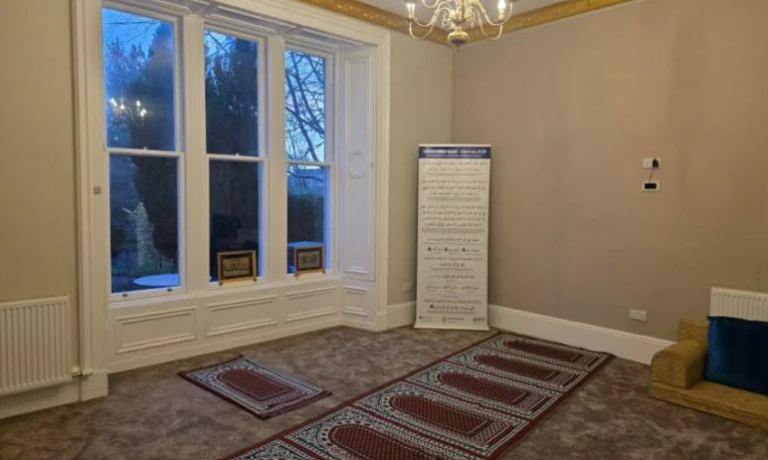
A student residence in Scotland imposes Islamic law in common areas
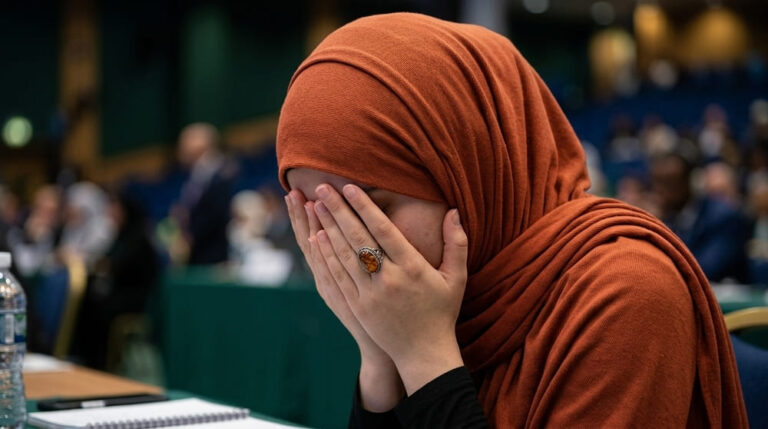
Kazakhstan threatens to close private schools that allow hijab
A Catholic university in Belgium incorporates Islamic chants into the opening mass of the course
A Muslim family in Granada chooses a Catholic school and demands that the courts teach Islam there
Phrase of the Week

Image of the Week
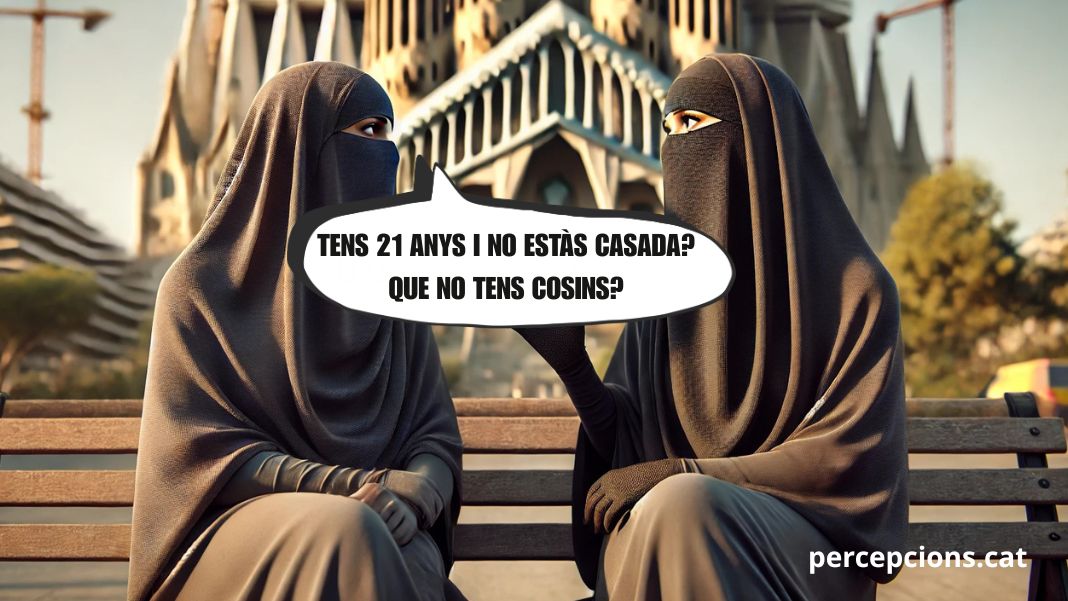
-Don't you have cousins?