
Who is Najia Lotfi? From cleaning staircases to halal banker
From being a member of parliament for a religious party in Morocco to an influential figure in the Catalan secular left. Najia Lotfi is a defender of the burka and a promoter of a publicly supported religious economic project.
Najia Lotfi on the TV programme where she said that the burka is culture.
[social-share align=»right» style=»button» mobile_app=»desktop»]
[social-share align=»center» style=»icon» mobile_app=»mobile»]
Najia Lofti was born in Guercif (Morocco) and was educated at Mohamed I University, where she obtained a Bachelor's degree in International Economics between 1992 and 1996. Between 1997 and 2002, she claims to have founded and run a private academy for computer science and economic management (ESSTI) in Morocco, where she served as director and taught accounting and information technologies. After the academy's closure, she explains that she tried to continue her academic career but encountered institutional difficulties in accessing doctoral studies.
It is in this context that she situates her decision to go to Europe in 2002, first to France and subsequently to Catalonia, not as a migration driven by immediate necessity. She explains that she left Morocco as a personal endeavour to redirect her academic and professional trajectory outside Morocco and to leave her mark as a Muslim in the West.
Early years in Catalonia: precariousness and religious perseverance.
Once in Catalonia, Lofti says her main objective was to resume an academic career that, she says, had been stalled in Morocco. In Barcelona she enrols at the University of Barcelona, where between 2005 and 2008 she completes a Diploma of Advanced Studies (DEA) in economics. On her professional profile, this course is described as a “Diploma of Advanced Studies in Economics, Islamic Economics and Finance”., a designation that does not correspond to any official title or specific programme existing at the UB. This detail is relevant because it shows how, even at this stage, the academic narrative is constructed with terminology that tends to symbolically reinforce specialisation, beyond the actual institutional framework.
At that time, Lofti explains that he lived in an irregular administrative situation during his first years in Catalonia., which forced her to accept precarious jobs, especially in the cleaning sector, in order to survive and pay for university. In this context, The Islamic veil becomes a central element of her narrative.She states that colleagues and people around her suggested she remove it to make it easier to access her job, a proposal she systematically rejected. This decision, which she says closed off employment opportunities for her, is not interpreted as structural discrimination or a conflict with the labour market, but as a trial sent by Allah. Precariousness, irregularity and the renunciation of income are presented as spiritual examinations. consciously undertaken, consolidating a discourse in which religious fidelity prevails over any strategy of adaptation to the European social and labour context.
Working at the Ibn Battuta Association: from marginality to institutional dialogue
Between 2007 and 2012, Najia Lofti worked at the Ibn Battuta Association, a central organisation in Barcelona's migrant association network and closely connected to Moroccan power. In her account, This stage marks the transition from individual precarity to integration into an organised structure with access to public programmes and the capacity for institutional engagement.. Ibn Battuta provides them with job security, visibility and initial recognition within the subsidised association circuit.
Lofti presents this period as the foundation of his associative learning: project management, relations with the authorities and mastery of the grant system. When the organisation's public funding is cut in 2012, it is dismissed, but it explains that it does not see this as a failure, but rather as an opportunity to take the leap into its own projects.. This accumulated capital enables them to move on to spaces such as SAFI, a platform that influenced anti-discrimination policies during Ada Colau's years in municipal government.
With €3,000, Ada Colau founds an Islamic bank in Barcelona
In 2015, Najia Lofti spearheaded the creation of CoopHalal with an initial capital of €3,000, provided by six partners—Spaniards and Moroccans—each contributing €500. Although not formally a bank, The project is publicly presented as a form of “Islamic banking” operating in Barcelona., which gives it strong symbolic and media weight. Lofti links the initiative's origin to his academic background and It is presented as a response to the specific needs of the Muslim community., but the decisive leap is its conversion into a stable, self-sustaining project after leaving the subsidised association world.
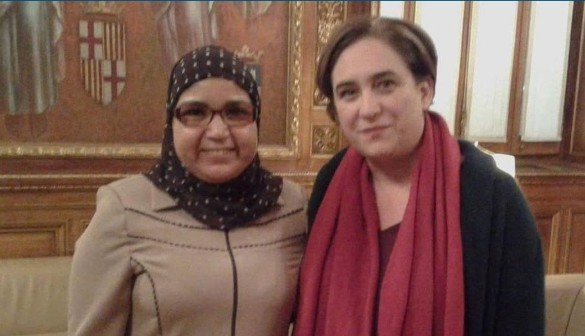
The Islamic banker and Ada Colau
The reports in which Lofti participates propose concrete measures that shift the principle of neutrality: They recommend enabling prayer rooms in workplaces and public facilities, and allowing specific time within the working day for Muslim employees to pray., and to interpret as discrimination—that is, Islamophobia—the failure to adapt spaces, timetables or internal dynamics to religious practice. This approach Turns religious accommodation into an institutional obligation. and redefines the conflict: not offering facilities for worship is no longer neutrality, but a violation of rights.
This period consolidates Lofti as a key figure within the constellation of entities promoted during the Colau era, combining anti-racist activism, the management of grant-funded projects and stable integration into public diversity policies. In parallel, Their religious projects receive sustained public funding from various administrations.. In total, CoopHalal receives €27,275, the Institute €25,700 and SAFI €145,978, from municipal and regional funding streams. The result is a twofold legitimacy: Lofti gains institutional centrality as his confessional proposals translate into policy recommendations., presented as a fight against discrimination.

Najia Lotfi at an event at Barcelona City Hall
Conservative in Morocco, progressive in Barcelona
Parallel to the launch of CoopHalal and the relationship with Colau, in that same year, 2015, Lofti takes the decisive step into Moroccan institutional politics by joining the Justice and Development Party (PJD)., then the ruling party in Morocco. The PJD is a party of institutional Islamism, often described by political literature as ideologically close to the orbit of the Muslim Brotherhood. She defends the centrality of religion as the foundation of social and legal order. Lofti fully embraces this and is elected as a deputy for the 2016–2021 legislature, consolidating a political profile that goes far beyond her previous role in Catalan associationalism.

Najia Lotfi in the Moroccan Parliament
The contrast between the two spaces is particularly revealing. In Morocco, Lofti positions himself as a clearly conservative voice, especially on matters of family, inheritance and civil law, opposing reforms aimed at expanding women's rights or introducing criteria for legal equality.. He argues that these areas must be governed strictly by Sharia law, even when this entails severe social consequences, such as divorced women losing their family home. In Barcelona, on the other hand, continues to operate within progressive environments, linked to anti-discrimination policies and the fight against Islamophobia, where she is not perceived as an ultraconservative figure but as a legitimate interlocutor. This dual position — conservative in Morocco and normalised within Barcelona's progressive sphere — constitutes one of the central tensions of her public trajectory.
From quoting Hitler to exploiting the dead during COVID
During her time as a member of parliament (2016–2021), Najia Lofti maintained a relatively low political profile within the Moroccan Parliament. It was in 2019 that His name suddenly gains national visibility following a high-media-impact controversy related to a quote from Hitler.. Lofti is said to have posted on Facebook an image of Adolf Hitler with an attributed quote: “If you can't find anyone who hates you, know that you're a failure.”The reports describe widespread public outrage and claim that Catalan associations have filed a complaint with the Hate Crime Prosecutor's Office. Despite the case's media reach, no verifiable screenshot of the publication has been found, nor any public institutional confirmation of the complaint, placing the controversy in the journalistic sphere but leaving significant evidential gaps.
The second controversy emerges during the COVID-19 pandemic, when Lofti, already a MP in Morocco and promoter of CoopHalal in Barcelona, It is criticised in Morocco for promoting services linked to Islamic burials for migrants at a time of health emergency and high mortality.. Several voices point out that these functions were already being carried out by Spanish public administrations and consulates, and interpret the initiative as an economic instrumentalisation of an extreme vulnerability situation. Both controversies, although different, highlight a constant in their trajectory: the combination of religious discourse, economic activity and political projection, with a high reputational cost in both Morocco and Catalonia.
Inspiradora, a grant recipient from Colau, in the fight against Islamophobia.
Ada Colau's arrival as mayor in May 2015 meant that the fight against Islamophobia was placed at the top of the political agenda. In this context, in 2016 Najia Lofti joined Stop the Islamophobic Phenomena (SAFI), an organisation aligned with the City Council's progressive strategy: Visibilisation of anti-Muslim racism, production of reports, training of public officials and institutional advocacy..
This period consolidates Lofti as a key figure within the constellation of entities promoted during the Colau era, combining anti-racist activism, the management of grant-funded projects and engagement in public policies on coexistence and diversity promoted by the municipal government. Lofti actively participates in this civic-institutional ecosystem and, moreover, his two religious projects receive sustained public funding from both the Barcelona City Council and the Generalitat of Catalonia. In total, CoopHalal receives €27,275, the Institute €25,700, and SAFI €145,978, from various municipal and regional grant schemes..

Cover of one of the SAFI reports in which Lotfi took part.
Islamophobia is anything that doesn't fit with Lofti's religious view.
In the reports and plans in which Najia Lofti participates, The concept of Islamophobia is stretched to the point of becoming a category that absorbs any limit, disagreement or friction with Muslim religious practice.. It is not limited to assaults or insults but also includes ordinary institutional operational decisions: the lack of prayer rooms at work, the failure to adjust schedules for Ramadan, the absence of halal menus or local opposition to the opening of places of worship. This framework does not merely describe a reality, but prescribes concrete actions: mandatory training for public sector staff, protocols for detecting “Islamophobic conduct” and the assumption that administrative neutrality is, in itself, a form of discrimination that must be actively corrected..
The most visible consequence of this approach is an obsession with the Muslim woman's body, turned into an ideological battleground. The reports reclassify any critical view of the veil as Islamophobia.that a teacher questions whether a minor is wearing it under family pressure, that an educational institution attempts to regulate dress, or that a feminist debate interprets the hijab as a symbol of inequality. The pedagogical conflict, the feminist disagreement or the mere doubt thus turn into symbolic violence, and the Muslim woman is simultaneously fixed as an absolute victim and an untouchable symbol. In this framework, to disagree is to discriminate, and to question religious practices automatically becomes an act of hate.
The Lofti's media leap: «Afghan women wear the burka because they want to'«
In 2025, Najia Lofti makes another media leap following her appearance on TVE2's programme Cafè d'idees, invited to debate the Islamic veil at a time when the issue has become one of the major cultural conflicts in European democracies. Far from contributing a critical or nuanced debate, Lofti defends on public television that the burka is “more cultural than religious” and that “women wear it because they want to,” reducing the imposition of the full-face veil to a mere matter of individual interpretation..
The statement is received as an explicit whitewashing of a practice associated worldwide with coercion, violence and the systematic denial of women's rights, and consolidates its image as the spokesperson for a discourse that presents as a choice what is in fact an obligation imposed with physical, penal and even deadly punishments.
Direct influence of Lofti on Catalan Muslim youth
Najia Lofti exerts a direct and continuous influence on sectors of the Muslim youth in Catalonia through talks, conferences and confessional training spaces. At events such as the Catalan Islamic Congress of UCIDCAT and in gatherings specifically aimed at young people, Lofti defends the need to build a comprehensive Muslim identity that is not limited to private religious practice., but rather embraces the economy, education and everyday life. His discourse calls on young people to maintain full coherence between faith and material life, presenting Islamic finance and their own community organisation as central tools for preserving this identity in the Catalan context. The message is clear.Integration understood as assimilation is a threat, whereas a differentiated identity is presented as a form of legitimate resistance., and Islamic finance is part of this idea.

Lotfi's talk at UAB
This influence is also exerted in the university sphere. Lofti has taken part in talks aimed at Muslim students at the Autonomous University of Barcelona., organised by the UMMUAB collective, where the fundamentals of Islamic finance are presented as an alternative to the Western economic system. In these spaces, economics does not appear as a neutral field, but rather as an instrument of identity discipline, intended to create its own circuits and to reduce young people's dependence on the financial and social structures of the European environment..
This task of influence is reinforced by the family legitimacy she herself invokes. In various interventions, Lofti states that he applies this model to the education of his children, whom he explicitly defines as Moroccan, Muslim and Arab., and sets this result as proof of a “well-made” upbringing”. When he states that «seeing a second generation “rooted in Moroccan identity and Islam» is because the parents have done it well," he turns the family experience into a normative criterion. In this way, their influence on young people is not limited to external schooling but is constructed as a continuum between family, community and public space, where educational success is measured by the identity and religious loyalty passed on from parents to children.
Lotfi is promoting the religious project in left-wing circles and town halls. progressives
That Najia Lofti was part of Morocco's most religious and ideologically radical party is no problem in Catalan left-wing and feminist circles. In Catalonia, her project is presented stripped of this ideological genealogy and is welcomed as a proposal for an ’ethical economy“, without either institutions or left-wing spaces examining its confessional content.

Lotfi's lecture at a venue in the Town Hall of L'Hospitalet de Llobregat.
This means that, in practice, Local councils and public facilities routinely cede spaces to him to hold talks and conferences.. Lofti has taken part in left-wing cooperative centres — such as La Tafanera in Terrassa — and in municipal cultural centres in L'Hospitalet de Llobregat, Viladecans and Canovelles. In all these contexts, Their religious project causes no discomfort: it integrates seamlessly into the agenda of the social and municipal left.. No one sees any problem with defending an economy subject to theological criteria and religious committees.
The most problematic point is that Lofti doesn't just talk about Islamic finance: he sells it.. The lectures he gives in public spaces function as Platforms for promoting one's own business, Cooperative Halal, of which he is a leader and the public face. Under the narrative of the formation and the ’ethical alternative“, a A deliberate confusion between advocacy, activism and commercial activity., with resources and prestige provided by public institutions. The result is a institutional whitewashinga project religious and confessional He does business while he travels. Left-wing spaces and town councils with the implicit endorsement of diversity and the social economy.

Lotfi with Ramon Espadaler, Minister of Justice
Naji Lofti's business is selling mortgages that do not offend Allah.
Najia Lofti's business is not about to redirect Muslim money into a separate religious economic circuit, separate from the conventional banking system. The objective is explicit: to prevent Muslim savings from entering what is presented as an “impure” system and to keep them circulating within a religious ecosystem.. The “interest-free” mortgage is a way of ensuring that vital decisions become an act of religious devotion.
To achieve this, Lofti uses a twofold discourse calculated according to the audience. Before institutions, left-wing spaces and mainstream media, he speaks of ’ethical economy“, ”solidarity finance“ and ”alternatives to capitalism.“, avoiding any explicit reference to Sharia. However, when addressed to a Muslim audience, the message changes: Conventional banking is sinful, Western rules are morally corrupt and submitting to them is “offending Allah.”. This deep-seated contempt for Western civil and financial norms is the true common thread of the project. Ethics are neither universal nor shared: they are confessional, and serve to justify the diversion of money, loyalties and life-altering decisions towards a closed system, religiously legitimised and shielded from external oversight (see more About the halal mortgage).

Najia Lotfi selling mortgages at the Barcelona Provincial Council
Collboni has brought Lofti's Islamic bank into the social and solidarity economy circuit.
With Jaume Collboni's arrival as mayor, Najia Lofti's religious and financial project is not only not sidelined, but makes a qualitative leap forward. In January 2025, CoopHalal is formally incorporated into Barcelona's 2030 Social and Solidarity Economy Strategy., the institutional framework that brings together and drives projects considered “ethical”, “inclusive” and “people-centred”. This entry places a project explicitly based on Sharia on the same level as secular co-operatives and traditional ethical banks., endowing it with public legitimacy, visibility, access to institutional networks and the ability to operate with the authorities.
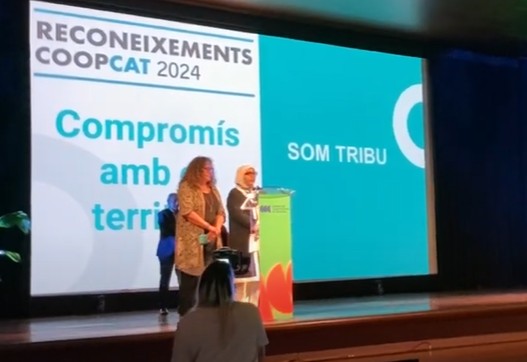
Najia Lotfi collecting an award from the world of co-operatives.
The move is particularly significant because it consolidates what had been done during Ada Colau's tenure mainly through one-off grants. Now, Lofti's project it goes on to become structurally integrated into the municipal ecosystem, with real prospects of accessing promotion, technical support, collaborations and even public procurement. In practice, The Barcelona City Council regards a private, confessional-based business as part of the social economy., which uses religious morality to regulate economic activity and channel money into its own circuit. The result is not merely symbolic: it is the institutional normalisation of a parallel economy in which the ultimate criterion for what is “ethical” is set by a theological interpretation.
The success of Islamic law in the world of the secular and co-operative left
For example, at the latest edition of the Fair of the Solidarity Economy of Catalonia, held at Barcelona's Estació del Nord, He spoke at a talk on migrant entrepreneurship, presented as a story of personal achievement.. In this space, Lofti shared the stage with women who have experienced precarity first-hand, even though her background — as a former MP for a Moroccan Islamist party and the head of a multimillion-pound financial project — places her in a radically different social and economic position.
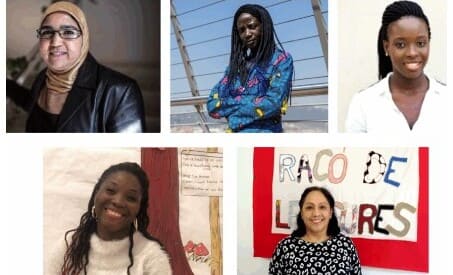
The former MP was presented alongside immigrants who have prospered.
This presence is not anecdotal but representative of its integration into the cooperative ecosystem. In the same circles, Lofti has been invited to events in the ethical finance sector and has taken to the stage at the CoopCat Awards to collect and sharing acknowledgements linked to projects funded by CoopHalal, such as the housing cooperative Somtribu. In all these contexts, the fact that its project operates under Islamic law and is subject to a religious committee not only fails to generate debate but is absorbed without conflict under the umbrella of the ’ethical economy“. The result is The normalisation of a confessional project within spaces defined as secular, transgressive and emancipatory..

The success of Islamic law in the world of the secular and co-operative left
The latest controversy in Najia Lofti's career is their appointment as a lecturer on a postgraduate course affiliated with the Autonomous University of Barcelona. It is the Postgraduate Diploma in Social and Solidarity Economy – Co-operative Studies, a proprietary qualification coordinated by the co-operative La Ciutat Invisible and funded with public money from the Generalitat de Catalunya. In this context, Lofti appears as a an expert invited to deliver content on Islamic finance, thereby integrating a confessional economic project into a university space associated with the social economy.
The controversy is exacerbated by an inconsistent academic narrative with which Lofti presents himself. In various public spaces and promotional materials she self-describes as a doctor, but references to her doctorate vary depending on the context: in some cases she attributes it to the Rey Juan Carlos University, in others to the Carlos III University of Madrid. Nevertheless, No doctoral thesis is locatable or registered in public academic repositories or university databases.. Despite this absence of verification, Lofti is presented and accepted as a lecturer in an institutional-backed university training programme, without this contradiction appearing to prompt any internal scrutiny or debate.
Her presence on the postgraduate course is not neutral: Lofti does not attend as an independent researcher, rather as president of CoopHalal, the body that markets the Islamic finance she herself advocates.. This introduces an obvious confusion between teaching, academic legitimacy and the promotion of a religious business, now under the university umbrella.
From a modest co-operative to 61% profits
Najia Lofti's account begins with a small, almost symbolic cooperative, but the figures from the CoopHalal Group itself tell a different story. According to its financial report for the first half of 2025, the project has experienced exponential growth in social capital, funding volume and number of members. The share capital rises from nominal figures in the early years to exceed €13 million in 2025., with a particularly marked jump from 2022 onwards. In parallel, the total capital financed is approaching €10 million, with operations concentrated mainly in housing and taxi licences, two sectors key to attracting savings from working and middle-class Muslim families.
This growth does not occur in a neutral margin but within a yield-generating framework. The internal documentation itself shows a rising profit rate, which rose from around 1.71% to 2.31% between 2018 and 2020. reaching 6% in 2024, a figure hardly compatible with the narrative of a simple solidarity cooperative.
These figures bring the character full circle. Najia Lofti is not just an activist, nor just a former Islamist MP, nor just a populariser of alternative economics. She is the leader of a religious financial project that moves millions of euros, which grows thanks to the systematic recruitment of followers and has managed to embed itself seamlessly within public institutions, the co-operative movement and the Catalan secular left.. The final step is no mere anecdote: backed by data, what is presented as “ethical economy” is already a well-established religious enterprise, with profitability, territorial expansion and a clear ambition to become its own economic circuit, parallel and ideologically fortified.
Muslim Brotherhood News

ERC, PSC and Comuns oppose combating political Islam in the European Parliament.
Who is Fatiha El Mouali, much more than the helpless immigrant from the newspaper ARA
Austria prepares to ban Muslim Brotherhood political Islam
Germany prevents civil servant from being a civil servant due to ties with the Muslim Brotherhood
An official Austrian report accuses the Muslim Brotherhood of wanting to transform democracy from within.
The foundation that manages the Barcelona Office of Religious Affairs paid €175 to denounce Islamophobia
The Generalitat trains teachers with an Islamic preacher who denies Western equality between men and women
The University of Strasbourg paid the lawyers of a student who had denounced a researcher critical of the Muslim Brotherhood.
Germany's intelligence service warns of the infiltration of the Muslim Brotherhood into institutions and parties.

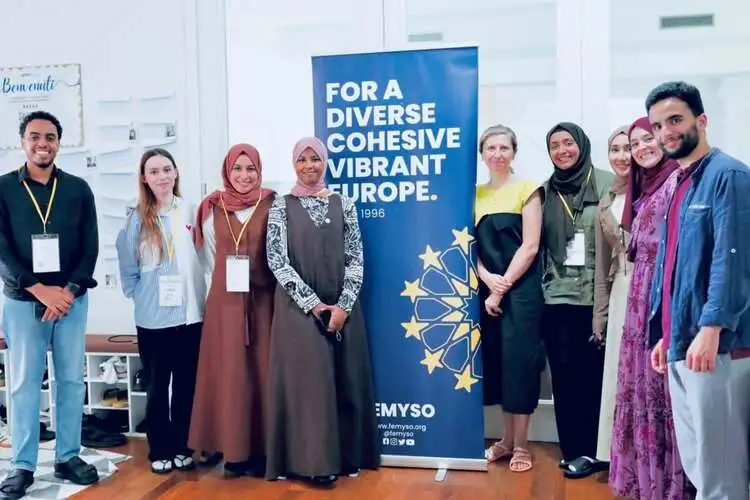
ERC, PSC and Comuns oppose combating political Islam in the European Parliament.

Azerbaijan expels students who wear Islamic headscarves from school
Sharia law in the US is supported by 75% of Muslims, 41% of atheists and up to 20% of Christians.

France now has a halal meat supply without the need to sacrifice animals facing Mecca.
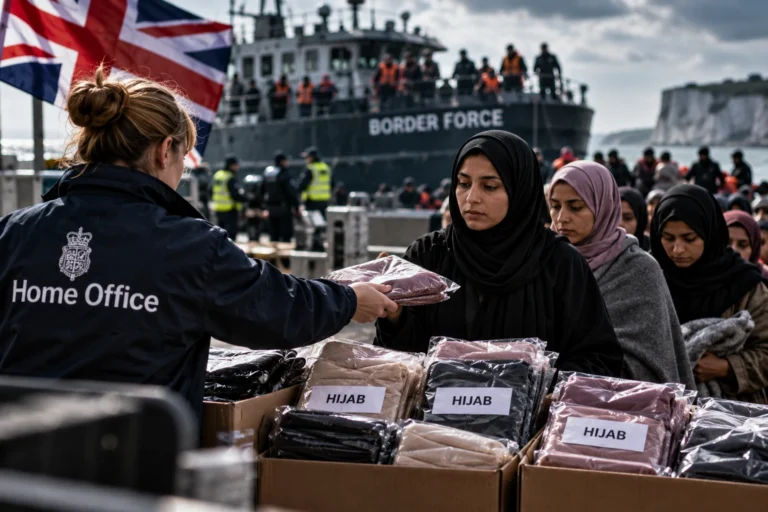
The United Kingdom gives away a thousand hijabs in six months to immigrants arriving via the Channel
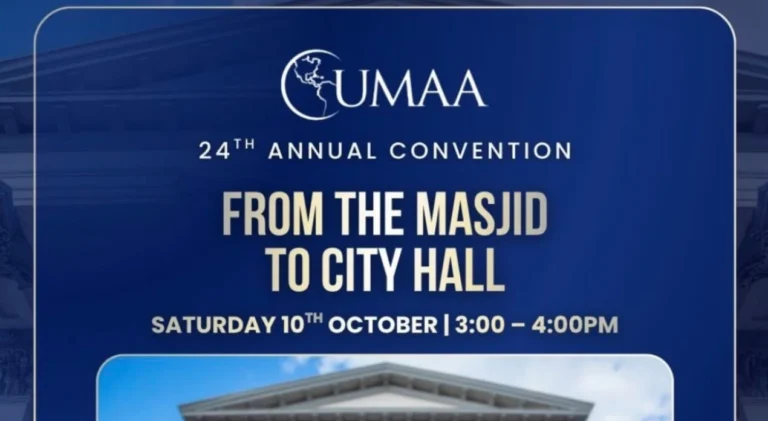
US Muslim politicians train Canadian Muslims under the slogan "From the mosque to the city hall"«
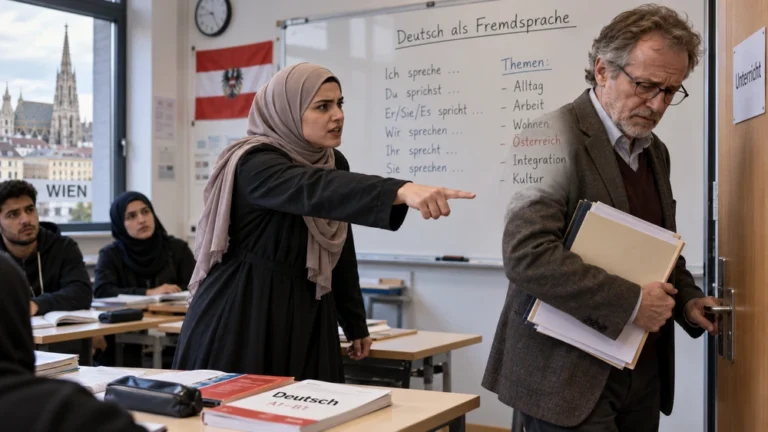
Teacher fired in Austria for denying a Muslim woman a prayer room
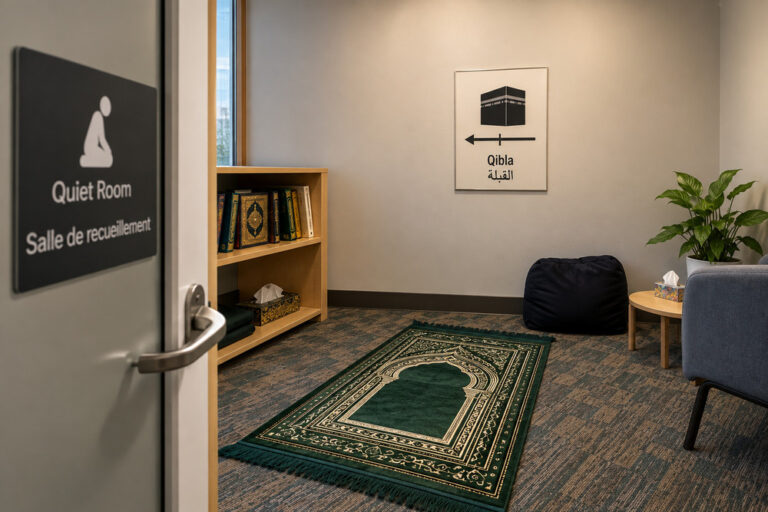
Canadian government normalizes Islamic prayer during workday
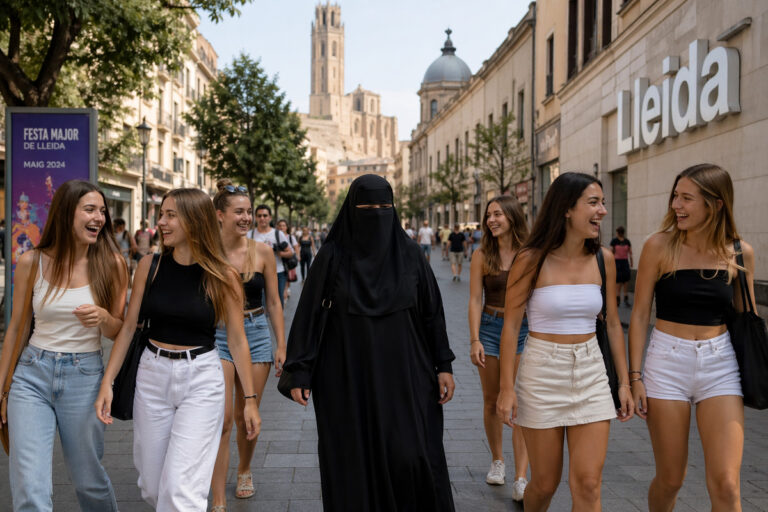
Lleida bans the burqa except if worn for religious reasons
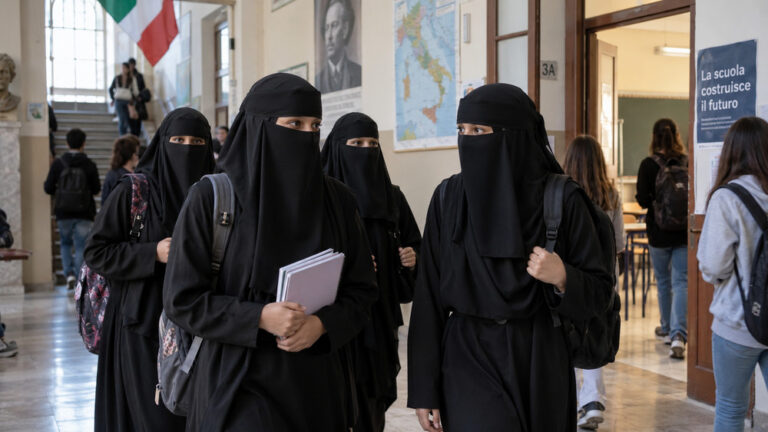
Italy bans burqa and niqab but only in schools
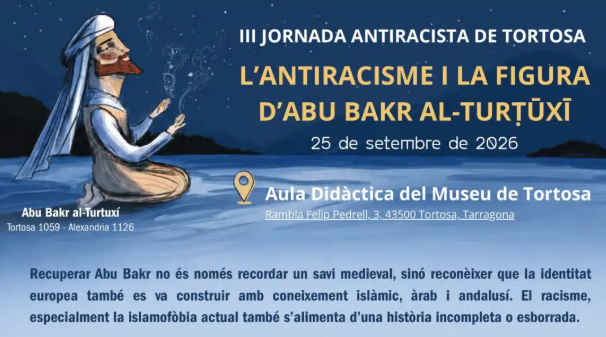
The Generalitat pays tribute to the racist Abu Bakr al-Turtuxí as an anti-racist icon
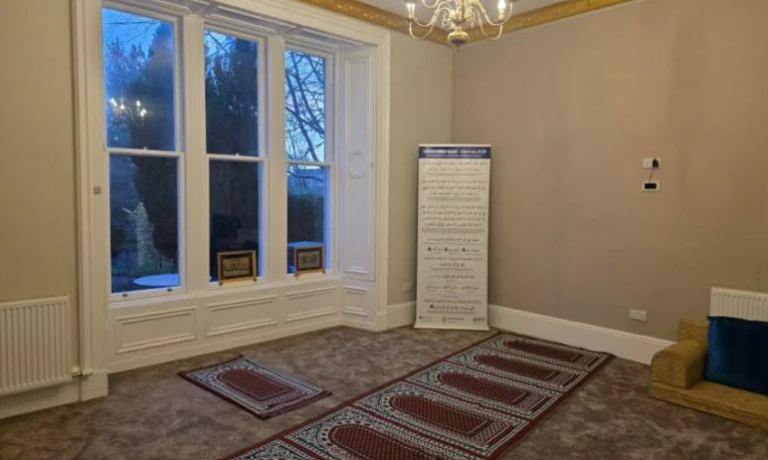
A student residence in Scotland imposes Islamic law in common areas
Kazakhstan threatens to close private schools that allow hijab

A Catholic university in Belgium incorporates Islamic chants into the opening mass of the course
A Muslim family in Granada chooses a Catholic school and demands that the courts teach Islam there
Phrase of the Week

Image of the Week
-Don't you have cousins?