
Former Moroccan Islamist MP Najia Lotfi is taking part in the Fair of Solidary Economy as a migrant entrepreneur.
The banker and expat Najia Lotfi is invited to a talk where immigrant entrepreneurs share their stories of precarity and overcoming adversity.
Talk presentation
[social-share align=»right» style=»button» mobile_app=»desktop»]
[social-share align=»center» style=»icon» mobile_app=»mobile»]
On the weekend of 18 and 19 October 2025, the Fair of the Solidarity Economy of Catalonia was held at Barcelona's Estació del Nord. The festival aims to be a meeting place for citizens, organisations and movements in the social and solidarity economy (ESS). The idea is to show alternatives to the capitalist model, to foster cooperation, sustainability and social transformation from the community grassroots.
Talk on migrant entrepreneurship with Najia Lotfi
He has taken part in this left-wing, anti-capitalist milieu. a former MP from Morocco's Islamist party in the guise of an “entrepreneurial migrant”. Unlike the other speakers at the talk, he did not arrive in Catalonia penniless or on the run from anything. They are a well-off individual from Morocco's upper-middle class, with connections, an education and strong religious fervour..
Lotfi was a member of parliament in Morocco in 2016 with the Justice and Development Party, which is considered to be linked to the ideological framework of the Muslim Brotherhood. During that period, he dealt with issues such as national defence and Islamic affairs.. Furthermore, he is an economist with a master's degree and a doctorate. In Catalonia, he heads a banking cooperative with a 61 per cent profit margin, owns more than 40 flats in his name and has been granted credit worth €10 million.
A high-class Moroccan expat banker alongside precarious voices
Najia Lotfi's life and career have nothing to do with the everyday poverty of immigrants. Her position in the affluent class allows her to speak from a place of security and recognition that sets her radically apart from her fellow panellists. Despite this, she took part in the discussion on «Migrant Entrepreneurship and the Social and Solidarity Economy.».
Right beside them, the floor was taken by women such as Yolanda Akpoli or Marie Faye., who have experienced precarity first-hand. One began as a street vendor; the other founded an association to give second chances to women in need. They speak from the lived experience of exclusion, of unfinished business, and of the need to devise real alternatives for those who have nothing.
Religious fervour at a secular left-wing fair
In an environment where many of the participants speak from the struggle against precariousness, Najia Lotfi brings a discourse strongly marked by religious fervour that also does not easily fit with the spirit of the Catalan solidarity economy. She herself has publicly defended the veil and even He has gone so far as to claim that the women of Afghanistan wear the burqa because they want to., a vision that contrasts with the feminist and anti-racist perspective of many grassroots organisations that work to empower migrant women and denounce structural oppressions.
Their financial project is also of a different nature: He launched his co-operative with just €3,000 in social capital and within ten years it was already worth €13 million. This career path, linked to the world of Islamic finance, places her far removed from the small, community-based initiatives of peers such as Marie Faye or Yolanda Akpoli, which are born out of precarity and volunteerism.
Thus, the contrast is twofold: on the one hand, a religious discourse that generates tensions with the ESS's feminism and anti-racism; on the other, an economic model that operates in a different league, much closer to banking logics than to popular self-management.
He doesn't have an Islamic bank because it's forbidden.
Although Lotfi describes his project as a financial cooperative within the framework of the social and solidarity economy, in reality It is a strategy forced by regulation.. In Spain and the European Union, Islamic banks as such are not permitted, as financial legislation requires provisions and structures that conflict with the principles of Islamic finance.
In the face of this legal scenario, Lotfi has devised a way to present his initiative as a cooperative. This adaptation has allowed him to sidestep the label of “Islamic bank” and, at the same time, to integrate into the world of the ESS, although its operation and lIts economic dimension places it far from the self-managed, grassroots model.r that characterises the majority of projects in the sector.
The basis of Lofti's project It is the promise of an “interest-free” financial system, in accordance with Islamic law.. However, it is clear that there is a profit margin: loans and transactions are presented under other names but end up functioning in much the same way as a concealed interest. This profit does not disappear, but is reinvested in the growth of the project and, at the same time, strengthens an ideological and religious framework that is intended to be expanded.. In practice, this means that a parallel financial system is built under the control of religious leaders, where the rules of the market and of the community are subordinated to spiritual authority.
Najia Lotfi's presence at the Fair of the Solidary Economy of Catalonia highlights a clear inconsistency. On the one hand, sand presents her as a “migrant entrepreneur” when her political, economic and class background places her in a privileged position, far removed from the daily struggles against precarity that define much of the ESS.. On the other hand, its financial project is more driven by banking and religious logic than by the principles of self-management, feminism and social transformation that inspire the movement.
Their participation in an anti-capitalist, left-wing space, then, exemplifies the tensions and contradictions that arise when the label of cooperativism is conflated with initiatives that, in reality, reinforce other forms of power and control.
More about Halal

France now has a halal meat supply without the need to sacrifice animals facing Mecca.
A student residence in Scotland imposes Islamic law in common areas
Halal logistics arrives: separate lorries and warehouses for Muslim food
The Barxiluna project turned 80 years of al-Andalus into Barcelona's eternal debt to Islam
A Muslim father denounces a Swedish judo club for not adapting the greeting to Islam
Muslims ban pork cooking at public barbecues in Austria
Human rights report claims Ireland served pork sausages to deportees to Pakistan
German police investigate kindergarten cook for serving pork to Muslims
A public water park in Texas advertises itself as a “Muslim-only” space”

More Perceptions of
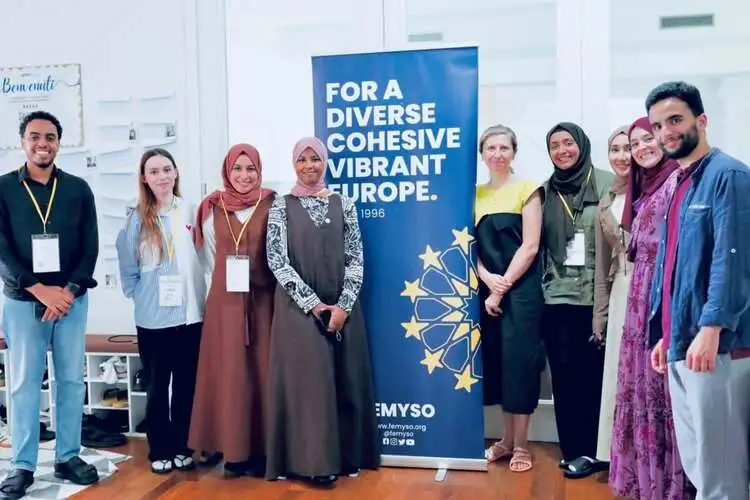
ERC, PSC and Comuns oppose combating political Islam in the European Parliament.
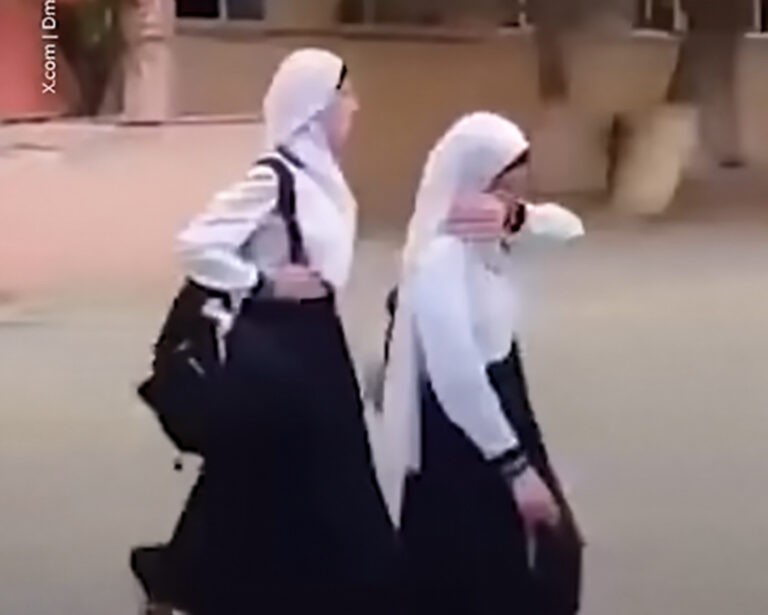
Azerbaijan expels students who wear Islamic headscarves from school
Sharia law in the US is supported by 75% of Muslims, 41% of atheists and up to 20% of Christians.
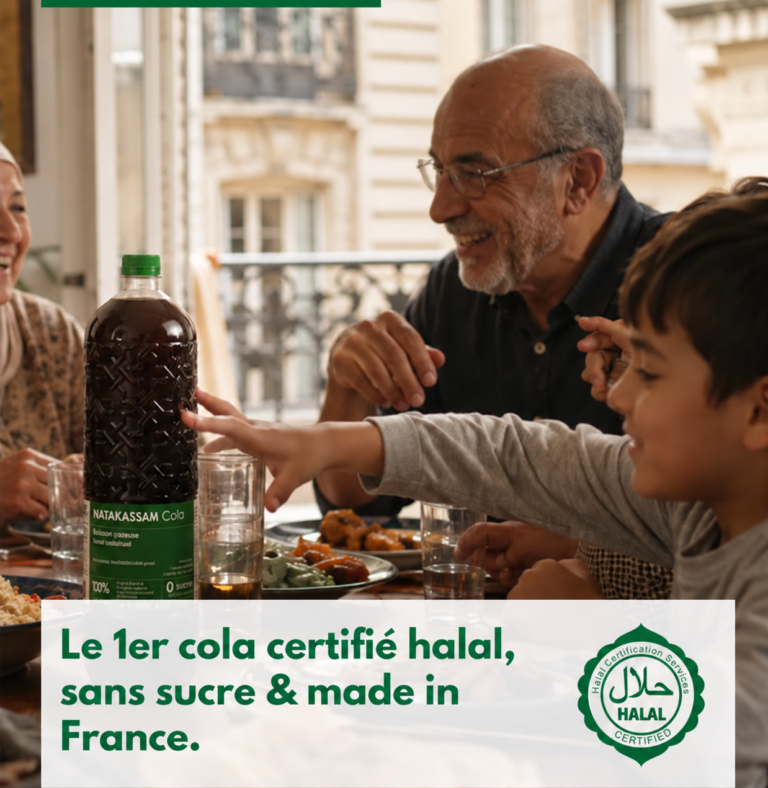
France now has a halal meat supply without the need to sacrifice animals facing Mecca.
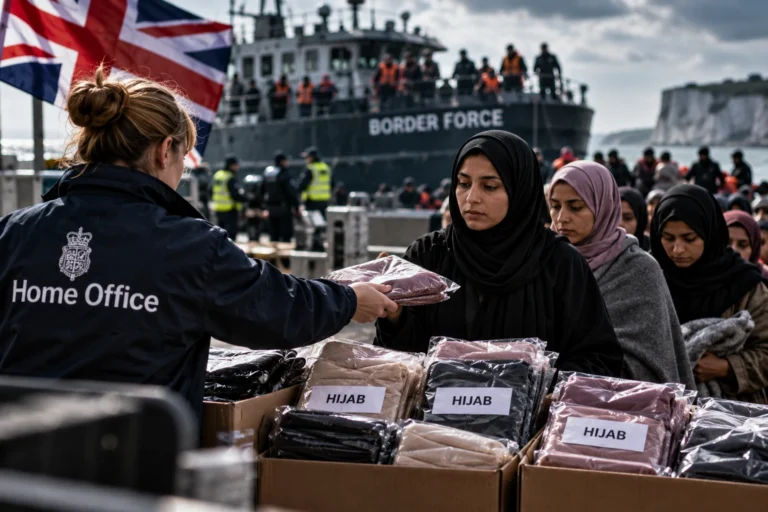
The United Kingdom gives away a thousand hijabs in six months to immigrants arriving via the Channel
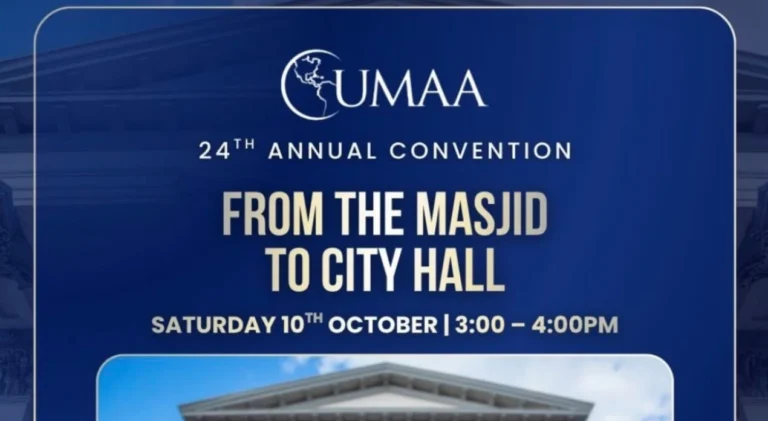
US Muslim politicians train Canadian Muslims under the slogan "From the mosque to the city hall"«
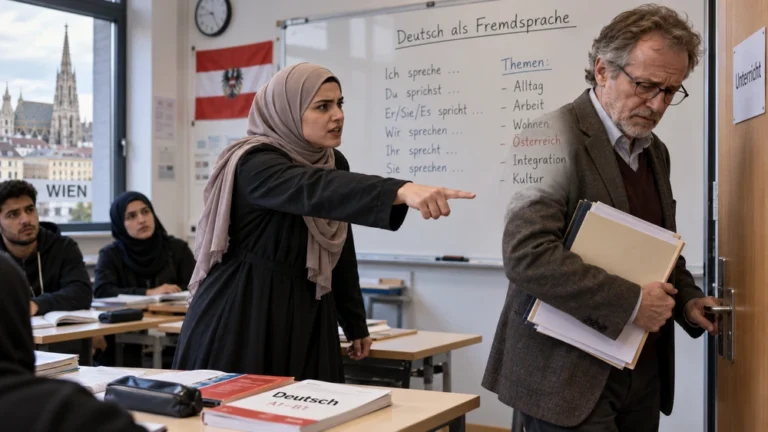
Teacher fired in Austria for denying a Muslim woman a prayer room
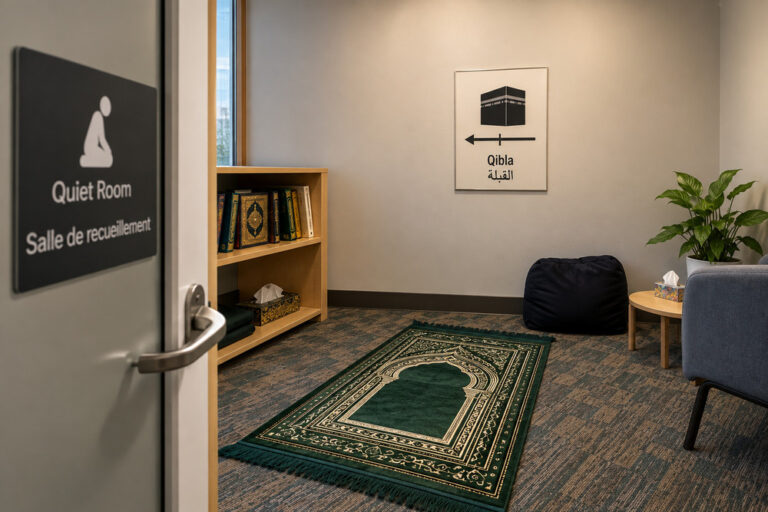
Canadian government normalizes Islamic prayer during workday
Lleida bans the burqa except if worn for religious reasons
Italy bans burqa and niqab but only in schools
The Generalitat pays tribute to the racist Abu Bakr al-Turtuxí as an anti-racist icon
A student residence in Scotland imposes Islamic law in common areas
Kazakhstan threatens to close private schools that allow hijab
A Catholic university in Belgium incorporates Islamic chants into the opening mass of the course
A Muslim family in Granada chooses a Catholic school and demands that the courts teach Islam there
Phrase of the Week

Image of the Week
-Don't you have cousins?