
Barcelona promotes the Islamic veil in official youth advertising.
The image used to encourage participation in neighbourhood youth centres features a girl wearing religious attire. The City Council thus conveys that submission to Islam is part of the identity of Barcelona's youth.
Creativity of the «Come on in» campaign»
[social-share align=»right» style=»button» mobile_app=»desktop»]
[social-share align=»center» style=»icon» mobile_app=»mobile»]
The new campaign for the Barcelona City Council's neighbourhood centres It features the image of a girl wearing a hijab in an everyday, normalised setting.. The aim of the initiative is to attract young people to the community centres by presenting them as spaces for meeting and participation in the neighbourhoods, with an image designed to resonate with religious profiles.
The «Come On In» campaign has been rolled out across various channels with the aim of gaining visibility throughout the city. It features on outdoor advertising hoardings, public transport, social media and radio. With this broad dissemination, the City Council aims to reach as many people as possible and reinforce the presence of neighbourhood centres in the public and media sphere.
Religion as a lure for «community» action»
The institutional narrative It explicitly emphasises the “community” dimension of the casals., to the point of making it the central axis of the discourse. There is talk of community action, community well-being and care, and spaces geared towards social cohesion. In this context, the presence of headscarf In the campaign, it fits perfectly with a logic that presents society as a sum of religious communities.. The result is that the City Council contributes to the symbolic legitimisation of certain practices without questioning their meaning or implications.
Moreover, the image fulfils a dual function. On the one hand, It acts as a bait for a part of the Muslim population., whom one wishes to address directly. At the same time, It can also be read as a message to more conservative families who view these spaces with suspicion. By adopting the hijab they signal that they will not question certain cultural or religious references. The idea is that the community centres are a «safe space» where no one will call any practice into question or dispute it, but rather it will be fully normalised.
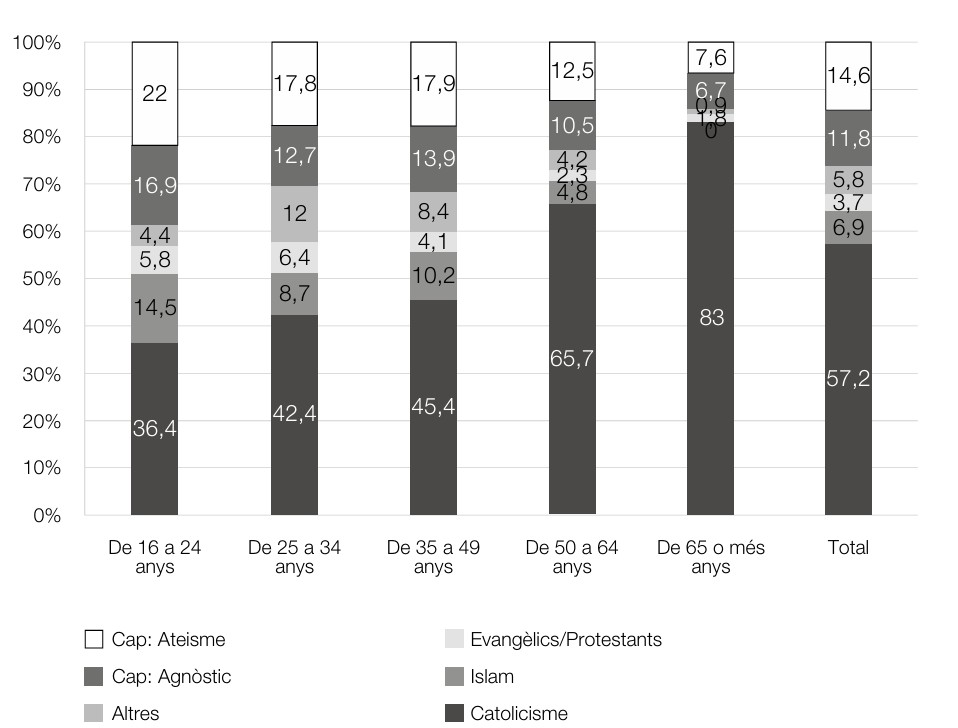
On the other hand, the normalisation of headscarf It also serves as a message to all citizens.It presents itself as completely normalised, conflict-free and as an expression of modernity. Thus, the campaign not only seeks to attract, but also to establish a mental framework in which the religious veil is beyond question and fully integrated into public and institutional space.
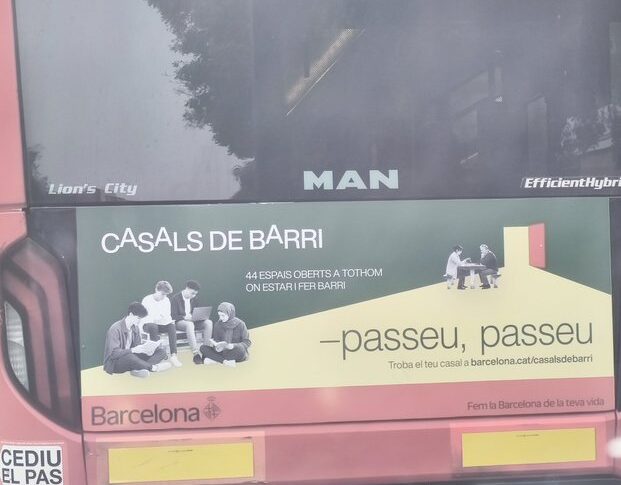
The headscarf It's no coincidence: it's the «community model» that the City Council is promoting.
The presence of headscarf The campaign is not an isolated or merely aesthetic decision. It responds to a conceptual framework that the City Council established in the 2025–2027 neighbourhood centres governance measure. In this document, The word “community” appears constantly.. The model thus transforms day-care centres into platforms for community organising rather than facilities serving individuals as they have until now. All of this without the document establishing any explicit limit in terms of values, secularism or criteria for coexistence. This model gives a central role to non-institutional entities and actors, who ultimately define the actual content of the summer camps to a large extent.
This approach has direct consequences for the way reality is represented by institutions. When the focus of public action ceases to be the individual citizen and becomes the “community”, The next step is to incorporate and make visible those elements that identify these collectives.. And among all the possible communities that could have been represented on the poster, they have chosen only the Muslim one, surrounded by people whose religion is unknown. Thus, the headscarf It fits perfectly as a recognisable symbol of a specific community and rules out the possibility of being Muslim and not wearing the headscarf. It is not just about reflecting a social reality, but about normalising it and integrating it into the institutional narrative., to the point of making it part of the familiar landscape of public communication.
Gender segregation at Barcelona's casals
In October 2025, Two leisure workers from the Raval publicly denounced that gender segregation was practised in the casal activities.. A The presentation of the organisation Per Elles they explained that in some day-care centres It has ended up being assumed that gender segregation is a condition for Muslim girls to be able to participate.. According to her testimony, even so, many teenage girls stop attending mixed activities—such as games, sports or extra tuition—while their brothers continue to take part as normal.
The entity For Them It was created precisely to denounce human rights violations affecting Muslim girls in El Raval.. Segregation in the youth clubs was only one part of the problem they exposed. During the event, they also they noted that these dynamics extend to public secondary schools in the neighbourhood, where they are applied measures of Islamisation under the label of cultural respect. These allegations point to a broader reality that extends beyond a single space and call into question the extent to which institutions are involved in promoting practices alien to Western culture.
After exposing these facts through the institutional channels and taking the complaint to the Ombudsman, Both of them were sacked. Their experience points to a problem that tends to be minimised or made invisible: The adaptation of public facilities to segregation standards that limit girls' freedom.. In this context, the image of the headscarf An institutional campaign reinforces the idea that Barcelona's institutions will continue to do nothing to help the girls who reject the family control that was denounced by Per Elles.

The neighbourhood centres campaign is not just an action to promote municipal facilities, but also an implicit statement about the «communal» model of coexistence that is intended to be built. The decision has been made and it has been decided that public spaces must adapt to certain dynamics rather than serve as a clear reference for the values they claim to defend.
More Perceptions of
More about veils

Azerbaijan expels students who wear Islamic headscarves from school
The United Kingdom gives away a thousand hijabs in six months to immigrants arriving via the Channel
Lleida bans the burqa except if worn for religious reasons
Italy bans burqa and niqab but only in schools
Kazakhstan threatens to close private schools that allow hijab
Convicted in Mallorca for gender violence for imposing the hijab, controlling and assaulting
Muslim teacher in Flanders prefers unemployment to taking off her hijab
Even Kadyrov's Islamized Chechnya doesn't want women with their faces covered with the niqab
Feminist strike in Austria to defend the Islamic veil for children under 14

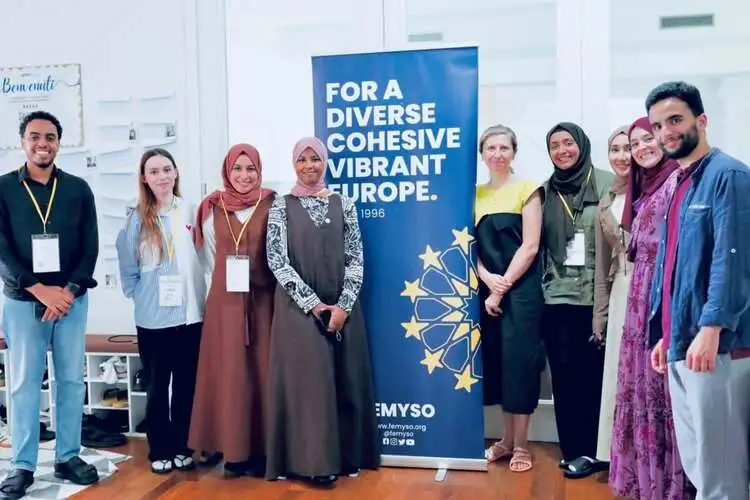
ERC, PSC and Comuns oppose combating political Islam in the European Parliament.
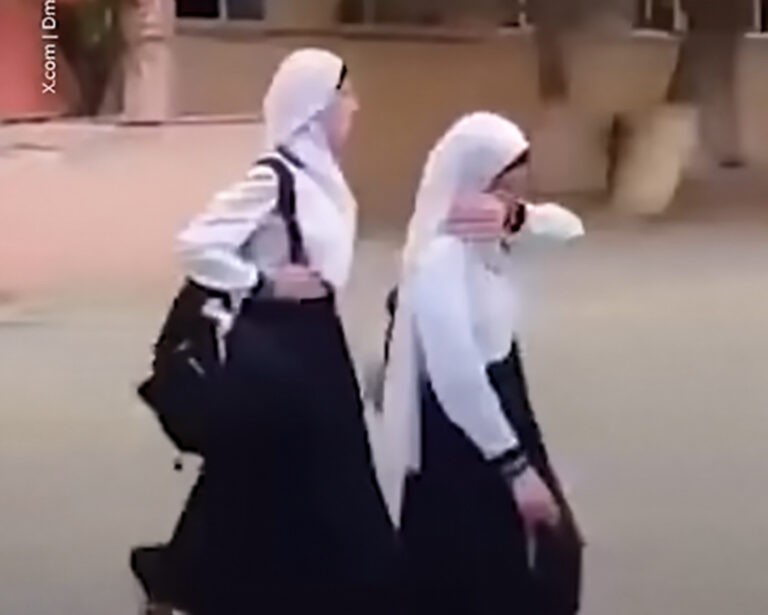
Azerbaijan expels students who wear Islamic headscarves from school

Sharia law in the US is supported by 75% of Muslims, 41% of atheists and up to 20% of Christians.

France now has a halal meat supply without the need to sacrifice animals facing Mecca.

The United Kingdom gives away a thousand hijabs in six months to immigrants arriving via the Channel
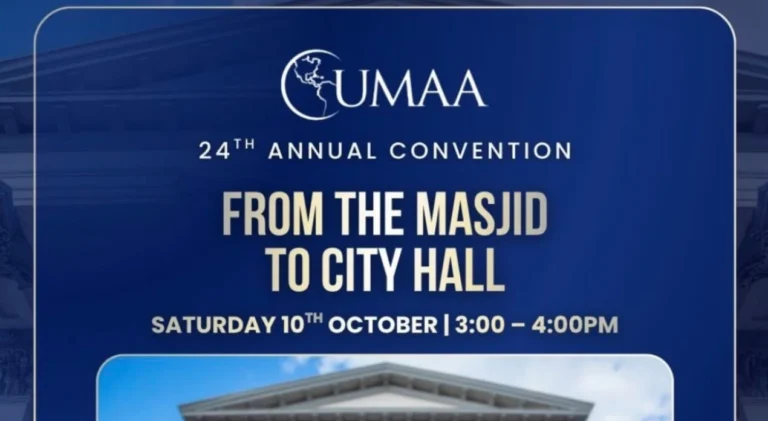
US Muslim politicians train Canadian Muslims under the slogan "From the mosque to the city hall"«

Teacher fired in Austria for denying a Muslim woman a prayer room
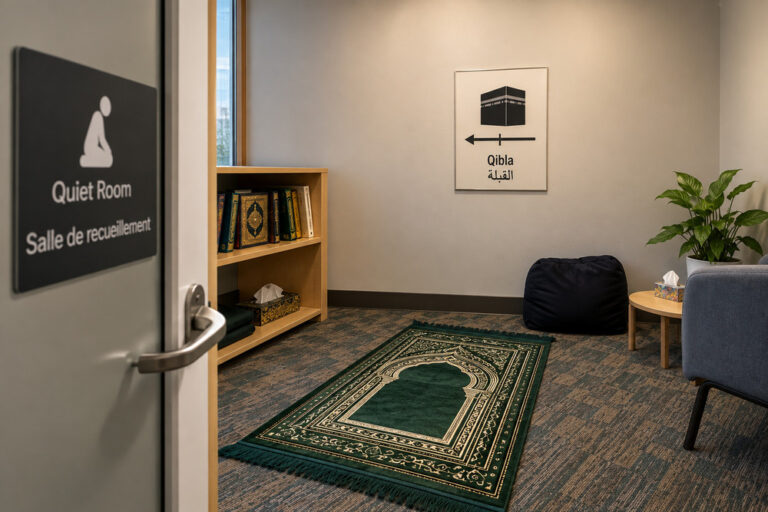
Canadian government normalizes Islamic prayer during workday
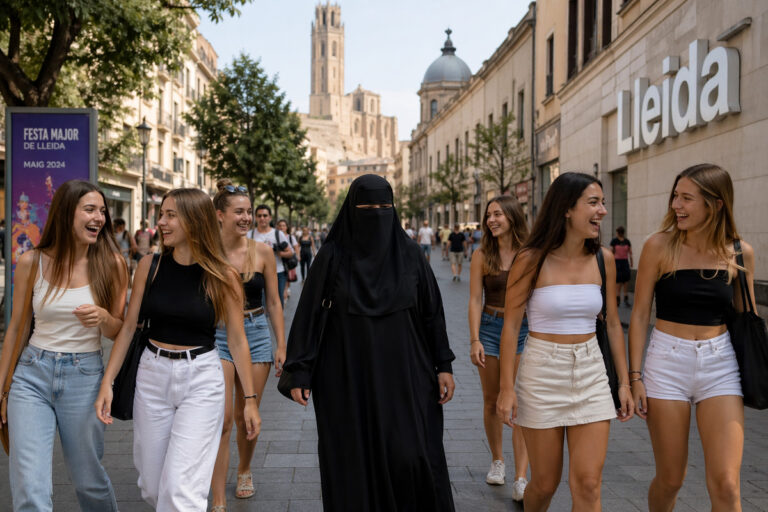
Lleida bans the burqa except if worn for religious reasons
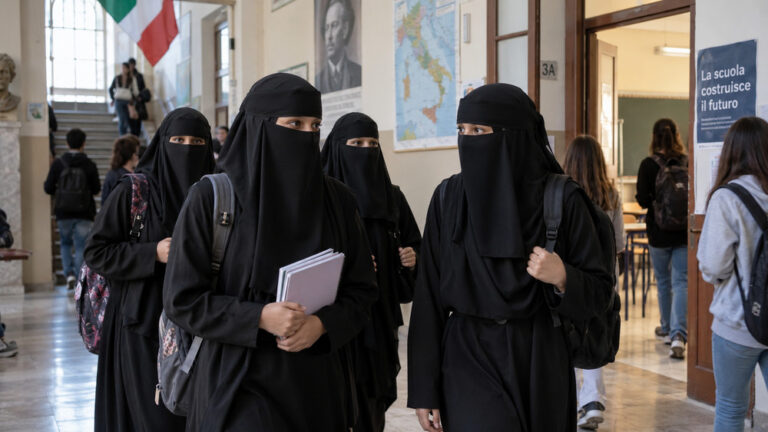
Italy bans burqa and niqab but only in schools

The Generalitat pays tribute to the racist Abu Bakr al-Turtuxí as an anti-racist icon
A student residence in Scotland imposes Islamic law in common areas
Kazakhstan threatens to close private schools that allow hijab
A Catholic university in Belgium incorporates Islamic chants into the opening mass of the course
A Muslim family in Granada chooses a Catholic school and demands that the courts teach Islam there
Phrase of the Week

Image of the Week
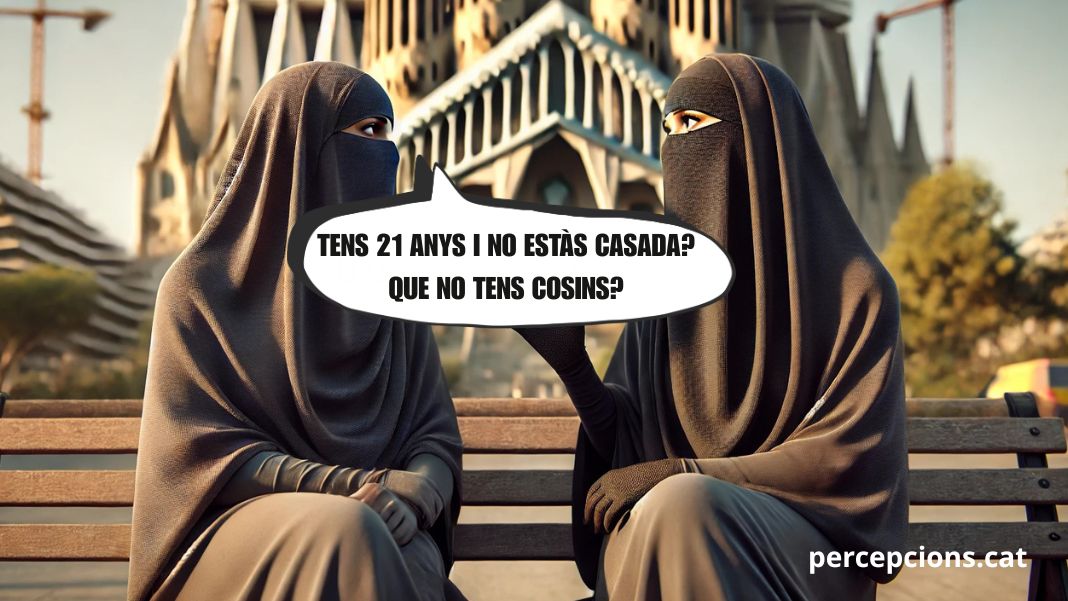
-Don't you have cousins?