
The Mohameds now outnumber the Jordis in Salt, Roses and Castelló d'Empúries.
Manlleu has 41 per cent of its population named Mohamed, the highest proportion in Catalonia among the most populous municipalities. The phenomenon is particularly pronounced in Empordà and Osona.
Distribution by municipality of the name Mohammed in Catalonia.
National Institute of Statistics
[social-share align=»right» style=»button» mobile_app=»desktop»]
[social-share align=»center» style=»icon» mobile_app=»mobile»]
The data from the National Statistics Institute and IDESCAT show an accelerated change in the demographic composition of several Catalan municipalities. The highest percentages are concentrated in Aitona (5.2%) and Manlleu (4%). Next are Salt (3.4%), Roses (3.1%) and Castelló d'Empúries (2.6%), also among the highest values in the country. In Salt and Castelló d'Empúries, the name Mohamed is three times that of Jordi, while in Roses it is clearly twice as common.
In the Ebro Delta and the Tarragona counties, the situation is intermediate.. Municipalities such as Amposta (around 0.91%) or Deltebre (nearly 11%) show a significant presence of the name Mohamed, but are still far from the levels seen in Girona or Osona. The contrast is also evident in the county capitals with a lower presence. Municipalities such as Ripoll (around 0.51%), Olot (near 0.61%) or Falset (0.71%) record very low percentages of the name Mohamed., while Jordi continues to be clearly in the majority. In these cases, the phenomenon is barely perceptible, which reinforces the idea of an uneven demographic map across the territory.
More Mohamed than Jordi in the Alt Empordà
The aggregated data by comarques confirm that the phenomenon is neither isolated nor limited to specific municipalities. In Alt Empordà there are 1,559 people named Mohamed, compared with 1,375 who are called Jordi.. In other territories such as Girona (1,645 Mochtes versus 2,595 Jordis) or Osona (1,707 versus 2,715), the difference is still in Jordi's favour, but the gap has narrowed significantly in recent years.
The contrast with other counties is notable. In Ripollès Only 113 people are registered with the name Mohamed, compared to 509 with the name Jordi., a much lower proportion. This paints a clear picture: counties with a high concentration and others where the presence remains minority, reinforcing the idea of uneven development across the territory.
More Mohamed in Barcelona, but a lower percentage
In Barcelona and its surrounding area, the pattern is different but not negligible. In the municipalities of the metropolitan area, the percentages of the name Mohamed usually range between 11% and 2.51%, with cases such as Santa Coloma de Gramenet (2.21 TP3T), Terrassa (2.51 TP3T) or L'Hospitalet de Llobregat and Cornellà at around 1.51 TP3T.. Although it remains below the highest levels of counties such as Osona or Empordà, these areas concentrate a very high population density, which also translates into a very large absolute number of people with this name. This is the case in the Barcelonès, where there are 6,394 people named Mohamed (compared with 15,488 who are called Jordi).
However, this pattern is not homogeneous across the metropolitan area. Municipalities such as Esplugues de Llobregat (0.351 TP3T), Sant Cugat del Vallès (0.431 TP3T) and Alella (0.141 TP3T) record much lower percentages, far removed from those of the more densely populated municipalities.
Catalonia is a leader in Mohamed
If one sets aside singular cases such as Ceuta and Melilla, The presence of the name Mohamed in Spain remains at levels much lower than those recorded in Catalonia.. According to INE data, the highest concentrations are found in Almería and the Region of Murcia. Municipalities such as Níjar stand at around 1.11 per cent, while in El Ejido and Roquetas de Mar the percentages range from approximately 11 per cent to 1.51 per cent. In the Region of Murcia, places such as Torre-Pacheco and Lorca show similar values, generally below 2%. However, these figures are far below those observed in Catalan municipalities such as Aitona (5.2%), Manlleu (4%) and Salt (3.4%).
The contrast is particularly noticeable in the north-west of the peninsula. In Galicia and neighbouring territories, the presence of the name Mohamed is practically non-existent., with very low percentages in most municipalities. Even in the cases with the highest presence, such as A Coruña (around 0.21 per cent) or Vigo (nearly 0.21 per cent), the figures remain far below those observed in Catalonia. The same applies to inland areas such as Castile and León, with cities like Valladolid (0.11%–0.21%) or Burgos (around 0.11%). This difference is explained by a lower influx of foreign population and a more stagnant demographic dynamic, with less growth and lower demand for labour in sectors such as intensive agriculture or construction.

Very uneven distribution in Catalonia and Spain
Overall, the data paint a clearly uneven picture in both Catalonia and Spain. While some Catalan municipalities record very high percentages of the name Mohamed — and in some cases it already surpasses traditional names such as Jordi — other areas of Catalonia and the rest of the country maintain a very low or negligible presence.
The highest percentages are concentrated mainly in medium-sized municipalities experiencing demographic growth and economic activity linked to sectors such as agriculture, services or construction. In contrast, in inland comarques, mountain areas or municipalities with an older population and lower dynamism, the presence of the name Mohamed remains low or negligible. The difference is not so much between countries as within the territory itself, with stark contrasts between counties and even between neighbouring municipalities.
More Perceptions of
More about Catalonia

ERC, PSC and Comuns oppose combating political Islam in the European Parliament.
Lleida bans the burqa except if worn for religious reasons
The Generalitat pays tribute to the racist Abu Bakr al-Turtuxí as an anti-racist icon
Who is Fatiha El Mouali, much more than the helpless immigrant from the newspaper ARA
Transcription of Ramon Cotarelo's speech in Ripoll for the 2026 Diada
Barcelona City Council spends 44,000 euros to "learn about the Muslim practices we carry within"«
Islamic marriage in Catalonia requires a guardian to authorize the woman

ERC, PSC and Comuns oppose combating political Islam in the European Parliament.
Azerbaijan expels students who wear Islamic headscarves from school
Sharia law in the US is supported by 75% of Muslims, 41% of atheists and up to 20% of Christians.
France now has a halal meat supply without the need to sacrifice animals facing Mecca.
The United Kingdom gives away a thousand hijabs in six months to immigrants arriving via the Channel
US Muslim politicians train Canadian Muslims under the slogan "From the mosque to the city hall"«
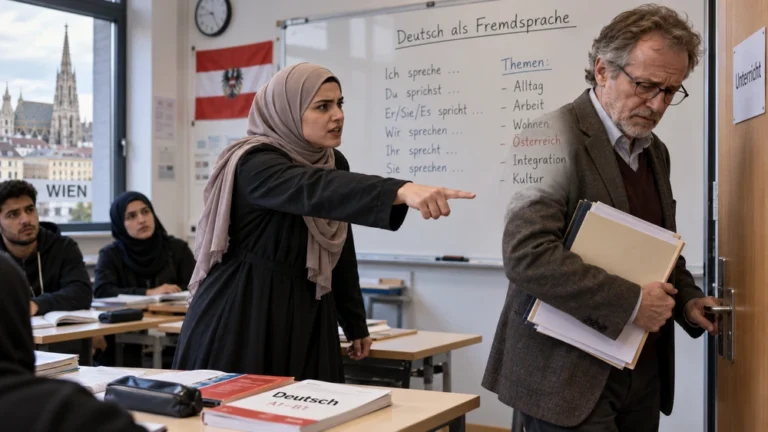
Teacher fired in Austria for denying a Muslim woman a prayer room
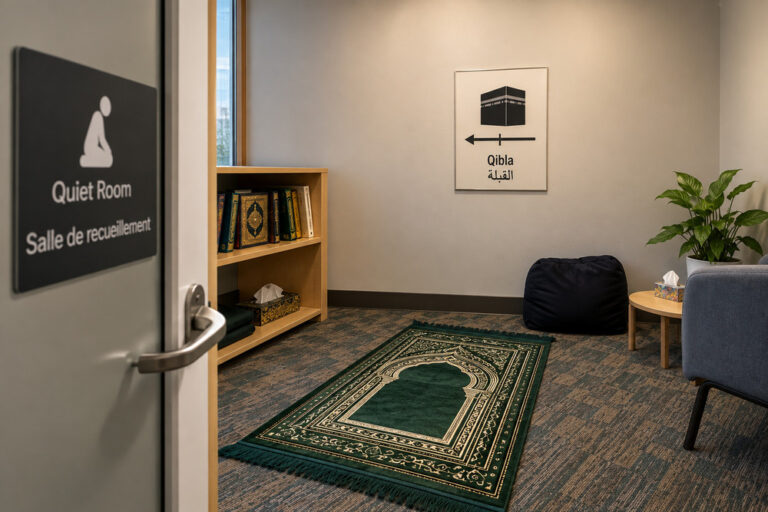
Canadian government normalizes Islamic prayer during workday
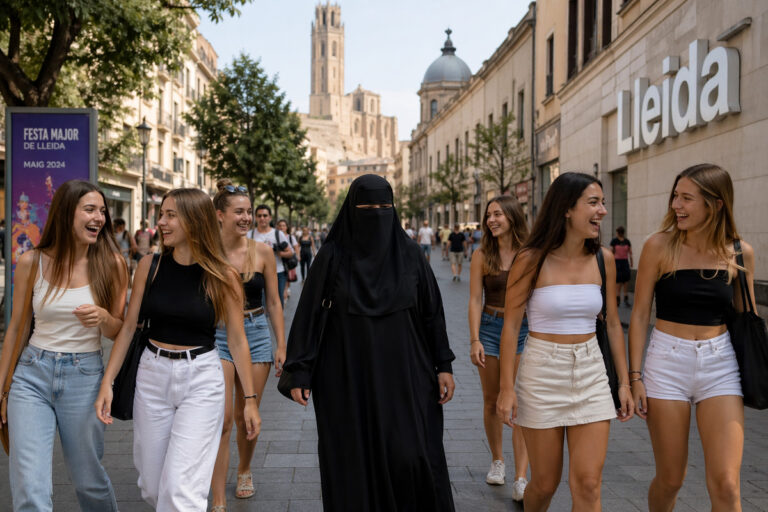
Lleida bans the burqa except if worn for religious reasons
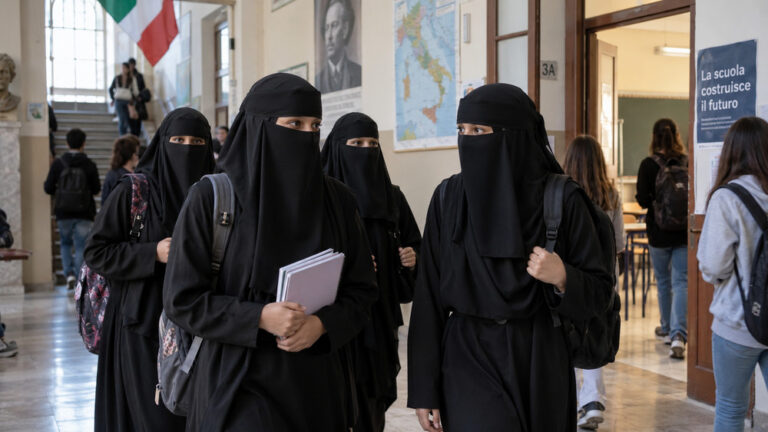
Italy bans burqa and niqab but only in schools
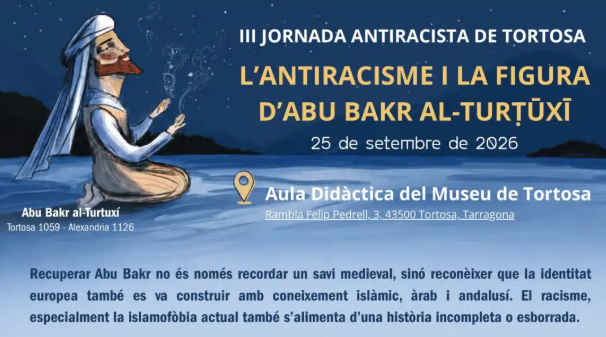
The Generalitat pays tribute to the racist Abu Bakr al-Turtuxí as an anti-racist icon
A student residence in Scotland imposes Islamic law in common areas
Kazakhstan threatens to close private schools that allow hijab
A Catholic university in Belgium incorporates Islamic chants into the opening mass of the course
A Muslim family in Granada chooses a Catholic school and demands that the courts teach Islam there
Phrase of the Week

Image of the Week
-Don't you have cousins?