
The Generalitat donates €23,000 to promote Catalan to an Islamic bank as a non-profit entity
The Department of Language Policy benefits the halal financial network, which includes a property limited company that accumulates flats and portrays the Western financial system as sinful.
Department of Language Policy Grants 2025
[social-share align=»right» style=»button» mobile_app=»desktop»]
[social-share align=»center» style=»icon» mobile_app=»mobile»]
By the end of 2025, the Department of Language Policy had allocated €23,355 from the Catalan budget to Islamic finance institutions. The grants distributed €17,669 to CoopHalal and €5,686 to CEIEFI (Centre for Studies and Research in Islamic Finance). Both structures They are part of the financial network of former Moroccan MP and Islamist activist Najia Lotfi., known on social media for defending the use of the burka as a cultural practice.
The CoopHalal credit cooperative finances housing and taxi licences with «halal credits». Meanwhile, the study centre promotes the benefits of the financial system based on the Qur'an. Both projects have received public funds. within a call for «Projects by private non-profit organisations to promote the use of the Catalan language.»As stated in the rules, it is intended to finance cultural activities that increase the actual use of Catalan.
Despite everything, There is no record of any public activity or any specific programme in Catalan by either of the two entities., while its main activity is of a financial, confessional and in Spanish or Arabic. On the other hand, lthe same resolution It includes dozens of examples of entities that do meet this criterion directly and verifiably: language partner programmes, conversation workshops, literary competitions or educational activities where Catalan is the medium of instruction and the central objective.
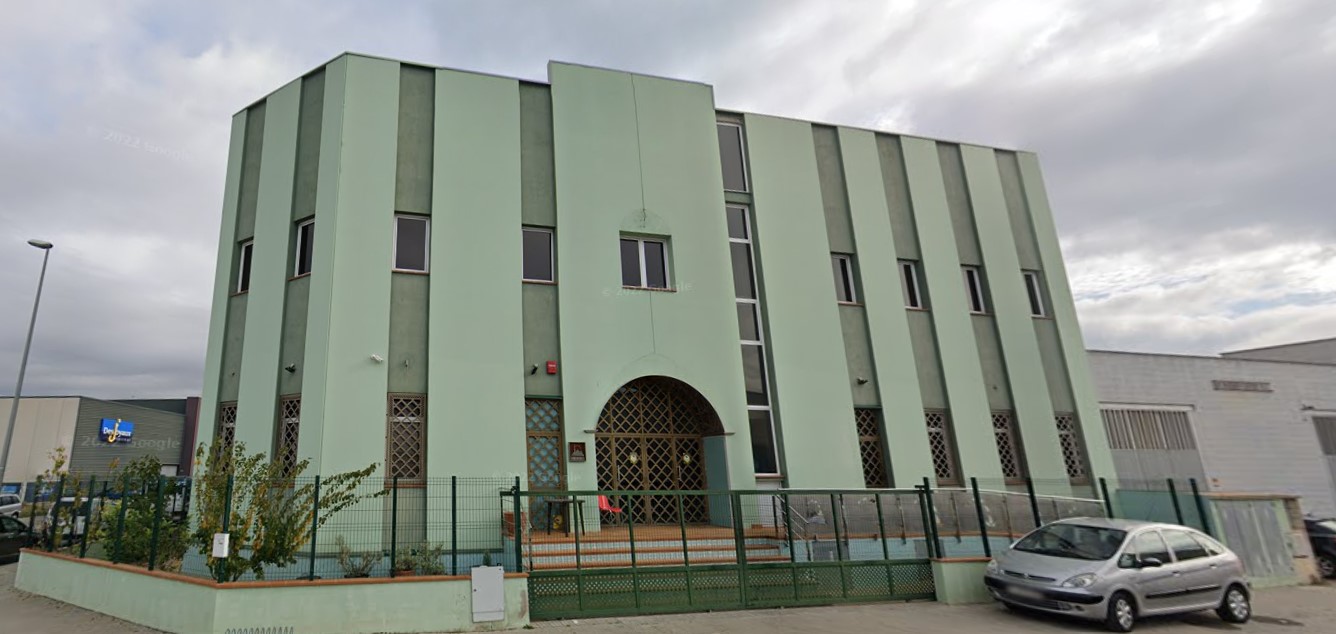
Mortgages and religion presented as a cultural activity
Far from developing language workshops or cultural activities in Catalan, CoopHalal's main activity revolves around financing housing and mobilising savings in accordance with religious criteria.. In its own webinars, the entity explains that “it works like a bank” and It offers alternatives to the conventional mortgage, which it describes as forbidden by Islam. and sinful. The moral and religious argument dissuades the faithful from using the Catalan financial system and encourages them to channel their savings and investments into the religious circuit offered by CoopHalal, endorsed by Muslim clerics.
The same religious narrative is also promoted from the study centre linked to the project., which acts as a space for doctrinal training and dissemination. Rather than cultural or linguistic activities, the content focuses on disseminating religious principles applied to economics and to the daily life of the Muslim in the West. The prevention of financial “sin” and adherence to financial obligations. halal of the entity itself They are presented as a moral solution and now also as a Catalan cultural phenomenon. worthy of public money.
Non-profit but with a property limited company
Although presenting itself as a non-profit cooperative, Mortgages are formalised through Manzil Halal Spain SL., a single-member limited company owned by Najia Lotfi. It is this company that buys the properties and lets them to the clients of the halal mortgage.
The mechanism resembles that of a disguised mortgage: The client contributes part of the flat's price, the company acquires the property and subsequently grants them the right to use it in exchange for a market-rate rent, which is presented as monthly instalments but which only appears on its records.. Over time, the user ends up paying the total cost of the property, the two transactions, the expenses and the corresponding service margin (or profit).
In practice, lSL acts as owner and landlord, accumulating properties and operating as a major landlord., a clearly commercial activity and difficult to reconcile with the concept of a cultural or not-for-profit entity required by the public call. Here, profit does not take the form of interest, but of margins, quotas and revenues associated with the ownership of real estate. The financial outcome is equivalent to that of a conventional mortgage, with the difference that ownership rests with the company and the user undertakes to pay the instalments and associated costs for years without enjoying any title deeds until the end of the process.
The complicity of the Catalan left with religious finances
Public support for the project is not limited to these language grants. Since the time of Ada Colau, the religious project of Najia Lotfi has been progressively integrated into the ecosystem of the social and solidarity economy of the’Barcelona City Council. In this environment, Islamic finance is presented as an “ethical” and “cooperative” alternative to the conventional banking system.. This institutional integration contrasts with the real nature of the project: financial operations validated by a religious committee, savings mobilisation, mortgage financing and a limited company that has accumulated more than 40 homes.
The result is that while the call requires non-profit organisations and activities to promote Catalan, the funds end up reinforcing a financial and religious structure. In the case of the Centre for Studies and Research in Islamic Finance (CEIEFI), the grant of more than €5,000 It is granted to spread its model of Islamic finance., rather than as an object of cultural promotion. As for CoopHalal, it is not clear what cultural activity they will carry out with the €17,669 they have received from Catalan taxpayers.
More Perceptions of
More about Catalonia

ERC, PSC and Comuns oppose combating political Islam in the European Parliament.
Lleida bans the burqa except if worn for religious reasons
The Generalitat pays tribute to the racist Abu Bakr al-Turtuxí as an anti-racist icon
Who is Fatiha El Mouali, much more than the helpless immigrant from the newspaper ARA
Transcription of Ramon Cotarelo's speech in Ripoll for the 2026 Diada
Barcelona City Council spends 44,000 euros to "learn about the Muslim practices we carry within"«
Islamic marriage in Catalonia requires a guardian to authorize the woman

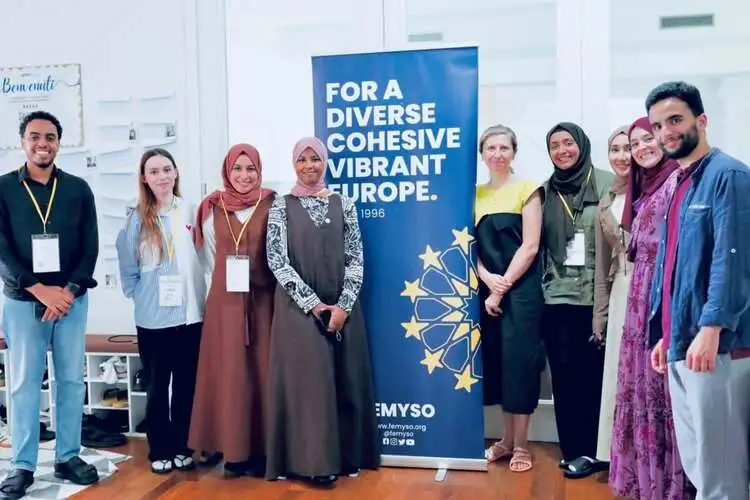
ERC, PSC and Comuns oppose combating political Islam in the European Parliament.

Azerbaijan expels students who wear Islamic headscarves from school

Sharia law in the US is supported by 75% of Muslims, 41% of atheists and up to 20% of Christians.

France now has a halal meat supply without the need to sacrifice animals facing Mecca.

The United Kingdom gives away a thousand hijabs in six months to immigrants arriving via the Channel
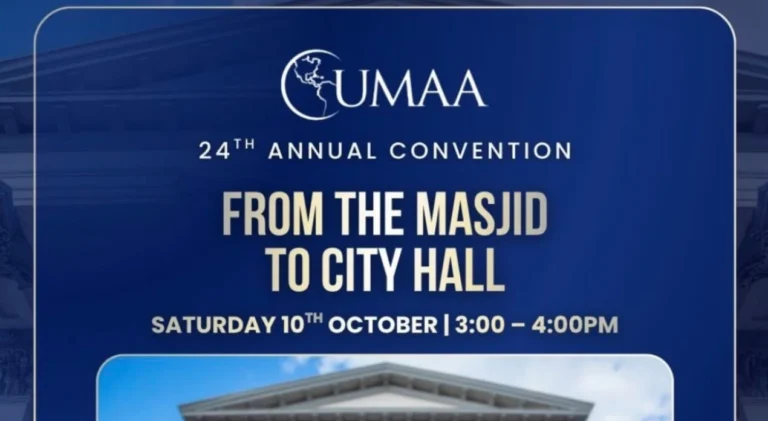
US Muslim politicians train Canadian Muslims under the slogan "From the mosque to the city hall"«

Teacher fired in Austria for denying a Muslim woman a prayer room

Canadian government normalizes Islamic prayer during workday

Lleida bans the burqa except if worn for religious reasons

Italy bans burqa and niqab but only in schools
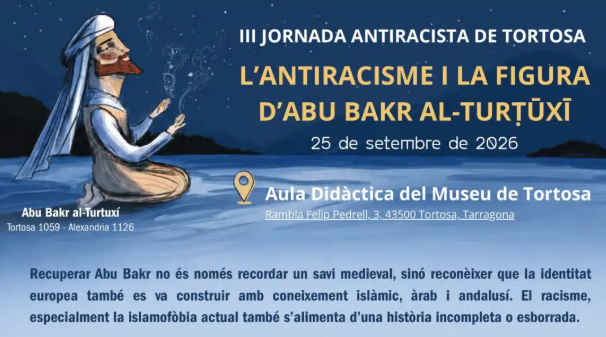
The Generalitat pays tribute to the racist Abu Bakr al-Turtuxí as an anti-racist icon
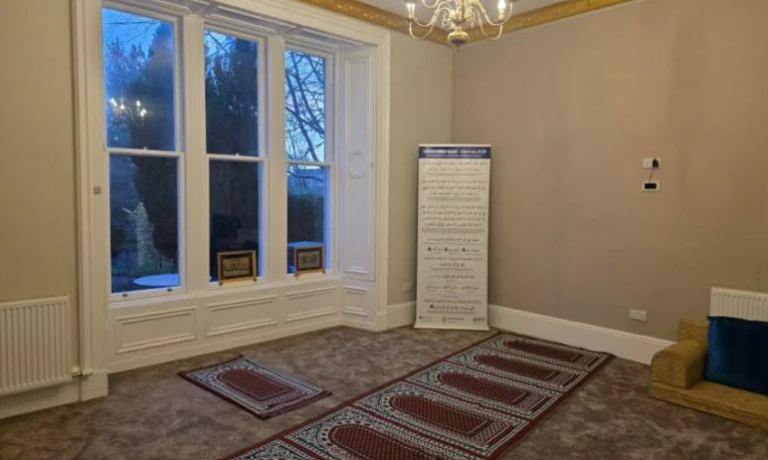
A student residence in Scotland imposes Islamic law in common areas

Kazakhstan threatens to close private schools that allow hijab

A Catholic university in Belgium incorporates Islamic chants into the opening mass of the course
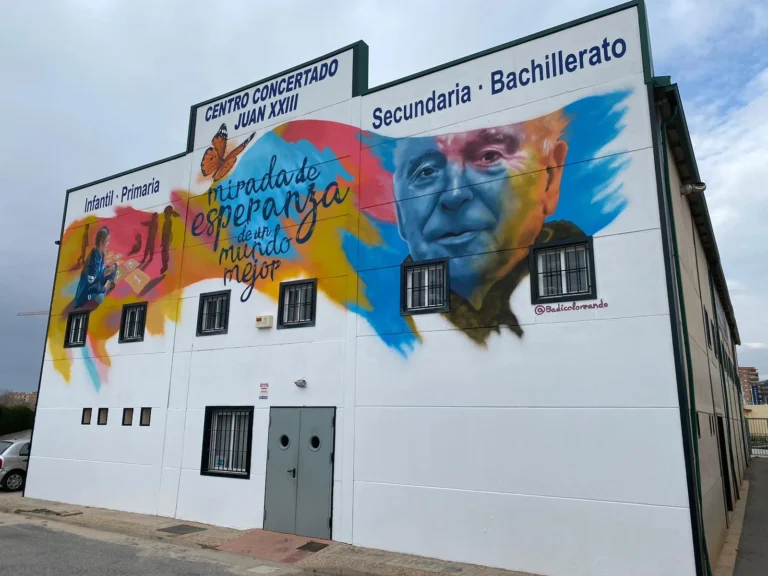
A Muslim family in Granada chooses a Catholic school and demands that the courts teach Islam there
Phrase of the Week

Image of the Week

-Don't you have cousins?