
Denmark extends burqa and niqab ban to education
Face veils have been banned on the streets since 2018. The Danish Prime Minister invites Muslims to adapt to Danish culture or leave the country.
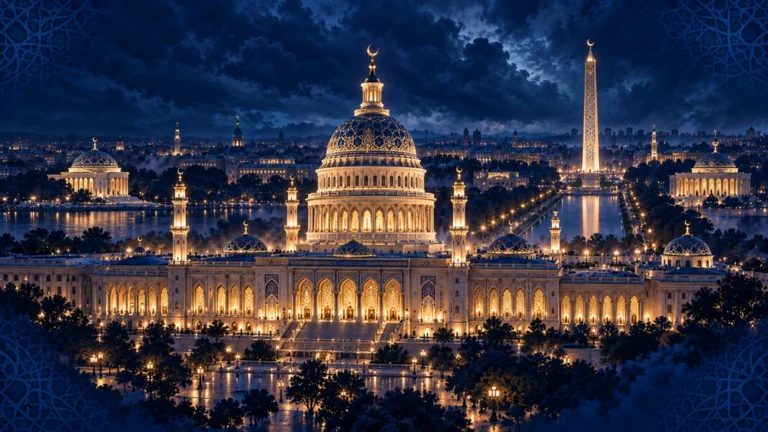
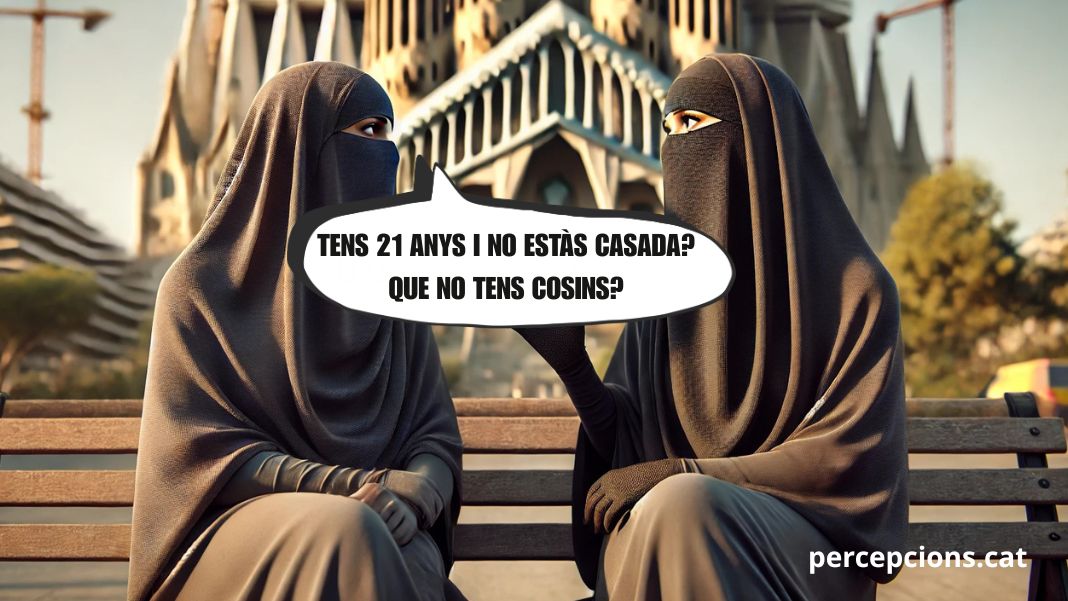
Illustrative image
Generated by AI
[social-share align=»right» style=»button» mobile_app=»desktop»]
[social-share align=»center» style=»icon» mobile_app=»mobile»]
The Danish Parliament on Thursday 17 July 2025 approved a new law that Extend the ban on the burqa and niqab in educational establishments.. The regulation affects both schools and public universities. Since 2018, Denmark already prohibited the use of garments that completely cover the face in public spaces, including the burqa, the niqab, masks and other items considered obstacles to facial identification.one.
The measure was driven by the government of Social Democratic Prime Minister Mette Frederiksen and enjoyed the support of a parliamentary majority. In her public justification of the law, Frederiksen stated that “There are legal loopholes that allow Muslim social control and the oppression of women in schools and universities.”. He also stated: “You have the right to your faith and to practise your religion, but democracy takes priority.”.
Prison, fines and obligation to leave the educational institution.
They had been in place since 2018. fines between 1,000 and 10,000 DKK (approximately €130–€1,300), depending on the number of times they repeat the offence. That law prohibited the burka and the niqab on the streets, on public transport, in places of worship, in hospitals, shops and restaurants..
It is now added that the police officers They can require veiled women to remove their veil or leave the educational centre.. If they refuse, they can be fined immediately and, if they reoffend, can receive sentences of six months' imprisonment. In addition, Anyone who forces a woman to cover her face faces up to two years in prison..
The burqa and the niqab, defined as barriers to educational interaction
The new law defines the burqa and the niqab as garments that make facial recognition and communication between students and teachers difficult.. The legal text considers that these garments impede normal pedagogical participation in the classroom and that contradict the values of transparency, equality and coexistence that govern the Danish education system.
The government has pointed out that the regulation is not directed against Islam as a religion, but rather against specific practices which, it claims, may violate the rights of women. The Minister of Justice, Peter Hummelgaard, stated that “In Denmark, no one should feel obliged to conceal their face for religious or cultural reasons.”.
The next objective is the prayer rooms.
Although the new legislation does not include any article affecting prayer rooms in schools and universities, The Prime Minister took the opportunity of the law's announcement to express her opposition to these spaces on university campuses.. Frederiksen said verbatim: “Prayer rooms are not neutral. They are often mechanisms of oppression rather than spirituality.”.
The government has asked the relevant ministries to initiate a dialogue with higher education institutions to prevent the retention or establishment of new spaces dedicated exclusively to religious practice. This initiative does not form part of the approved legal text but is a policy guideline that the government intends to develop in collaboration with educational institutions.
Denmark curbs immigration and imposes restrictions specifically aimed at Islam.
The ban on the full-face veil is part of a The Danish government's general policy to reduce immigration and limit the influence of Islam in the public sphere.. Over the past decade, the country has implemented legislative and administrative measures to restrict the arrival of people from non-Western countries. According to official data, Denmark has reduced asylum applications by 90 per cent over ten years.. This strategy has been hailed as a success by the government.
The executive's discourse links the protection of national values with curbing the arrival of people from Muslim-majority countries. In repeated public interventions, Mette Frederiksen has stated that “there are communities in Denmark where l’Islam represents a barrier to integration.”The migration policy of his government includes quotas, stricter controls on family reunification and plans to outsource asylum processing outside the European Union.
More about Islamic veils

Azerbaijan expels students who wear Islamic headscarves from school
The United Kingdom gives away a thousand hijabs in six months to immigrants arriving via the Channel
Lleida bans the burqa except if worn for religious reasons
Italy bans burqa and niqab but only in schools
Kazakhstan threatens to close private schools that allow hijab
Convicted in Mallorca for gender violence for imposing the hijab, controlling and assaulting
Muslim teacher in Flanders prefers unemployment to taking off her hijab
Even Kadyrov's Islamized Chechnya doesn't want women with their faces covered with the niqab
Feminist strike in Austria to defend the Islamic veil for children under 14

More Perceptions of
ERC, PSC and Comuns oppose combating political Islam in the European Parliament.
Azerbaijan expels students who wear Islamic headscarves from school
Sharia law in the US is supported by 75% of Muslims, 41% of atheists and up to 20% of Christians.

France now has a halal meat supply without the need to sacrifice animals facing Mecca.
The United Kingdom gives away a thousand hijabs in six months to immigrants arriving via the Channel
US Muslim politicians train Canadian Muslims under the slogan "From the mosque to the city hall"«
Teacher fired in Austria for denying a Muslim woman a prayer room
Canadian government normalizes Islamic prayer during workday
Lleida bans the burqa except if worn for religious reasons
Italy bans burqa and niqab but only in schools
The Generalitat pays tribute to the racist Abu Bakr al-Turtuxí as an anti-racist icon
A student residence in Scotland imposes Islamic law in common areas
Kazakhstan threatens to close private schools that allow hijab
A Catholic university in Belgium incorporates Islamic chants into the opening mass of the course
A Muslim family in Granada chooses a Catholic school and demands that the courts teach Islam there
Phrase of the Week

Image of the Week
-Don't you have cousins?