A report describes how the Muslim Brotherhood accesses public funds with leftist discourse
The study analyzes how entities linked to the Muslim Brotherhood have received European funds by adopting the language of diversity, anti-racism and inclusion. At the same time, it points to a lack of knowledge among officials responsible for evaluating projects.
Logo of the Muslim Brotherhood
[social-share align=»right» style=»button» mobile_app=»desktop»]
[social-share align=»center» style=»icon» mobile_app=»mobile»]
A report presented to the European Parliament analyses how organisations linked to the Muslim Brotherhood receive European public funds and gain access to institutional spaces through the use of progressive language. The document is titled Unmasking the Muslim Brotherhood: Brotherism, Islamophobia and the EU and it was written by specialists in political Islam at the request of the group of European Conservatives and Reformists.
The text does not establish a binding institutional position, but it compiles budgetary data, parliamentary questions, official documents and specific cases that point to a sustained pattern over time. The central thesis of the report is clear: European institutions tend to confuse non-violent Islamism with a moderate ally against radicalisation.. This facilitates both financing and public legitimacy. organisations that advocate an ideological vision incompatible with European liberal and democratic values.
The absence of violence is a problem.
The report emphasises that one of the main diagnostic errors of the European institutions It is to identify the absence of violence as an indicator of democratic compatibility. According to the authors, lorganisations linked to Muslim Brotherhood They do not need to resort to violent action to advance their agenda., as they operate within the legal framework and take advantage of the freedoms inherent in liberal democracies to consolidate themselves socially, politically and institutionally.
Without formally breaking the law or openly promoting violence, Actors linked to the Muslim Brotherhood present themselves as reliable partners in policies of inclusion, anti-racism and the prevention of radicalisation.. Thus, while there is broad consensus to exclude violent extremist or far-right movements from public funding, Non-violent Islamism remains off the radar of control mechanisms.. The report concludes that this asymmetry is not a minor detail, but aa structural problem that favours the normalisation and legitimacy of an ideological project which, without the need for violence, aspires to transform the European democratic framework from within.
Progressive language as a key to access
One of the central pillars of the report is the analysis of discourse. According to the document, Many organisations linked to the Muslim Brotherhood systematically adopt the vocabulary of diversity, inclusion, intersectionality, minority rights, and the fight against discrimination and Islamophobia. to present themselves as actors fully aligned with the EU's political priorities.
This use of language is not circumstantial but strategic. The authors explain that These organisations “speak the same language” as grant calls., They reproduce the formal objectives of the programmes and adapt their narrative to prevailing political sensibilities. Progressive language thus serves as a pre-existing credential of legitimacy.
When it comes to a project that deals with social cohesion, anti-racism or the empowerment of minorities, Evaluation mechanisms tend to take adherence to democratic values for granted.. No one analyses in depth the entity's ideological trajectory, its links or the real meaning it attaches to concepts such as equality, pluralism or religious freedom. According to the report, It is in this grey area that non-violent Islamism finds its main competitive advantage..
Officials who are afraid and without judgement
According to the authors, many officials responsible for evaluating projects and awarding grants operate in an environment where questioning entities that present themselves under the umbrella of diversity, anti-racism or the fight against Islamophobia It entails a personal and professional risk. The possibility of being accused of ideological bias, racism or religious discrimination acts as a brake that limits the scope for critical analysis.
This climate, the report notes, It fosters an administrative culture based on extreme prudence and the uncritical acceptance of the formal discourse of projects., to the detriment of a rigorous political and ideological evaluation. Control mechanisms thus tend to prioritise procedural correctness and the formal fulfilment of stated objectives, while the underlying trajectories, connections and ideological frameworks remain outside the focus. The result is a system that, without requiring explicit complicity, ends up favouring actors who are ideologically well-structured and penalises any attempt at substantive scrutiny.
Funding to Muslim Brotherhood entities
One of the most prominent examples is that of the European Network Against Racism (ENAR), a network that has received approximately 23 million euros. of European funds between 2007 and 2020. The document notes that ENAR has acted as a regular partner of the European Commission in initiatives on migration, climate change and combating Islamophobia, despite the fact that His former director had acknowledged a past link with the Muslim Brotherhood. According to the authors, this background has not prevented the organisation from maintaining a central position within the European institutional ecosystem.
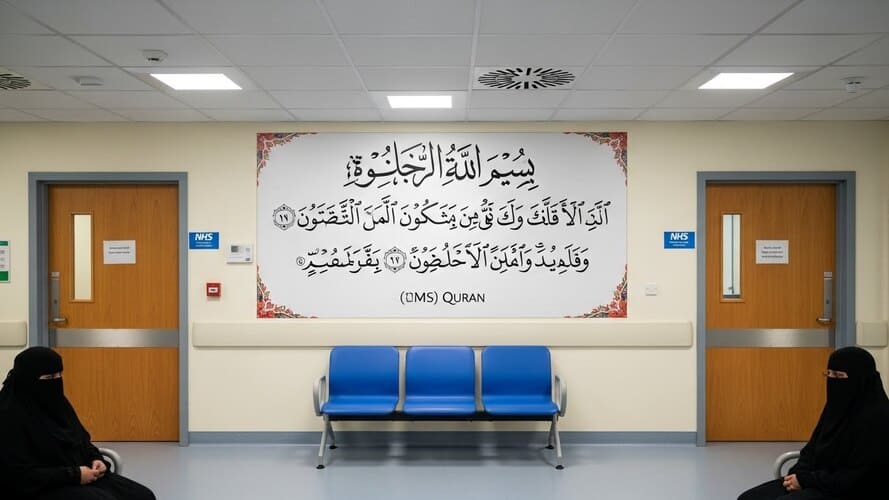
Another relevant case is that of Forum of European Muslim Youth and Student Organisations (FEMYSO), which has received €288,000 in European funding over more than a decade. The report recalls that the French report on the Muslim Brothers describes them as a space «which is preparing a new generation of activists committed to extending the influence of the Muslim Brothers in the political, social and academic spheres.«Despite these warnings, FEMYSO has continued to participate in European projects and official events, often under the label of youth representation, diversity and the fight against discrimination, without this ideological context having led to a substantial review of its access to public funds.
The report also devotes particular attention to Islamic Relief Worldwide and its European subsidiaries, which have received tens of millions of euros in funding from the European Union over the past few years. The document notes that these grants have been maintained despite an accumulation of serious controversies, including antisemitic statements attributed to leaders of the organisation, the mass resignation of its board of directors and documented links between the Palestinian branch of Islamic Relief and entities controlled by Hamas, such as the Gaza Zakat Committee.
The Forum Al Shaark is another entity linked to the Muslim Brotherhood that has as its objective«to consolidate the values of pluralism and justice«It received €1.9 million for a project entitled «When Authoritarianism Fails in the Arab World«, despite its founder and director, Wadah Khanfar — a prominent leader of Hamas's office in Sudan —, celebrated the massacre of 7 October. In 2022, Al Shaark also received more than €100,000 as coordinator of four Erasmus+ programme projects.
The Muslim Brothers under the umbrella of wokism
The report interprets the convergence between institutional wokism and the Muslim Brotherhood's strategy as a tactical rather than an ideological alliance. Progressive language acts as a framework of legitimacy that allows the brotherhood's networks to present themselves as civic actors fully aligned with European values. This dynamic fits perfectly with the nature of the Muslim Brothers: a flexible, decentralised and highly adaptive structure, composed of formally independent but ideologically connected entities. This configuration allows organic ties to be denied when necessary, while maintaining strategic coherence.
The final result, the report concludes, is not the result of explicit complicity, but of a structural imbalance: an administration lacking political judgement on non-violent Islamism, officials constrained by reputational fear, and a funding system that prioritises formal correctness. above substantive analysis. In this context, wokism does not act as the cause of the problem, but as the medium that makes it possible. And the Muslim Brothers, far from open confrontation, find in it an optimal space to consolidate influence, legitimacy and resources in the very heart of European institutions.
More Perceptions of
More about Muslim Brotherhood

ERC, PSC and Comuns oppose combating political Islam in the European Parliament.
Who is Fatiha El Mouali, much more than the helpless immigrant from the newspaper ARA
Austria prepares to ban Muslim Brotherhood political Islam
Germany prevents civil servant from being a civil servant due to ties with the Muslim Brotherhood
An official Austrian report accuses the Muslim Brotherhood of wanting to transform democracy from within.
The foundation that manages the Barcelona Office of Religious Affairs paid €175 to denounce Islamophobia
The Generalitat trains teachers with an Islamic preacher who denies Western equality between men and women
The University of Strasbourg paid the lawyers of a student who had denounced a researcher critical of the Muslim Brotherhood.
Germany's intelligence service warns of the infiltration of the Muslim Brotherhood into institutions and parties.

ERC, PSC and Comuns oppose combating political Islam in the European Parliament.
Azerbaijan expels students who wear Islamic headscarves from school
Sharia law in the US is supported by 75% of Muslims, 41% of atheists and up to 20% of Christians.

France now has a halal meat supply without the need to sacrifice animals facing Mecca.
The United Kingdom gives away a thousand hijabs in six months to immigrants arriving via the Channel
US Muslim politicians train Canadian Muslims under the slogan "From the mosque to the city hall"«
Teacher fired in Austria for denying a Muslim woman a prayer room
Canadian government normalizes Islamic prayer during workday
Lleida bans the burqa except if worn for religious reasons
Italy bans burqa and niqab but only in schools
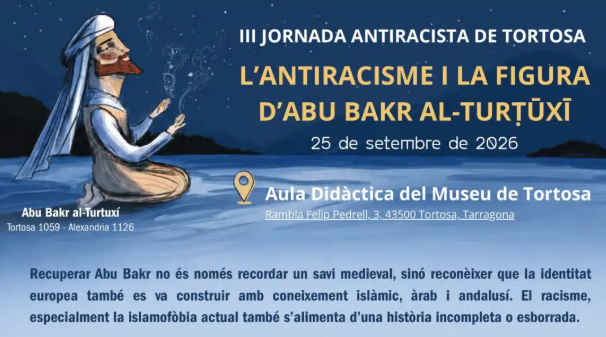
The Generalitat pays tribute to the racist Abu Bakr al-Turtuxí as an anti-racist icon
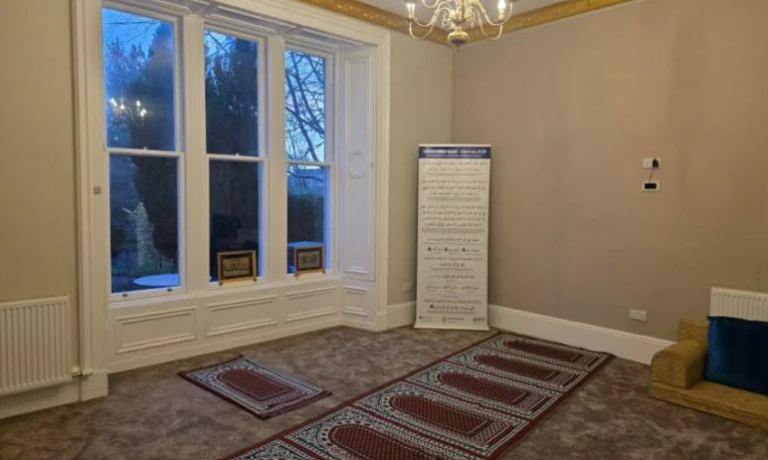
A student residence in Scotland imposes Islamic law in common areas
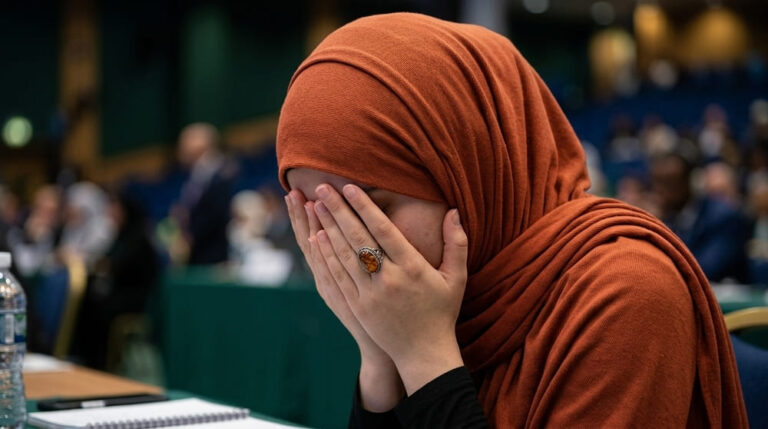
Kazakhstan threatens to close private schools that allow hijab
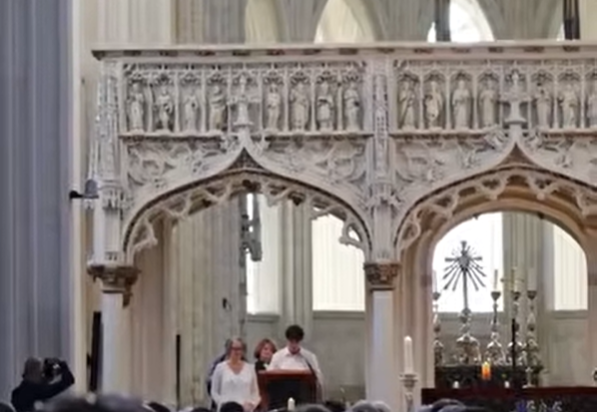
A Catholic university in Belgium incorporates Islamic chants into the opening mass of the course
A Muslim family in Granada chooses a Catholic school and demands that the courts teach Islam there
Phrase of the Week

Image of the Week
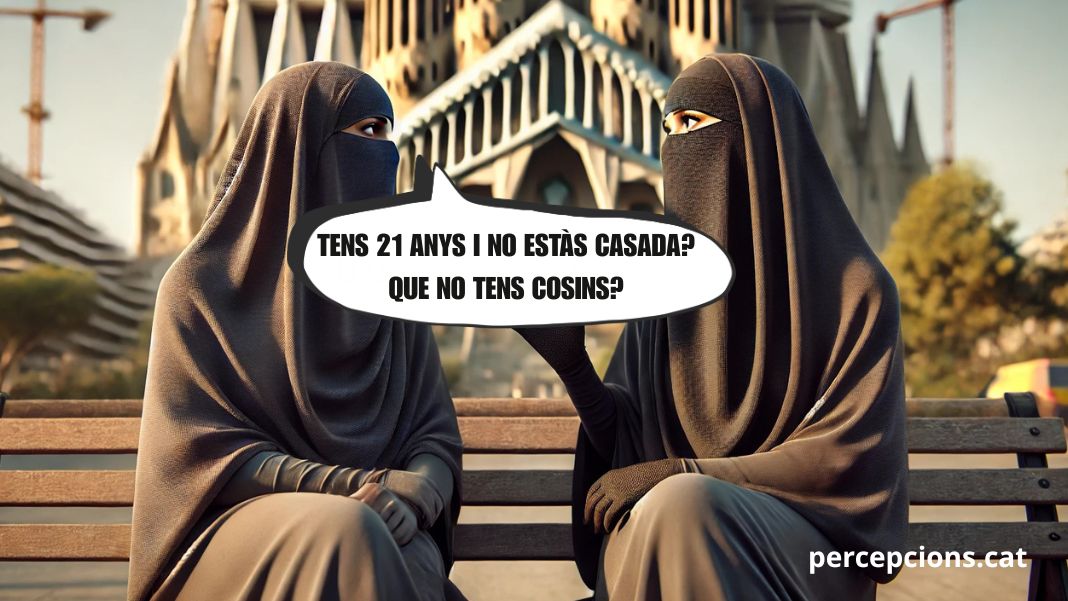
-Don't you have cousins?