
The Barcelona City Council publishes a guide for schools to adapt to Ramadan.
The document recommends avoiding activities such as music or dance during Ramadan to accommodate the more radical versions of Islam. It makes no provision for family or community pressures.
Cover of the guide published by the Barcelona City Council on Ramadan in schools.
[social-share align=»right» style=»button» mobile_app=»desktop»]
[social-share align=»center» style=»icon» mobile_app=»mobile»]
The Barcelona City Council, through the Office of Religious Affairs, has presented the document. Guidelines for educational institutions during Ramadan to provide instructions to schools on adapting to Ramadan. The text aims to offer information and criteria so that schools can understand this festival and the rights of Muslim pupils. In addition, the council has organised information sessions for teachers to explain the guidance and provide guidelines on how to apply it in schools.
In this context, the guide not only describes the Islamic festival, but also sets out criteria for centres with the stated aim of ’to integrate this reality into the life of the centre”.
Avoiding music or dance so as not to offend Islamic radicals.
The content goes beyond general information and includes operational recommendations that change the usual pace in schools. For example, in the section on subjects and activities, it notes that «Some people may consider music or dancing inappropriate during this period.»and concludes that “It would be advisable to take this sensitivity into account when planning certain activities or offering alternative activities.”.
The document recognises that “There is no regulation that exempts students from any of the curricular subjects.”Thus, although there is no legal obligation to adapt the curriculum, the text guides the school to make changes to accommodate fundamentalist interpretations of Islam that consider music a sin.
This approach falls in line with other institutional guidelines on religion in schools. This is the stated intention of the A guide to respecting diversity of beliefs in educational settings of the Generalitat de Catalunya when it says that it is necessary to “To make the observance of pupils' religious traditions compatible with the organisation of the centre.”It is, then, quite a deployment of resources to to modify the ordinary running of schools to accommodate pupils' religious sensitivities which can range from dress code to food, the content of the subjects, the very existence of the subjects or the extracurricular activities.

Protocols for everything, except for cases of family pressure
The Barcelona City Council document states that it is common for some younger children… who wish to fast, “impatient to take part in the celebration”. This formulation presents fasting as a spontaneous initiative by the minor and does not address other factors that may influence it. In line with this approach, the guide states that pupils who use the canteen service and fast “They have the right to be served at lunchtime.”Furthermore, it adds that, whenever possible, it is preferable that they be in a room other than the dining room while the others are having lunch, without specifying how the monitors will manage to attend to them all.
The text justifies this measure as good organisational practice, but does not develop specific guidelines on how centres should act if the minor changes their mind or if the decision is not fully autonomous. Nor does it at any point address what to do if there is coercion among pupils to comply with a religious precept. In no case, It is proposed to take advantage of the situation to instil Western values such as individual freedom., public spaces' neutrality or the secular school. The overall tone of the guide is that Muslims fast en masse without allowing the option of being Muslim and eating normally in order to be able to perform at school.
The guide specifically states, in a resigned tone, that the school cannot prevent a child from eating if they wish. This indication reinforces individual decision-making., but the guide does not address what consequences this situation may have within the family environment, nor how centres should act in the event of possible conflicts between the parents' judgement and the child's wishes.. The document It focuses primarily on how to support and facilitate the practice of fasting.. Only in the phrase «If a child wants to eat or drink, they should be able to do so, and it is not the school's function to prevent them.dto go there»Personal autonomy is taken into account. The whole strategy consists of explaining how to manage fasting within school life, but It offers nothing for situations where the minor chooses not to follow it. and is subjected to pressure. There is no guidance on how to manage the discrepancy from an educational standpoint or how to protect the child who is under pressure. The result is that the system leaves children on their own in the face of family and community pressure.
Guide content
Muslim nutritionist to carry out scientific jihad
The institutional presentation of the guide is not limited to explaining the document, but also includes a specific talk on nutrition during Ramadan by Muslim nutritionist Hadia Bakkali. The speaker had already taken part in Training in the Sant Andreu District to provide nutritional guidance to healthcare professionals so that they can learn to preserve patients' spirituality and dietary needs during Ramadan.
Now, he is once again involved in an activity linked to public administration to offer “Practical guidance to support students and the educational community”during Ramadan. Bakkali advocates a model that combines nutritional arguments with the spiritual dimension of fasting and presents this practice as an experience with potential metabolic benefits. In his public guidance, for example, It explicitly acknowledges that dehydration occurs during the day and that it must be compensated for afterwards., and describes strategies for adapting physical activity or meal composition to the times when one can eat. At no point does it propose as the reference scenario that young people maintain their usual routine under optimal physiological conditions., It neither places the principle of holistic health as an unconditional starting point nor does it set fasting as a prerequisite. Bakkali's teachings assume prior fasting and aim to make it compatible with everyday life.
It is in line with the municipal guide: the starting point is not the centre's ordinary operation, nor the young people's performance or well-being. The objective now becomes adapting the school organisation to religious practice., never the other way round.
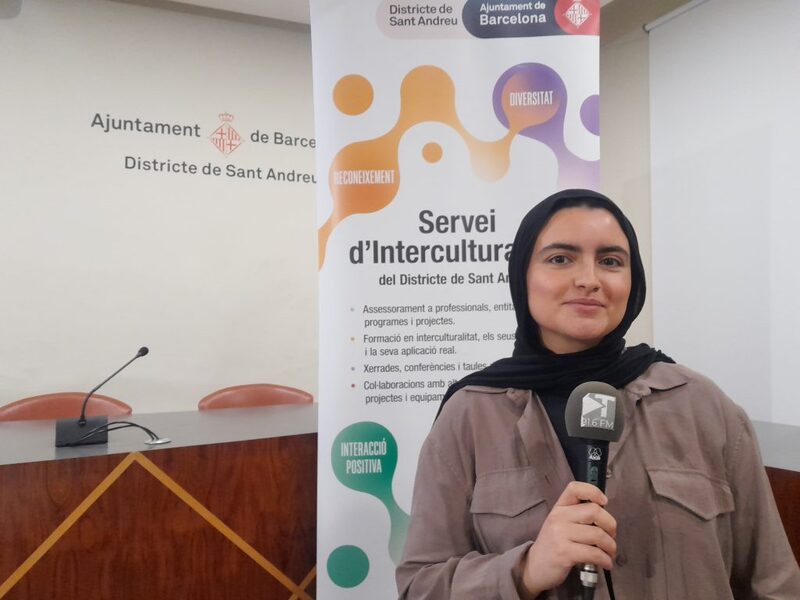
The Islamic nutritionist Hadia Bakkali.
The new function of the school subjected to Islam
The public school is legally defined as secular and non-denominational, that is to say, as an institutional space that does not promote any particular belief and which must guarantee a common framework for all pupils regardless of their religion. In this context, the publication of a guide that sets out specific guidelines for adapting school operations to Islam represents a change in approach: the school no longer acts solely as a neutral space, but rather… as an agent that must actively manage demands linked to beliefs. The document does not present this issue as a pedagogical or institutional debate, but as an operational guideline that schools must apply.
This approach contrasts with the evolution in many centres in recent years, where traditional Christian celebrations such as Christmas have been scaled back or reinterpreted to avoid confessional references. The result is a framework in which institutional neutrality is applied to some religions but, for others, schools are urged to adapt. This places the debate on a broader footing than that of Ramadan: the role the state school should play in relation to beliefs within an education system that, formally, defines itself as secular.

More about Ramadan

Muslims in Italy are taking advantage of May Day to demand public holidays in the work calendar.
A study by Can Ruti and Sant Pau proposes not testing pregnant women for glucose during Ramadan.
Sant Andreu observes Ramadan with a prayer room at the district headquarters.
Bonpreu is sponsoring an iftar in Lleida featuring a conservative Islamic preacher.
New York police explain they put up Ramadan lights to «educate» non-Muslims
Pep Guardiola rebukes fans who boo during the Ramadan break

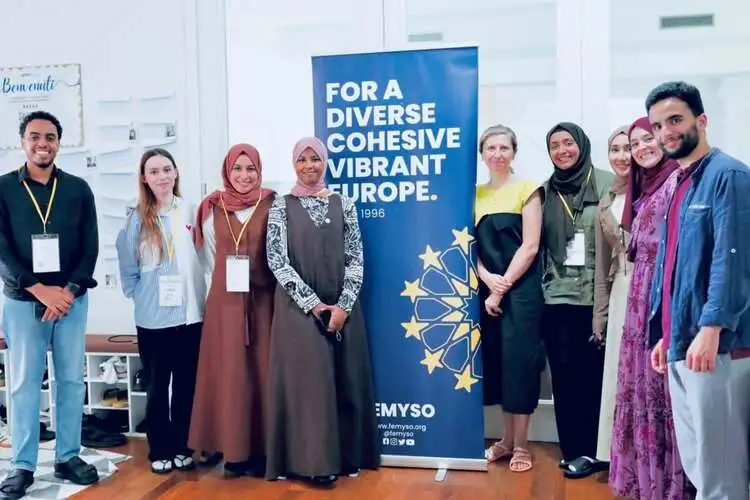
ERC, PSC and Comuns oppose combating political Islam in the European Parliament.
Azerbaijan expels students who wear Islamic headscarves from school

Sharia law in the US is supported by 75% of Muslims, 41% of atheists and up to 20% of Christians.
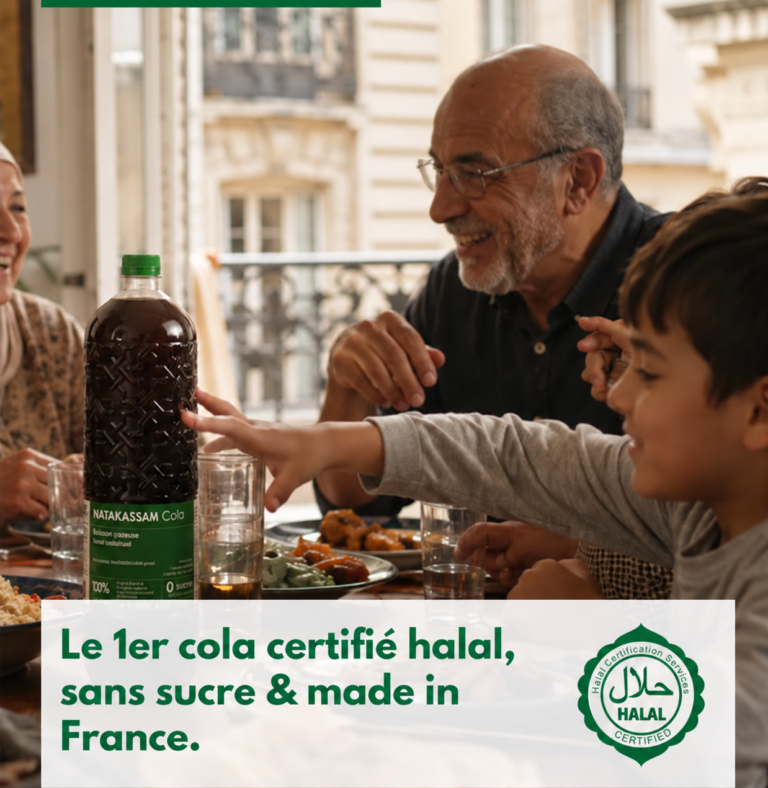
France now has a halal meat supply without the need to sacrifice animals facing Mecca.
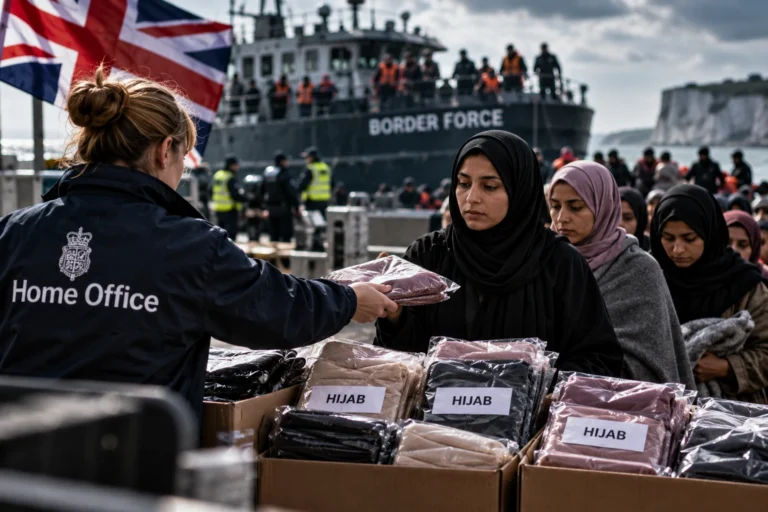
The United Kingdom gives away a thousand hijabs in six months to immigrants arriving via the Channel
US Muslim politicians train Canadian Muslims under the slogan "From the mosque to the city hall"«
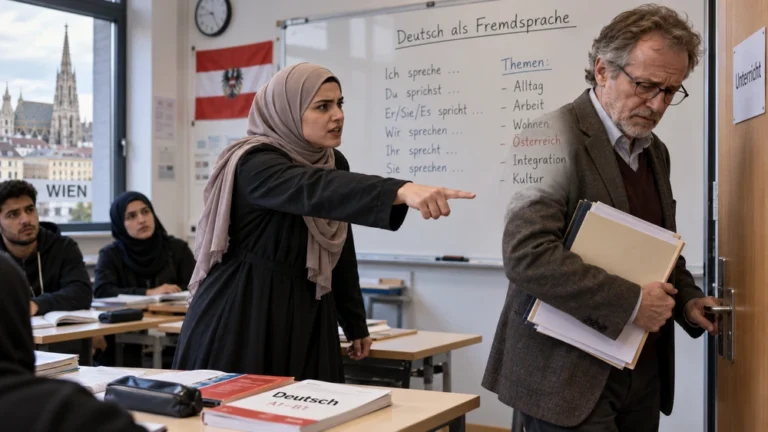
Teacher fired in Austria for denying a Muslim woman a prayer room
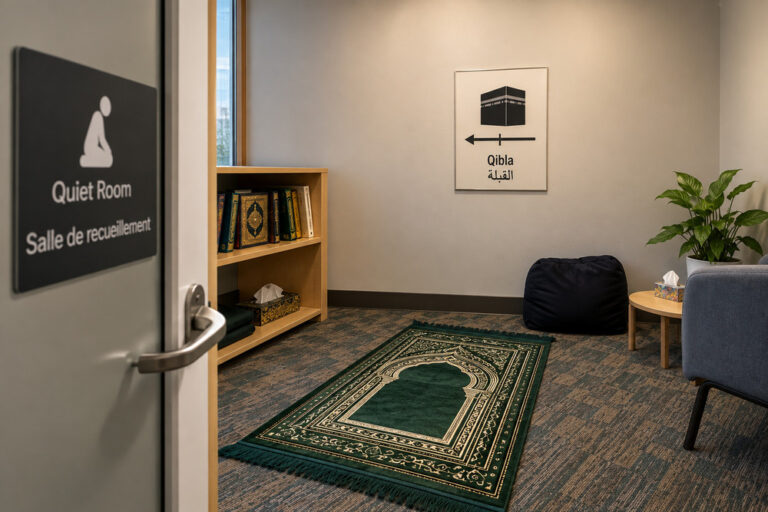
Canadian government normalizes Islamic prayer during workday
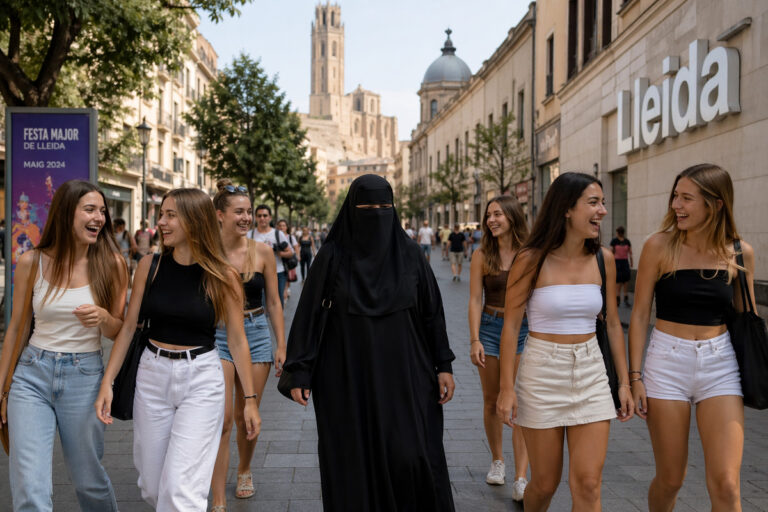
Lleida bans the burqa except if worn for religious reasons
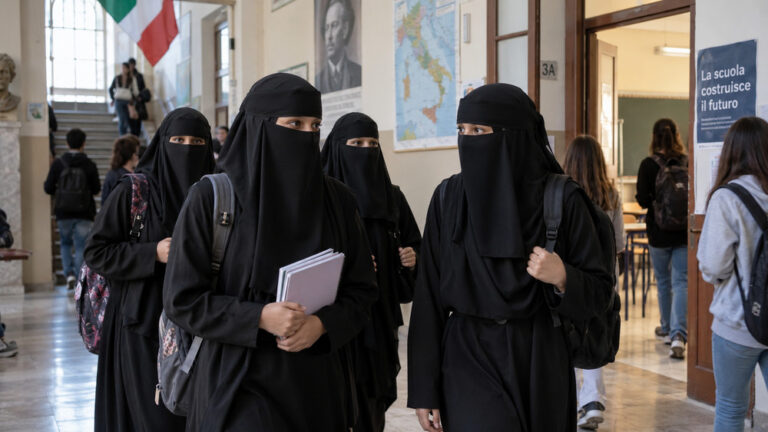
Italy bans burqa and niqab but only in schools
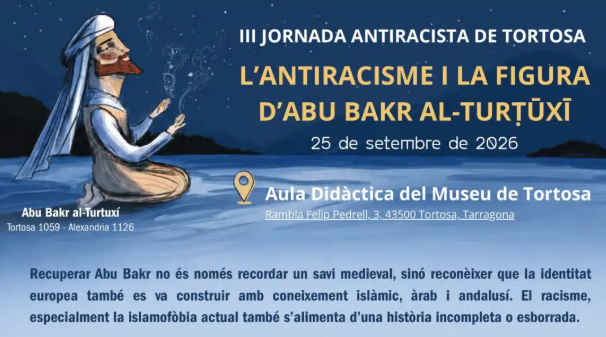
The Generalitat pays tribute to the racist Abu Bakr al-Turtuxí as an anti-racist icon
A student residence in Scotland imposes Islamic law in common areas
Kazakhstan threatens to close private schools that allow hijab
A Catholic university in Belgium incorporates Islamic chants into the opening mass of the course
A Muslim family in Granada chooses a Catholic school and demands that the courts teach Islam there
Phrase of the Week

Image of the Week
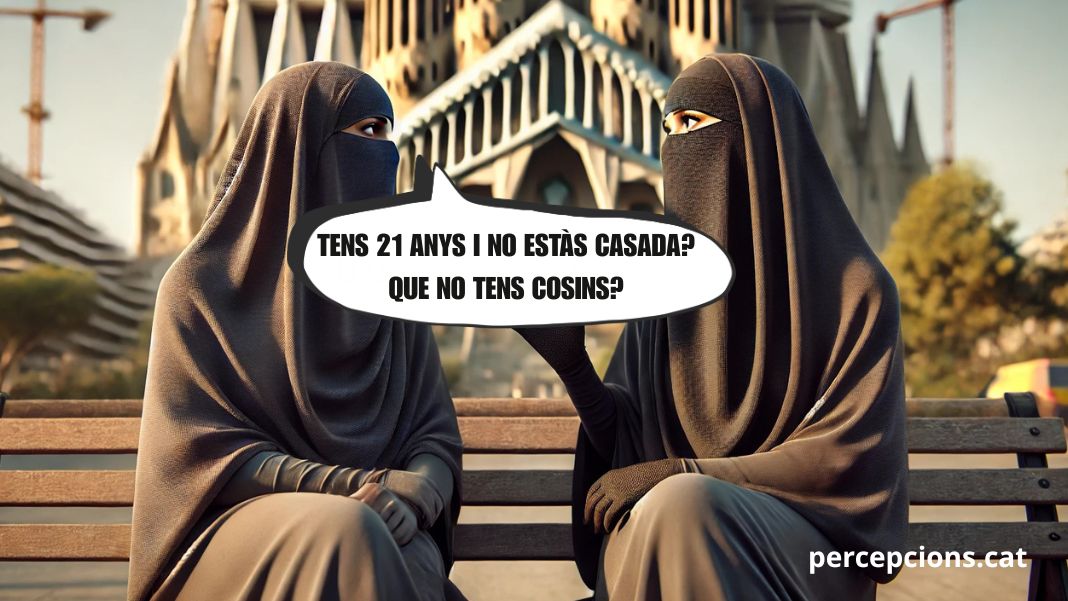
-Don't you have cousins?