
Islam presents itself in the Strasbourg elections with proposals such as hours for women in swimming pools
New candidates linked to the Muslim Brotherhood are mobilizing the identity vote with advertising in Arabic and Turkish and religious proposals. The left of LFI could be greatly harmed.
Arabic advert by Cem Yoldas and campaign image by Fahad Raja
[social-share align=»right» style=»button» mobile_app=»desktop»]
[social-share align=»center» style=»icon» mobile_app=»mobile»]
Strasbourg, the capital of Alsace and home to the European Parliament, is a seemingly tranquil, elegant city steeped in European history. It boasts a very numerous and organised Turkish diaspora, and with a Muslim population of more or less 10% and growing. Furthermore, the city is governed by a special regime that grants it an exceptional and more flexible religious status than ordinary French secularism.
In Strasbourg, the special religious regime makes imams civil servants, has religion taught in state schools, has the city council fund mosques and provides menus in schools. halal. This set of exceptions make the city a particularly permeable ground for Muslim community influence.
The new Muslim elite transforming the city
Strasbourg has become a nerve centre where two major contemporary Islamic influences converge: the universe of the Muslim Brothers and the religious influence of Turkey. According to CNRS researchers and reports from state security services, The city has a well-structured network of Islamic associations and a disciplined Turkish community capable of mobilising collectively.. This ecosystem has allowed religious-rooted discourses and identity-oriented political actions to become visible in public spaces, universities and working-class neighbourhoods.
In this environment, they have emerged. Young Muslims, educated and politically ambitious, capable of moving between the language of the Republic and the communal referent.. They are university students, professionals and youth leaders who have grown up in associations such as the Étudiants Musulmans de France (EMF) and in Turkish educational and cultural networks that foster identity cohesion. This new elite, Often multilingual and with a strong presence on social media, it is no longer limited to social or religious mobilisation.It enters the electoral arena directly, connecting with a young Muslim electorate that often feels under-represented in traditional politics. It is from this breeding ground that some of the candidates who are shaking up today's Strasbourg municipal elections emerge.
Since 2020, Strasbourg has been governed by the Green mayor Jeanne Barseghian, of the Greens, known for her sensitivity towards the demands of the Muslim community. During her term, she has provided financial support for the Grand Mosque project., has allowed more flexibility with halal menus and has endorsed municipal campaigns featuring images of women wearing the hijab. It has also made symbolic decisions, such as breaking off twinning with an Israeli city and strengthening it with a Palestinian one, which have fuelled the perception of a government especially receptive to this environment.
Cem Yoldas: the far-left activist who speaks Turkish and Arabic
Cem Yoldas, 29, of Turkish origin, is one of the most surprising figures in the Strasbourg municipal elections. A former street educator in the working-class Neuhof district, He entered politics as the spokesperson for the Jeune Garde Antifasciste, a radical collective dissolved in 2025 by the Ministry of the Interior for inciting violence.. He now heads the “Strasbourg, c'est nous” (Strasbourg, it's us) list, and He has attracted attention for distributing campaign leaflets in Turkish, Arabic and Alsatian.. He claims he wants to “speak to all the Strasbourg residents in the language they are most proficient in”, but this gesture has raised alarm bells on the right, who accuses him of communitarianism and of breaking the French republican framework. According to various experts, this linguistic strategy resembles practices observed in Germany and Belgium, where movements inspired by the Muslim Brothers They mobilise the vote through cultural and religious identity..
Politically, Yoldas advocates a radically left-wing agenda: total free public transport, rent cuts, universal opening of school canteens, restrictions on Airbnb and even the disarmament of the municipal police. It also demands the right to vote for foreigners in local elections. Moreover, he has adopted a highly critical stance towards the Green mayor, Jeanne Barseghian, especially regarding the twinning with the Israeli city of Ramat Gan. To his supporters, he represents the voice of the neighbourhoods; to his detractors, he is an agent of identity agitation who could fracture the city's cohesion.
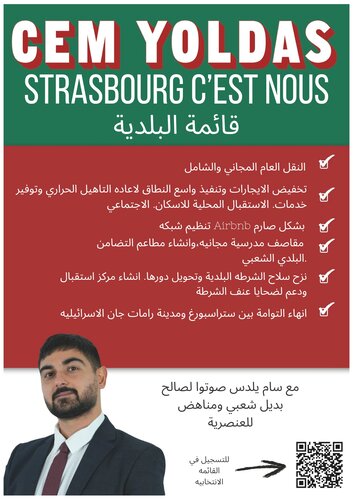
Cem Yoldas leaflet
Fahad Raja Muhammad: the young man of Pakistani origin who wants to segregate women in swimming pools.
Fahad Raja Muhammad, 20 years old and of Pakistani origin, is even more controversial. A computer engineering student, He became known as a leader of the Étudiants Musulmans de France (EMF), a student organisation that French intelligence services identify as being close to the Muslim Brotherhood.. He has turned his movement—the Mouvement Populaire Indépendant—into a A micro-match aimed at young people from working-class neighbourhoods and the practising Muslim community.. His direct and emotional style resonates with an electorate disillusioned with the institutional left. His flagship proposal, however, has been the most controversial: To introduce separate swimming times for men and women at the municipal swimming pools.. He officially presents it as a measure of Protection for women against “lack of respect” and harassment; but reveals the real nature of his project: to bring Islamist-rooted demands to the centre of local politics.
Through his Mouvement Populaire Indépendant, Fahad has built a image of a young, moderate reformer, with videos and street rallies aimed at working-class neighbourhoods and especially at a Muslim female audience.. But behind the friendly tone lies a political entrism strategy: its “Maison des Projets Innovants” — which organises neighbourhood clean-ups, tournaments and solidarity actions — acts as an instrument of community cohesion and a base for electoral mobilisation. Their victim narrative and “participatory” language conceal an ideological agenda that seeks to normalise political Islam under the guise of grassroots democracy.
Under the guise of a young reformist, Fahad Raja Muhammad embodies a generation that has learned to move adeptly between modern communication and a primitive ideology.. Fahad Raja's candidacy could turn Strasbourg into the laboratory where this new strategy of political Islam in Europe is tested.
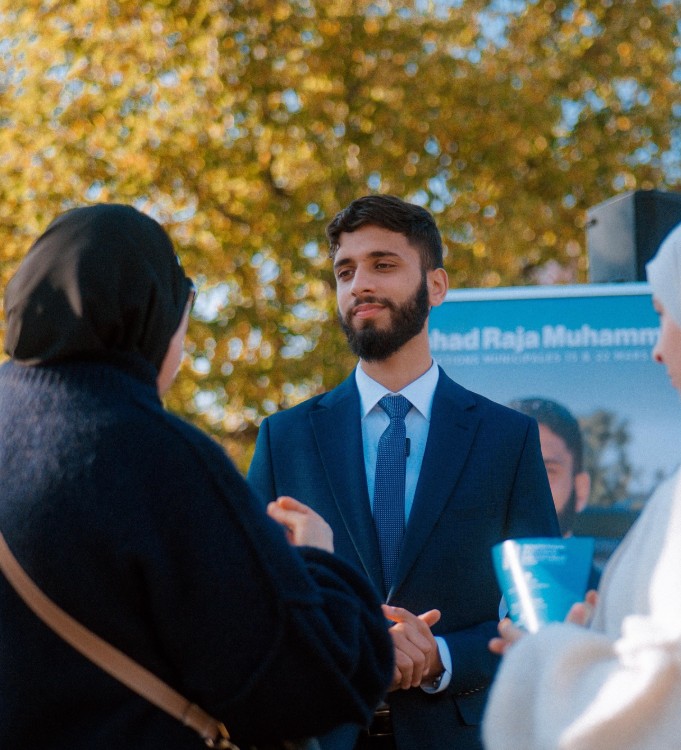
Fahad Raja's Instagram
Mamdani as a model of a new popular left French
Zohran Mamdani's victory in New York has become a benchmark for new aspirants of the radical European left. His triumph, presented as proof that a popular, multicultural and deeply anti-racist coalition can gain municipal power, fuels the narrative of candidates such as Cem Yoldas or Fahad Raja Muhammad. Both invoke Mamdani's example to legitimise a project that combines social rhetoric with identity mobilisation., and which presents itself as the alternative to an institutional left perceived as disconnected from the working-class neighbourhoods. In Strasbourg, this narrative works: it allows these actors to reclaim themselves as spokespeople for a new generation forgotten by the current municipality.
In this context, the candidacies of Cem Yoldas and Fahad Raja Muhammad are not local anecdotes but symptoms of a profound mutation: the emergence of a new generation of political actors who use the language of equality and participation to introduce identity-based discourses and religiously rooted demands into the heart of municipal life. Strasbourg, with its state of exception and a community capable of mobilising, becomes the ideal testing ground for this hybridisation between left-wing activism, community assertion and Islamist strategy. The municipal elections, beyond the result, reveal the extent to which the city has become a space in which the future of French republican cohesion is being redefined and in which the very meaning of the European project is being contested.
More Perceptions of
More about Muslim Brotherhood

ERC, PSC and Comuns oppose combating political Islam in the European Parliament.
Who is Fatiha El Mouali, much more than the helpless immigrant from the newspaper ARA
Austria prepares to ban Muslim Brotherhood political Islam
Germany prevents civil servant from being a civil servant due to ties with the Muslim Brotherhood
An official Austrian report accuses the Muslim Brotherhood of wanting to transform democracy from within.
The foundation that manages the Barcelona Office of Religious Affairs paid €175 to denounce Islamophobia
The Generalitat trains teachers with an Islamic preacher who denies Western equality between men and women
The University of Strasbourg paid the lawyers of a student who had denounced a researcher critical of the Muslim Brotherhood.
Germany's intelligence service warns of the infiltration of the Muslim Brotherhood into institutions and parties.

ERC, PSC and Comuns oppose combating political Islam in the European Parliament.
Azerbaijan expels students who wear Islamic headscarves from school
Sharia law in the US is supported by 75% of Muslims, 41% of atheists and up to 20% of Christians.
France now has a halal meat supply without the need to sacrifice animals facing Mecca.
The United Kingdom gives away a thousand hijabs in six months to immigrants arriving via the Channel
US Muslim politicians train Canadian Muslims under the slogan "From the mosque to the city hall"«
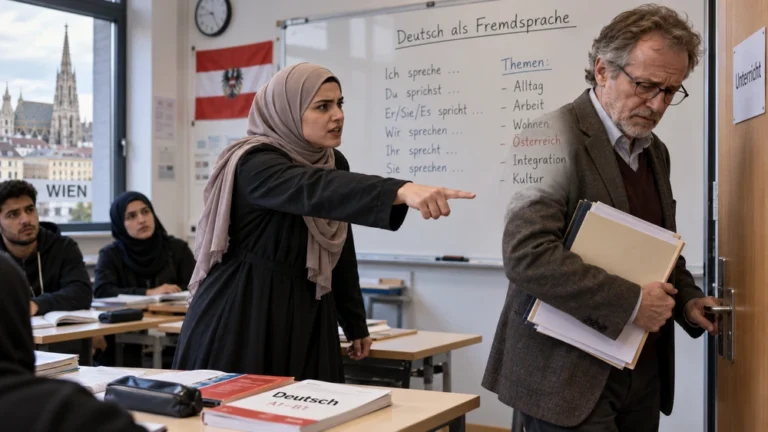
Teacher fired in Austria for denying a Muslim woman a prayer room
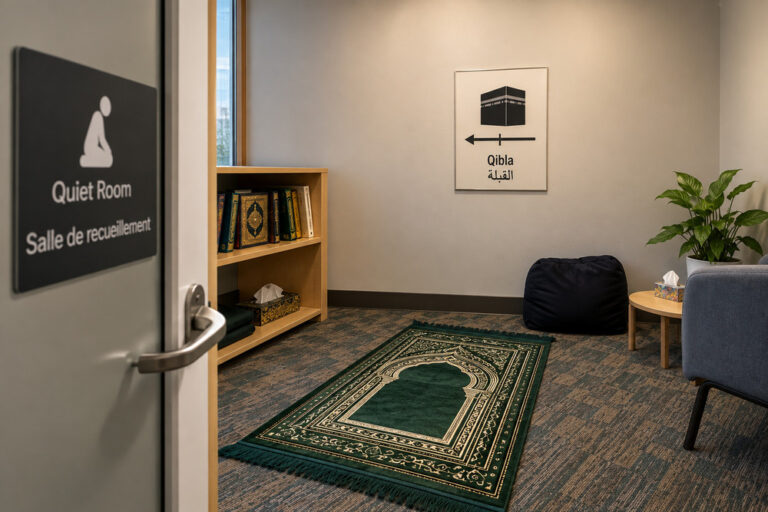
Canadian government normalizes Islamic prayer during workday
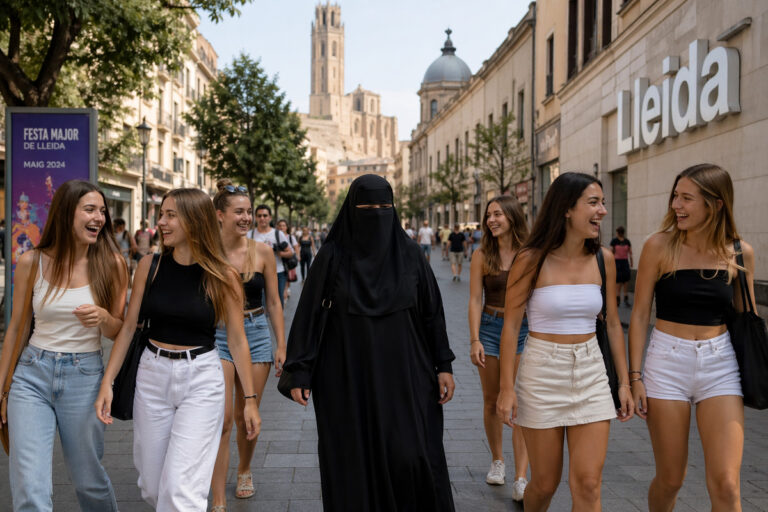
Lleida bans the burqa except if worn for religious reasons
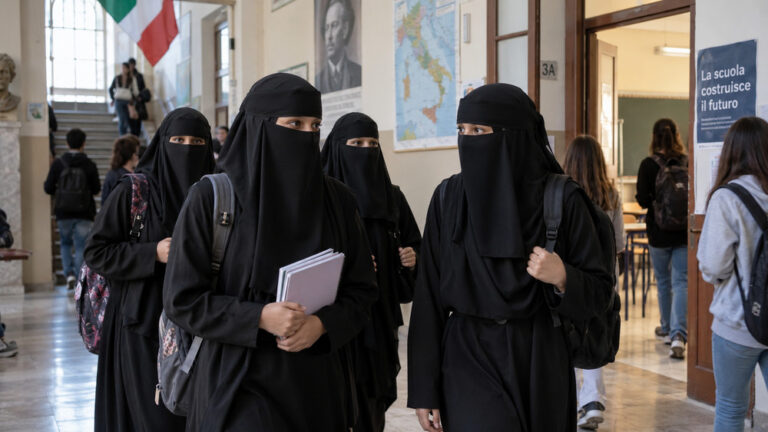
Italy bans burqa and niqab but only in schools
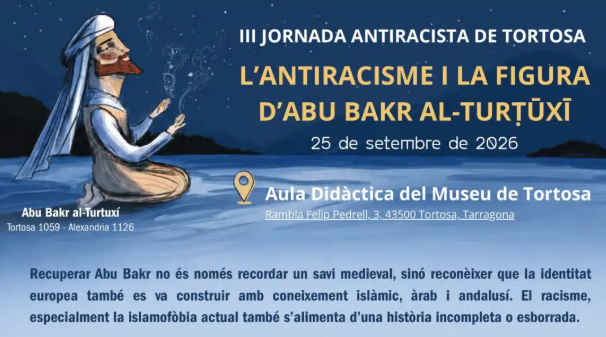
The Generalitat pays tribute to the racist Abu Bakr al-Turtuxí as an anti-racist icon
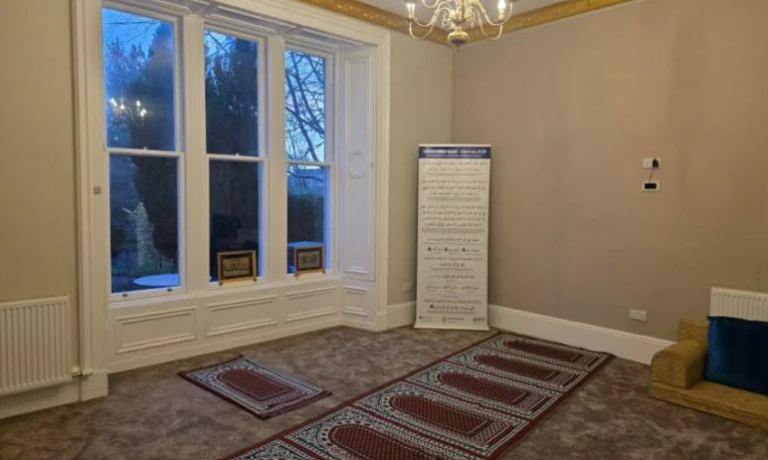
A student residence in Scotland imposes Islamic law in common areas
Kazakhstan threatens to close private schools that allow hijab
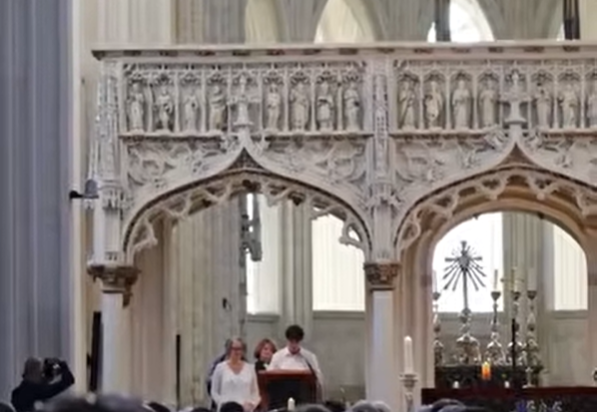
A Catholic university in Belgium incorporates Islamic chants into the opening mass of the course
A Muslim family in Granada chooses a Catholic school and demands that the courts teach Islam there
Phrase of the Week

Image of the Week
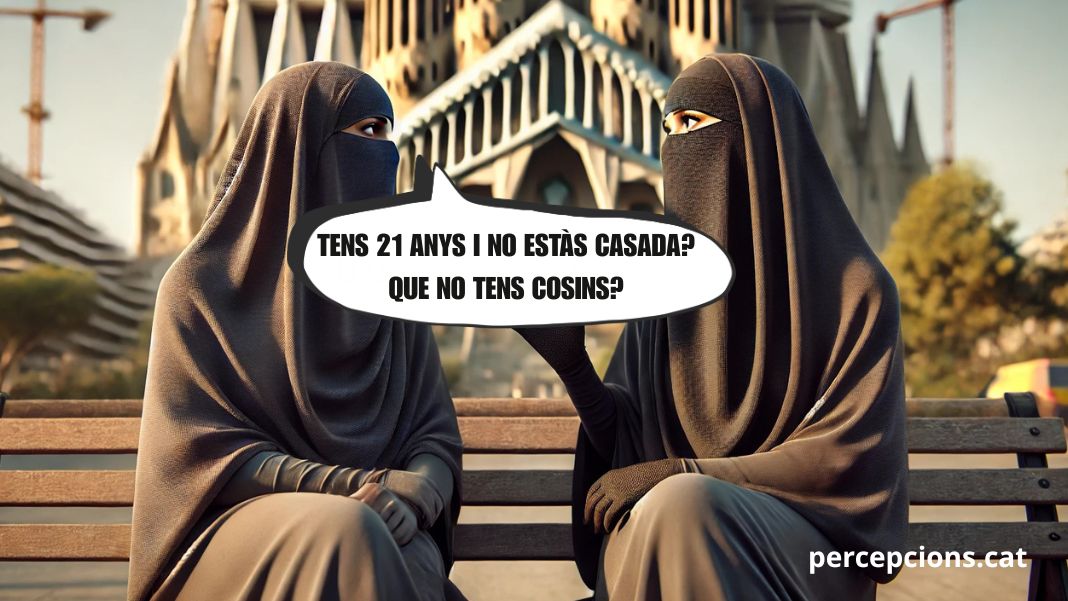
-Don't you have cousins?