
In 2019, ERC believed that Islam in schools was contrary to Catalan identity.
Muslims denounced Councillor Bargalló for Islamophobia when he expressed disagreement with the teaching of the Islamic religion in Catalan schools.
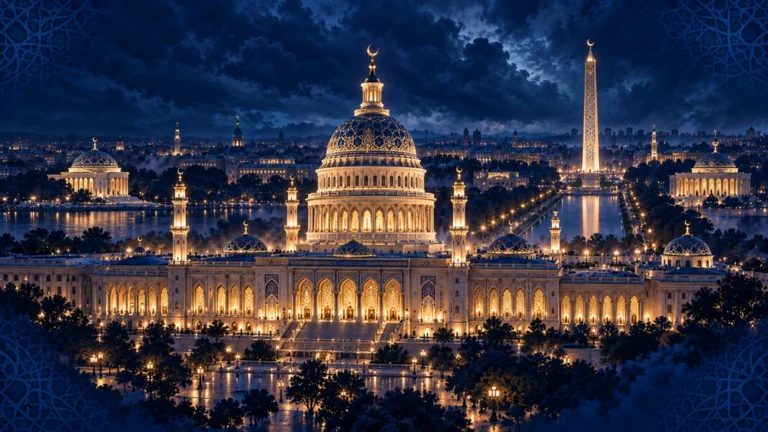
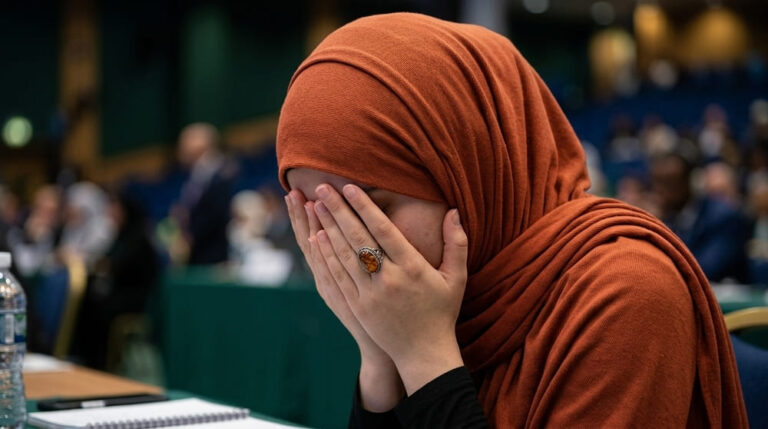
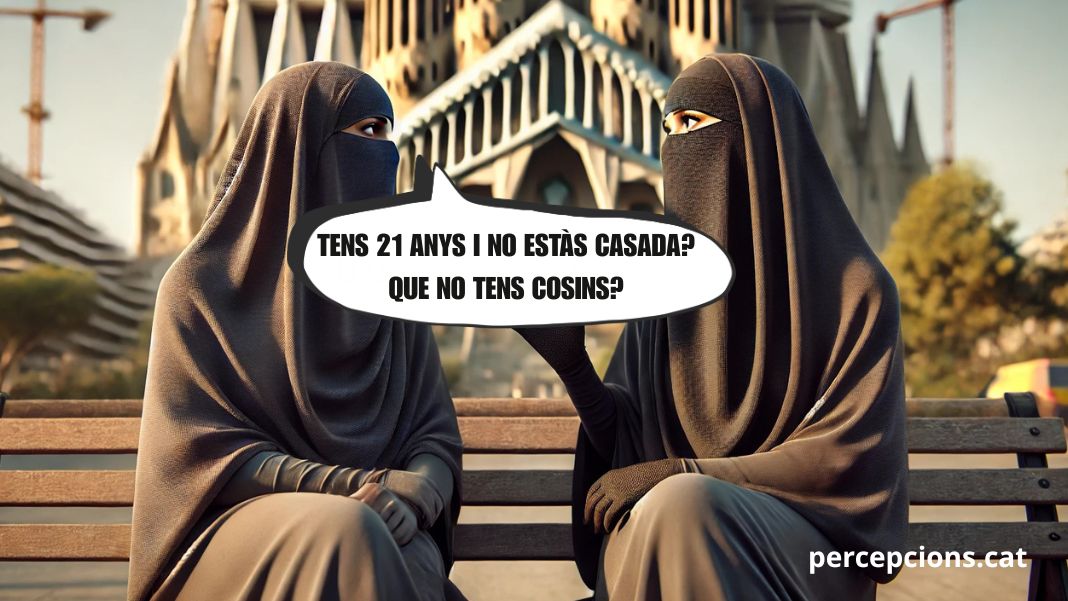
Illustrative image
Generated by AI
[social-share align=»right» style=»button» mobile_app=»desktop»]
[social-share align=»center» style=»icon» mobile_app=»mobile»]
In 2019 an intense political and social conflict erupted over the role of the Islamic religion in schools in Catalonia. Explain. La Vanguardia, 25 November 2019, that the Catalan Education Minister, Josep Bargalló (ERC), He publicly stated that he did not want confessional teaching of Islam in educational institutions..What's more, he warned of the implications for Catalan identity and the balance between religions.
«I do not want confessional teaching of the Islamic religion.«
The complaint filed by the Muslims was supported by a recording (and its transcript). of a session held on 17 November with Catholic religion teachers. The event was organised by the trade union “JunTS – Teachers of Religion of Catalonia”, at which Bargalló clearly said «I do not want confessional teaching of the Islamic religion in schools in Catalonia, and under the current regulatory framework, if we do not reach an agreement on the matter, we will generally be forced into it.«.
At that meeting, the councillor defended the project to introduce a new subject called Culture of Religions, designed to be taught by Catholic religion teachers and intended to replace the confessional religion classes that had been offered until then. The problem in implementing the proposal was Spain's agreements with Islam and other religions.
The councillor, who cited the case of Torredembarra as an example, He was convinced that schools would end up offering more Islamic than Catholic religion classes., since Muslim families would enrol their children in the optional religious studies class, whereas many Catholic families, despite being the majority of the population, would not.«What would we all look like when it comes to defending the identity we claim to defend?»?" he asked up to twice.
Catalan national identity and Islam
One of the most sensitive points of the controversy is the idea that Bargalló said that Islam would be in contradiction with Catalan identity.. Therefore, if Islam is recognised as a legitimate religion within the school system, an identity-based conception that implicitly excludes the Muslim faith is called into question.
The complaint interprets this discourse as a narrative of symbolic discrimination: to claim that the Muslim religion does not “fit” with Catalan identity, or that its expansion would be a threat to the identity, It is an exclusionary discourse that can generate stigma and reinforce Islamophobia. This form of discourse, if publicly disseminated from an institutional position, can align with legal definitions of hate speech.
For Muslim communities, this kind of approach indicates institutional resistance to recognising Islam as a legitimate part of Catalan religious pluralism.
The memory of the Ripoll terrorists
Bargalló explained that he had gone to Ripoll in early September to talk about the education pact. On that occasion, according to him, the press highlighted the number of requests in Ripoll to teach a religious subject that was not Catholic. In this way, he suggested that there was significant demand for Islamic religious education in that municipality, and that this intensified the problem of the debate over which religion should be permitted in schools.
With this, Bargalló indirectly linked Ripoll as an example of a place where the Muslim community was demanding Islamic religious instruction, which for some represented a potential threat to the “Catalan identity” that he considered predominantly Christian.
Complaint not upheld and Islam in schools in 2020
Finally, the complaint filed by the association Muslims against Islamophobia The complaint against Councillor Josep Bargalló was not admitted for processing by the Prosecutor's Office of the Supreme Court of Justice of Catalonia. Despite the media impact of the statements and the controversy they generated, the case did not succeed in court and Bargalló remained at the head of the Department of Education.
Parallel to this, in 2020 Catalonia began offering Islamic religious classes in some public schools, as part of a pilot scheme promoted by the Ministry of Education and the Islamic Commission of Spain. The subject was initially introduced in municipalities such as Barcelona, Girona, Reus and Lleida, with teachers specifically hired to teach it. This step placed Catalonia among the autonomous communities that, for the first time, were complying with the 1992 cooperation agreement and effectively recognising the right of Muslim families to confessional religious education.
More about Education

Azerbaijan expels students who wear Islamic headscarves from school
Teacher fired in Austria for denying a Muslim woman a prayer room
Italy bans burqa and niqab but only in schools
The Generalitat pays tribute to the racist Abu Bakr al-Turtuxí as an anti-racist icon
A student residence in Scotland imposes Islamic law in common areas
Kazakhstan threatens to close private schools that allow hijab

ERC, PSC and Comuns oppose combating political Islam in the European Parliament.
Azerbaijan expels students who wear Islamic headscarves from school
Sharia law in the US is supported by 75% of Muslims, 41% of atheists and up to 20% of Christians.
France now has a halal meat supply without the need to sacrifice animals facing Mecca.
The United Kingdom gives away a thousand hijabs in six months to immigrants arriving via the Channel
US Muslim politicians train Canadian Muslims under the slogan "From the mosque to the city hall"«
Teacher fired in Austria for denying a Muslim woman a prayer room
Canadian government normalizes Islamic prayer during workday
Lleida bans the burqa except if worn for religious reasons
Italy bans burqa and niqab but only in schools
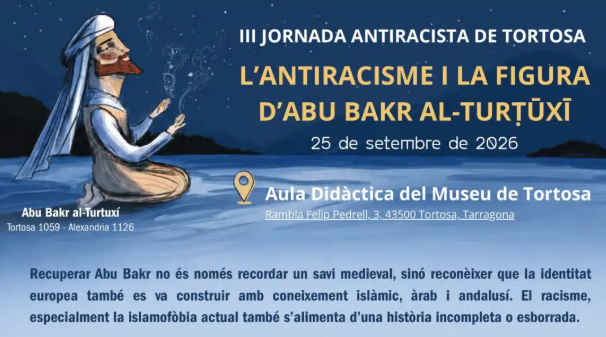
The Generalitat pays tribute to the racist Abu Bakr al-Turtuxí as an anti-racist icon
A student residence in Scotland imposes Islamic law in common areas
Kazakhstan threatens to close private schools that allow hijab
A Catholic university in Belgium incorporates Islamic chants into the opening mass of the course
A Muslim family in Granada chooses a Catholic school and demands that the courts teach Islam there
Phrase of the Week

Image of the Week
-Don't you have cousins?