
They publish a book to explain that control over mosques in Catalonia is «institutional racism.»«
According to the book “The Radicalisation of Racism”, the PRODERAI plan to monitor mosques in Catalonia turns everyday religious practices into suspicious ones.
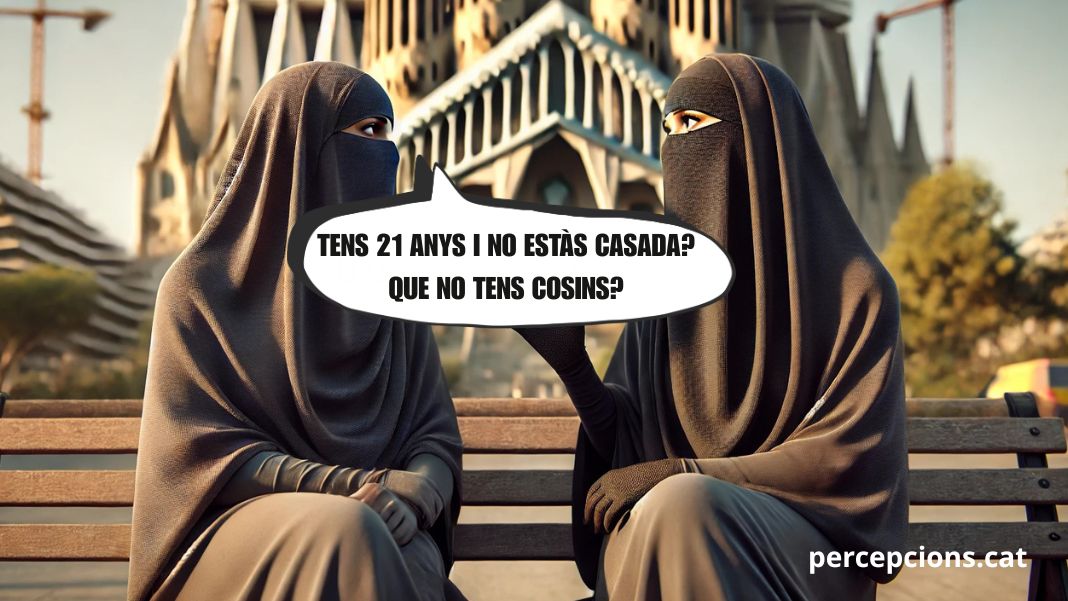
Illustrative image
Generated by AI
[social-share align=»right» style=»button» mobile_app=»desktop»]
[social-share align=»center» style=»icon» mobile_app=»mobile»]
In 2019, the researchers Ainhoa Nadia Douhaibi i Salma Amazian They published the book. The Radicalisation of Racism. State Islamophobia and Counter-Terrorism Prevention (Ed. Cambalache). His work begins with an uncomfortable question: what lies behind the official protocols for preventing Islamic radicalisation? The authors' response is Islamophobia and racism..
Their thesis is clear: what is presented as “prevention” and “detection of radicalisation” It is actually a racist device.. The starting point is the I will endure (Protocol for the Detection, Prevention and Intervention of Islamist Radicalisation processes), activated after the 17 August 2017 attacks in Barcelona and Cambrils.
The book is a critique of the PRODERAI plan to control mosques, schools, prisons and social services, implemented after the attacks by the Ripoll boys in Barcelona and Cambrils. What the book reveals is that The Muslim community is effectively monitored to detect processes of radicalisation. which could culminate in a terrorist attack.
Mosques under permanent surveillance
The most visible surveillance takes place at the Mosques and oratories. It is explained by L’Report on Islamophobia in Catalonia 2021 (SOS Racism) made by one of the book's authors and funded by Soros's Open Society. In this report, the is denounced. Constant presence of police patrols around mosques and Muslim prayer rooms. The witnesses are clear: during prayer times, especially on Fridays at midday or at dawn during Ramadan, Police cars are parked in front of the mosques. and they are made Selective identifications to people who enter or leave it.
According to Salma Amazian, this deployment sends a twofold message: the mosque is not only a religious space but also a place under suspicion. The report explains that some mosques have been virtually emptied because people prefer not to be seen there.
Monitoring mosques is «racist control»
The book The radicalisation of racism says of PRODERAI that it is an instrument that Mixed religion and security and ends up stigmatising normal religious practices: to wear a beard, to pray, to eat halal or to wear a hijab. The book explains that this perspective It is neither neutral nor technical., but rather a reflection of prejudices and racist control logics.
“When the State deploys surveillance mechanisms that associate Islam with radicalisation, it not only prevents potential cases of violence but also casts suspicion over the entire Muslim community. This is institutional racism.” (Douhaibi & Amazian, 2019)
Many mosques have installed security cameras. Officially, for protection reasons, but with the awareness that the recordings may be requested by the Mossos. This situation creates a climate of control and self-censorship. The imams know that any critical expression can be taken out of context and become a reason for investigation. A witness quoted in the book says:
“When I speak in the sermon, I know that not only does the community listen to me, but people outside it do too. I watch every word, because any phrase can be used against us..” (Douhaibi & Amazian, 2019)
Direct pressure on imams and expulsions
Police control over mosques and religious leaders not only translates into surveillance, but also into administrative expulsions. When an imam or an active member of the community is considered “problematic”, they may receive a Removal proceedings under the Immigration Act. The authors see a message: Anyone who does not cooperate, who does not show themselves to be “loyal” to the State, can be expelled..
According to the’Report on Islamophobia in Spain (2021), anti-terrorism legislation and migration legislation operate jointly.The Immigration Act allows the expulsion of people considered a “danger to national security.”, even if there is no court conviction.
Debate within the Muslim community
This reality generates a complex debate within the Muslim communities themselves. According to the SOS Racism report funded by George Soros's foundation and the book The radicalisation of racism, often those affected by expulsion proceedings are Salafist-oriented imams. This means that, in some cases, other Islamic associations and federations validate his expulsion or, at the very least, do not resist it.
A member of a federation admitted in private:
“We don't like the Salafist discourse because it's rigid and creates tensions. When the State expels them, many people see it as a relief.” (Douhaibi & Amazian, 2019)
This situation generates what Douhaibi and Amazian describe as a kind of tacit collaborationWhile the administration uses the Immigration Act to sideline inconvenient imams, certain sectors of the community They look the other way. because they also do not feel represented by these religious leaders.
For the authors, the State achieves to divide the communitySome Muslims see the expulsions as protection, while others see them as an attack. What the researchers do not explain is that it is even the community itself that alerts the Mossos to Salafist discourses: that is the case. of an expelled man who was standing as an imam in Olot but was rejected and denounced as a radical..
The authors' proposal is to do nothing.
The authors insist that the State's best response should be not to intervene, because any police or administrative action against Muslim communities is based on prejudice and reinforces the idea that Islam is suspect. Remember that many of those detained in counter-terrorism operations end up being acquitted for lack of evidence. According to Douhaibi and Amazian, this shows that the “radicalisation detection” system does not work, and that In reality, it only serves to legitimise institutional racism. The authors conclude that this deployment does not prevent terrorism, but rather constructs the image of the Muslim as an internal enemy, normalising suspicion and chronicling Islamophobia.
At the same time, the book records that Yes, there is active and systematic surveillance of mosques and Muslims in Catalonia.. The police presence in prayer rooms, pressure on imams, expulsions under the Foreigners Act and the collection of “radicalisation” indicators in schools and prisons show that the State has turned the Muslim faith into a security issue. They even show that the very community that wants nothing to do with radical discourse is content and even actively co-operates.
More about jihadists

The United Kingdom has foiled 19 imminent Islamist attacks in five years and is monitoring 600 Muslims.
From terrorist in Yemen to municipal candidate in the multicultural United Kingdom
A report from the French secret services warns that Islamists are ordering attacks on Christians in Europe.
59.1% of young French Muslims want Sharia law and 24.1% sympathise with the Muslim Brotherhood.
Niqab, Bin Laden and wheelchair: three very young girls wanted to carry out a suicide bombing in Paris
Mohmed and Majed arrested on charges of trying to kill LGBTI locals in Detroit

ERC, PSC and Comuns oppose combating political Islam in the European Parliament.
Azerbaijan expels students who wear Islamic headscarves from school
Sharia law in the US is supported by 75% of Muslims, 41% of atheists and up to 20% of Christians.

France now has a halal meat supply without the need to sacrifice animals facing Mecca.
The United Kingdom gives away a thousand hijabs in six months to immigrants arriving via the Channel
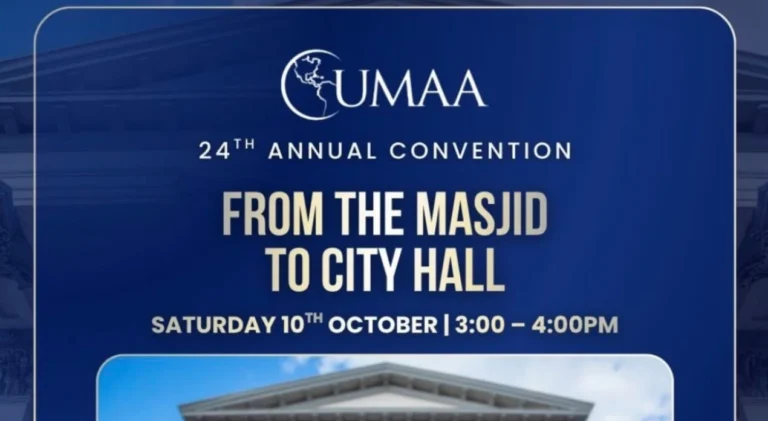
US Muslim politicians train Canadian Muslims under the slogan "From the mosque to the city hall"«

Teacher fired in Austria for denying a Muslim woman a prayer room
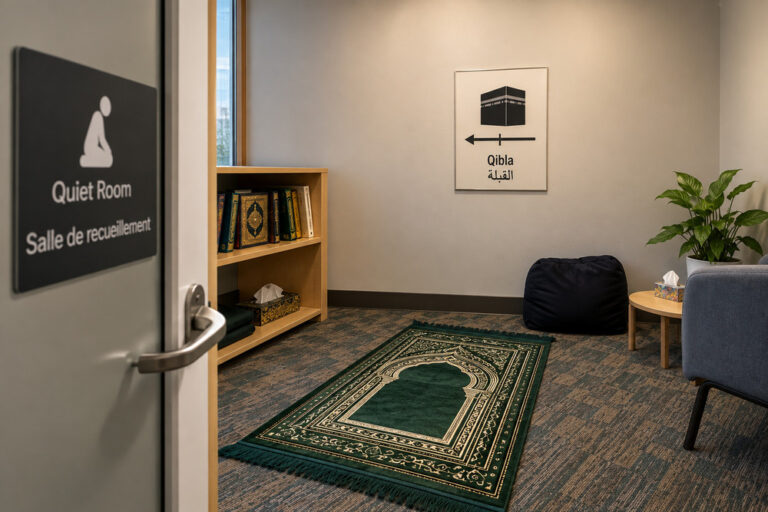
Canadian government normalizes Islamic prayer during workday
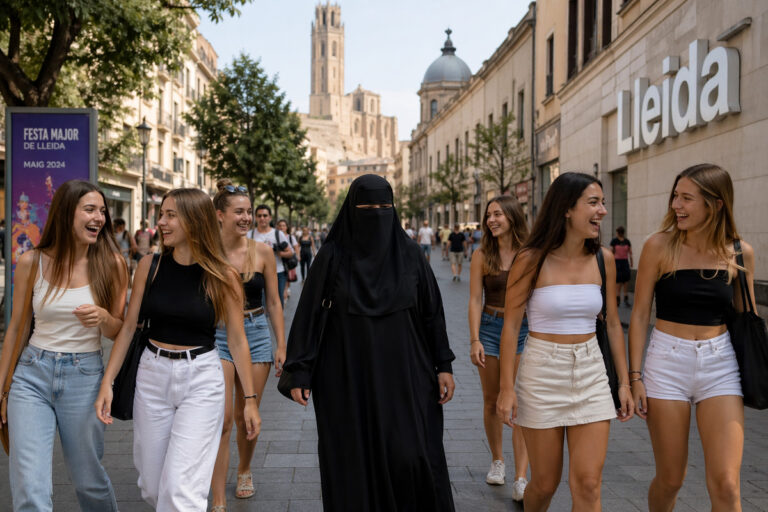
Lleida bans the burqa except if worn for religious reasons
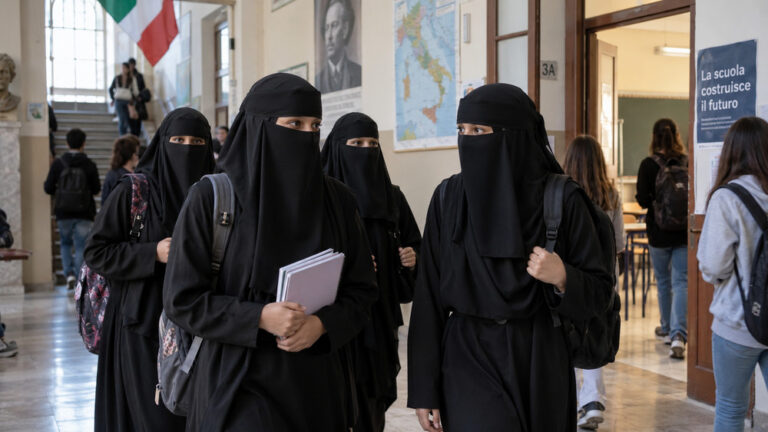
Italy bans burqa and niqab but only in schools
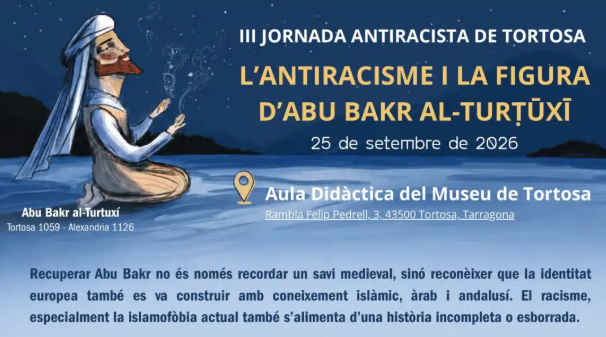
The Generalitat pays tribute to the racist Abu Bakr al-Turtuxí as an anti-racist icon
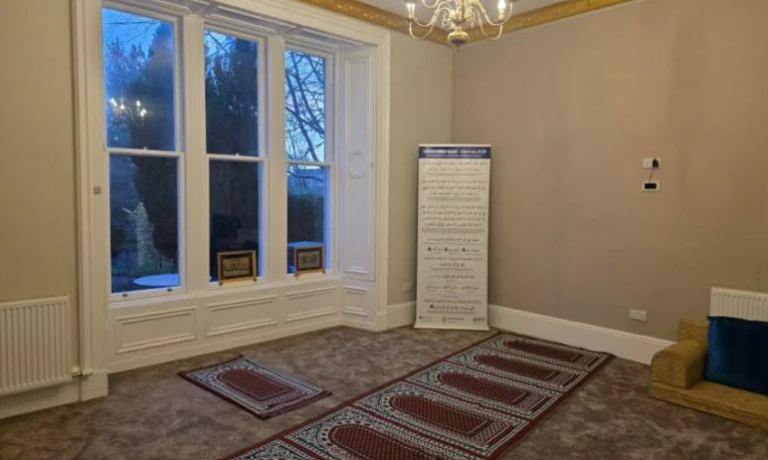
A student residence in Scotland imposes Islamic law in common areas
Kazakhstan threatens to close private schools that allow hijab
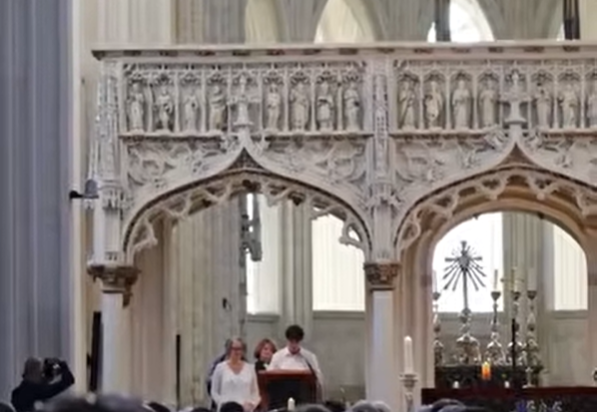
A Catholic university in Belgium incorporates Islamic chants into the opening mass of the course
A Muslim family in Granada chooses a Catholic school and demands that the courts teach Islam there
Phrase of the Week

Image of the Week
-Don't you have cousins?