
France is preparing to ban the hijab in sport.
Controversy is growing over the law that seeks to ban the Islamic veil in all sport. Division in government and society.
Illustrative image
[social-share align=»right» style=»button» mobile_app=»desktop»]
[social-share align=»center» style=»icon» mobile_app=»mobile»]
This time, the debate in France centres on the right to play sport with the headscarf. On 18 February 2025, the French Senate passed a law banning the wearing of the Islamic veil in all sporting competitions, including amateur events. The proposal to ban the veil in sport in France has been approved by the Senate but is still awaiting debate in the National Assembly amid intense social and political controversy.
If it passes this filter, human rights organisations have already announced that they could appeal to the Constitutional Council or even to the European Court of Human Rights (ECtHR).
What does the law say that wants to ban the headscarf to sport
The bill bans the hijab and any other «ostensible» religious symbol during sporting competitions, including amateur ones. The initiative, driven by Republican senator Michel Savin and backed by the government, is grounded in the «neutrality of sport.»,
The text was approved by 201 votes in favour and 145 against, and it falls in line with the laws already banning religious symbols in schools (2004) and the burqa in public spaces (2010). Its proponents argue for an «imperative of uniformity» in sport and contend that the hijab could pose a safety risk or create «visible inequalities». The idea is that sport should be a neutral space where everyone can better themselves regardless of differences in belief.
Divisions in government
The French government is experiencing a major internal shake-up following the debate on banning visible religious symbols, such as the hijab, during sporting competitions. According to reports Political, On Tuesday, Prime Minister François Bayrou urgently convened several ministers to contain the crisis and establish a clear line.
Although the Minister for Equality, Aurore Bergé, He stated in Parliament that «there is only one position within the government: no visible religious symbols in sporting competitions», but the reality is that the messages have been contradictory in recent days.
Instead, the Minister for Sport, Marie Barsacq, had recently stated that the issue «was not a priority» and that she did not intend to push through legislation in this regard. For her part, the former prime minister and current Education Minister, Élisabeth Borne, argued that they should be the sports federations those who decide whether or not religious symbols are permitted.
These statements provoked the angry reaction of the Minister for Justice, Gérald Darmanin, who described Barsacq's position as «naive» and even threatened to resign, according to an interview in The Parisian. «We must ban the veil in sporting competitions, it's obvious,» he said publicly.
Now justice has delivered its verdict. On Friday 28 March 2025, the Gironde Assizes Court convicted Mounir Boutaa a life imprisonment with a minimum term of 22 years. He was declared. guilty of premeditated murder. The decision comes after a tense trial, charged with emotion and pent-up anger, held in Bordeaux.
Divided Federations
To date, it is the sports federations that have the authority to decide whether or not to allow the wearing of visible religious symbols during competitions. This autonomy has led to an uneven application of secularism in French sport. Some federations, such as football and basketball, have chosen to ban the hijab by invoking the principle of neutrality, while others, such as handball, allow players to compete wearing a veil.
This situation has created a fragmented reality, where an athlete's participation can depend solely on the sport they practise. It is in this context that the bill promoted by the Senate becomes significant, as it aims to establish a common and mandatory rule for all federations, ending their current autonomy and uniformising the ban at a national level.
More Perceptions of
.

ERC, PSC and Comuns oppose combating political Islam in the European Parliament.
Azerbaijan expels students who wear Islamic headscarves from school
Sharia law in the US is supported by 75% of Muslims, 41% of atheists and up to 20% of Christians.

France now has a halal meat supply without the need to sacrifice animals facing Mecca.
The United Kingdom gives away a thousand hijabs in six months to immigrants arriving via the Channel
US Muslim politicians train Canadian Muslims under the slogan "From the mosque to the city hall"«
Teacher fired in Austria for denying a Muslim woman a prayer room
Canadian government normalizes Islamic prayer during workday
Lleida bans the burqa except if worn for religious reasons
Italy bans burqa and niqab but only in schools
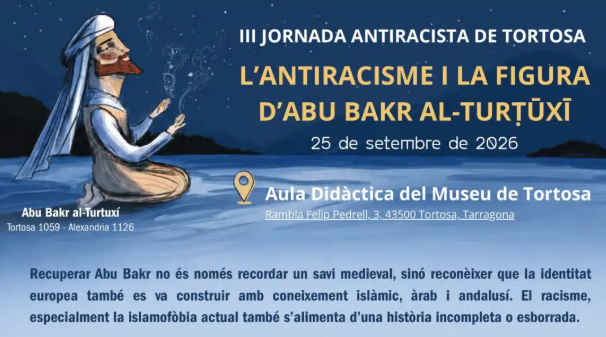
The Generalitat pays tribute to the racist Abu Bakr al-Turtuxí as an anti-racist icon
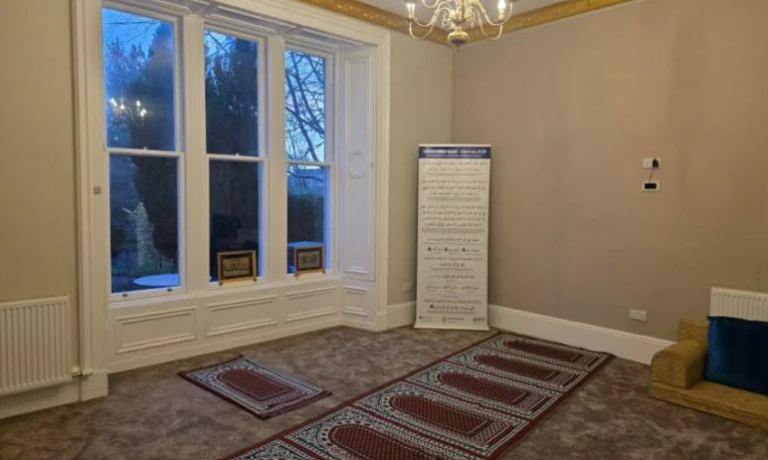
A student residence in Scotland imposes Islamic law in common areas
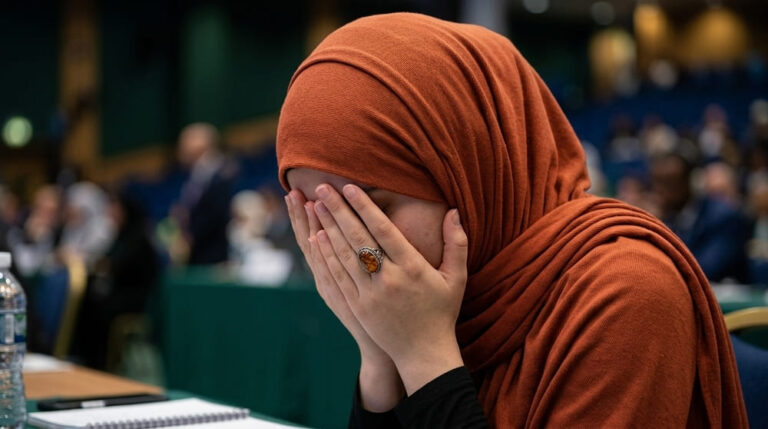
Kazakhstan threatens to close private schools that allow hijab
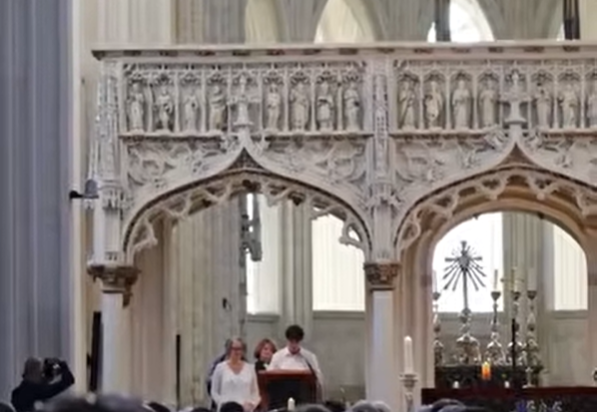
A Catholic university in Belgium incorporates Islamic chants into the opening mass of the course
A Muslim family in Granada chooses a Catholic school and demands that the courts teach Islam there

Phrase of the Week

Image of the Week
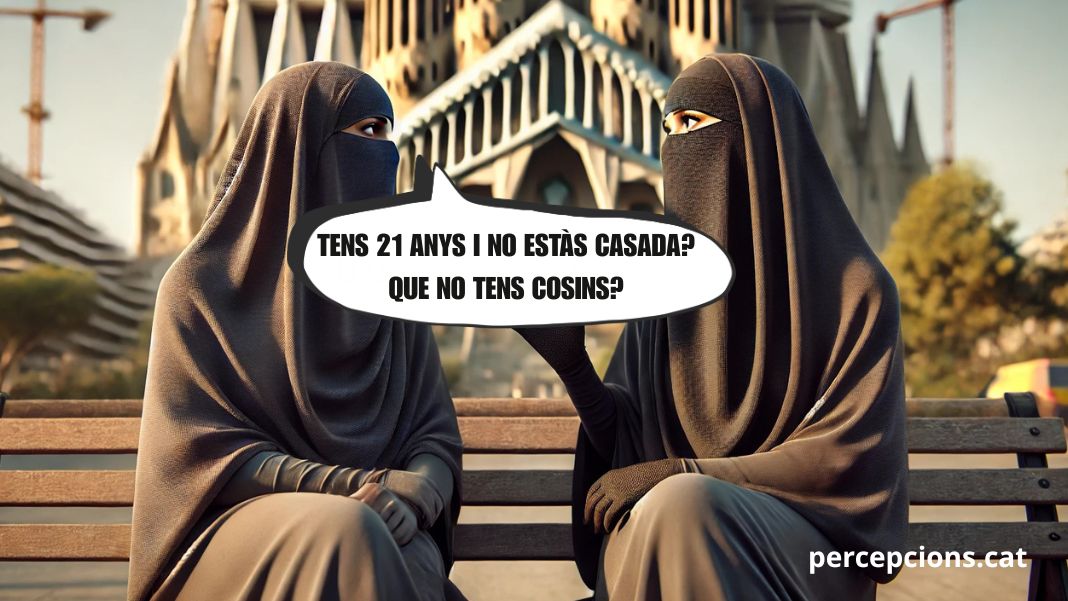
-Don't you have cousins?