
Alarm in France over 'municipal Islam» set to stand in 2026 elections
The Ministry of the Interior is monitoring municipalities where candidates with suspected links to the Muslim Brotherhood are standing on mainstream lists.
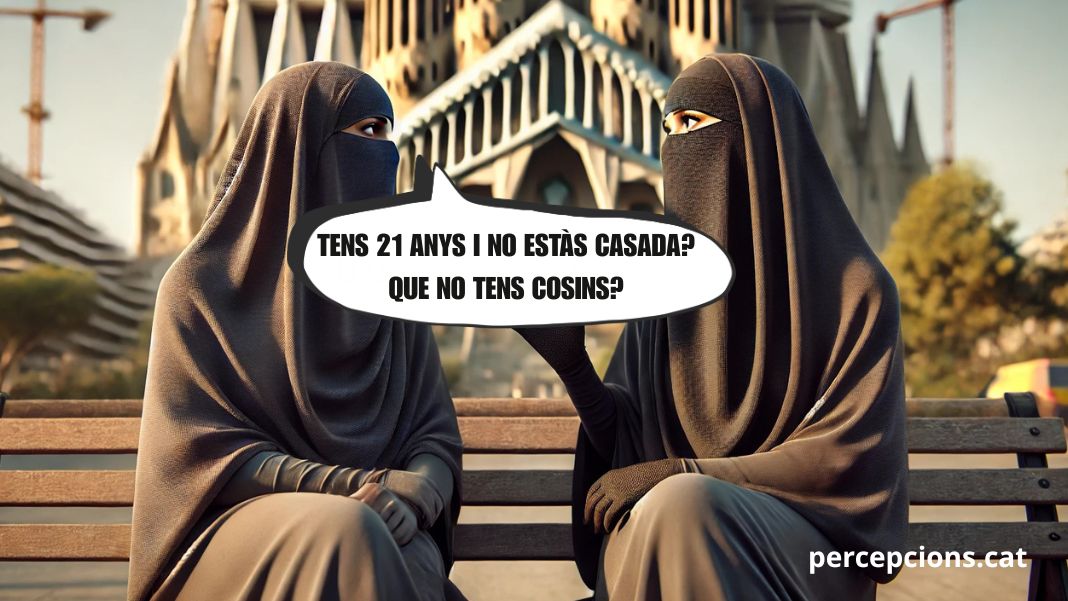
Illustrative image
[social-share align=»right» style=»button» mobile_app=»desktop»]
[social-share align=»center» style=»icon» mobile_app=»mobile»]
France is already in municipal pre-campaign and there is one issue that has taken precedence over the rest. It is what some media outlets and political figures have dubbed as «Municipal Islam». The concern is not about visible religious lists that barely get any votes, but about a much more discreet strategy: Islamist candidates integrated into traditional parties with a moderate discourse, Slow implantation and growing presence within town halls without arousing suspicion.
France's report on the Muslim Brothers and journalistic investigations indicate that this implantation takes place from the bottom up. First, through cultural, educational or social entities; then, through participation in community life and volunteering; finally, by entering conventional electoral lists as “cross-party” candidates, often with generic speeches about coexistence, diversity or social justice. Only once inside the town halls, They begin to influence strategic areas. such as grants to associations, the management of facilities, youth leisure or non-formal education. All of these are key spaces for building long-term networks of influence.
«Several dozen» municipalities under surveillance
Although the authorities insist that The phenomenon affects only «a few dozen» municipalities. Of the 35,000 or so in France, the cases documented by the press have raised the alarm. The logic is always the same: elected officials or candidates who, without presenting themselves openly as religious, Promote religious practices within public institutions.. The concern is not an «Islamic party» but a much more effective and discreet strategy., to enter existing structures from within and reorient them from the inside.
A Pigeons, The debate over ’municipal Islam» has become a textbook case because it combines the town council, the associative network and suspicions of parallel religious structures. According to The Parisian, The State pressured the mayor to remove his chief of staff because State services attribute to it a problematic mix of “social, educational, religious and political” activities.”, against the backdrop of a space resembling a “Quranic school”.
A Graulhet (Tarn), for example, a socialist deputy has been accused of repeated communityist practices, with social services management aimed at strengthening parallel networks and religious intermediaries. It is not a theoretical debate about identity, but about concrete decisions on who is granted aid, which entities are legitimised and which actors become the exclusive spokespeople of a community before the town council. It is municipal politics turned into confessional mediation.
The case of Strasbourg shows another side of the phenomenon: Some candidates have distributed propaganda in Arabic or Turkish and have advocated for separate public facilities for men and women.. That is to say, to bring into the institutional sphere cultural or religious separation criteria that directly clash with the French secular tradition. The implicit message is clear: it is not individual citizens who are being addressed, but distinct community blocs.
Between local permissiveness and state surveillance
Several municipal officials admit in private that They often prefer not to confront these networks for fear of social conflict or of being accused of ’Islamophobia.“, a fact that ultimately consolidates a political neglect which the central government attempts to correct afterwards.
In various municipalities on the outskirts of Paris—especially in Hauts-de-Seine, Seine-Saint-Denis and Val-de-Marne— The local press and state services describe similar dynamics.cultural associations that manage municipal grants, sports clubs or school tutoring, and which, progressively, introduce gender segregation, collective prayers, pressure on dress or identity-based discourses. All this without ever presenting themselves as a formal religious organisation, which allows them to evade the controls applied to mosques or places of worship.
While the Ministry of the Interior multiplies reports and warnings about the infiltration of the Muslim Brotherhood into the associative and municipal spheres, Many local councils continue to collaborate with these same organisations because they manage services that the administration does not cover.. Colombes exemplifies this clash. The State exerts pressure, the municipality resists, the associations play the victim and, meanwhile, the presence of this “municipal Islam” is consolidating in everyday life: after-school activities, canteens, holiday clubs, support for families, sports clubs. There is no need to win an election with a religious list.; It is enough to control the social intermediaries.
A recent case illustrates the extent to which some local councils choose to turn a blind eye to the problem. A press investigation has uncovered The religious infiltration of the municipal football club of Fontenay-aux-Roses. According to witnesses and administrative sources, Within the football section prayers have been held in the changing rooms and on the pitch, a de facto exclusively halal diet has been imposed, religious behavioural rules have been introduced, and women's football has disappeared.. Several families — including Muslims — have withdrawn their children. It all takes place in public facilities and with municipal resources, but while the secret services watch and the council avoids intervening to avoid any problems.
In the midst of the pre-campaign for the 2026 local elections, this is the real debate: who actually governs the neighbourhoods, the council or the community networks operating in its shadow? France is beginning to admit that the problem is not theological but one of local power.
More Perceptions of
More about France

France now has a halal meat supply without the need to sacrifice animals facing Mecca.
Feminists in France wear the Muslim headscarf against the possible ban
Human rights defenders in France want to ban debate on the Islamic veil
Islam accounts for 85 per cent of religious conflicts in French companies.
France permanently bans the burkini in municipal swimming pools
The University of Strasbourg paid the lawyers of a student who had denounced a researcher critical of the Muslim Brotherhood.

ERC, PSC and Comuns oppose combating political Islam in the European Parliament.
Azerbaijan expels students who wear Islamic headscarves from school
Sharia law in the US is supported by 75% of Muslims, 41% of atheists and up to 20% of Christians.
France now has a halal meat supply without the need to sacrifice animals facing Mecca.
The United Kingdom gives away a thousand hijabs in six months to immigrants arriving via the Channel
US Muslim politicians train Canadian Muslims under the slogan "From the mosque to the city hall"«
Teacher fired in Austria for denying a Muslim woman a prayer room
Canadian government normalizes Islamic prayer during workday
Lleida bans the burqa except if worn for religious reasons
Italy bans burqa and niqab but only in schools
The Generalitat pays tribute to the racist Abu Bakr al-Turtuxí as an anti-racist icon
A student residence in Scotland imposes Islamic law in common areas
Kazakhstan threatens to close private schools that allow hijab
A Catholic university in Belgium incorporates Islamic chants into the opening mass of the course
A Muslim family in Granada chooses a Catholic school and demands that the courts teach Islam there
Phrase of the Week

Image of the Week
-Don't you have cousins?