
Muslims protest against the «No' Headscarf Leicester's »Day« proposes 'putting the hijab to a man»
Two opposing visions on the veil clash in Leicester: the No Headscarf Day denounces it as oppressive. The World Headscarf Day encourages non-Muslims to «to live the experience» and show «solidarity».
The No poster Headscarf Day of the Leicester Secular Society
[social-share align=»right» style=»button» mobile_app=»desktop»]
[social-share align=»center» style=»icon» mobile_app=»mobile»]
1 February is no ordinary date for the debate on the Islamic veil in the United Kingdom. It is the day that World is celebrated everywhere. Headscarf Day, an international campaign that invites non-Muslim women to put on the hijab for a day as a gesture of symbolic support. The initiative explicitly appeals to schools, organisations and workplaces with a clear call: «Show solidarity with Muslim women who choose to wear the hijab. hijab».
The organisers encourage sharing supportive posters on social media, posting group photos with the headscarf, and spreading messages such as «We proudly support #WorldHijabDay»to raise awareness of the cause. The stated objective is to combat discrimination and «celebrate the strength of the women who wear it. Even the campaign also takes to the streets. with information stalls inviting Western women to try on the hijab hijab for a day as a gesture of «solidarity». Some schools, universities and companies take part by asking women to wear the headscarf for at least part of the day.
They stand up to them with a No Headscarf Day to give a voice to women repressed by hijab
Leicester's secular sector has decided to organise its own response. The Leicester Secular Society The No calls for a referendum on the same Sunday, 1 February. Headscarf Day. They present it as a public gathering to support women and girls who reject the hijab and denounce it as a tool of social control, coercion and forced modesty.
The event is part of the international initiative. #NotHijabDay, driven by the ex-Muslim activist Yasmine Mohammed, that Calls for “honesty” about the reality for millions of women who cannot freely choose whether or not to wear a veil.. According to the promoters, in the West the hijab It is often presented as an “empowering” piece, but this narrative—they argue—ignores the experiences of women who have experienced it as an imposition. .
The organisers They maintain that the veil does not arise from a personal decision but from family pressure, community coercion or legal threats and violence.. Remember that in some countries refusing to wear it can result in penalties, assaults or even imprisonment.“Treating it as a mere aesthetic choice erases the voices of those who have not been able to choose.”, they argue.
The testimony of women victims of the veil
The Leicester Secular Society's alternative event is entitled No Hijab Day: Lived experiences of female ex-Muslims. Far from being a symbolic gesture or a mere counter-campaign, the day is conceived as a space for testimonies. It includes a round table discussion where several ex-Muslim women will explain first-hand what it meant for them to grow up under the pressure of the veil and, subsequently, to abandon it.
The objective is to shed light on stories that rarely reach the public debate and that often only circulate in very small circles or in support groups. Stories of family rejection, control over dress, religious impositions, forced marriages or social stigmatisation that contrast with the image of hijab as a simple aesthetic choice or expression of empowerment. For many of these women, removing the veil was not a minor gesture, but a break with their surroundings and the beginning of a difficult process of personal reconstruction.
In this context, the controversial poster with the slogan «Put your hijab on a man» —which shows men wearing veils— is not so much the centre of the act as a Deliberate visual provocation. Seculars use it as a satirical device to invert the roles and emphasise that this rule falls almost exclusively on women. They argue that they want to shake consciences and spark an uncomfortable debate: what would happen if the same requirement were imposed on men?
The meeting will conclude with an open question-and-answer session with the audience. For security reasons, prior registration is required, and admission is free for members and charged for all other attendees.
The Council of Mosques calls it «Islamophobia»
The Leicestershire Council of Mosques has sent a formal complaint to the officials of the Leicester Secular Society forto call for the withdrawal of the poster and to question the celebration of the No Hijab Day. In the statement, the community representatives They claim that the image shows the hijab as a symbol of oppression and considers that this stigmatises Muslim women who wear it out of conviction.
According to the Council, the message is “offensive”, “divisive” and “socially irresponsible”, and can contribute to reinforcing negative stereotypes In a context that, they say, is already seeing growing episodes of hostility towards the Muslim community. They also warn that associating the veil with submission or repression invisibilises the women who wear it as an expression of personal faith.
The global #NoHijabDay campaign: the veil is not untouchable
What is happening in Leicester is part of a broader movement that is growing across the West. The No Headscarf Day has ceased to be a mere symbolic campaign and has become an international day. with in-person gatherings in front of iconic locations in Vancouver, San Francisco, Washington, New York, London or Brussels. It has the website nOh, what a day! and promotes hashtags on social media such as #NotHijabDay, #BurnYourHijab, # Let Women Choose, #EndHijabLaws o #WomenLifeFreedom. Parallel to this, entities such as Ex-Muslims International and the Council of Ex-Muslims of Britain They promote protest and solidarity actions with women who face compulsory veil laws, especially in Iran.. The objective is clear: to denounce that, for millions of women, the hijab It is not a choice, but a legal, family or community imposition.
Unlike the official narrative that presents the veil as a symbol of empowerment, these campaigns They focus on the freedom to take it off and the right to criticise it openly.. After years of uncritical acceptance, more and more sectors of British and European society are beginning to question this consensus and to make room for dissenting voices. More than a local controversy, what is discernible is a shift in the cultural climate: the debate on the hijab It's no longer taboo.
More Perceptions of
More about headscarves

British school forces six-year-olds to wear hijabs during Islam class
The new separatist government of Quebec is determined to ban the hijab in primary schools.
The main Islamic organisation in the US is calling for diplomatic pressure to persuade Azerbaijan to allow the hijab in schools
The Catalan Government offers secondary schools materials that defend the Islamic veil and question Western feminism
Azerbaijan expels female students who wear the hijab.
The United Kingdom gives away a thousand hijabs in six months to immigrants arriving via the Channel
Lleida bans the burqa except if worn for religious reasons
Italy bans burqa and niqab but only in schools
Kazakhstan threatens to close private schools that allow hijab

UK's top sharia court imam charged with rape

The Guardia Civil arrests a jihadist in Vilanova i la Geltrú

«Allahu Akbar» failed with a lighter and gas cylinders at a gas station in France
Muslim protesters shout «Allahu Akbar» outside a London restaurant for not serving halal.
Swedish public television exposes imams who help practice polygamy
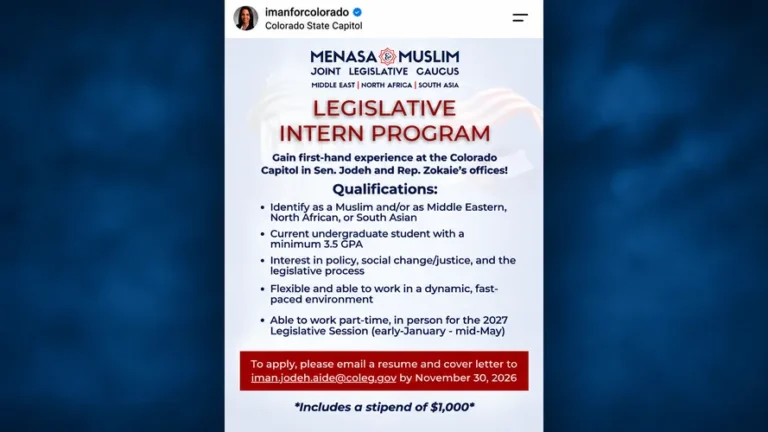
Colorado Muslim Senator Creates Muslim-Only Work Placements
Egypt designates Islamic organisation linked to Barcelona’s largest mosque as terrorist
They want to change the name of the Navas neighborhood so as not to offend Muslims

Police capture a muslim follower of Islamic State in his cave in Barcelona’s Raval neighborhood
British school forces six-year-olds to wear hijabs during Islam class
Students at an Italian School Told to Pretend to Be Muslims in Catholic Religion Class
Figure of Jesus Christ beheaded and Arabic graffiti left on a monument to fallen British soldiers
Teenagers interrupt a mass in Vienna shouting “Allahu Akbar”
Phrase of the Week

Image of the Week
-Don't you have cousins?