
Muslim lesbians, Palestinian flag and a white person hanging on the Paris gay pride poster.
The poster for this year's Gay Pride march has sparked a political storm and divided the LGBT+ community itself.
Image of the poster
Social Networks
[social-share align=»right» style=»button» mobile_app=»desktop»]
[social-share align=»center» style=»icon» mobile_app=»mobile»]
The Paris Pride March, scheduled for June 2025, has already caused a political earthquake before it even begins. The catalyst was the promotional poster released by the Inter-LGBT organisation. On the poster you can see a white man apparently hanging by a tie, a woman wearing an Islamic veil, another with a pin bearing the colours of the Palestinian flag, and other figures with features evoking sexual, gender and racial minorities..
The chosen slogan has also helped to inflame passions: “Against the reactionary international, queers of all countries, unite!”, an adaptation of the classic Marxist slogan which hints at a willingness for ideological confrontation on a global scale.
Humiliation of the white man
Many have interpreted the sign as a staging of revenge or humiliation against the heterosexual white man, who appears in the centre, unconscious or dead, with a Celtic cross tattoo on his neck, a symbol commonly associated with far-right groups. The visual effect, however, has given rise to very different interpretations. For some, It represents an incitement to hatred and a dangerous caricature of relations between groups..
The organisers of the March, Inter-LGBT, have said that the message has been misunderstood. According to them, the hanging man does not represent any «white person», but rather an allegory of the international reaction. They have also clarified that the colours of the sack (red, white and green) are not Palestinian, but those of countries such as Hungary or Bulgaria, where marches are banned.
Division within the LGBT+ community
The controversy over the poster has opened an ever more visible rift within the LGBT+ community itself. The Beit Haverim collective, which represents gay and lesbian Jewish people, was among the first to speak out. They believe that the use of symbols such as the pin bearing the colours of the Palestinian flag is a form of political instrumentalisation that can generate tension and hostility within the movement. In their own words, It is a dangerous gesture that puts the safety and legitimacy of community members who do not share this agenda at risk.«.
But they are not the only ones. Several Figures from critical feminism have expressed unease at the presence of a veiled woman on the poster., a symbol that they interpret as a banalisation of gender oppression in the name of multiculturalism. For these voices, the alliance between certain LGBT+ sectors and Islamist or anti-Zionist discourses is contradictory and exclusionary for women, atheists, religious dissidents or LGBT+ people from Muslim backgrounds who have broken with that religion.
On top of all this, there is growing criticism among older gay people or those with a long history of activism: Some lament that the Pride March is no longer a liberation festival, but an increasingly sectarian political march.. Others, by contrast, argue precisely that the movement must be anti-fascist, anti-racist, anti-colonial and pro-Palestine, all in one package.
Immediate political reactions
The response of the French political class has not been long in coming. The first critical voices have come from the institutional right and the far right. These voices denounce a sectarian and violent drift by a section of the LGBT+ movement. Valérie Pécresse, President of the Île-de-France region, has been the most forceful: It has announced the immediate withdrawal of the regional logo from the poster and has suspended public funding for the Inter-LGBT organisation.. He has stated that “You cannot subsidise a message that incites hatred and violence against a section of the population.”.
From the National Rally, Marine Le Pen has spoken openly of “anti-white racism.”. On the left, the reaction has been more nuanced: figures such as Jean-Luc Mélenchon has defended the poster as a legitimate expression in the face of the global reactionary offensive..
In short, the poster has not only divided civil society but has also ignited a symbolic battle within the French political landscape. In the midst of the campaign for the European elections, with the far right gaining ground, The conflict over the Pride March has become an ideological marker.For some, a symbol of resistance; for others, further proof of the cultural fracture that France is experiencing.
Similar

France now has a halal meat supply without the need to sacrifice animals facing Mecca.
Feminists in France wear the Muslim headscarf against the possible ban
Human rights defenders in France want to ban debate on the Islamic veil
Islam accounts for 85 per cent of religious conflicts in French companies.
France permanently bans the burkini in municipal swimming pools
The University of Strasbourg paid the lawyers of a student who had denounced a researcher critical of the Muslim Brotherhood.

More Perceptions of
ERC, PSC and Comuns oppose combating political Islam in the European Parliament.
Azerbaijan expels students who wear Islamic headscarves from school
Sharia law in the US is supported by 75% of Muslims, 41% of atheists and up to 20% of Christians.

France now has a halal meat supply without the need to sacrifice animals facing Mecca.
The United Kingdom gives away a thousand hijabs in six months to immigrants arriving via the Channel
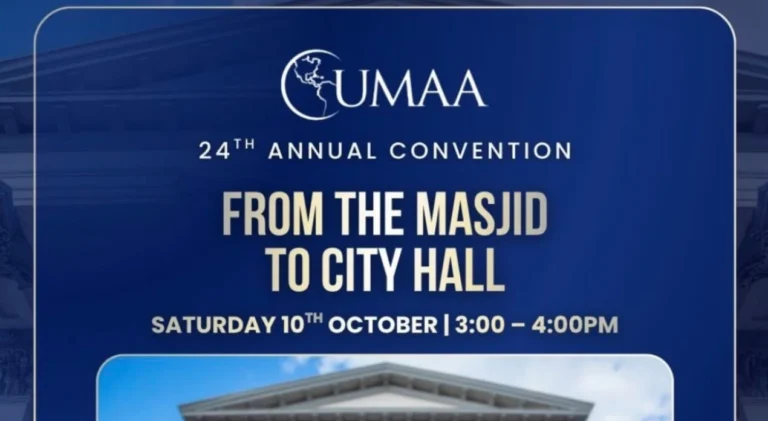
US Muslim politicians train Canadian Muslims under the slogan "From the mosque to the city hall"«
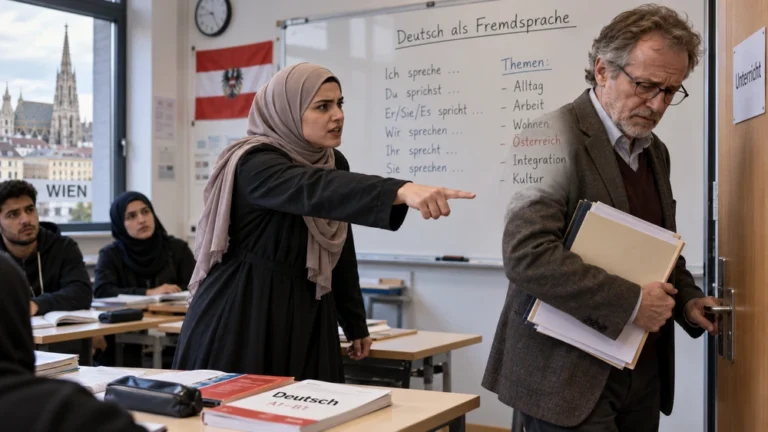
Teacher fired in Austria for denying a Muslim woman a prayer room
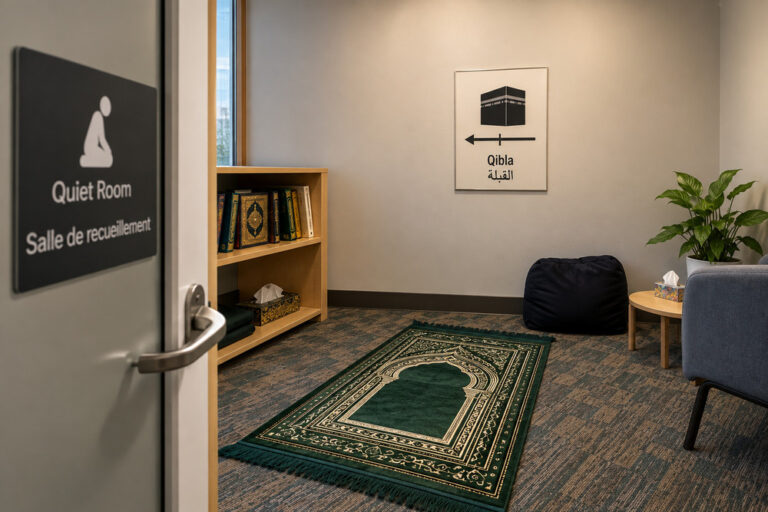
Canadian government normalizes Islamic prayer during workday
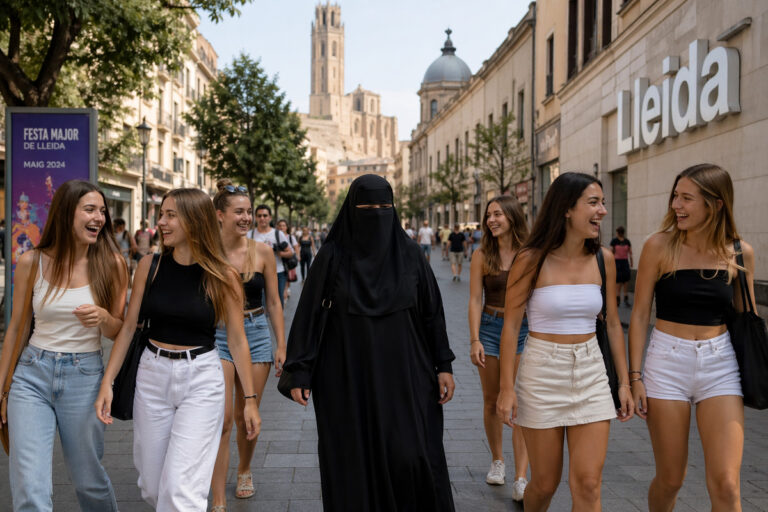
Lleida bans the burqa except if worn for religious reasons
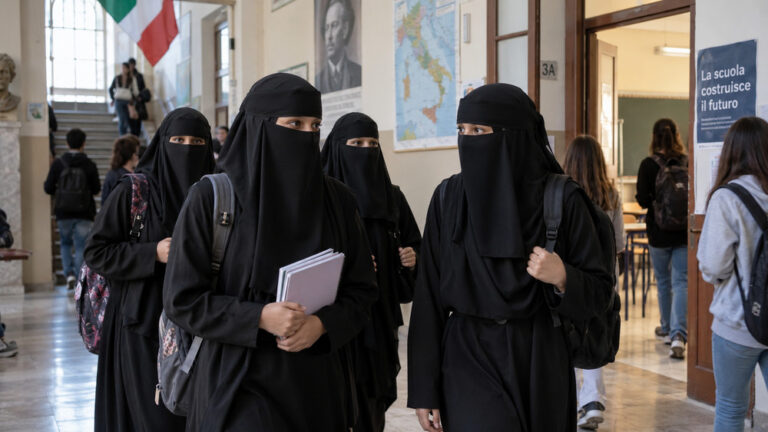
Italy bans burqa and niqab but only in schools
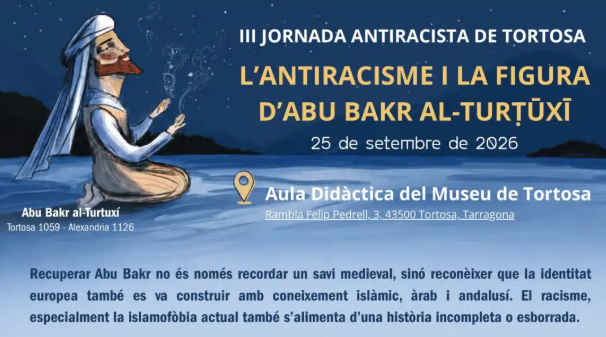
The Generalitat pays tribute to the racist Abu Bakr al-Turtuxí as an anti-racist icon
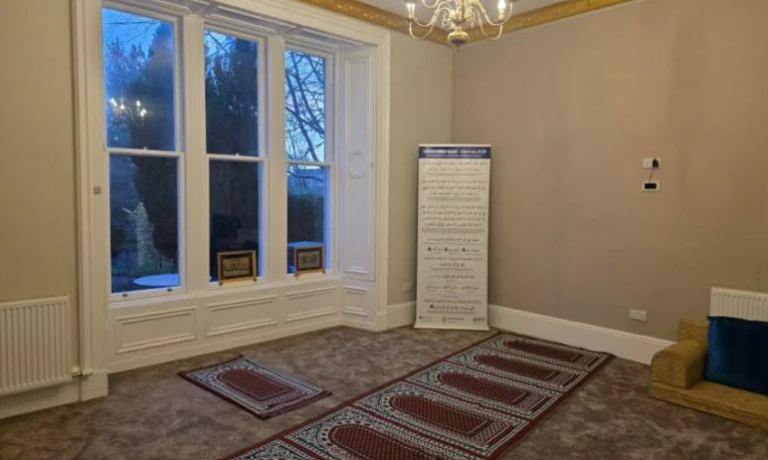
A student residence in Scotland imposes Islamic law in common areas
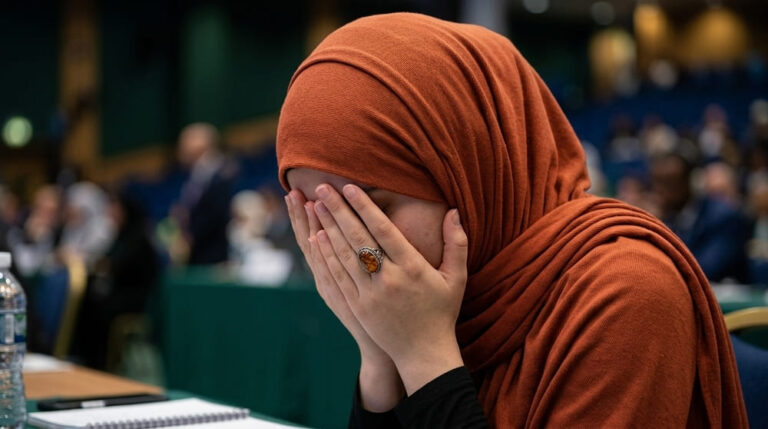
Kazakhstan threatens to close private schools that allow hijab
A Catholic university in Belgium incorporates Islamic chants into the opening mass of the course
A Muslim family in Granada chooses a Catholic school and demands that the courts teach Islam there
Phrase of the Week

Image of the Week
-Don't you have cousins?