
Muslims explain that love comes after marriage.
They claim that marriage between Muslims works because, before getting married, they do not know each other in a romantic sense but instead assess one another. They view marriage as a contract with prior negotiation over roles, rights and duties.

[social-share align=»right» style=»button» mobile_app=»desktop»]
[social-share align=»center» style=»icon» mobile_app=»mobile»]
The Muslim TikTok influencers Petrov and Elhusse talk about marriage among Muslims. In their conversations, they themselves point out that ’love is fleeting“ and that, in the case of Muslim marriages, ”’Love is built after marriage.”. As they explain, the key is to establish the terms of the relationship from the outset: “I want a woman who dresses according to the Sunnah, who is affectionate, who doesn't work, and who has children straight away.”.
Marriage is a contract with preconditions.
This discourse presents marriage as a A prior contract in which expectations and obligations are negotiated.. They do not see it as a meeting space between two free individuals who can evolve together. Both Petrov and Elhusse insist that “There is no need to continue talking if the woman has other personal projects, such as studying or delaying motherhood. According to them, compatibility is settled before getting married and no subsequent change should be expected: “You have to marry the person they are now, not what they could be.«.
From a critical perspective, these statements convey a a rigid and unidirectional view of relationships, which reduces a woman's role to obedience and the renunciation of her autonomy. Moreover, They present Muslim marriage as an institution that functions solely on the basis of clarity in the preliminary conditions., invisibilising the diversity of experiences and the complexity of human relationships.
Marriage and the gender hierarchy in Islam
The conception of traditional Islamic marriage they advocate is inspired by certain readings of the Qur'an that place the man in a position of responsibility over the woman. One of the most cited verses is Sura 4:34, which states that “men are responsible for women” and that good wives must be obedient. Therefore, what the Muslim man seeks is to secure a wife who is clear about her role.
The same verse also sets out the steps that the husband must follow in the event of his wife's disobedience: First to admonish her, then to withdraw to bed and, finally, if she persists in disobedience, to strike her.. It then states that, once the woman obeys, the man must not continue seeking any reason for confrontation. This formulation establishes a hierarchical protocol that posits man as a corrective authority with divine authorisation to assault the woman if she misbehaves.
Western love does not exist among Muslims.
In their videos, Petrov and Elhusse They insist that love, understood in a romantic sense, is not the basis of Muslim marriage. and that the emotional bond must be built after the union.
The Islamic tradition within which the words of the two preachers are framed. Understand marriage as an act of worship to Allah.. That is to say, getting married is not just a personal decision, but also a way of fulfilling divine will and living in accordance with it. sunnah. In this sense, the love between husband and wife is inscribed within a religious framework where The central element is the love of God..
The tradition defended by Petrov and Elhusse emphasises segregation between the sexes and the restriction of interaction between young people before marriage. The aim is to prevent relationships that could lead to intimacy and, in particular, to stop boys and girls forming bonds based on mutual attraction. This separation, which translates into the prohibition or control of mixed social gatherings, rI support the idea that contact between boys and girls should be based on a matching of religious expectations. and that emotional and physical intimacy is only legitimate once the marital union has been formalised.
The message is very clear:
You have to have, so to speak, a vision of the kind of woman you want. I want her to dress in accordance with the Sunnah. I want her to be affectionate. I want her to be… Yes, yes, yes. That's why Muslim marriages work.
Love is built after marriage. Exactly. Love is fleeting. But the thing is… That's why Muslim marriages work. Because you go and talk to the other person and you say: I want the marriage to be like this, like that and like this. I want a wife who doesn't work. I want to have children right now. Well, whatever you want. If your wife wants to study now, do a four-year degree, doesn't want to have children, etc., etc., then there's no need to carry on talking, you know? You marry someone who's doing the same as you. Exactly.
You don't need, so to speak, to have basic principles about the woman you want, and it's the same with the man you want. And you marry the woman you want in the present. Obviously, we will all reach a certain degree of iman, an improvement in every aspect: spiritual, physical, mental and in knowledge. But you must marry the person as they are now, not what they might become, because no one can guarantee that.
More videos

London preacher wants to shave the foreheads of non-Muslims
This is how the call to prayer sounds in a Western city.
The influencer Omar Shawkii doesn't like the Gospel because it speaks of love.
How to end a conversation with a Muslim preacher badly

More Perceptions of
ERC, PSC and Comuns oppose combating political Islam in the European Parliament.
Azerbaijan expels students who wear Islamic headscarves from school
Sharia law in the US is supported by 75% of Muslims, 41% of atheists and up to 20% of Christians.
France now has a halal meat supply without the need to sacrifice animals facing Mecca.
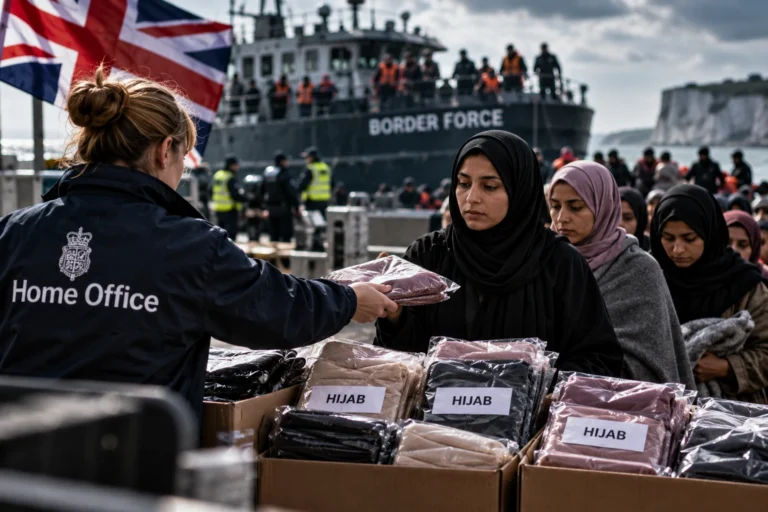
The United Kingdom gives away a thousand hijabs in six months to immigrants arriving via the Channel
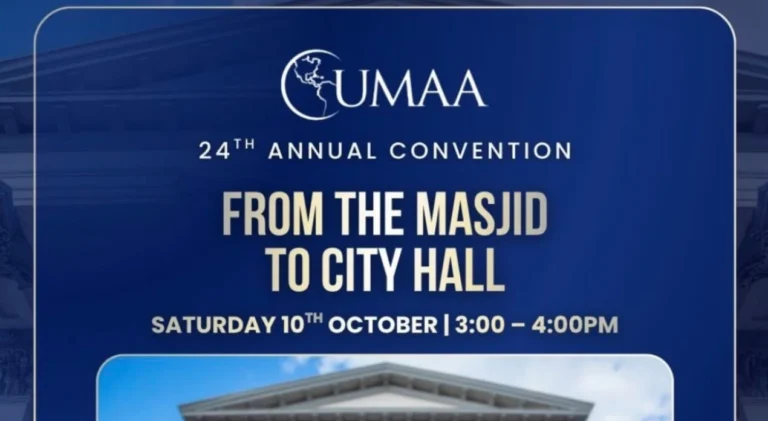
US Muslim politicians train Canadian Muslims under the slogan "From the mosque to the city hall"«
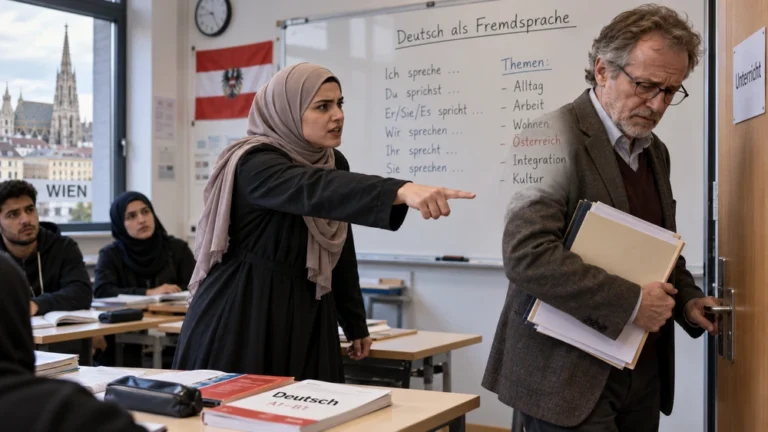
Teacher fired in Austria for denying a Muslim woman a prayer room
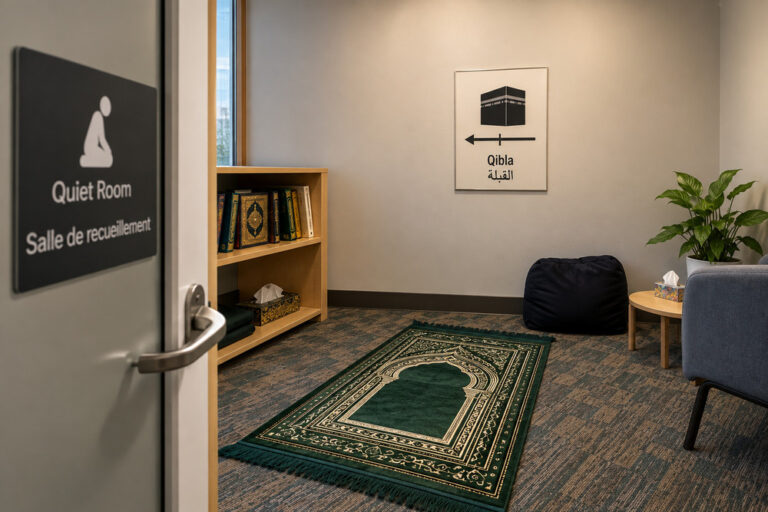
Canadian government normalizes Islamic prayer during workday
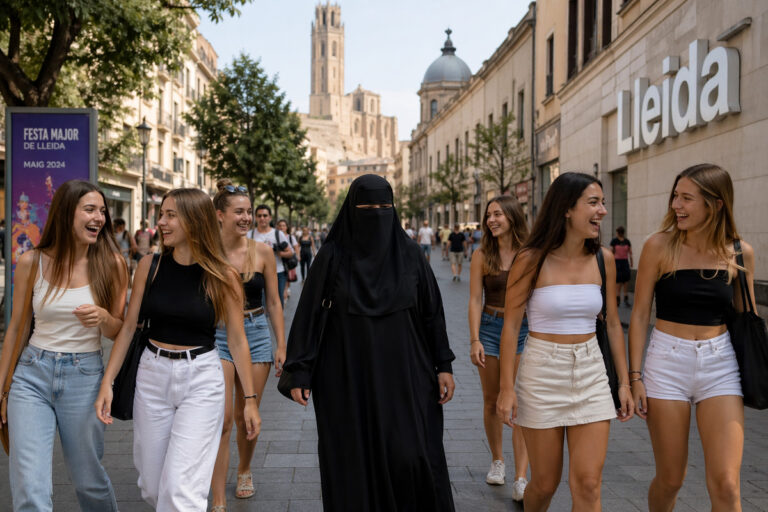
Lleida bans the burqa except if worn for religious reasons
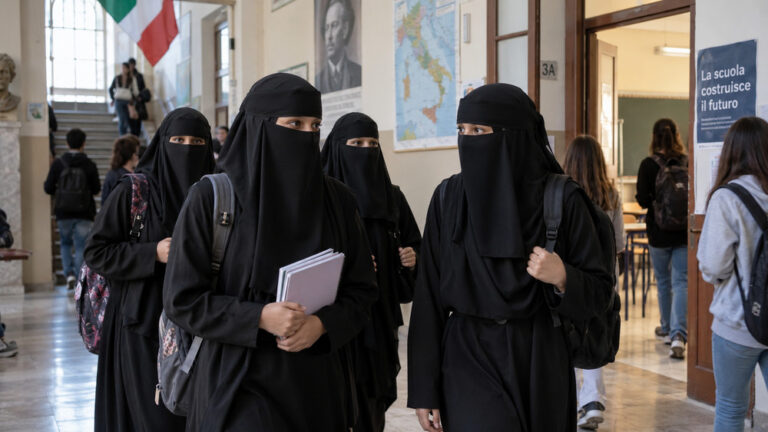
Italy bans burqa and niqab but only in schools
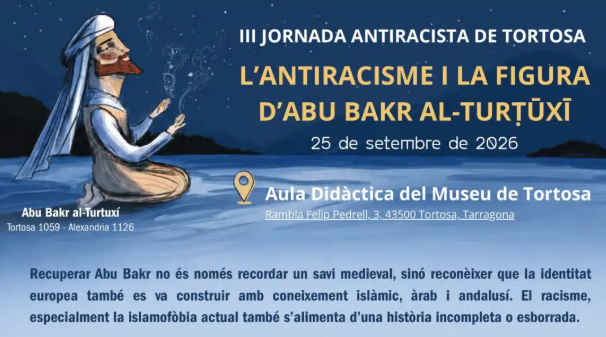
The Generalitat pays tribute to the racist Abu Bakr al-Turtuxí as an anti-racist icon
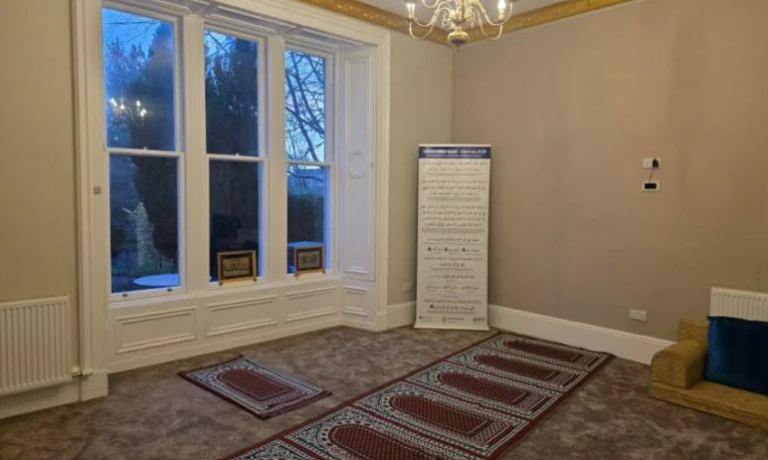
A student residence in Scotland imposes Islamic law in common areas
Kazakhstan threatens to close private schools that allow hijab
A Catholic university in Belgium incorporates Islamic chants into the opening mass of the course

A Muslim family in Granada chooses a Catholic school and demands that the courts teach Islam there
Phrase of the Week

Image of the Week

-Don't you have cousins?