
An Islamic political project in Italy seeks “a million votes for sharia”
Muslims in Italy have a leader, a programme, voters and a plan that is the old dream of the Muslim Brotherhood.
[social-share align=»right» style=»button» mobile_app=»desktop»]
[social-share align=»center» style=»icon» mobile_app=»mobile»]
In Italy a heated debate has opened up about the political role of the Muslim minority. At the centre of this storm is MuRo27 (Muslims for Rome 2027): a new party born in the Italian capital with the idea to present a Muslim list in the 2027 Rome municipal elections and, in the future, throughout the country.
The strategy is no longer for Muslims to join traditional parties or stand as isolated candidates in municipalities. Now the declared aim is to be a confessional force made up of Muslims to influence Italian legislation.
A million votes for Sharia
The strategy is no longer for Muslims to join traditional parties or stand as isolated candidates in municipalities. Now the declared aim is to be a confessional force made up of Muslims to influence Italian legislation. Muslims no longer want to be “a minority within a party.”, but rather an actor with its own agenda, capable of negotiating, pressuring and influencing governments.
The promoters of the future national party base their strategy on a demographic reality that is advancing relentlessly. Each year, the flow decrees authorise the entry of 150,000 to 200,000 non-EU workers., and more than 70% of these newcomers come from Muslim-majority countries. This is only the first step.
Family reunification further amplifies the impact. For every person who arrives legally with a work permit, three or four more can enter.wives, children, parents or even siblings. Islamic communities know this and openly explain it: each residence permit creates a complete family unit that takes root in the territory within a few years and which, once it obtains citizenship, becomes a loyal electorate.
Among workers and family members generates a net annual increase of between 300,000 and 400,000 Muslims residing in Italy. All legal, all integrated into the administrative system. and all destined to have the right to vote. If the trend continues, In 2035 there will be about four million Muslims in the country., and more than 1.2 million will have the right to vote. That is why the strategists have a very simple plan: to exist, grow each year and hope that demographics will do the rest.
From left-wing militant to leader of political Islam
The political project cannot be understood without its instigator: Francesco “Abd al-Haqq” Tieri, an engineer, former Democratic Party activist and convert to Islam more than a decade ago.. Tieri is not just an activist; he has become the political representative of the Muslim communities in Lazio and the architect of a narrative he intends to bring to the institutional level.
In 2021 he stood in the centre-left primaries to preside over Rome's Fifth District. Half the residents there are Muslim, and Tieri took advantage of it.He built the election campaign on rallies in mosques.. He openly admits it: “I am a Muslim. I have no party or organisation supporting me. I asked the prayer centres for help in collecting signatures.”And the imams replied to him. Tieri explains that He discovered “a world ignored by politics”He moved from mosques to bars and greengrocers, taking advantage of a cohesive social network that no traditional party had worked on.
The project is pure political Islam, the old dream of the Muslim Brotherhood.
The project led by Tieri can no longer be disguised as a local list or a neighbourhood association. Tieri's thinking can be read in his book and in an article in the magazine of Italy's main Islamic federation. The article functions as a manifesto and, right from the title, leaves no room for doubt: “From Islamic political thought to the need to act: do we need a party of Italian Muslims?”And the ideas he sets out are even more striking.
Tieri cites the Muslim Brothers as a model of organisation. Claim the Palestinian resistance, including “the use of violence in self-defence”. He defends that Muslims must formalise an alternative worldview.”based on the “protection of the Qur'an”. It demands to oppose everything that “is not in accordance with the Islamic religion”alcohol consumption, sexual freedom, secularism, and much of the pluralism that defines contemporary Europe. And, above all, it estimates that the Muslim electorate has “more than one million potential votes”, a bloc sufficient to make it a decisive minority in local and national governments.
The strategy that describes It is exactly what the Muslim Brotherhood have been preaching for decades.Moving from the religious community to the political community, and from there to a force capable of influencing laws, norms and social customs. They do not intend to transform the country overnight; they want to advance step by step, gaining institutional presence and normalising the idea that religious identity can—and must—become a political programme.
The Islamic challenge is already in Italy
MuRo27's candidacy for the 2027 Rome municipal elections is, therefore, the first Italian translation of the political Islam model. It is not a cultural claim, but a project that aspires to stretch the secular framework. and introduce religious criteria into the public sphere. Tieri himself acknowledges this when he laments that the Islamic presence in politics is “almost insignificant” and urges communities to “leave social media and organise themselves.”.
This move forces Italian politics to ask itself a question it had until now avoided: cHow will a secular state react when a religious minority decides to organise itself as a political bloc and use its demographic weight to influence the legislature? The temptation to look the other way is no longer possible. MuRo27 is just the first step of a model that can be replicated in Turin, Milan or Bologna, and which already has organised communities ready to follow it. What is decided in Rome in 2027 will not be a local episode: It could mark the beginning of a new political era in Italy., in which the central battle will not be between left and right, but between the Western secular model and a confessional project that wants to enter the institutions with a firm and calculated step.
More about Muslim Brotherhood

ERC, PSC and Comuns oppose combating political Islam in the European Parliament.
Who is Fatiha El Mouali, much more than the helpless immigrant from the newspaper ARA
Austria prepares to ban Muslim Brotherhood political Islam
Germany prevents civil servant from being a civil servant due to ties with the Muslim Brotherhood
An official Austrian report accuses the Muslim Brotherhood of wanting to transform democracy from within.
The foundation that manages the Barcelona Office of Religious Affairs paid €175 to denounce Islamophobia
The Generalitat trains teachers with an Islamic preacher who denies Western equality between men and women
The University of Strasbourg paid the lawyers of a student who had denounced a researcher critical of the Muslim Brotherhood.
Germany's intelligence service warns of the infiltration of the Muslim Brotherhood into institutions and parties.

ERC, PSC and Comuns oppose combating political Islam in the European Parliament.
Azerbaijan expels students who wear Islamic headscarves from school
Sharia law in the US is supported by 75% of Muslims, 41% of atheists and up to 20% of Christians.
France now has a halal meat supply without the need to sacrifice animals facing Mecca.
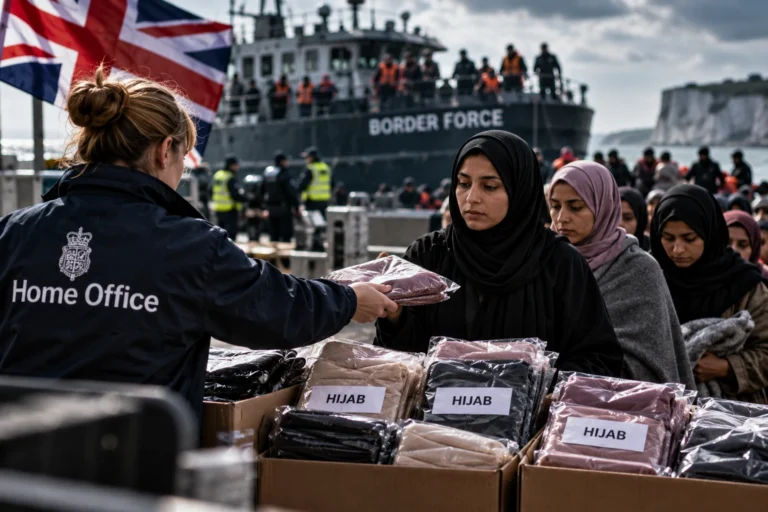
The United Kingdom gives away a thousand hijabs in six months to immigrants arriving via the Channel
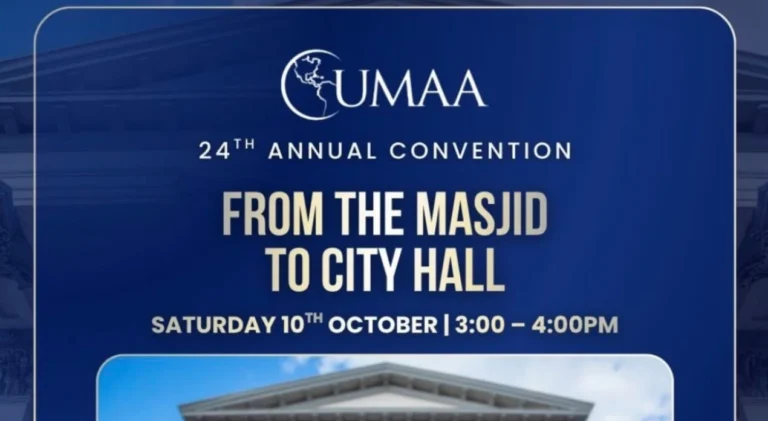
US Muslim politicians train Canadian Muslims under the slogan "From the mosque to the city hall"«
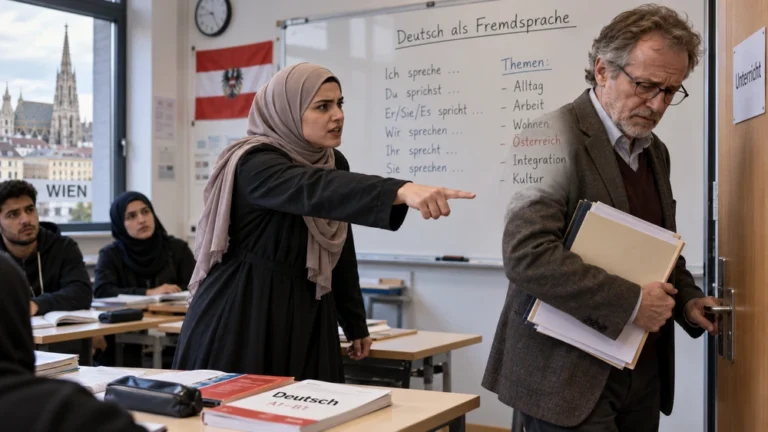
Teacher fired in Austria for denying a Muslim woman a prayer room
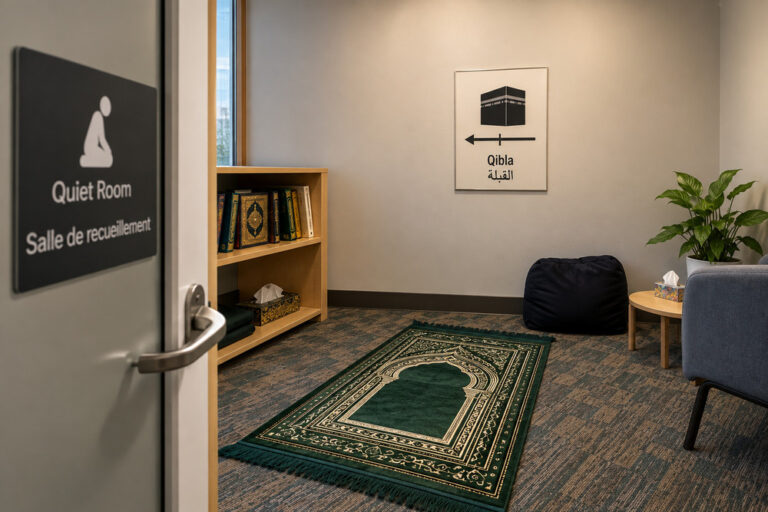
Canadian government normalizes Islamic prayer during workday
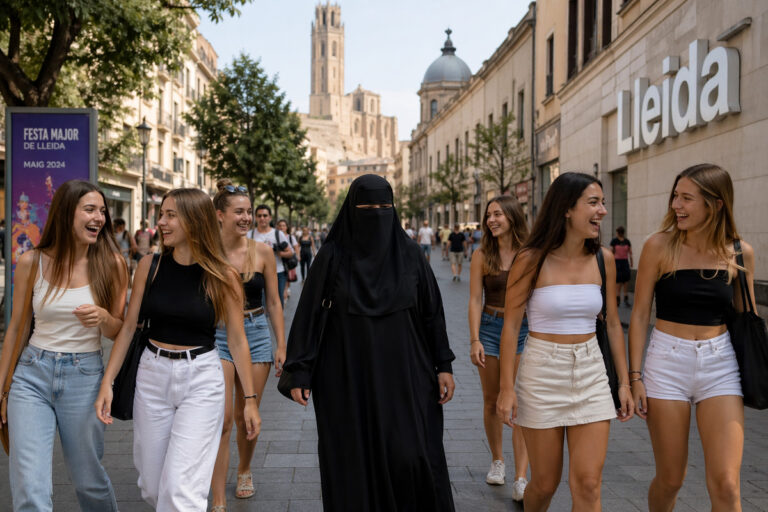
Lleida bans the burqa except if worn for religious reasons
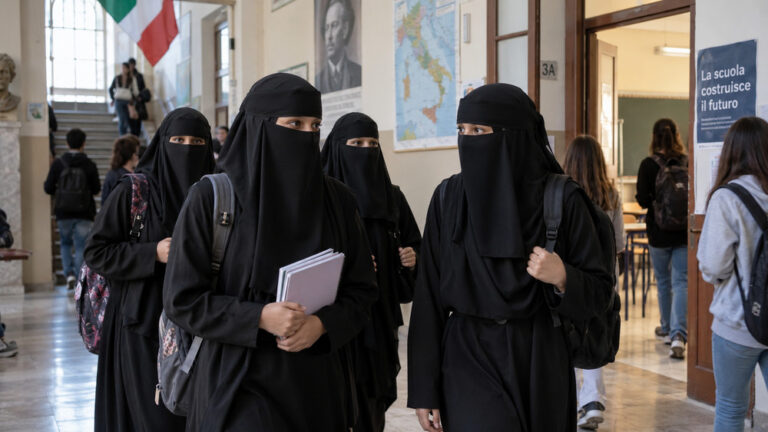
Italy bans burqa and niqab but only in schools
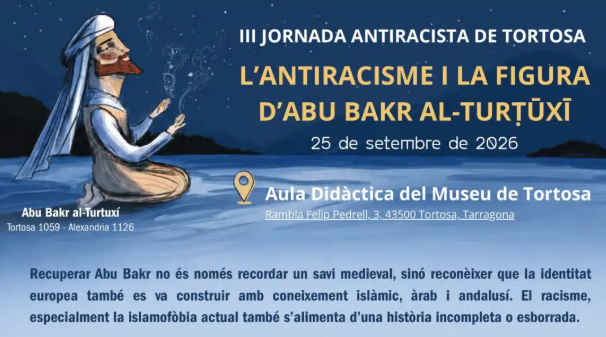
The Generalitat pays tribute to the racist Abu Bakr al-Turtuxí as an anti-racist icon
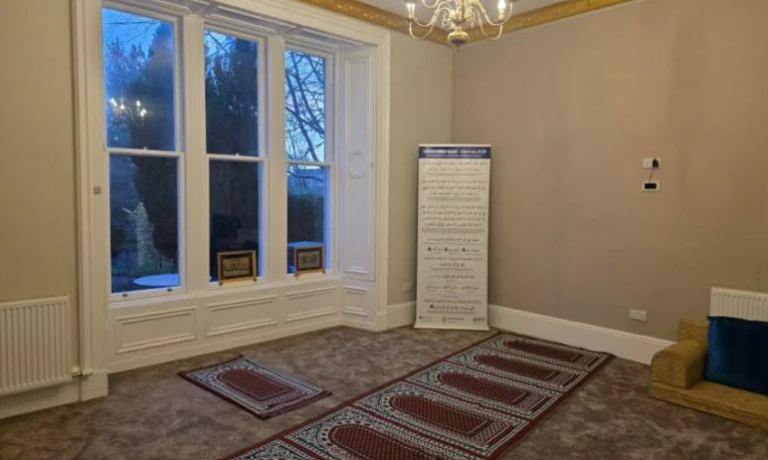
A student residence in Scotland imposes Islamic law in common areas
Kazakhstan threatens to close private schools that allow hijab
A Catholic university in Belgium incorporates Islamic chants into the opening mass of the course
A Muslim family in Granada chooses a Catholic school and demands that the courts teach Islam there
Phrase of the Week

Image of the Week
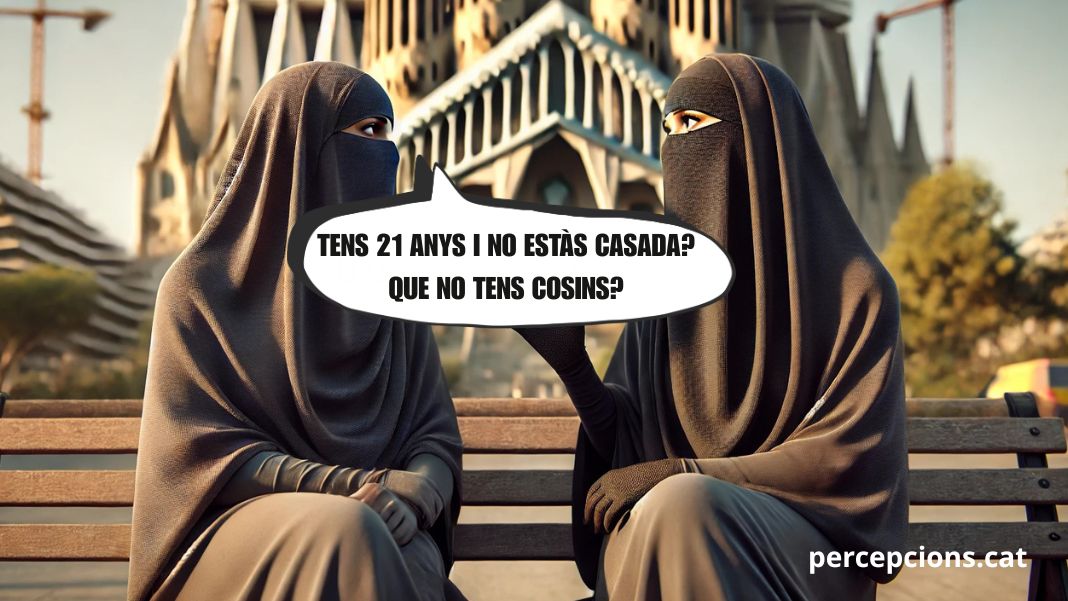
-Don't you have cousins?