
Clear majority in France in favour of banning the Islamic veil in public
A new survey reveals that 69% of the French want the ban on headscarf. The figure rises to 78% among the elderly.
Illustrative image
[social-share align=»right» style=»button» mobile_app=»desktop»]
[social-share align=»center» style=»icon» mobile_app=»mobile»]
A new poll published this Sunday, 30 March, has once again shaken France. After the survey which says that the 421 French TP3T foresee a war caused by multiculturalism Now it is revealed that a clear majority of the French population would be in favour of banning the Islamic veil in public spaces. According to the CSA institute survey for CNEWS, Europe 1 and the Sunday Journal, The French 69% supports this measure.. In 2022 the same survey stood at 61%.
The 2004 law doesn't reach the street
The Act of 15 March 2004 it only prohibits ostentatious religious symbols —such as the veil, the kippah or the cross— in public educational establishments (schools, colleges and secondary schools), but not in public spaces such as streets, town halls or universities, where its use is permitted.
Nevertheless, the debate has been reignited after Jordan Bardella, president of the far-right party National Rally, stated that the ban on the veil in public spaces is a «long-term objective».». In a similar vein, the Minister of the Interior and Religious Affairs, Bruno Retailleau, declared «Down with the veil» during a demonstration against Islamism in Paris.
Unequal support by age, gender and ideology
The survey shows that Support for the ban on the veil is cross-party. among men (69%) and women (68%), but it shows marked differences according to age and political tendency.
- Young people aged 25 to 34 are the most reluctant, with only 47 per cent in favour.
- On the other hand, the 78% of citizens aged 50 to 64 It supports it.
- The 80% of the right-wingers and the 90% of the far right want a ban.
- The 60% on the left who votes for the Socialist Party (PS) in favour of a ban.
- Only 421 TP3T of La France Insoumise (LFI) voters approve the veto.
Controversial measure
Despite popular support, various experts and political leaders remind us that Banning the veil in public spaces could violate fundamental rights., such as freedom of religion and conscience.
The MP Maud Bregeon (EPR) recalled that «no democracy in the world» imposes a total ban on the veil in public spaces, and warned that any attempt in this direction would have to face either a constitutional reform or the partial exception or withdrawal from European treaties such as the European Convention on Human Rights.
The debate over the veil in France remains complex and polarising, reflecting tensions between the principles of secularism, individual freedom and social integration.
Survey conducted on 27 and 28 March using a self-administered online questionnaire, with a nationally representative sample of 1,010 people aged 18 and over, using quota sampling.
More Perceptions of
.
ERC, PSC and Comuns oppose combating political Islam in the European Parliament.
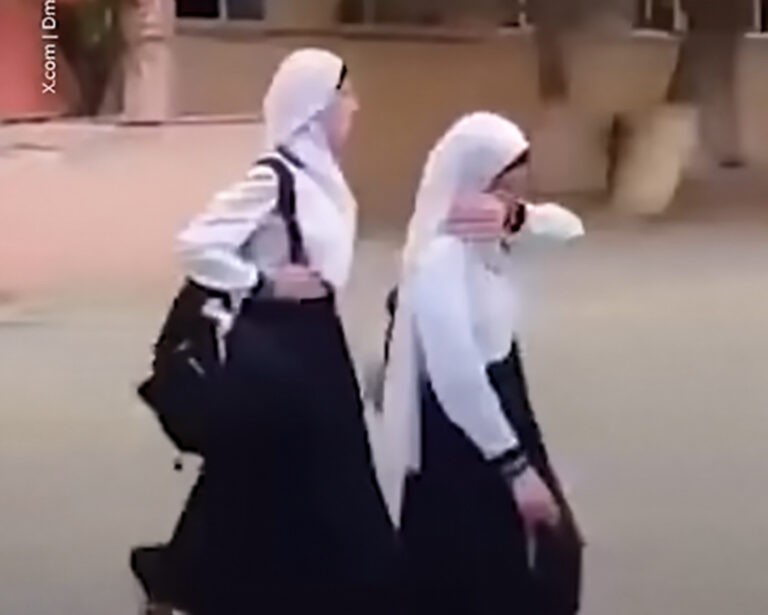
Azerbaijan expels students who wear Islamic headscarves from school
Sharia law in the US is supported by 75% of Muslims, 41% of atheists and up to 20% of Christians.

France now has a halal meat supply without the need to sacrifice animals facing Mecca.
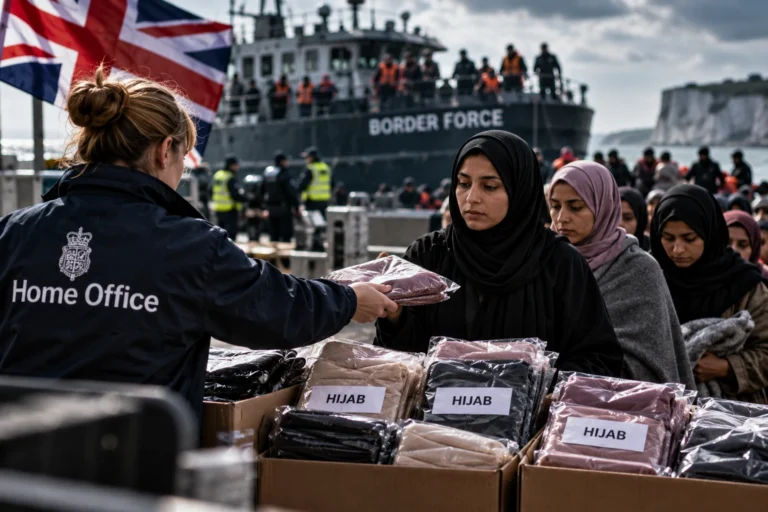
The United Kingdom gives away a thousand hijabs in six months to immigrants arriving via the Channel
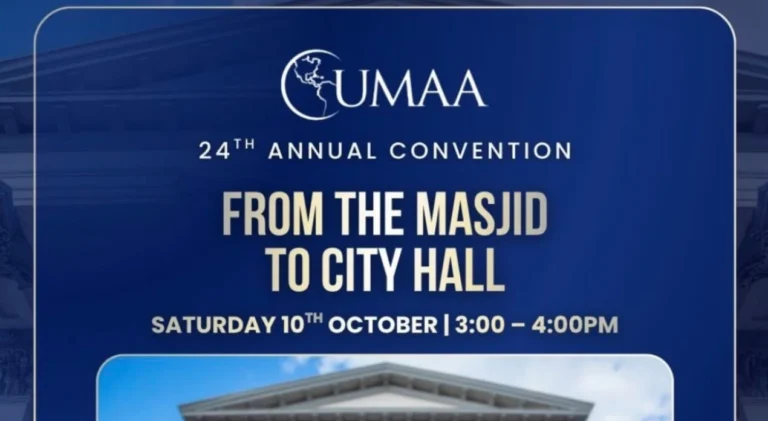
US Muslim politicians train Canadian Muslims under the slogan "From the mosque to the city hall"«

Teacher fired in Austria for denying a Muslim woman a prayer room
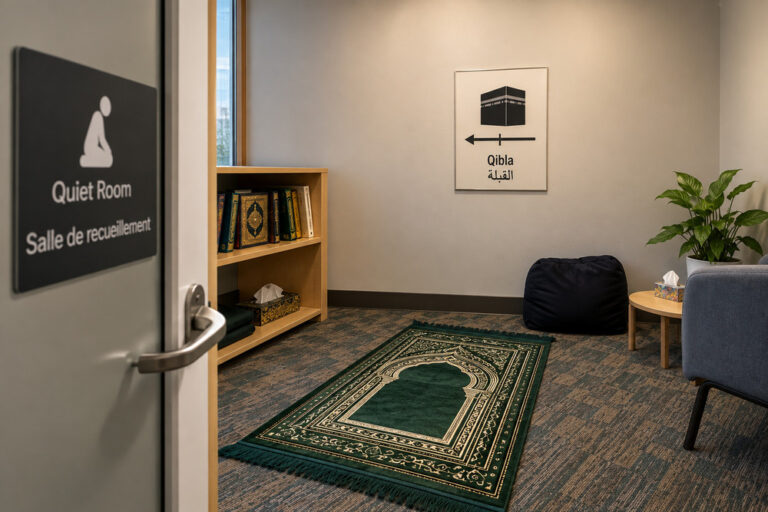
Canadian government normalizes Islamic prayer during workday
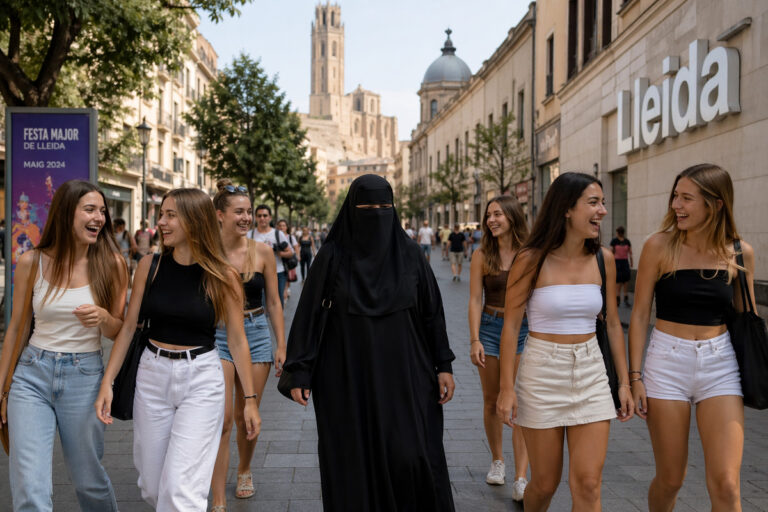
Lleida bans the burqa except if worn for religious reasons
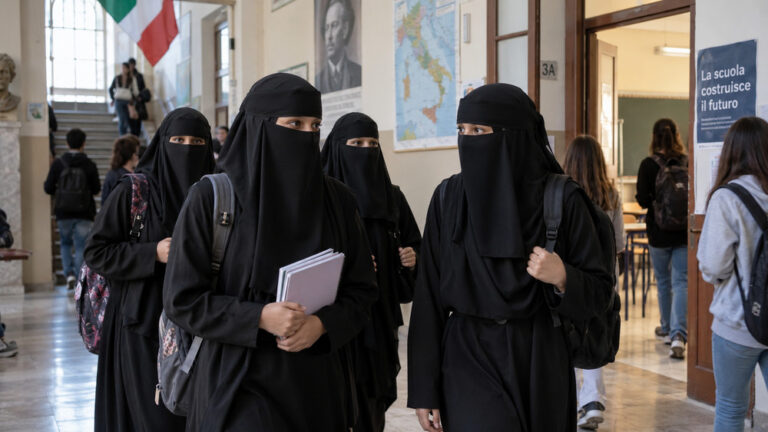
Italy bans burqa and niqab but only in schools
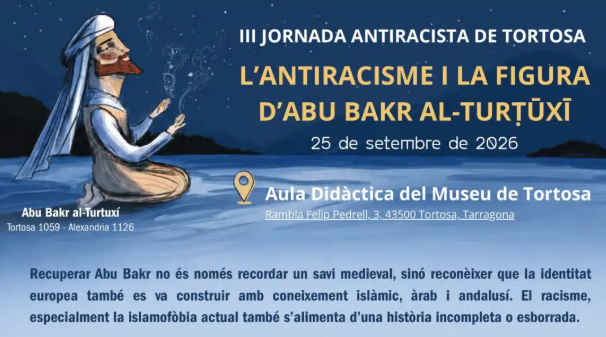
The Generalitat pays tribute to the racist Abu Bakr al-Turtuxí as an anti-racist icon
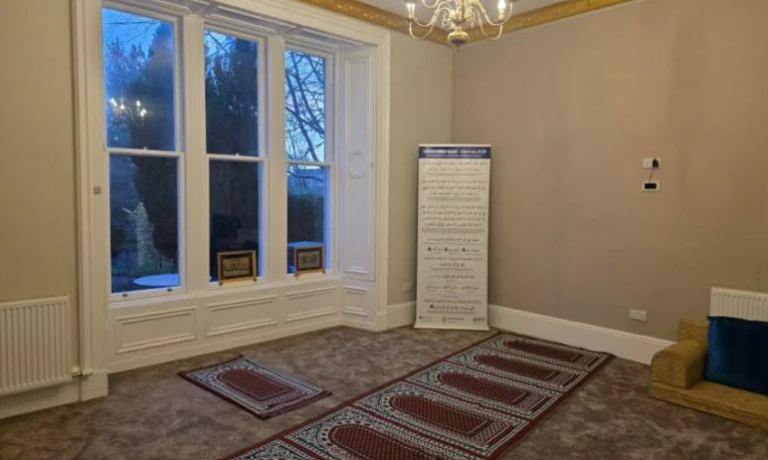
A student residence in Scotland imposes Islamic law in common areas
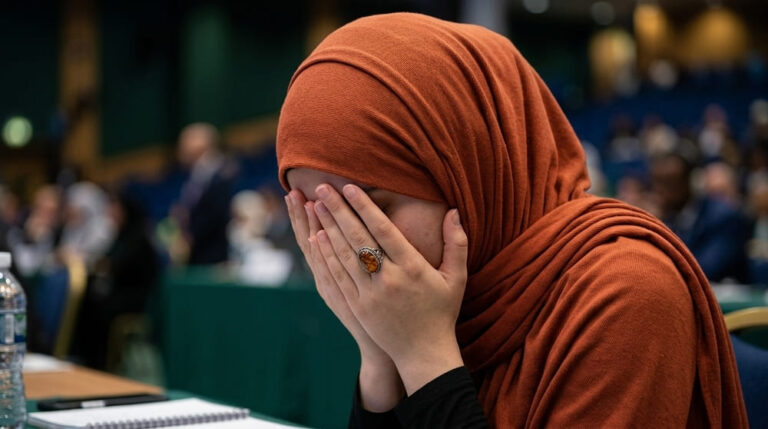
Kazakhstan threatens to close private schools that allow hijab
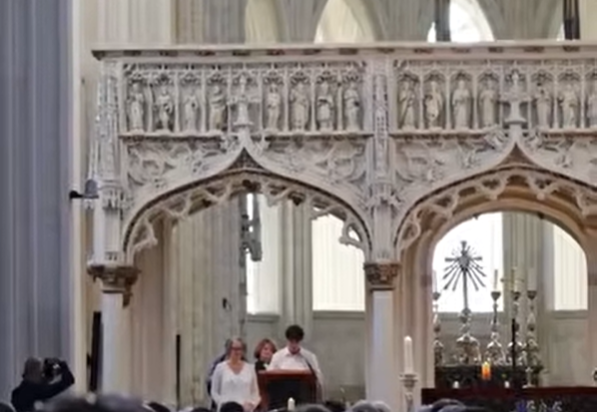
A Catholic university in Belgium incorporates Islamic chants into the opening mass of the course
A Muslim family in Granada chooses a Catholic school and demands that the courts teach Islam there

Phrase of the Week

Image of the Week
-Don't you have cousins?