
The French 42% foresees a civil war arising from multiculturalism.
Radical Islamism is linked to rising social tension and a sense of insecurity.
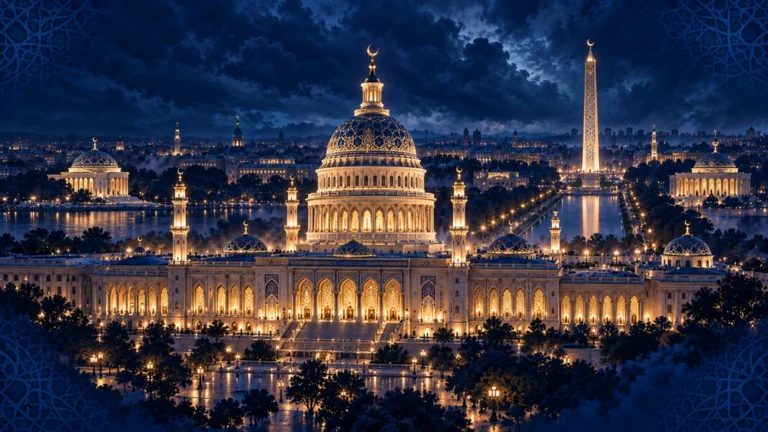
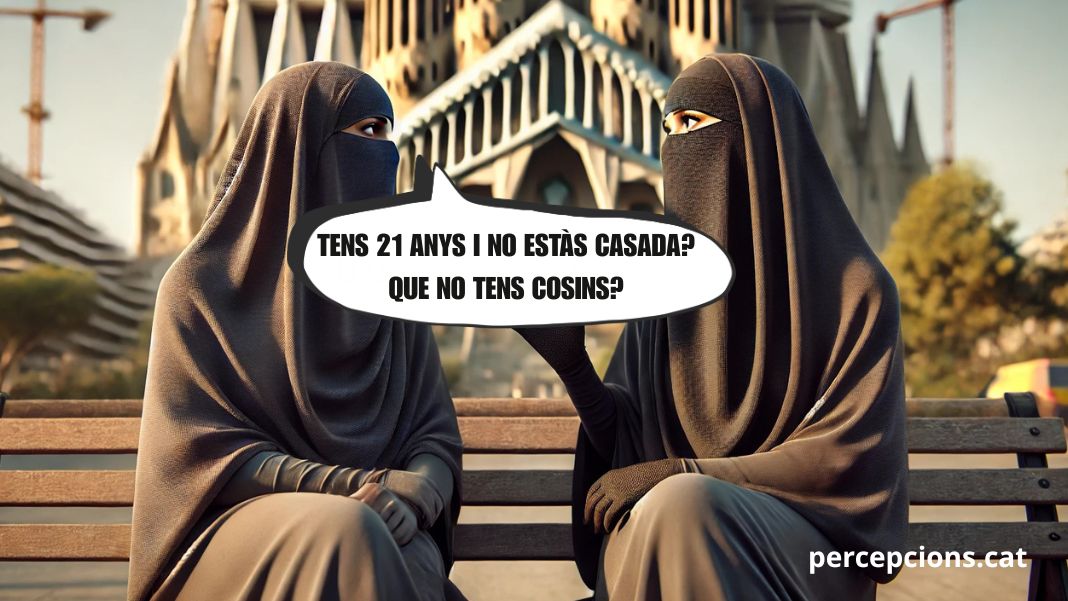
Illustrative image
Dall-e
[social-share align=»right» style=»button» mobile_app=»desktop»]
[social-share align=»center» style=»icon» mobile_app=»mobile»]
An Ifop survey revealed exclusively by The Figaro It provides an unprecedented assessment of how the French perceive multiculturalism. The study says that this level of distrust had never been seen under the Fifth Republic. Some key data are:
- 42% see a civil war as possible.
- 80% believe there will be serious street disturbances in a few months.
- 39% see an assault on the Élysée Palace or the National Assembly as likely.
- 60% do not trust the institutions' ability to guarantee political stability.
Islamism is the centre of concern.
Islamism has become the The central core of social and political fears in France. Beyond security or the economic crisis, a large part of the population sees the spread of Islamist ideology as a direct threat to the republican model, to the values of secularism and to civic coexistence.
This perception is not only based on isolated incidents, but on a growing feeling that Islamism is penetrating key structures of society.from education to the most vulnerable neighbourhoods. Other surveys have found that Young French Muslims have more radical religious beliefs. than previous generations.
The results of the Ifop survey are clear and unequivocal:
- 63% believe that Islam is the religion with the most radical positions.
- 72% think that Islamist ideology is advancing in the working-class neighbourhoods.
- 64% claim that the State «has not done enough» to combat radical Islamism.
- 63% detect Islamist influence in schools.
- 56% on university campuses.
Social bond in decomposition
French society is immersed in a deep crisis of cohesion. According to the Ifop survey, the 80% of the population consider that social bonds have weakened over the past 20 years.. This feeling is not merely a subjective impression: it manifests itself in levels of collective anguish and political distrust that are unprecedented in the country's recent history.
This widespread dislocation is neither accidental nor improvised. The French are very clear about its main causes:
- 88% believe that the rise in crime is the main cause.
- 82% indicate the concentration of people of the same origin in certain neighbourhoods.
- 77% consider that economic inequalities are a determining factor.
- 75% think that religions have too much of a presence in the public sphere.
These data point to a a sense of structural disorder, where insecurity, cultural fragmentation and disconnection between social groups fuel the idea of a country that no longer functions as a single community.
Generational fracture and politics
The divisions within French society are not only cultural or social, but also generational and political. The survey shows that young people have a rather different view of the Islamist phenomenon compared with the rest of the population. Some surprising data are:
- 301 per cent of those under 25 have a positive view of Islamism, but only 161 per cent of those over 25 think the same.
These data highlight an uncomfortable reality: National unity is no longer broken only between neighbourhoods or social classes, but also between generations. The disconnect between young people and adults Fuels a radicalisation of public debate and weakens any attempt at a collective response to the crisis of cohesion that France is experiencing.
France on edge before the outbreak
The data from the Ifop survey offer a disturbing portrait of a France in deep crisis. The breakdown of social cohesion, the fear of an imminent explosion, the perception of an increasingly present Islamism, the generational divide and absolute distrust of institutions all combine to create a scenario fraught with tension. The data show that the malaise is structural, not a one-off..
The question is no longer whether there will be a spillover, other than when, how and with what consequences. France is at a historic turning point, where democracy, secularism and coexistence are being tested like never before. The country seems to be living in a silent vigil before a possible outbreak., where uncertainty leaves no room for indifference.
The Ifop survey not only reflects fear. It also shows a desire for change. Nevertheless, 58 per cent of the French say that «It is still possible to rebuild social cohesion if we work through education, justice and equality of opportunity.».
[social-share]
ERC, PSC and Comuns oppose combating political Islam in the European Parliament.
Azerbaijan expels students who wear Islamic headscarves from school
Sharia law in the US is supported by 75% of Muslims, 41% of atheists and up to 20% of Christians.

France now has a halal meat supply without the need to sacrifice animals facing Mecca.
The United Kingdom gives away a thousand hijabs in six months to immigrants arriving via the Channel
US Muslim politicians train Canadian Muslims under the slogan "From the mosque to the city hall"«
Teacher fired in Austria for denying a Muslim woman a prayer room

Canadian government normalizes Islamic prayer during workday
Lleida bans the burqa except if worn for religious reasons
Italy bans burqa and niqab but only in schools

The Generalitat pays tribute to the racist Abu Bakr al-Turtuxí as an anti-racist icon
A student residence in Scotland imposes Islamic law in common areas
Kazakhstan threatens to close private schools that allow hijab
A Catholic university in Belgium incorporates Islamic chants into the opening mass of the course
A Muslim family in Granada chooses a Catholic school and demands that the courts teach Islam there

Phrase of the Week

Image of the Week
-Don't you have cousins?