
Austrian Muslims' feelings hurt by a minister's criticism of the children's hijab.
The main Muslim organisation is upset because a minister said that the child veil is «a symbol of oppression». They denounce that the criticism violates «religious freedom».
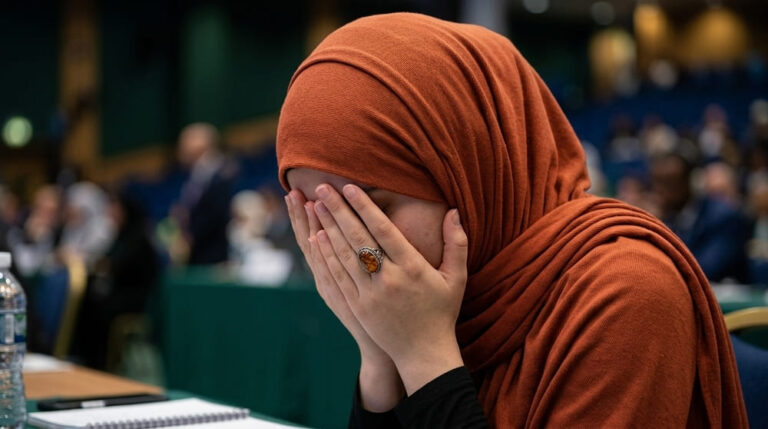
Illustrative image
Generated by AI
[social-share align=»right» style=»button» mobile_app=»desktop»]
[social-share align=»center» style=»icon» mobile_app=»mobile»]
The Austrian Minister for Youth and Culture, Claudia Plakolm (of the Austrian People's Party, ÖVP), hShe has posted a video on Instagram in which she claims that the Islamic veil is a “symbol of oppression” that should have no place in schools.. According to the minister, the girls who wear it are “hidden” during a vital stage of their development, and links this practice to “extremist tendencies”.
The statements come at a time when The Austrian government is preparing a legal reform to ban the use of the Islamic headscarf in schools and nurseries for girls under the age of 14.. Various political and educational sectors support this measure in the name of protecting minors and maintaining the neutrality of educational spaces.
The main Muslim organisation says that it «violates fundamental rights'«
The Islamic Religious Community in Austria (IGGÖ) It is the official authority representing Islam to the Austrian State and manages religious education., the training of imams and the community's institutional relations within the Muslim community. It represents around 700,000 people and acts as a point of contact on religious, educational and cultural matters.
The entity has denounced that the minister's words offend religious freedom and stigmatise Muslim girls. He considers that linking the headscarf to extremism is a dangerous oversimplification that fuels mistrust of Muslim families and promotes a distorted view of religious diversity. Also He has accused the government of trivialising religious freedom. and unfairly associate Islam with extremism.

The IGGÖ defends «religious self-determination.»
The president of the IGGÖ has stated that wearing a veil can be a freely chosen religious expression. He believes that presenting all girls wearing headscarves as victims of oppression is a simplification that denies the plurality of personal and cultural situations.
He also warned that using child welfare as an argument to restrict religious practices may violate fundamental rights. “Whoever denies a girl's religious self-determination does not protect her; they limit her,” the organisation said.
The representative of Islam in Austria wants dialogue and demands explanations.
IGGÖ considers that An institutional statement like that of Minister Claudia Plakolm cannot go unanswered.. For this reason, has demanded clear and responsible explanations to clarify the meaning of his words or correct their content, if it has been misinterpreted. According to the organisation, the statements of a government official carry symbolic and legal weight that can negatively shape the public perception of an entire religious community.
The entity insists that The debate about the child veil cannot be based on one-sided narratives or general judgements about what it means to be a Muslim woman.. IGGÖ argues that the voices directly involved—families, young people and teachers—must be heard before pushing through legislative measures that affect fundamental rights. To this end, it has offered to open a structured institutional dialogue space where it can be to speak openly about coexistence, freedom of belief and the role of the state school in a plural society.
The debate over the headscarf reaches an increasingly diverse school
The IGGÖ's reaction is set within an educational context marked by major demographic changes. In Vienna, Muslim pupils are already in the majority in many state schools and, according to official data, in some areas. more than 401% of children do not speak German at home. This reality has generated concern among teachers, trade unions and administrations about how to ensure an equitable, inclusive education that remains true to constitutional values.
The Austrian People's Party (ÖVP) has led the government in coalition with the Greens since 2020. Under the leadership of Karl Nehammer,’The ÖVP has adopted a discourse marked by security, national identity and migration control, especially in matters of education and culture. The Minister for Youth and Culture, Claudia Plakolm, is part of the party's most conservative wing. Her The defence of a school “free from religious pressures” fits with the government's strategy of imposing neutral dress codes and reinforcing “Western values” in the education system.. This stance has generated support among part of the electorate, but also criticism for rights violations and lack of intercultural sensitivity.
Similar

Teacher fired in Austria for denying a Muslim woman a prayer room
Feminist strike in Austria to defend the Islamic veil for children under 14
Austria prepares to ban Muslim Brotherhood political Islam
An official Austrian report accuses the Muslim Brotherhood of wanting to transform democracy from within.
Muslims ban pork cooking at public barbecues in Austria
More than 40% of young Muslims in Vienna prefer Islamic law to Austrian law

More Perceptions of
ERC, PSC and Comuns oppose combating political Islam in the European Parliament.
Azerbaijan expels students who wear Islamic headscarves from school
Sharia law in the US is supported by 75% of Muslims, 41% of atheists and up to 20% of Christians.
France now has a halal meat supply without the need to sacrifice animals facing Mecca.
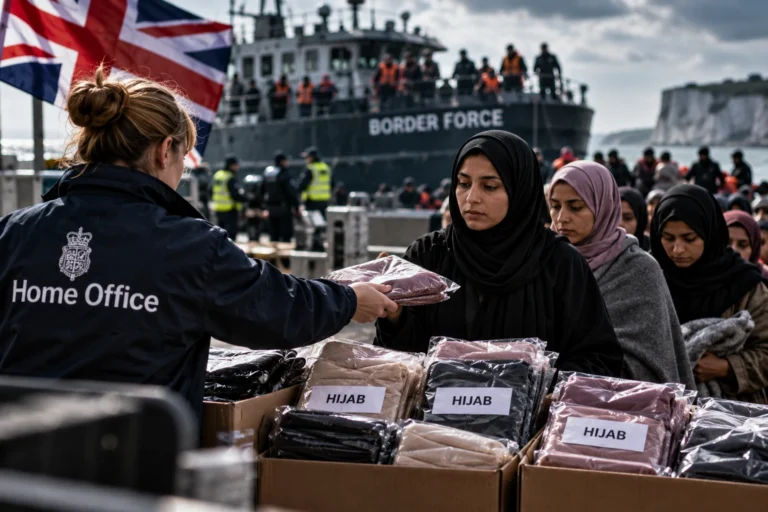
The United Kingdom gives away a thousand hijabs in six months to immigrants arriving via the Channel
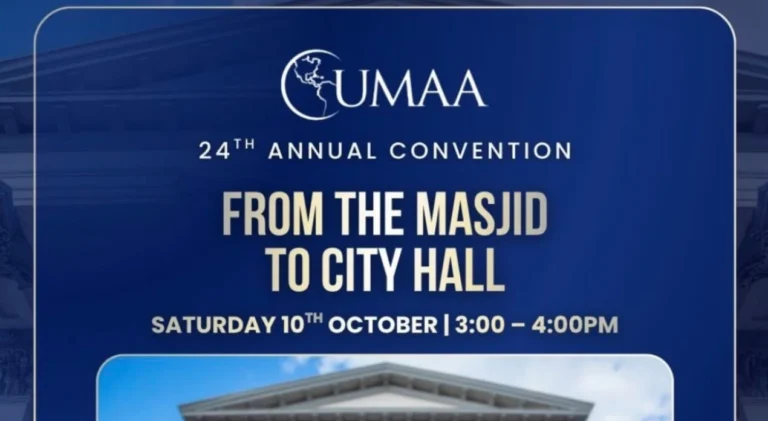
US Muslim politicians train Canadian Muslims under the slogan "From the mosque to the city hall"«
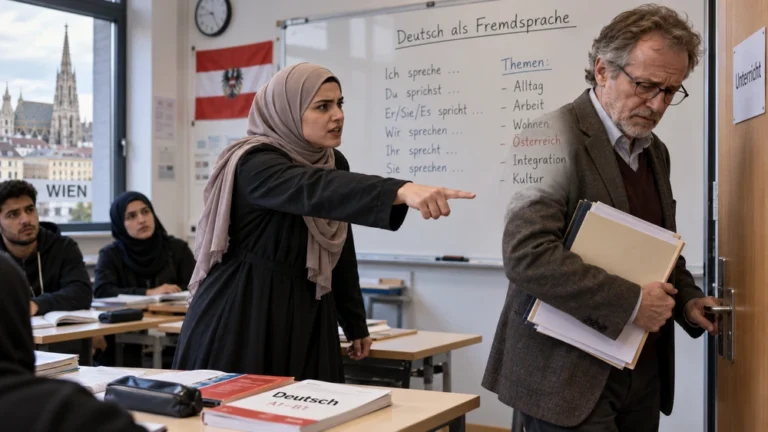
Teacher fired in Austria for denying a Muslim woman a prayer room
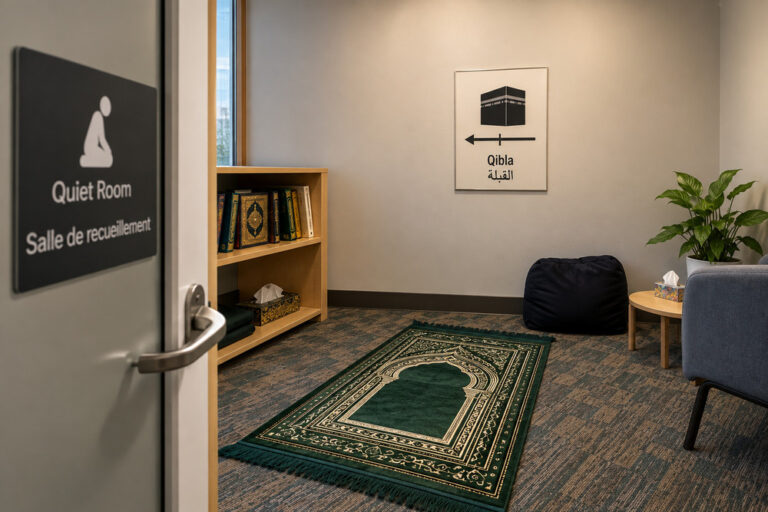
Canadian government normalizes Islamic prayer during workday
Lleida bans the burqa except if worn for religious reasons
Italy bans burqa and niqab but only in schools
The Generalitat pays tribute to the racist Abu Bakr al-Turtuxí as an anti-racist icon
A student residence in Scotland imposes Islamic law in common areas
Kazakhstan threatens to close private schools that allow hijab
A Catholic university in Belgium incorporates Islamic chants into the opening mass of the course
A Muslim family in Granada chooses a Catholic school and demands that the courts teach Islam there
Phrase of the Week

Image of the Week
-Don't you have cousins?