
A Green MP in Germany tells Parliament that parts of Sharia law are compatible with the Constitution.
The comment is framed within the debate over the Greens' document with 24 measures to promote Muslim life in Germany.

[social-share align=»right» style=»button» mobile_app=»desktop»]
[social-share align=»center» style=»icon» mobile_app=»mobile»]
The German Green Party MP Omid Nouripour stated during an intervention in the Bundestag that Certain parts of Sharia law may be compatible with the German Constitution.. In the parliamentary debate, Nouripour argued that Islam, like other religions, includes religious practices and norms that can coexist with the constitutional order.
Nouripour (Tehran, 1975) is a member of parliament for the Green Party, Bündnis 90/Die Grünen, and one of the best-known figures in the German Greens on international policy and integration. Born in Iran and based in Germany since his teenage years, he has been a member of the Bundestag for years and served as co-chair of the party between 2022 and 2024. He currently serves as Vice-President of the German Federal Parliament. Throughout his political career, he has also been involved in several controversies. The Green politician has been criticised for his positions on Islam and integration.

The Greens' plan: 24 measures to institutionalise Islam in Germany
The debate over Omid Nouripour's statements coincides with their presentation to the Bundestag. of a document promoted by the Green parliamentary group that proposes 24 measures to strengthen the institutional presence of Islam in Germany. The text, entitled “Promoting a diverse Muslim life in Germany”It proposes a series of reforms and initiatives aimed at increasing the official recognition of Muslim communities and their participation in public structures.
Among the proposals are the expansion of the teaching of Islamic religion in state schools, with the creation or consolidation of educational programmes supervised by German universities. The document also advocates strengthening institutional cooperation between the State and Muslim organisations, facilitating the Legal recognition of Islamic associations so that they can have a status similar to that of other religious denominations.
The plan also includes the Introduction of Muslim chaplaincies in public institutions csuch as the army, prisons or hospitals, as well as measures to increase the protection of mosques and to fund studies on Muslim life in Germany and discrimination against Muslims. In parallel, the document proposes reviewing or to reduce some existing restrictions on the use of the Islamic veil in certain areas of the public sector, an issue that in recent years has been the subject of judicial decisions and intense political debate in the country.

This set of measures has generated controversy in the German political landscape. Its promoters They argue that it is a necessary step to integrate a religious community. present in the country for decades and guarantee equality with other faiths. Its critics, however, argue that the document could favour the institutionalisation of Islam within the structures of the State and reopen the debate on the boundaries between religion and public space in Germany.
More about Germany

Imam in Germany: "Every Muslim knows another who votes for the AfD"«
Germany prevents civil servant from being a civil servant due to ties with the Muslim Brotherhood
Forty-one per cent of Muslim students in Berlin want the precepts of the Qur'an taught in class.
German police investigate kindergarten cook for serving pork to Muslims


ERC, PSC and Comuns oppose combating political Islam in the European Parliament.

Azerbaijan expels students who wear Islamic headscarves from school

Sharia law in the US is supported by 75% of Muslims, 41% of atheists and up to 20% of Christians.

France now has a halal meat supply without the need to sacrifice animals facing Mecca.

The United Kingdom gives away a thousand hijabs in six months to immigrants arriving via the Channel

US Muslim politicians train Canadian Muslims under the slogan "From the mosque to the city hall"«

Teacher fired in Austria for denying a Muslim woman a prayer room

Canadian government normalizes Islamic prayer during workday

Lleida bans the burqa except if worn for religious reasons
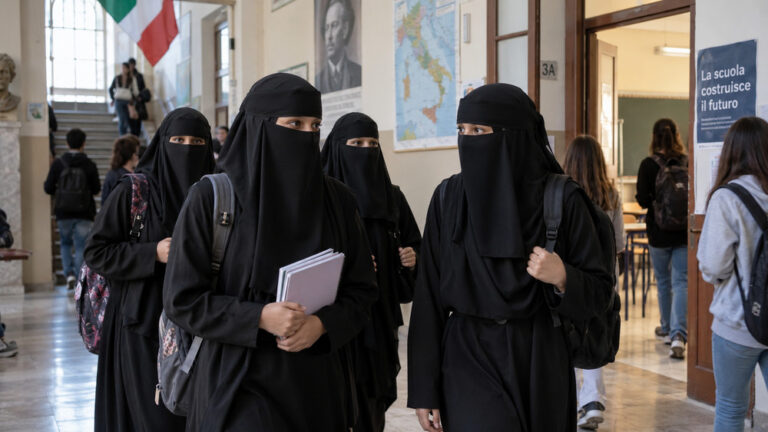
Italy bans burqa and niqab but only in schools

The Generalitat pays tribute to the racist Abu Bakr al-Turtuxí as an anti-racist icon
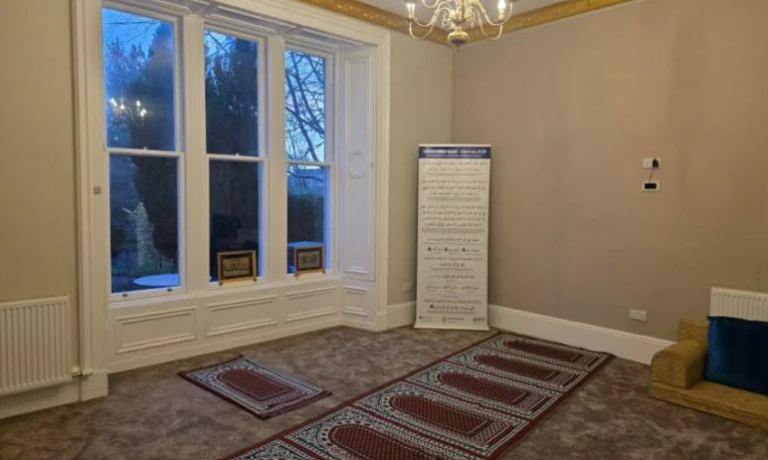
A student residence in Scotland imposes Islamic law in common areas
Kazakhstan threatens to close private schools that allow hijab

A Catholic university in Belgium incorporates Islamic chants into the opening mass of the course

A Muslim family in Granada chooses a Catholic school and demands that the courts teach Islam there
Phrase of the Week

Image of the Week

-Don't you have cousins?