
The UAB bows to Islam: prayer rooms, an imam and catering for Ramadan
Around 150 UAB students pray in classrooms and have a €10,000 meal funded with public money through the Catalan Institute for Peace.
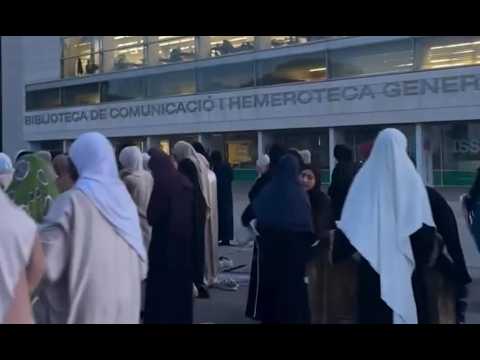
Images of the’breaking of the fast From Ramadan to UAB
Social Networks
[social-share align=»right» style=»button» mobile_app=»desktop»]
[social-share align=»center» style=»icon» mobile_app=»mobile»]
The Autonomous University of Barcelona (UAB) hosted a Ramadan meal (or breaking of the fast) which was attended by around 150 students. The event included the provision of classrooms for collective prayer, the presence of an imam and a catering service. All of this financed with public money: 10,000 euros contributed by the Catalan International Institute for Peace (ICIP), a body dependent on the Parliament of Catalonia.
Chat with the imam, call to prayer, prayer and food.
The meeting was at 5 pm at the Civic Square to go all together towards the classrooms that the university provides for the religious and gastronomic event. The event began with a speech by Imam Ahmed Bermejo, who is currently touring Catalonia attending various events. iftars. The presence of this person is not neutral: Imam Ahmed Bermejo has been publicly linked to Salafist or radical Islamist currents.. His profile was the subject of a complaint to the Parliament of Catalonia after the Generalitat contracted him to provide training for prison officers on Ramadan. Specifically, it was reported to the Parliament of Catalonia that this imam and influencer collaborates with the NGO Islamic Relief Worldwide, an organisation that has been internationally accused of maintaining links with the Muslim Brotherhood.
Before going down to the square to pray, passages from the Qur'an were read and the call to prayer was made. Once everyone was in Civic Square, the moment of prayer began. to pray in public to make the presence of Islam at the university visible to the other students. They did so in accordance with the gender segregation rules imposed by the version followed by the students: The boys on one side and the girls on the other.a. This desire for religious visibility in public space is interpreted by some experts as a characteristic element of the ideological strategy associated with the Muslim Brotherhood. In fact, there is no tradition in Muslim countries of doing iftars community because it is considered a family gathering.
After the prayer, the attendees went to the classrooms to share the meal funded by Catalan taxpayers to promote world peace. The tables were arranged with a gender separation: The boys occupied one set of tables and the girls another.. Immediately afterwards, they began bringing out trays and containers of all kinds of food to share among the attendees. When the event ended, the participants returned to prayer, this time inside the classrooms.
€10,000 as a ‘peace research project’
The Catalan International Institute for Peace (ICIP) granted €10,000 to the UAB to celebrate Ramadan as part of a specific call for academic research on peace. The official document, identified by file number ICI03725000003, confirms that it was the UAB itself that applied for and received the funds in full. The awarded project is titled «Eating together: public iftars as devices for everyday peace« and can be found on the institution's website. With a total of 150 attendees, The public subsidy amounted to about 66 euros per diner.
This institute is a body created by the Parliament of Catalonia in 2007 to promote the culture of peace. Its grants come from public funds and are subject to academic criteria. Neither the university nor the ICIP has published any report attesting to this, nor do they respond to any questions on the matter. The ICIP's regulatory rules require that that the funded projects produce «original and unpublished research papers» and require the beneficiary organisations to submit an academic report with the results. Furthermore, expenditure on consumable supplies — a category in which catering for Ramadan could fall — is limited to 10.1% of the grant, that is, a maximum of €1,000 of the €10,000 awarded.
The public university is defined, among other principles, by its religious neutrality. However, the UAB not only allowed the event to take place, but was the entity that applied for the public subsidy to organise it, provided the spaces for religious ceremonies and permits a religious organisation to operate on its campus. Other Catalan universities, such as the University of Girona, have rejected religious organisations because they do not benefit the entire university community.
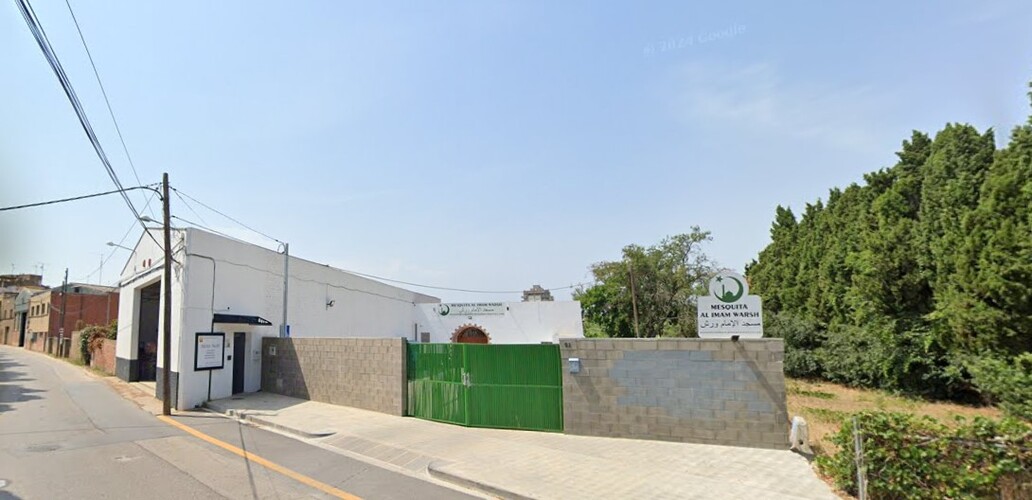
Who are the Muslim students at UAB?
The so-called UAB Muslim Youth (UMUAB) are second-generation immigrant Catalans who have grown up among Catalans. They define themselves as The Founding Manifesto as a project with an explicit religious purpose: “To promote and raise the visibility of Muslim men and women at the University.”. The group's ideological core is defined as “spine the Islamic principles based on the word of God and the sunnah”of their prophet. They understand the religious activity they carry out on the Bellaterra campus.“as an act of worship to God”.
The manifesto does not forget the usual victimisation: it literally states that young Muslims they face a “triple burden: social class, ethnic origin and religious practice”. And they consider the result a «A perfect combination for the University to be a hostile space.”. The document insists that his religion “It is neither dogma nor darkness; history speaks for itself.”and they claim to be “Heirs of this rich tradition”. This formulation suggests that The academic environment does not adequately reflect this heritage that they consider valuable., as if there were a conspiracy against Islam. Its organised presence It responds to the desire to correct the absence in the recognition. of the contributions of Islam to humanity.
Western society is also not spared criticism, and a moral judgement is passed on it in order to present Islam as an alternative. The problems of young people are attributed to “the most radical individualism” and to ’the absence of a stable morality“. The religious proposal is presented as ”an alternative to the youth of this country and that of the world in general”. In this context, the project It has a universal vocation and a social transformation grounded in religious principles.. Principles that the document itself describes as “utter reason and justice” because they emanate from the preaching of «the last prophet of God», Muhammad.
The same narrative promoted by European Islamist university networks
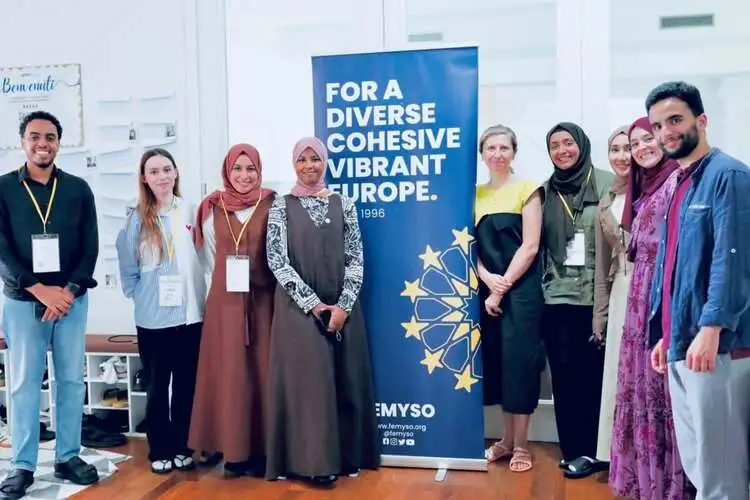
The narrative presented by the UAB Muslim Youth is not isolated. It coincides with narratives disseminated by European-level Islamic associative structures. These structures, such as FEMYSO, They instil in European Muslim students that universities are «hostile spaces'.s» for Muslims. Once the diagnosis has been made, the response is to organise to confront the alleged discrimination.
These networks, funded by European funds, use the rhetoric of Islamophobia as a structural problem. The concept is not limited to denouncing specific assaults or discrimination, but rather… which includes institutional neutrality, the limits of secularism, the absence of accommodations or that the curricula of the subjects do not make reference to Islam. The university can be accused not only of acts, but also of omissions or of maintaining common criteria that do not accommodate specific religious demands. Even, a recent survey circulated among Muslim students was explicitly asking if the “Islamophobic” experience has had a psychological impact, “diagnosed or not”. In this way, emotional distress without any clinical criteria becomes sufficient proof of structural hostility. Gradually, they present the Western university as a dangerous and harmful environment for Muslims and urge them to act to redress the injustice.
The new demand: spaces for prayer
Three years ago at the Autonomous University they introduced the celebration of Ramadan. Now the demand is for spaces to pray. At several European universities there are already prayer rooms for Muslims, with the assistance of imams. The campaign to demand a prayer room has been launched under the slogan “More breaks, less noise”, a deliberately neutral and emotional formulation. The message avoids explicit references to religious practice and is framed in terms of well-being: it speaks of a space to “think”, “pause” or “relax” within the accelerated pace of university life.
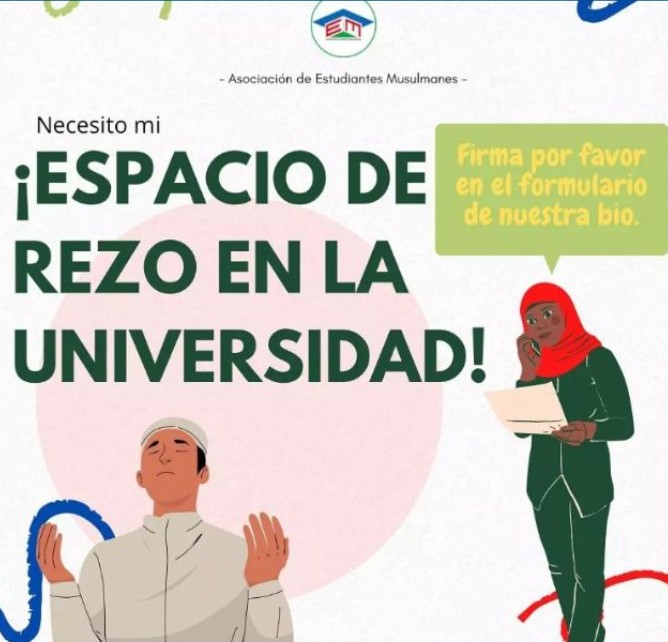
In other Catalan universities where religious organisations have been permitted, the demand for spaces to pray is made explicitly. This is the case with the Muslim Students' Association affiliated to the UB and the UPC. Here, the message leaves no room for interpretation and rHe openly exclaims, “Prayer space at the university!”. The visual (in Spanish) and textual language does not appeal to relaxation or a pause, but directly to the need for a space for religious practice within the university. This shows that beneath the appearance of well-being there can be the same underlying demand, but with a different communication strategy.
The case of the UAB is not an isolated incident, but the symptom of a worrying trend: the growing permeability of public institutions to the demands of a religious group. When a university finances, hosts and legitimises religious acts with institutional resources, the boundary between neutrality and involvement ceases to be diffuse and becomes tangible. What is presented as coexistence or diversity it could end up translating into structural changes within the academic sphere. It is no longer a question of debating religious freedom (guaranteed by law), but of how the public university must adapt its ordinary functioning to a religion to create a friendly environment for certain versions of Islam.
More about education

Azerbaijan expels students who wear Islamic headscarves from school
Teacher fired in Austria for denying a Muslim woman a prayer room
Italy bans burqa and niqab but only in schools
The Generalitat pays tribute to the racist Abu Bakr al-Turtuxí as an anti-racist icon
A student residence in Scotland imposes Islamic law in common areas
Kazakhstan threatens to close private schools that allow hijab

ERC, PSC and Comuns oppose combating political Islam in the European Parliament.
Azerbaijan expels students who wear Islamic headscarves from school

Sharia law in the US is supported by 75% of Muslims, 41% of atheists and up to 20% of Christians.

France now has a halal meat supply without the need to sacrifice animals facing Mecca.

The United Kingdom gives away a thousand hijabs in six months to immigrants arriving via the Channel
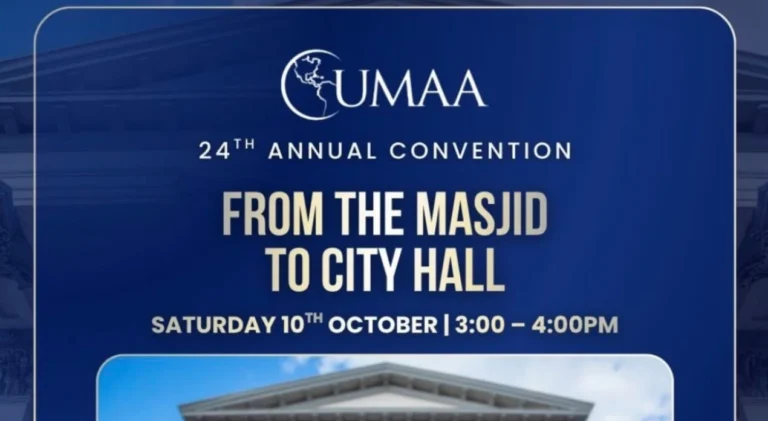
US Muslim politicians train Canadian Muslims under the slogan "From the mosque to the city hall"«
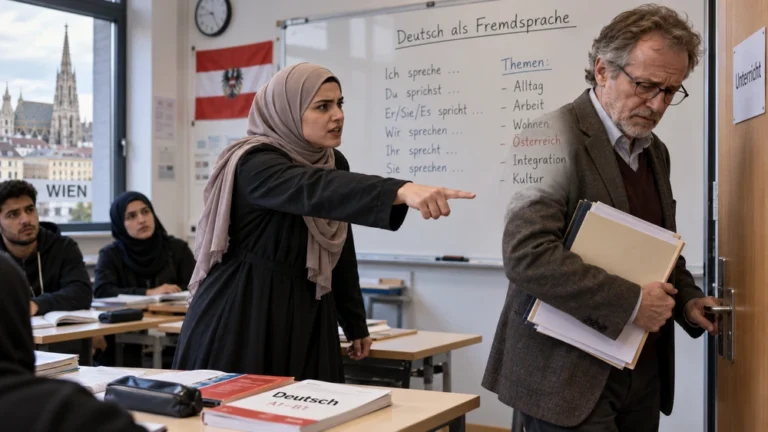
Teacher fired in Austria for denying a Muslim woman a prayer room
Canadian government normalizes Islamic prayer during workday
Lleida bans the burqa except if worn for religious reasons
Italy bans burqa and niqab but only in schools

The Generalitat pays tribute to the racist Abu Bakr al-Turtuxí as an anti-racist icon
A student residence in Scotland imposes Islamic law in common areas
Kazakhstan threatens to close private schools that allow hijab
A Catholic university in Belgium incorporates Islamic chants into the opening mass of the course
A Muslim family in Granada chooses a Catholic school and demands that the courts teach Islam there
Phrase of the Week

Image of the Week

-Don't you have cousins?