
The mortgage is ‘waging war on Allah’: the Islamic bank's discourse to attract followers and money in Catalonia
An Islamist leader who defends the burka, public funds and infiltration of the Catalan social economy to legitimise a financial system subject to Sharia. This is how the Catalan Islamic bank operates.

Commentary on the mortgage webinar halal.
[social-share align=»center» style=»icon» mobile_app=»mobile»]
An opaque financial project led by Najia Lotfi, a former MP for the Moroccan Islamist party PJD, is taking root in Catalonia. aligned with the thinking of the Muslim Brothers. Despite this background, Lotfi received €50,000 in grants from Barcelona City Council during Ada Colau's term in office. With eUnder Jaume Collboni's government, his organisation has been integrated into the wheel of the Social and Solidarity Economy (ESS). where she has access to public support, sub-grants, promotion and public procurement. Lofti became known on social media for defending the burka on TVE as a voluntary cultural and religious choice.

Najia Lotfi defending the burka as a voluntary option.
With this profile and despite having no banking licence or oversight from any authority, he has managed to deploy a network that operates as a covert credit entity. In his own YouTube webinars he explains that “We work like a bank”, “we replace the bank” and “we offer a religious oversight that banks cannot provide”. But they are not a bank. And in any European country, operating as they do under religious criteria and without regulation is legally unviable.
A model that works like a bank… but without being one
In the webinars, CoopHalal explain matter-of-factly that they operate as an Islamic alternative to the financial system. They talk about ’valuations“, ”guarantee funds“, ”risk management“, ”investment portfolios“, ”financing contracts“ or ”control mechanisms“., all of them functions inherent to a supervised banking entity. The only distinguishing feature is that they add a layer of “Islamic compliance: imams and religious ”experts“ verify that every operation complies with Sharia criteria..
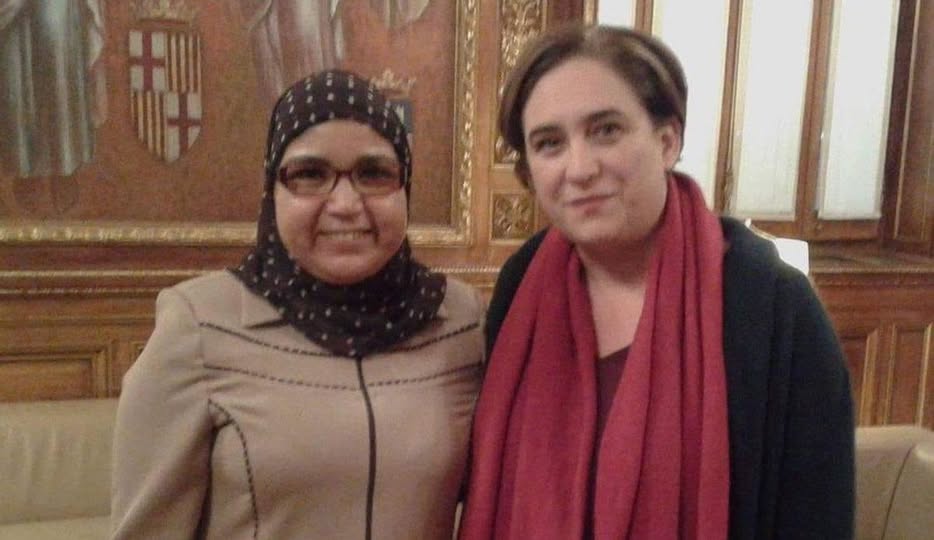
Najia Lofti with the mayor who funded her project. Facebook.
This mechanism allows them to sell the product as if it were an “ethical” solution., but are not subject to the European solvency regulation, consumer protection, anti-money laundering or deposit insurance. Users contribute money to a common fund, But this money is not protected: in the event of a failure, it would all be lost..
Lotfi herself acknowledges in the videos that it is not possible to operate as an Islamic bank legally in Europe.“The law does not allow us.”, he says. And precisely for that reason they use the cooperative format and various parallel companies, creating a a financial circuit that mimics the bank, but it falls outside its legal framework. What on paper is a major problem has become the system's greatest strength: Being a cooperative has opened up to Lofti the great window of opportunity of the Catalan Social and Solidarity Economy.. This ecosystem has read the cooperative as an “ethical”, “community-based” and “people-centred” project. And not only have they embraced it, but they have invited it to events, given it a platform and established formal collaborations. The most notable is Religious funding for the Som Tribu housing cooperative which received an award for being an example of «ethical» financing.
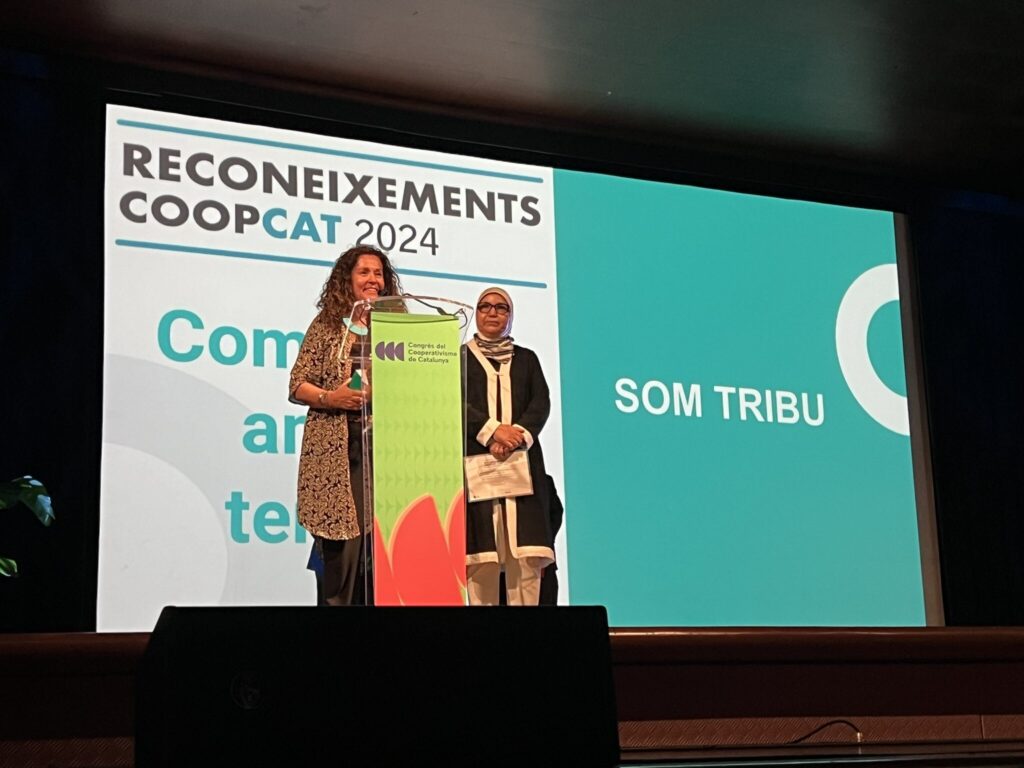
Najia Lotfi collecting an award from the Catalan cooperatives.
The pyramid scheme halalto depend on the money of newcomers
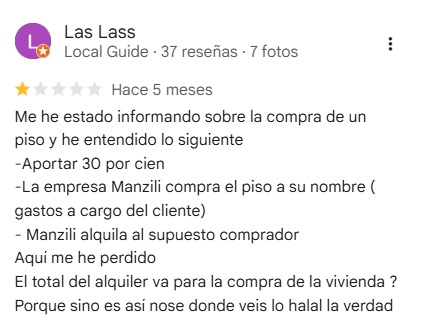
The model is clearly explained in its videos: to access mortgage finance, the individual must put down 30% of the property's price. This money goes directly into the common fund and is used to buy properties from third parties. The beneficiaries who have already bought a flat have done so with the money put in by new sign-ups, and the cycle continues as long as there is recruitment.
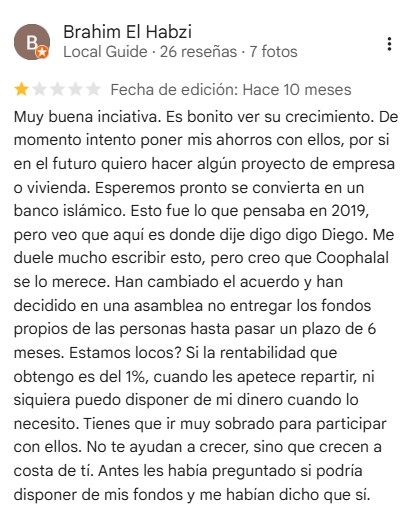
At no point does CoopHalal contribute its own capital in proportion to the volume of operations; It merely redistributes the money from the user base and charges commissions, fees and margins disguised as “rent”, “participation” or “shared profit.”. This creates a structural dependency: if no new contributors enter, the system seizes up and the participants already enrolled are left without funding or the means to recover their savings.
In Europe, Similar schemes based on Islamic finance have collapsed in communities in the United Kingdom, Belgium and France., leaving hundreds of families without their savings. The patterns are identical: absence of supervision, contractual opacity, dependence on new investors and Use of religion as an emotional guarantee. The Google Maps reviews already hint that something is wrong:
A conventional mortgage is tantamount to “declaring war on God.”
In the webinars, the promoters present the project as the ideal solution for Muslim families who “do not want to fall into the sin of riba” (interest). The religious argument serves as a tool of emotional and moral pressure: taking out a conventional mortgage is tantamount to “declaring war on God”, in words repeatedly used in their talks., in Arabic.
This religious narrative allows them Raising savings from vulnerable profiles, many of whom do not have easy access to the traditional banking system or find themselves in a situation of legal uncertainty: To enter the system, a passport is all that's needed.. Furthermore, the videos include statements such as “we've never lost a single euro” or “everyone here comes out on top”, giving a false sense of security and stability.
The miracle halal of the 6% and 10% yields
A CoopHalal advertisement presents three investment options. halal with yields of 61% and 101%, apparently fixed, and with surprisingly low entry amounts. Despite the attractive tone —“Let your savings work for you while you sleep.”— does not explain what business is behind it, what risks the investor assumes, or under what supervision the entities offering it operate. Nor does it detail how the profits are generated, nor provide any documents or guarantees to verify the feasibility of these promises. Everything is explained in a very simple, visual way, designed for people with little experience in finance.
Although it is true that some investments can reach 6% or 10%, It is not at all common for them to be presented as practically guaranteed gains., and even less so in contracts of this type a form of Islamic partnership, which by definition cannot guarantee returns. When a company offers such high returns in such a straightforward way and without important details, One must be very cautious. The lack of information, the overly simplified presentation and the promise of high returns with little effort are indicators that may suggest the offer is not as secure as it appears.
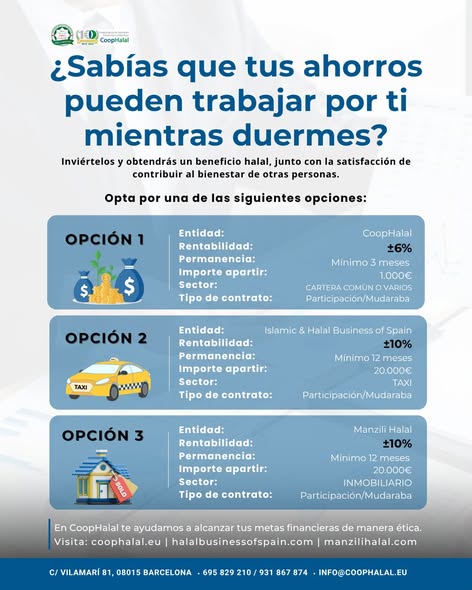
A web of companies linked by religion, not by regulation.
CoopHalal operates as a fundraising cooperative, but The properties are purchased in the name of another company (Manzili Halal Sleeping Lion. This fragmented structure allows for evading tax obligations, avoiding banking controls and presenting it as a “normal” commercial activity”. The operations pass through various corporate layers, all led by the same actors and justified as “complementary” within an Islamic ecosystem.
In practice, this creates a legal vacuum where it is very difficult to claim, report or hold to account in cases of fraud or malpractice. The majority of users He doesn't even know which legal entity he is handing over his money to.. And, as the webinars acknowledge, “if anyone wants to recover their savings, they can only do so if there is enough liquidity in the fund,” a phrase that any financial supervisor would consider a textbook red alert.
A religious mini-bank that operates taxis, housing and looks after burials.
According to its own webinars and internal documents, CoopHalal has created an economic ecosystem that acts as a clandestine bank: They raise funds, redistribute them as loans, manage portfolios and set a margin on each transaction through tailor-made contracts.“ to circumvent banking legislation. Its flagship product is home financing through the parallel company Manzili. Halal SL, which cHe buys flats with the money of new entrants and sells them, years later, to the same clients. who have been paying monthly fees. All this without a guarantee deposit or external audits.
On top of all this is the funeral business — Janaza SL — and participation in the expansion of Islamic cemeteries. Sectors that reinforce the idea of a total ecosystem: CoopHalal aims to manage the believer's economic life from the purchase of their flat to the taxi they drive and, ultimately, to their burial.. It is a self-sufficient and closed economic and symbolic circuit, without the external oversight that any accredited financial institution would have.
Uncontrolled international expansion: opaque capital and transnational risk
While presenting itself as a humble cooperative that raises local funds from humble people, CoopHalal boasts in its internal memorandum of participate in international fairs, state-level institutional meetings and events where it attracts investors from other countries. The same corporate report highlights that CoopHalal is achieving new investors even from outside Spain, taking advantage of their appearance in state debates, international fairs and institutional events —including events presided over by members of the Spanish government—.

This influx of foreign capital, coupled with the fact that the project is based on religious criteria and It is ideologically aligned with the ideology of the Muslim Brotherhood, thereby multiplying the risk of opaque or politically conditioned funds entering.. The European Union is crystal clear: religious-criteria-based financial institutions cannot operate without a banking licence to prevent economic dependencies on organised ideological groups. Lotfi herself, in the webinars, admits that “An Islamic bank cannot be opened in Europe for legal reasons.”, and it is precisely for this reason that it uses a network of associations, cooperatives and front companies.
This uncontrolled expansion is reminiscent of other European cases: in France, Belgium and the United Kingdom, similar “community Islamic finance” projects attracted foreign investors, grew unregulated and ultimately collapsed, leaving hundreds of families without savings. The pattern is identical: religion as a driver of trust, absence of guarantees, corporate opacity and money arriving from outside without going through official channels. CoopHalal is reproducing the same formula, but now in Catalonia and with institutional support.
More about Muslim Brotherhood

Two Catalan organisations call for the punishment of MEPs who warn of the infiltration of the Muslim Brotherhood
Catalonia’s National Youth Council wants scout groups to adapt to Ramadan and religious dietary practices
The Flydubai jihadist was radicalised in Australia in an environment linked to the Muslim Brotherhood.
ERC, PSC and Comuns oppose combating political Islam in the European Parliament.
Who is Fatiha El Mouali, much more than the helpless immigrant from the newspaper ARA
Austria prepares to ban Muslim Brotherhood political Islam
Germany prevents civil servant from being a civil servant due to ties with the Muslim Brotherhood
An official Austrian report accuses the Muslim Brotherhood of wanting to transform democracy from within.
The foundation that manages the Barcelona Office of Religious Affairs paid €175 to denounce Islamophobia


UK's top sharia court imam charged with rape

The Guardia Civil arrests a jihadist in Vilanova i la Geltrú
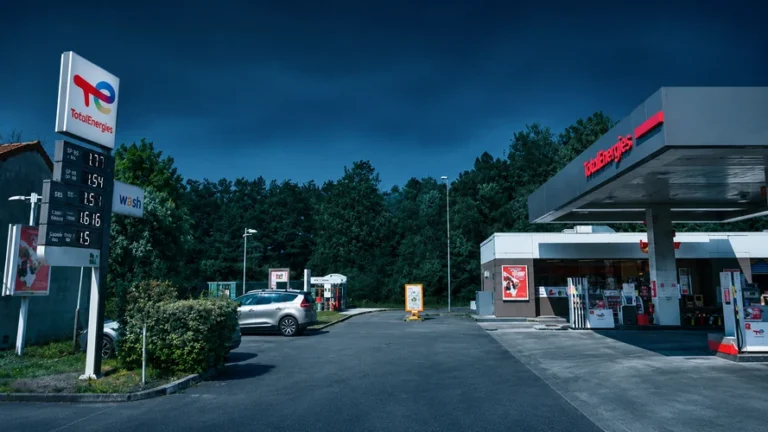
«Allahu Akbar» failed with a lighter and gas cylinders at a gas station in France

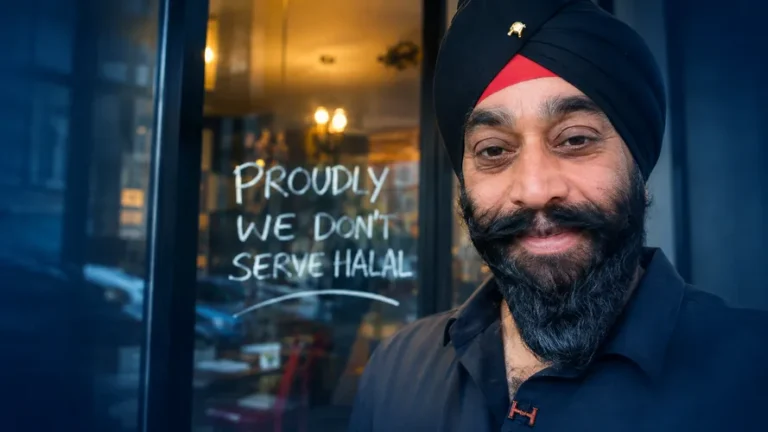
Muslim protesters shout «Allahu Akbar» outside a London restaurant for not serving halal.
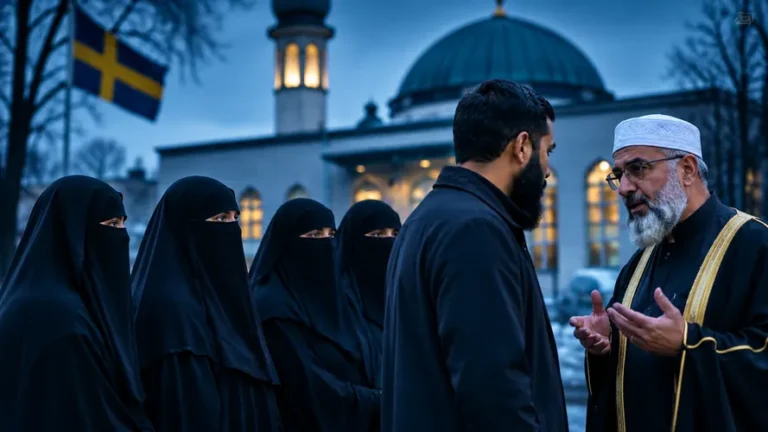
Swedish public television exposes imams who help practice polygamy

Colorado Muslim Senator Creates Muslim-Only Work Placements
Egypt designates Islamic organisation linked to Barcelona’s largest mosque as terrorist
They want to change the name of the Navas neighborhood so as not to offend Muslims

Police capture a muslim follower of Islamic State in his cave in Barcelona’s Raval neighborhood
British school forces six-year-olds to wear hijabs during Islam class
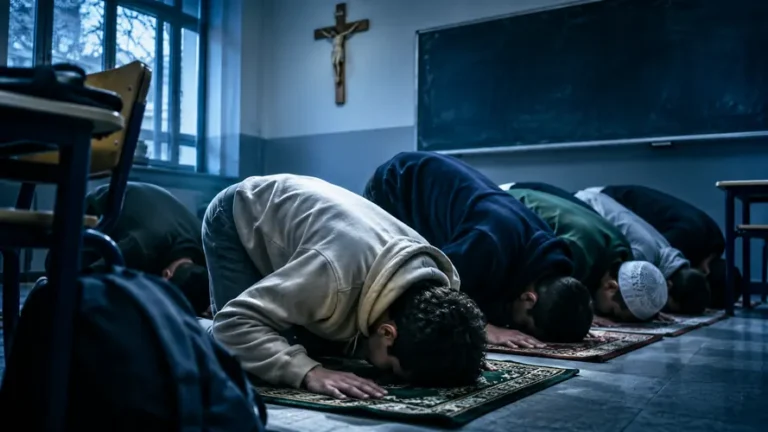
Students at an Italian School Told to Pretend to Be Muslims in Catholic Religion Class
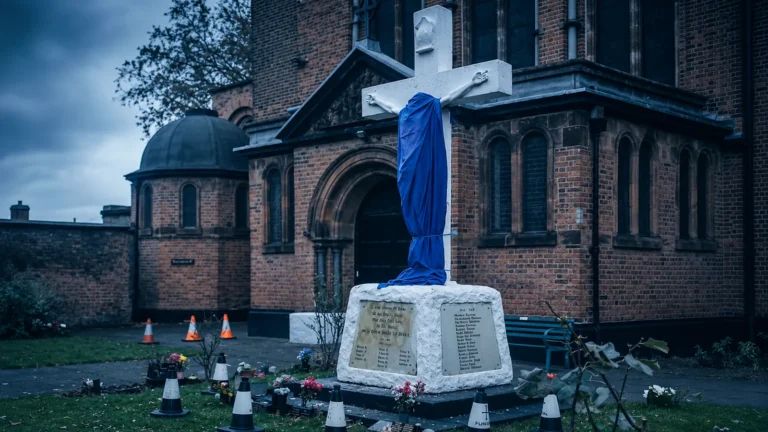
Figure of Jesus Christ beheaded and Arabic graffiti left on a monument to fallen British soldiers

Teenagers interrupt a mass in Vienna shouting “Allahu Akbar”
Phrase of the Week

Image of the Week
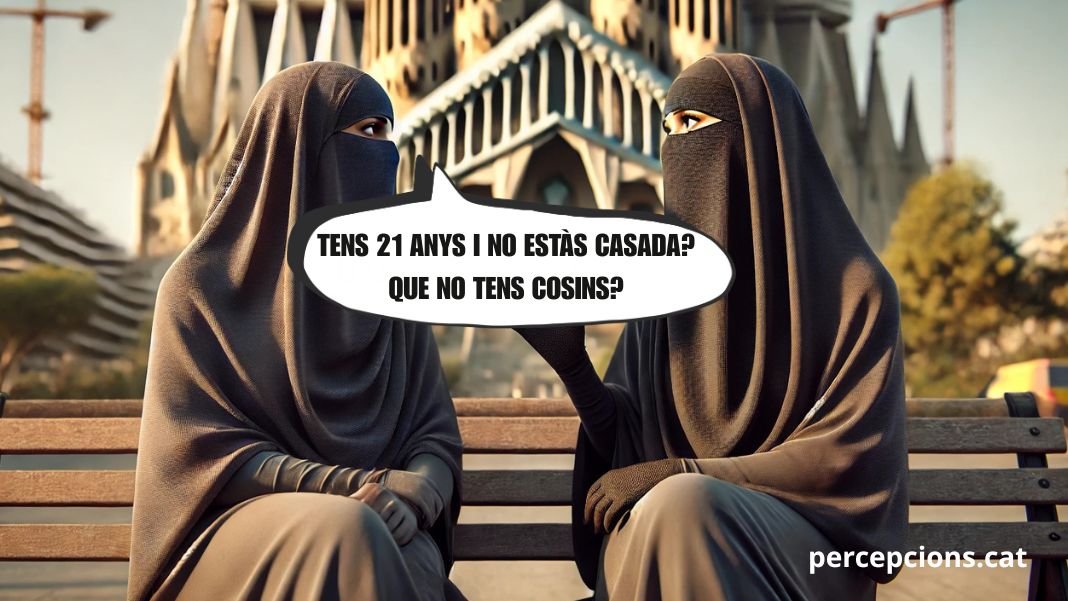
-Don't you have cousins?