
The most inclusive street in the United Kingdom is where English has most disappeared.
Leicester has a street that exemplifies the failure of integration and starkly reveals the meaning of inclusion. Speaking English on Mornington Street is the exception.
A neighbour from Leicester
Daily Mail
[social-share align=»right» style=»button» mobile_app=»desktop»]
[social-share align=»center» style=»icon» mobile_app=»mobile»]
On Mornington Street, in the heart of Leicester, English is not necessary to live there. This street is in a neighbourhood predominantly made up of immigrants from India, Bangladesh, Somalia and the Middle East. Here, Almost half of adults do not speak English fluently, and others do not speak it at all. The British establishment calls it “diversity”, but more and more residents, educators and even members of the very same immigrant communities eThey ask themselves whether this is truly inclusion or a resounding failure of integration.. A report by Nick Kaven for the Daily Mail The 19th of May gives all the details.
Strolling through the streets of Mornington Street and its surroundings gives you a an immediate sense of disconnection from the British surroundings. The façades, the shops and even the visual and auditory ambience clearly evoke another part of the world. The flags of Palestine and India hang from balconies, windows and shops. The atmosphere is more reminiscent of an Asian suburb than a Leicester neighbourhood..
The street is full of women dressed in burqas, hijabs or other forms of Islamic head covering. Most of the establishments have signs written in Gujarati or Urdu. English, if it appears at all, does so in small print or as a secondary translation..
The data that explains it
According to the 2021 census, this street in Leicester records the highest percentage of residents who do not speak English in the whole United Kingdom. The data surpass any official discourse on integration or inclusion:
- 43 % of those aged over 16 On Mornington Street they speak little or no English.
- Only 57.1% of Leicester residents were born in England.,
- The 23.5 per cent of the city's population is Muslim.,
- Up to Three generations live together in the same home., and it is the children who act as a linguistic bridge.
A city within a city
The red brick façades and narrow terraces evoke 19th-century industrial England, but the social reality on Mornington Street and its surroundings is quite different. Children's bands play in languages other than English and shops advertise offers in Urdu.. English, when used, sounds with a foreign or childish accent.
We find a pizzeria that sells more curry pizzas than pepperoni ones, a supermarket with an Islamic name and a Hindu temple next to two mosques. The adjacent streets have official British names, but Everyday life is organised as if it were an Asian neighbourhood of the subcontinent..
The children act as translators.
According to Ruki, a 62-year-old woman from Malawi, Many children in the neighbourhood have to act as translators for their parents and grandparents.. At school, it is often the children who accompany their parents to meetings to help them understand what the teaching staff are saying.“Adults don't make the effort to learn English because they know their children will sort it out for them.”, explains Ruki, who works at a primary school.
This phenomenon has serious consequences, especially in sensitive areas such as health and education. How can you access an accurate medical diagnosis if you cannot describe your symptoms to the doctor? How can you understand an educational plan if you cannot read a school note?
English isn't necessary or it's a pain.
Many residents interviewed by Daily Mail journalists admit that they do not speak English. Others speak it, but they claim that Their relatives or friends do not do it out of laziness, difficulty or lack of interest.. Opinions are varied, but they all point to a shared reality: Linguistic integration is not a priority for everyone.
Shohel Issufo, a 37-year-old pizzeria worker originally from Gujarat, explains that he only learned English because he had no other option if he wanted to get ahead. On arriving in the country, his lack of command of the language limited him so much that he had to take an ESOL (English for Speakers of Other Languages) course for a year. He now speaks English fluently, but He acknowledges that many of his neighbours do not feel motivated to do the same: they live in a cultural and linguistic bubble where everyone speaks Gujarati or other languages from their country of origin., and this spares them the need to integrate linguistically.
Ribwar Hussein, an Iraqi Kurd who runs a garage, recounts a similar case but with a personal twist: He only learnt English after marrying a British woman.. At home they now speak English with their children, but their community still speaks predominantly Kurdish. Ribwar is clear: «If you want to prosper and have real opportunities, you need to master English, but it also admits that if you only move within your own group, there is no pressure to learn it.«.
By contrast, Rukshana Fatiwala, a British citizen born in Leicester and the daughter of Indian immigrants, believes that It's not fair to expect everyone to speak English.. She argues that what really matters is that people contribute to society by paying taxes and generating economic activity. However, even she acknowledges that her husband—also an immigrant— He used to skip his English classes to go to work, and that hasn't stopped him from succeeding professionally..
These testimonies reflect a structural problem: as long as the system does not require knowledge of the common language as a condition for living and working, Many will opt to stay within their linguistic comfort zone..
Is the political discourse changing… too late?
Prime Minister Keir Starmer has admitted that A distinction must be made between those who integrate and those who do not.. Without limiting the number of migrants, it demands an active commitment to the British language and values. But perhaps it is already too late.
On Mornington Street, the young people consider themselves British, but they speak to their grandparents in Asian languages, and there is no contact with the indigenous population. In some cases, They even refuse to learn English.. A 38-year-old woman, interviewed by the press, says: “I don't like the language. It's too difficult. Why should I learn it?”
How far does the duty to integrate go?
The Mornington Street case is not a mere anecdote. It is the empirical demonstration that A society can allow multiple cultures to coexist… but it cannot survive if it renounces having a shared language and set of rules.When the State ceases to set clear boundaries, and assimilation becomes a voluntary option, the result is what we see in Leicester: parallel, isolated and self-sufficient communities living on the margins of the country that hosts them.
The case of Leicester raises questions about the limits and conditions of integration in societies with high cultural and linguistic diversity, especially when the host country's language ceases to play a central role in certain neighbourhoods or communities… what remains of the collective national project?
Similar

The United Kingdom gives away a thousand hijabs in six months to immigrants arriving via the Channel
A student residence in Scotland imposes Islamic law in common areas
Scottish independence removes flags from Scotland so as not to inconvenience immigrants
Muslim school that forces hijab on 7-year-old girls moves to UK public system
UK detects Muslim gangs forcing prisoners to convert to Islam to survive
Convicted in the United Kingdom for a joke about Islam on social media.
British Islamism is already talking about training Muslims in martial arts in mosques.
A report on rape gangs in the United Kingdom links Islam with violence and the state's inaction.
The Welsh police will record comments it considers “hostile” towards Islam.

More Perceptions of
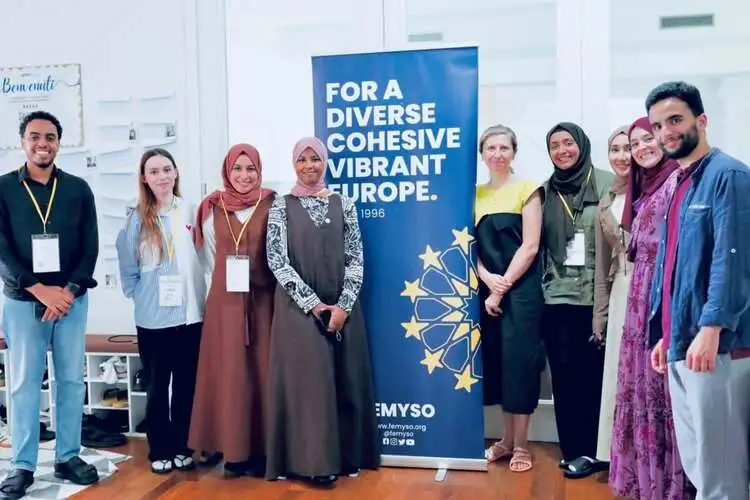
ERC, PSC and Comuns oppose combating political Islam in the European Parliament.

Azerbaijan expels students who wear Islamic headscarves from school
Sharia law in the US is supported by 75% of Muslims, 41% of atheists and up to 20% of Christians.

France now has a halal meat supply without the need to sacrifice animals facing Mecca.
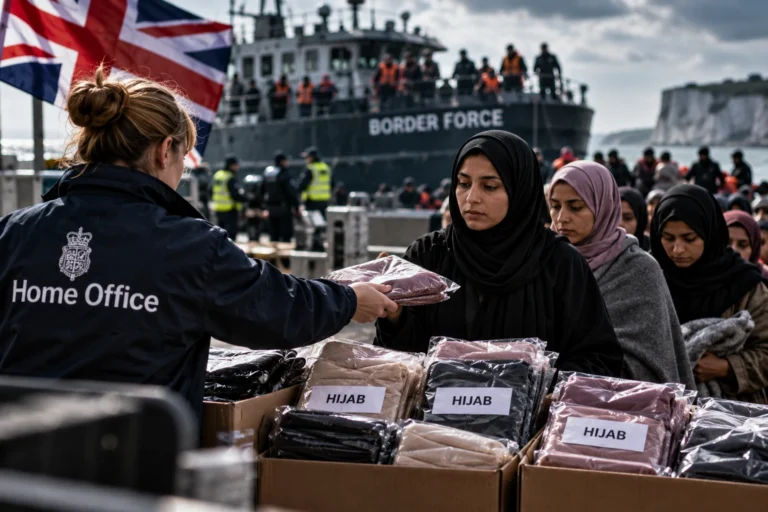
The United Kingdom gives away a thousand hijabs in six months to immigrants arriving via the Channel
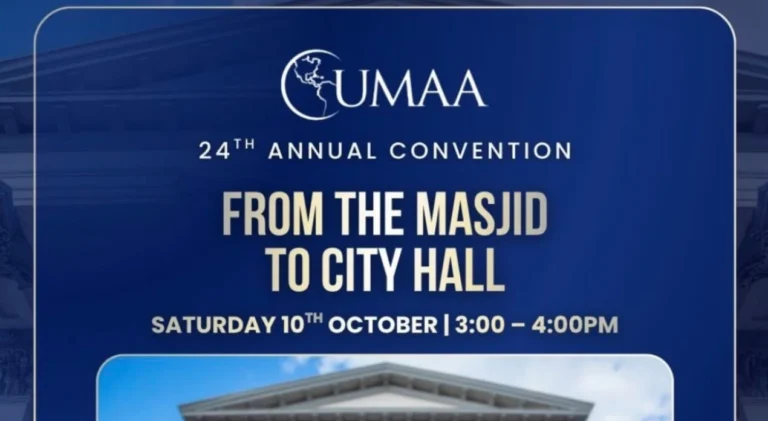
US Muslim politicians train Canadian Muslims under the slogan "From the mosque to the city hall"«
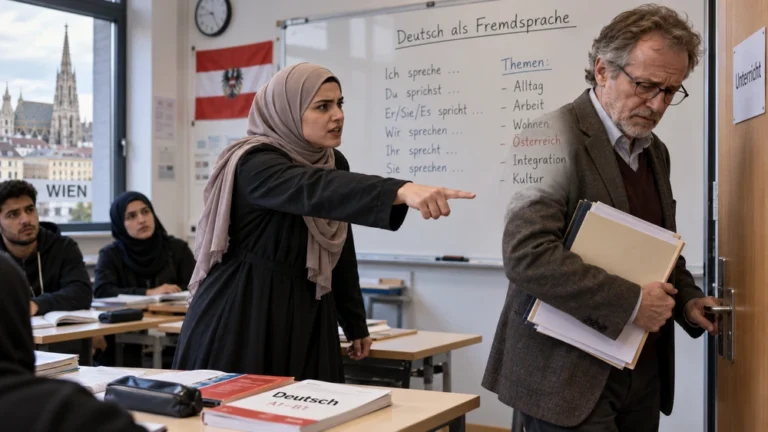
Teacher fired in Austria for denying a Muslim woman a prayer room
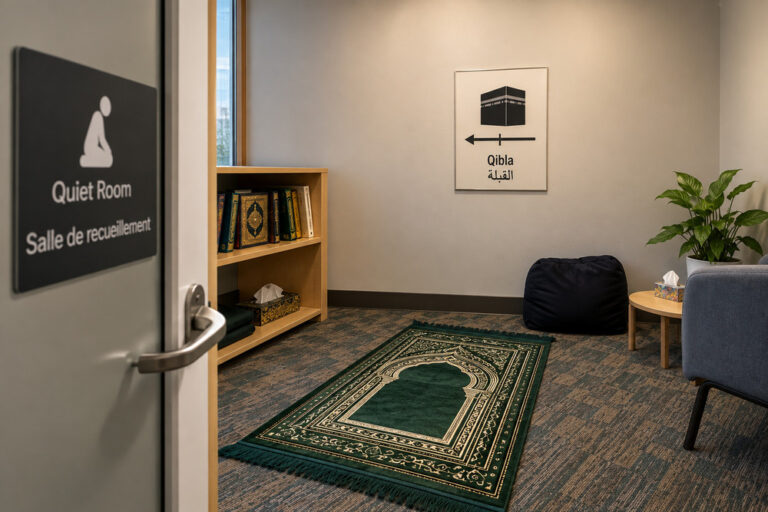
Canadian government normalizes Islamic prayer during workday
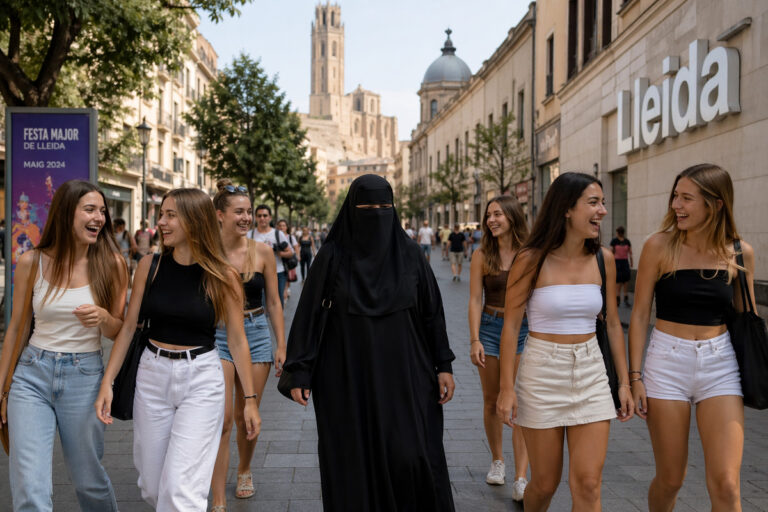
Lleida bans the burqa except if worn for religious reasons
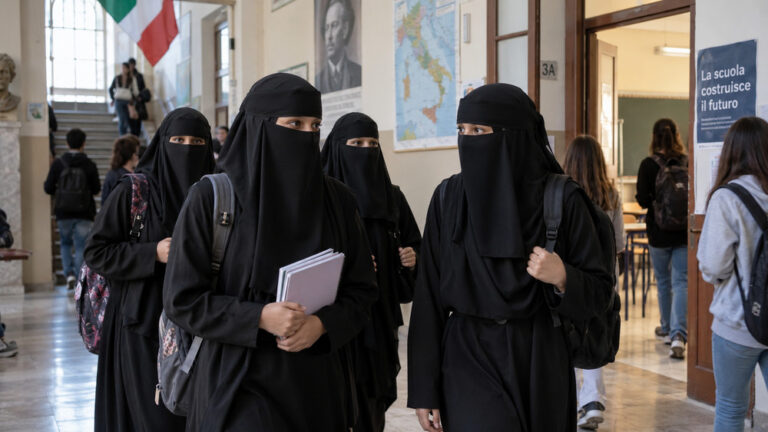
Italy bans burqa and niqab but only in schools

The Generalitat pays tribute to the racist Abu Bakr al-Turtuxí as an anti-racist icon
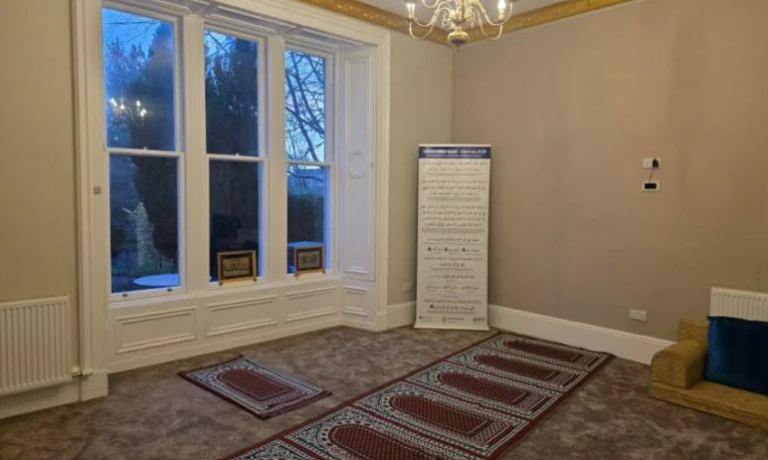
A student residence in Scotland imposes Islamic law in common areas
Kazakhstan threatens to close private schools that allow hijab
A Catholic university in Belgium incorporates Islamic chants into the opening mass of the course
A Muslim family in Granada chooses a Catholic school and demands that the courts teach Islam there
Phrase of the Week

Image of the Week

-Don't you have cousins?