
Catalan state schools pressure teenagers to fast during Ramadan
To the family, group or legal pressure from the countries of origin, the Generalitat adds promotions and exemptions.
Ramadan Promotion of the Egara Institute of Terrassa
[social-share align=»right» style=»button» mobile_app=»desktop»]
[social-share align=»center» style=»icon» mobile_app=»mobile»]
Catalan public secondary schools have become another means of pressure to enforce Ramadan on Catalan adolescents. Greetings, infographics, projects and assignments on Ramadan are now part of the Catalan education system.
Ramadan is presented as an obligation for the pupils.
If there are young Muslims who don't feel like following religious precepts, the Generalitat doesn't help them. The idea conveyed in the classrooms is that It is compulsory for everyone to drink water or eat during Ramadan, and it is beneficial to observe it..
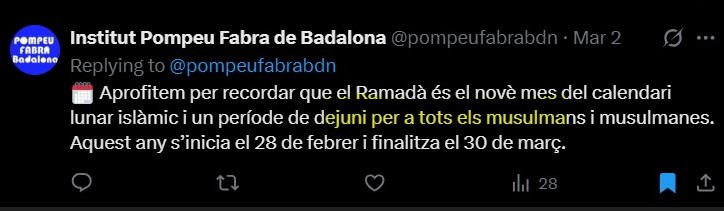
Tweet from the Pompeu Fabra Institute stating that fasting is «for all Muslims.»
The idea that fasting during daylight hours is compulsory comes from the Department for Education. In the materials it provides to schools to inform teachers about Ramadan, It is presented as an obligation.. Therefore, it leaves no room for personal freedom.
The infographic states that Ramadan It is obligatory for every Muslim from the moment they reach puberty..
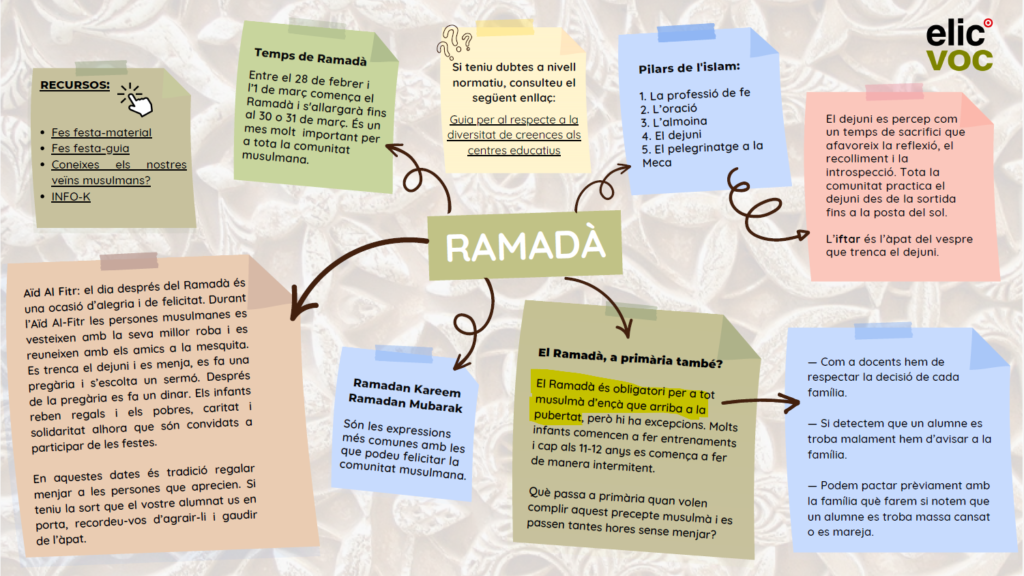
Infographic distributed to educational centres in Catalonia
The Info K videos featuring veiled girls
Among the materials the Department recommends for viewing with students in class are The videos from the Info K channel about Ramadan. In these videos recorded in 2022, boys and girls are seen in the mosque, separated by gender, talking about their experience of fasting.
Catalan girls wearing the veil explain how they are getting on with their training to observe Ramadan.
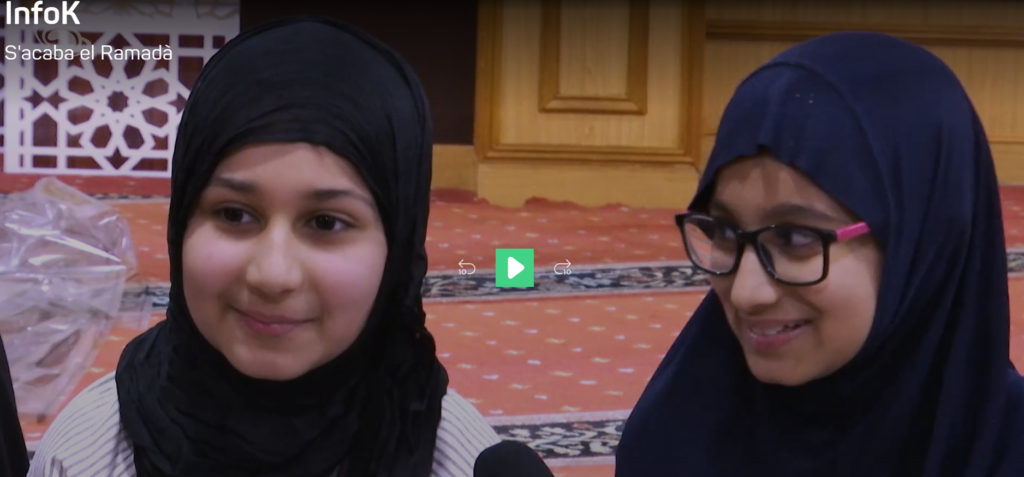
Image from one of Info K's reports on Ramadan.
Academic exemptions for Ramadan
Academic exemptions during Ramadan are based on cooperation agreements between the State and the Islamic Commission of Spain, regulated by Law 26/1992. This regulation applies to state-owned or publicly funded schools and colleges, not necessarily to private schools without a concert agreement. The key points are:
Justified absenceStudents may request not to attend classes or sit exams on Fridays during Ramadan between 1.30 pm and 4.30 pm. Schools must ensure that students can make up for any exams or assessable activities affected by the exemption.
Religious festivalsThey may also request not to attend on dates observed by their religion (for example, the’Aid you in the fast, the celebration of the end of Ramadan, and the’Aïdu l'adha, the Feast of the Sacrifice).
The agreement The regulation governing religious exemptions is mandatory for all schools to comply with.. In addition, it is recommended to «flexibilise» physical education, change meal timetables or create quiet spaces for students fasting during Ramadan.
Ramadan in the classroom
On the xtec network we find examples of students' work on Ramadan: presentations, videos or essays… Ramadan enters primary classrooms, secondary classrooms and even reception classes.
For example, the El Viver School in Montcada i Reixach displays an essay about Ramadan written by an eight-year-old Year 2 pupil:
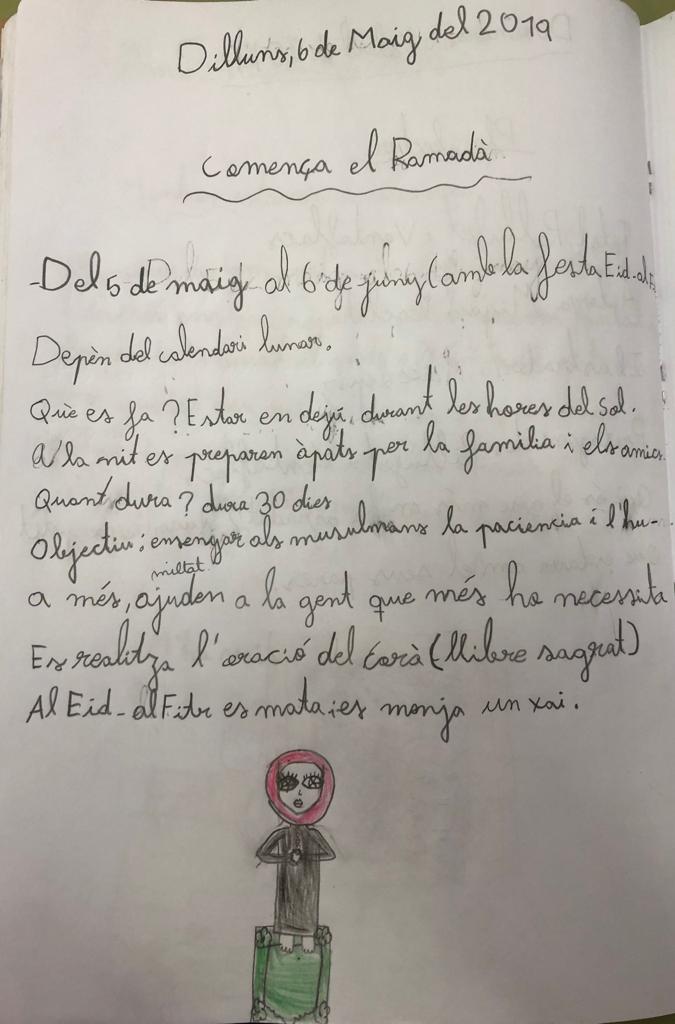
An 8-year-old boy's essay on Ramadan | xtec.cat
Young people who don't fast during Ramadan
Some young Muslims in the West choose not to observe Ramadan because they prioritise a lifestyle more similar to that of their Western peers. In an environment where fasting is not customary, they may feel that this practice sets them apart from others and opt not to observe it.
On the internet, some people lay out their situation and respond to those who pressure them to fast. Despite pressure from family, friends or school, there are those who defend their choice.
One example is the TikTok user @maebreinatiktok, who claims that with Halal chicken. I respect Ramadan..

Activists against Ramadan
In Muslim countries, Ramadan is enshrined in the penal code. Eating, drinking or smoking is grounds for fines, imprisonment or flogging. Anyone who breaks the religious rules risks insults, contempt and assaults, as well as criminal penalties at the discretion of the police or the judge.
In Morocco and Algeria, people are arrested every year for breaking the Ramadan fast. Depending on the region, the enforcement is more or less strict. In these two countries, young people who want to be free organise picnics via social media to defy the law.
One of these movements is Morocco's Alternative Movement for Individual Freedoms (MALI), led by journalist Zineb El Rhazoui. She challenged the regime by calling on other young people to eat sandwiches in a park to defend the right not to fast during Ramadan.
For this action they were arrested, fined and imprisoned. The group's action was presented to society as a plot organised by Spain.
This struggle and others to demand reforms in Morocco led El Rhazoui to leave the country with the help of a Norwegian NGO. She now lives in exile in France.
Catalan Muslim youths eating in secret
Many young Catalan Muslims want nothing to do with religious impositions that complicate their lives and act as a barrier to integration. For this reason, some eat in secret and hide it from their family and surroundings.
However, The Generalitat, through the Department of Education, conveys to them the idea that Catalan society wants them to fast.. It not only provides them with educational facilities but also promotes them at all educational levels and presents it as an «obligation.».
.